Nearly three decades after its release, director Barry Levinson revisits his acclaimed 1996 drama Sleepers, reflecting on the critical discourse that, in his view, largely "lost the plot" regarding the film’s central themes. As Sleepers receives a brand-new 4K/Blu-ray release, Levinson offered insights into the film’s enduring controversies, its star-studded cast, and the broader challenges facing the contemporary film industry, particularly the declining prominence of mid-budget productions.
Sleepers, based on Lorenzo Carcaterra’s purportedly true-life memoir of the same name, plunges into the harsh realities faced by four childhood friends from Hell’s Kitchen, New York. The narrative begins in the late 1960s, depicting the innocent, mischievous lives of young Michael, Shakes, John, and Tommy. A seemingly harmless prank—a botched attempt to steal hot dogs—results in a tragic accident that severely injures an innocent bystander. This incident leads to their incarceration at the Wilkinson Home for Boys, a state-run reformatory, where they endure a horrific period of systemic sexual and physical abuse at the hands of four brutal guards. The film vividly portrays the profound psychological scars left by this institutional trauma, setting the stage for the dramatic events that unfold years later.
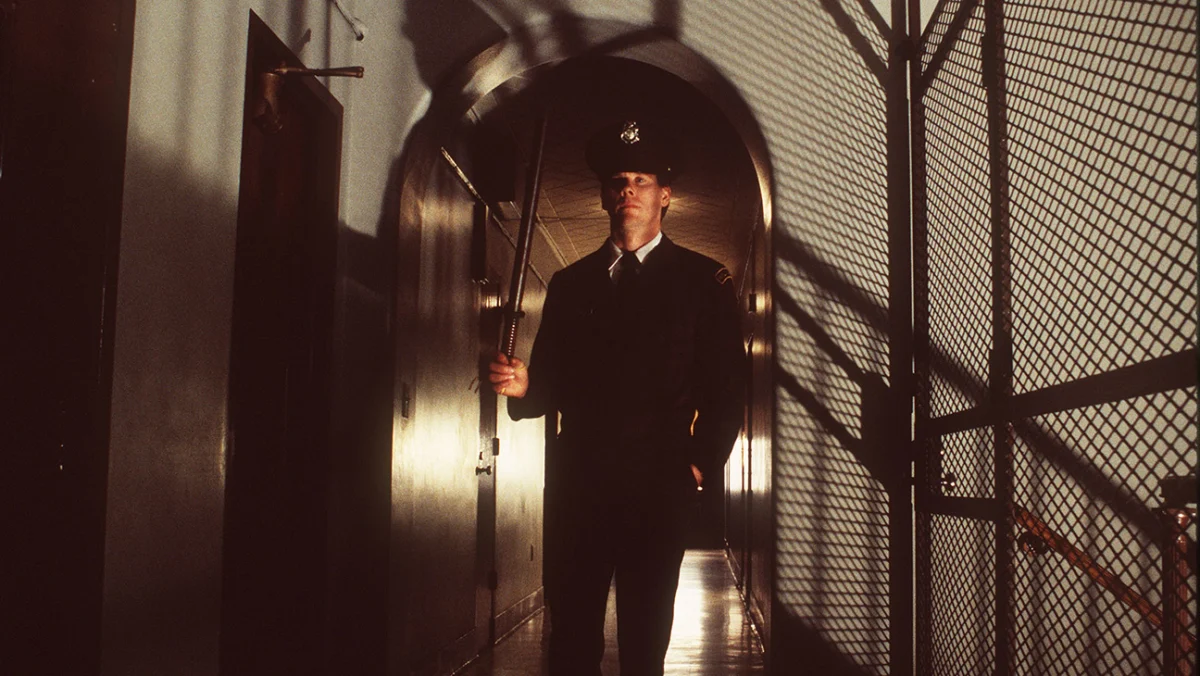
The story then fast-forwards to 1981, a pivotal year that ignites the second act of the narrative. Two of the now-adult friends, John Riley (played by Ron Eldard) and Tommy Marcano (Billy Crudup), encounter their former lead abuser, Sean Nokes (Kevin Bacon), in a bar. Overwhelmed by a potent mix of trauma and rage, they confront him, leading to Nokes’s fatal shooting. This act of vigilante justice lands John and Tommy in prison, setting in motion a complex plan orchestrated by their remaining childhood friends. Lorenzo "Shakes" Carcaterra (Jason Patric), now a low-level clerk at The New York Times, and Michael Sullivan (Brad Pitt), who has risen to the position of Assistant District Attorney, covertly conspire to exonerate their imprisoned friends and, crucially, to expose the deep-seated corruption and systemic abuse within the Wilkinson Home for Boys that irrevocably altered their lives. The film masterfully weaves a tale of revenge, justice, and the unbreakable bonds of friendship forged in the crucible of shared suffering.
The "True Story" Debate: A Distraction from Deeper Themes
One of the most significant controversies surrounding Sleepers upon its 1996 release, and one that Levinson continues to lament, revolved around the veracity of Carcaterra’s claim that the story was "based on a true story." The author consistently maintained that the core events, including the abuse and the subsequent revenge plot, were authentic, despite fictionalizing names, dates, and specific locations to protect identities. This assertion immediately drew scrutiny from investigative journalists and critics who sought to corroborate the details. Many found inconsistencies or a lack of verifiable evidence, leading to widespread debate about the memoir’s factual basis.

Levinson, in his conversation with The Hollywood Reporter, expressed his frustration with this particular line of inquiry, arguing that it fundamentally misdirected public attention from the film’s profound message. "Why does film get caught in this cycle of whether something happened or didn’t happen? It’s a story. It wasn’t the craziest, weirdest thing you’ve ever imagined," Levinson stated. He added, "I never quite got that noise that was made at that time. It, in some ways, took away from what the piece was. It doesn’t need to be authenticated in that regard for us to pay attention."
This perspective highlights a recurring tension in filmmaking: the delicate balance between factual accuracy and narrative truth. For Levinson, the "spiritual truth" of Sleepers — its stark portrayal of institutional child abuse and its devastating long-term effects — was paramount. The film arrived at a time when public awareness of child abuse in institutions was growing, making its themes particularly resonant. While the literal accuracy of Carcaterra’s account remained contested, the emotional and psychological realities depicted in Sleepers mirrored countless documented cases of abuse and cover-ups that would later emerge globally, particularly within religious and state-run institutions. The focus on authentication, Levinson implies, allowed audiences and critics to sidestep the discomforting questions the film posed about systemic failures and the dark underbelly of seemingly benevolent institutions. The European market, notably, embraced Sleepers with less emphasis on this particular controversy, leading to significant success there, suggesting a different cultural reception to the film’s narrative power.
Father Bobby’s Perjury: A Nuanced Ethical Dilemma
Another aspect of Sleepers that sparked considerable debate was the character of Father Bobby, played by Robert De Niro. A revered priest and mentor to the four boys, Father Bobby ultimately provides a false alibi on the witness stand, committing perjury to help John and Tommy evade murder charges. Many critics and viewers found this action morally reprehensible, questioning the plausibility of a man of God, especially one swearing on a Bible, engaging in such a deception.
Levinson, however, points to an often-overlooked detail within the film that provides crucial context for Father Bobby’s decision. The film subtly reveals that Father Bobby himself, along with his best friend, spent time at the very same Wilkinson Home for Boys in their youth. While the film doesn’t explicitly state that Bobby was a victim of abuse, it strongly implies that his friend certainly was. This shared history at Wilkinson transforms Father Bobby’s reluctant perjury from a simple act of aiding vigilante justice into a deeply personal and ethically complex stand against the corrupt institution that scarred his past. His lie, therefore, was not merely about saving his childhood friends from prison; it was equally about contributing to the broader objective of exposing and bringing down anyone involved in the cover-up of Wilkinson’s ongoing abuses.
"The discourse got caught up in whether or not a priest would ever lie on the stand. You can certainly have that, but that’s not the point of the movie. It was a much broader piece than that," Levinson explained. He emphasized that the film wasn’t advocating for perjury or vigilantism, but rather presenting a complex narrative where characters are forced to make impossible choices in the face of profound injustice. Father Bobby’s actions underscore the film’s thematic exploration of justice, revenge, and moral compromise in a world where formal systems have failed. His character embodies the idea that sometimes, in the face of monstrous evil, individuals might feel compelled to operate outside conventional morality to achieve a greater good, even if that good is deeply flawed. The film challenges viewers to grapple with these moral ambiguities rather than offering simplistic answers.

The Star-Studded Cast and Creative Collaborations
Sleepers boasted an ensemble cast that reads like a who’s who of 1990s Hollywood, a testament to Levinson’s directorial prowess and the script’s compelling nature. Brad Pitt, coming off critically acclaimed roles in 12 Monkeys and David Fincher’s Seven, lent his considerable star power to the role of Assistant DA Michael Sullivan. Levinson, however, downplayed any direct connection between Pitt’s prior work with Propaganda Films co-founder David Fincher and his casting in Sleepers, noting that "I don’t think it was related, as I remember."
The film also marked a significant collaboration with Robert De Niro, the first of five between the actor and Levinson. De Niro’s portrayal of Father Bobby added immense gravitas to the controversial role. Levinson recounted, "I was thrilled to use him, but I didn’t foresee beyond the first time we worked together. It was great, but I didn’t know what I would be doing and how that would fit into what Bob would be up to." Their subsequent collaborations, including Wag the Dog the following year, emerged serendipitously, suggesting a strong creative synergy.
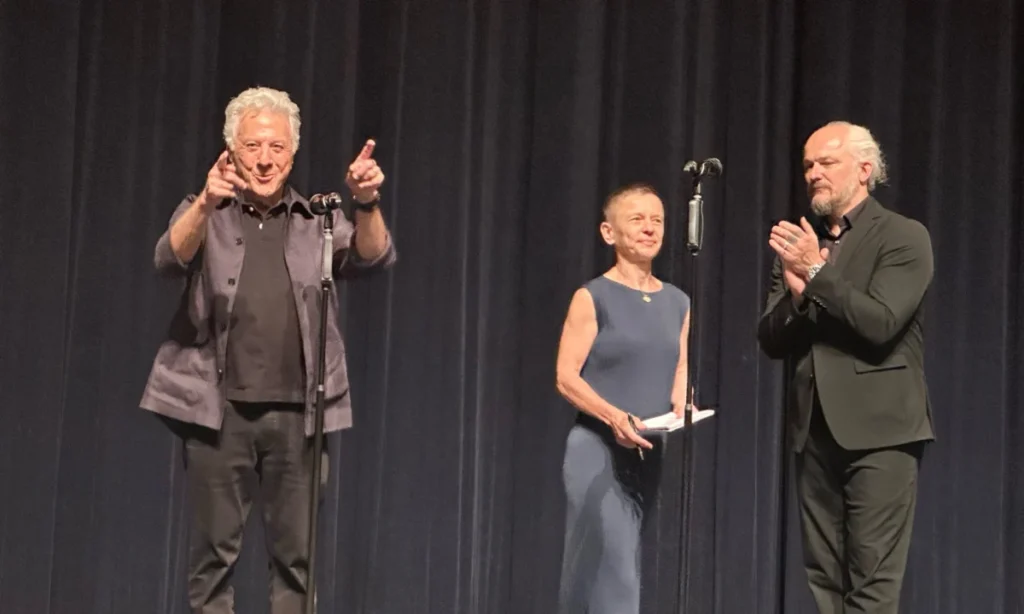
Dustin Hoffman, another frequent collaborator, joined the cast as the alcoholic, dishevelled lawyer Danny Snyder, representing John and Tommy. Sleepers was their second film together after the Oscar-winning Rain Man. Levinson explained his casting choice: "When I wrote the screenplay, I just thought, ‘Dustin would be a good choice here. I’ll see if he wants to do it.’" Hoffman’s nuanced performance, particularly his character’s fidgeting and constant page-flipping in the courtroom, was a deliberate choice by Levinson to convey Snyder’s inner turmoil and alcoholism without explicit exposition. "The physicality of it — as opposed to just sitting there — shows that the guy’s got some issues. How do you do that without somehow spelling it out in some grand fashion?" Levinson remarked.
The film’s haunting score, composed by the legendary John Williams, added another layer of depth. Levinson sought a "touch of [Leonard] Bernstein" for the New York-set drama, believing Williams could capture the necessary emotional complexity. "He’s a great composer, obviously. I thought that he could do quite well with this material, and I felt it needed a touch of [Leonard] Bernstein in a way. It needed just a little hint of it in the air, thinking of New York," Levinson commented, expressing his thrill at Williams’s positive response to the material.
The casting process for the young and adult versions of the characters was intricate. Levinson indicated that they likely cast the adult actors first, then sought out younger counterparts who could convincingly portray their earlier selves, ensuring a cohesive portrayal of character development over time. The opening sequence, focusing on the children’s lives and the subsequent abuse, is pivotal, making the selection of actors like Geoffrey Wigdor, Joe Perrino, Jonathan Tucker, and Brad Renfro crucial for establishing the emotional foundation of the film.

The Demise of Mid-Budget Cinema: A Systemic Concern
Beyond Sleepers, Levinson’s conversation with THR delved into a broader, more systemic issue plaguing Hollywood: the dwindling production of mid-budget films. Many of Levinson’s most acclaimed works, including Sleepers, Rain Man, Diner, and Bugsy, fall within the $15 million to $40 million budget range – a category that major studios have increasingly abandoned in favor of blockbusters or micro-budget independent features.
"Yeah. In general, taking me out of the mix, what’s happening right now is that there’s too much emphasis on the blockbuster, as opposed to, This [smaller] movie can make some money for us, and we can keep moving along," Levinson lamented. He argued that the industry’s singular focus on "extravagant piece[s] that costs $150 million or more" is a mistake. While blockbusters can yield massive returns, they also carry immense financial risk. The mid-budget film, historically, served as a crucial backbone for studios, offering a more stable return on investment and catering to a diverse audience seeking character-driven dramas, comedies, and thrillers that don’t rely on spectacle.
Levinson believes this shift narrows the audience rather than expanding it. "It can also expand your audience rather than sharpening the audience to a smaller number. So my take on it is that I don’t think you can survive by just working in one area predominantly. It narrows your audience year by year. That’s a mistake," he asserted. The economic pressures and the rise of tentpole franchises have pushed original, character-focused stories out of the mainstream studio pipeline, often relegating them to independent financing or streaming platforms.
This trend has significant implications for the talent pipeline within Hollywood. Levinson echoed a common concern that the decline of mid-budget films is directly linked to the struggle for new movie stars to emerge. Historically, these films served as vital proving grounds for actors, allowing them to showcase their range and build a following before graduating to larger productions. With fewer opportunities in this segment, the path to stardom has become more challenging, leading to a situation where "the IP or the high concept is the star," rather than compelling human performances. "Where’s a breakout movie star? There are not many compared to what there used to be, that’s for certain," Levinson observed.
The landscape is further complicated by the proliferation of streaming services and the internet, which offer alternative entertainment avenues that consume vast amounts of audience attention. Levinson noted the societal shift in attention spans, observing how pervasive digital devices detract from immersive storytelling experiences. "You’re not going to get storytelling if you’re texting for hours at a time. Sometimes, you go into a restaurant, and you’ll see two people on their cell phones at the same table. They’re with each other, but they’re elsewhere at the same time. So I can’t figure out that whole behavior, and we’re looking at a breakdown of sorts," he mused. This fragmentation of audience attention adds another layer of challenge for filmmakers striving to capture and hold viewers.

Levinson’s Enduring Vision and Future Projects
Despite the evolving and often challenging industry landscape, Barry Levinson, at 82, remains an active and passionate filmmaker. He firmly rejects the notion that filmmaking is exclusively "a younger man’s game," stating, "Well, I don’t think age is the issue. It’s the ideas. What ideas do you want to do? Are they completely out of fashion? But if you’re basically dealing with the world we’re in, what’s the story that you want to tell? I don’t think it’s based on anything other than that."
Levinson currently has "two or three projects" in development, with budgets ranging from $15 million to $20 million – precisely the kind of mid-range films he champions. He emphasizes his ability to work quickly and efficiently, citing past successes like The Humbling with Al Pacino (shot for $2 million in his own home) and The Bay (also $2 million). His philosophy remains rooted in the power of storytelling, regardless of the financial scale. "So I have no problem working in all ways as long as I know the story that I want to tell," he affirmed.
The current climate of industry shifts, including potential mergers and acquisitions, adds an element of unpredictability to film financing and distribution. However, Levinson’s resolve to continue making films remains unshaken. He represents a generation of filmmakers committed to diverse narratives and character studies, even as the industry increasingly prioritizes large-scale blockbusters. His reflections on Sleepers serve not only as a retrospective on a provocative film but also as a broader commentary on the artistic and commercial integrity of cinema in a rapidly changing world.
Sleepers is now available on 4K/Blu-ray, offering audiences a chance to revisit a film that, despite its initial controversies, continues to provoke thought and discussion about justice, trauma, and the enduring power of friendship. Levinson’s enduring perspective reminds us that the true impact of a story often transcends debates over its literal truth, residing instead in its ability to illuminate universal human experiences and societal challenges.