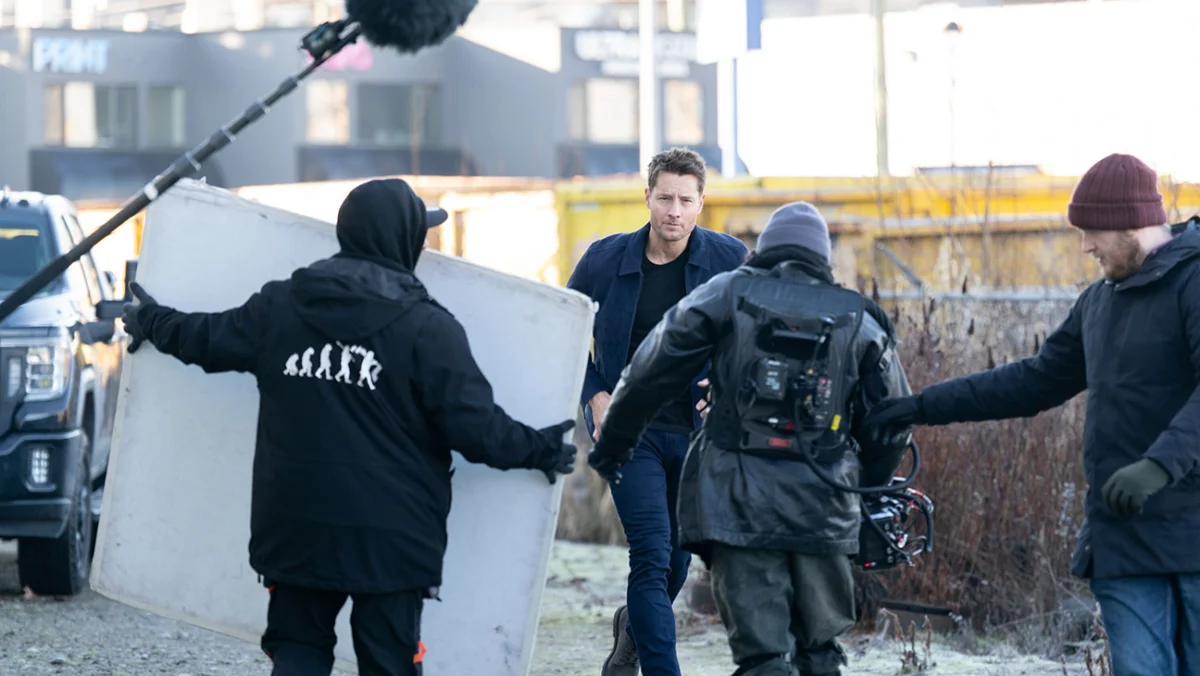
The provincial government of British Columbia has significantly intensified its efforts to maintain Vancouver’s standing as a premier global production hub by implementing a substantial increase in tax incentives aimed at attracting high-budget international projects. In a strategic legislative move finalized in late 2024, the province raised the basic tax rebate for foreign film and television productions from 28 percent to 36 percent. This fiscal adjustment serves as a cornerstone for a broader economic strategy designed to catalyze a rebound in local industry activity following a period of global labor unrest and shifting production trends within the entertainment sector. Early indicators suggest the policy shift is yielding immediate results, with a surge in high-profile network television series and major animation investments now flowing back into the region.
The decision to enhance the Production Services Tax Credit (PSTC) comes at a critical juncture for the British Columbia film industry. As the "Streaming Wars" era of unfettered spending transitions into a more disciplined fiscal environment, jurisdictions worldwide are competing fiercely for a shrinking pool of "Peak TV" budgets. By increasing the labor-based credit, British Columbia has positioned itself more aggressively against competing hubs such as Ontario, Georgia, and the United Kingdom, ensuring that the infrastructure and talent pool built over four decades in Vancouver remain utilized at capacity.
The Resurgence of Network Television in Vancouver
The impact of these revised incentives is most visible in the current production schedule for major U.S. broadcast networks. According to industry tallies, five significant broadcast series are currently filming in the Vancouver area for the 2024-2025 season. This includes heavy hitters from CBS such as the high-rated drama Tracker and the firefighting procedural Fire Country. Fox has also committed heavily to the region with the workplace comedy Animal Control and the detective drama Murder in a Small Town. Furthermore, the highly anticipated revival of the medical comedy Scrubs for ABC has chosen Vancouver as its primary production base.
This concentration of network television is vital for the local economy because broadcast series typically offer longer production cycles than limited series or feature films. A standard 22-episode network season can provide stable employment for hundreds of local crew members for up to nine months of the year. The return of these "tentpole" productions signals a renewed confidence from major studios like Disney, Paramount, and Fox in the reliability and technical proficiency of Vancouver’s labor force.
Animation and Visual Effects: A Strategic Growth Pillar
Beyond traditional live-action production, British Columbia is witnessing a historic expansion in its animation and visual effects (VFX) sectors. In April 2024, Netflix reached a significant milestone by officially opening the Netflix Animation Studios in Vancouver. The facility, a massive 110,600-square-foot complex, is dedicated to the development and production of animated feature films, marking a permanent footprint for the streaming giant in the city. The studio’s flagship project is Steps, a reimagining of the Cinderella story centered on the perspective of the stepsisters. The production features a high-profile voice cast including Ali Wong, Stephanie Hsu, and Amanda Seyfried, underscoring the level of prestige projects now being helmed entirely within British Columbia.
Simultaneously, Cinesite, a global leader in VFX and animation, has launched an aggressive hiring campaign for its Vancouver studio. The company is ramping up production on an untitled animated feature for Skydance Animation and Netflix, a project being shared with its sister studio in Montreal. Antony Hunt, CEO of the Cinesite Group, noted that the industry is finally seeing the fruits of its resilience. Having navigated two years of extreme volatility, the company is now witnessing a robust flow of high-quality projects. This follows Cinesite’s successful completion of Spellbound for the Skydance-Netflix partnership and the ongoing work on Ray Gunn, the latest project from acclaimed The Incredibles director Brad Bird.
Katharine Pavoni, Deputy Director of the British Columbia Film Commission, emphasizes that the province’s long history as "Hollywood North" has created a "one-stop-shop" environment that few other regions can replicate. The integration of physical production, post-production, VFX, and animation allows studios to keep entire pipelines within a single geographic area, maximizing efficiency and tax credit eligibility.
Chronology of the Rebound: From Strike to Recovery
The current revitalization of the Vancouver film scene must be viewed through the lens of the industry-wide disruption that occurred in 2023. The dual strikes by the Writers Guild of America (WGA) and the Screen Actors Guild (SAG-AFTRA) effectively shuttered global production for nearly six months, leaving Vancouver’s soundstages empty and thousands of local technicians out of work.
- May – November 2023: The dual strikes in Los Angeles halt almost all U.S.-backed productions in Vancouver. The local industry experiences a "bruising impact," with ancillary businesses like catering, equipment rentals, and transportation suffering alongside crew members.
- Early 2024: Production begins to trickle back as contracts are ratified. However, major studios remain cautious, implementing cost-cutting measures and reducing the volume of greenlit projects.
- April 2024: Netflix opens its dedicated animation studio in Vancouver, signaling long-term institutional investment despite the broader industry slowdown.
- Late 2024: The British Columbia government officially implements the tax credit increase from 28% to 36% for foreign productions. This move is designed to make the province the most attractive option for the 2025 production cycle.
- Late 2024 – Early 2025: Major networks confirm five series for Vancouver, and the animation sector enters a hiring boom.
While the current activity levels have not yet returned to the "go-go" years immediately following the COVID-19 pandemic—when a backlog of content led to record-breaking spending—the growth is characterized by a more sustainable and diversified trajectory.
Educational Adaptation and the Evolution of the Workforce
As the industry evolves, so too must the institutions that feed its labor market. The Vancouver Film School (VFS), a primary pipeline for talent into the local and global film sectors, has introduced significant changes to its curriculum to address the dual challenges of industry volatility and technological advancement.
Jonathan Bell, Managing Director of VFS, asserts that Vancouver’s status as a hub for film, television, and video games is permanent. However, he acknowledges that the "Peak TV" era has ended, requiring a more flexible approach to professional training. In response to the rise of Artificial Intelligence (AI) and the shifting needs of international students, VFS has launched a new hybrid production model. This program allows students to complete portions of their training—specifically in 3D animation, VFX, screenwriting, and digital design—remotely before transitioning to the Vancouver campus for intensive, hands-on studio work.
This hybrid approach is designed to mitigate the high cost of living in Vancouver for international students while ensuring they still receive the "irreplaceable" experience of collaborating in a professional production environment. By modernizing its educational delivery, VFS aims to ensure that the next generation of creators is equipped to handle the integration of AI tools and the collaborative nature of modern digital pipelines.
Economic Implications and Future Outlook
The film and television industry is a vital engine for the British Columbia economy, historically contributing over $3 billion annually to the provincial GDP. The increase in tax credits represents a calculated gamble by the provincial government: while the higher rebates represent a direct cost to the treasury, the resulting influx of foreign investment and the retention of high-paying technical jobs are expected to provide a net positive return.
The focus on animation and post-production is particularly strategic. These sectors are less susceptible to the seasonal weather fluctuations that can impact live-action filming and provide year-round employment. Furthermore, the specialized skills required for VFX and animation are highly transferable to the burgeoning video game and virtual reality industries, further diversifying the province’s tech-driven economy.
However, challenges remain. The global landscape for film production is increasingly fragmented. Jurisdictions like New Jersey and Oklahoma in the United States, as well as countries like Australia and Hungary, have recently enhanced their own incentive programs. British Columbia’s 36 percent credit keeps it competitive, but the industry’s long-term health will depend on its ability to maintain its "one-stop-shop" status—offering not just tax breaks, but world-class talent, state-of-the-art facilities, and a supportive regulatory environment.
As Vancouver enters 2025, the narrative of the local film industry is one of cautious optimism. The major studios and streamers have returned in strength, the infrastructure is expanding, and the provincial government has signaled its unwavering support through fiscal policy. While the era of "Peak TV" may have passed, Vancouver’s role as the indispensable backlot for Hollywood appears more secure than ever.