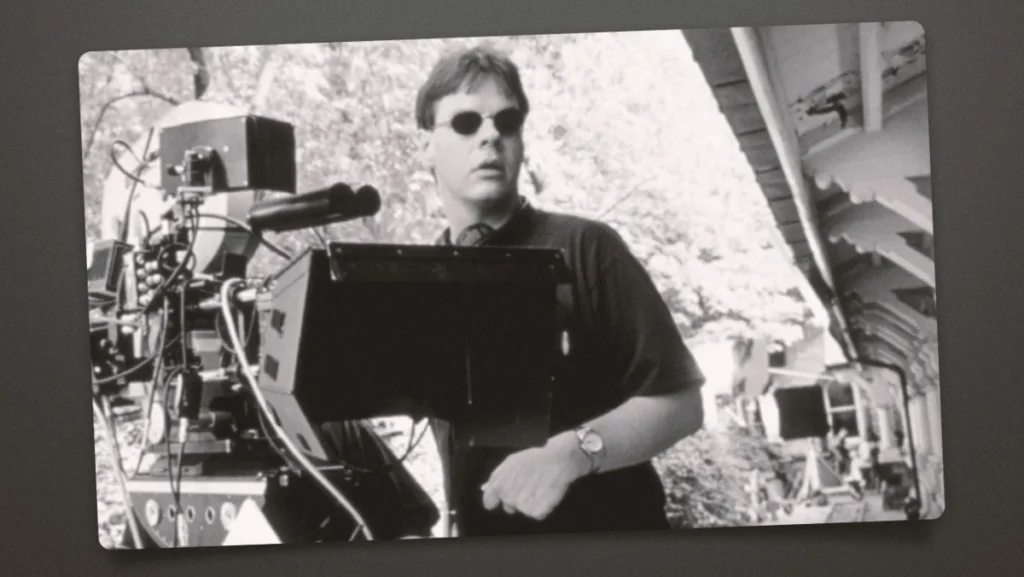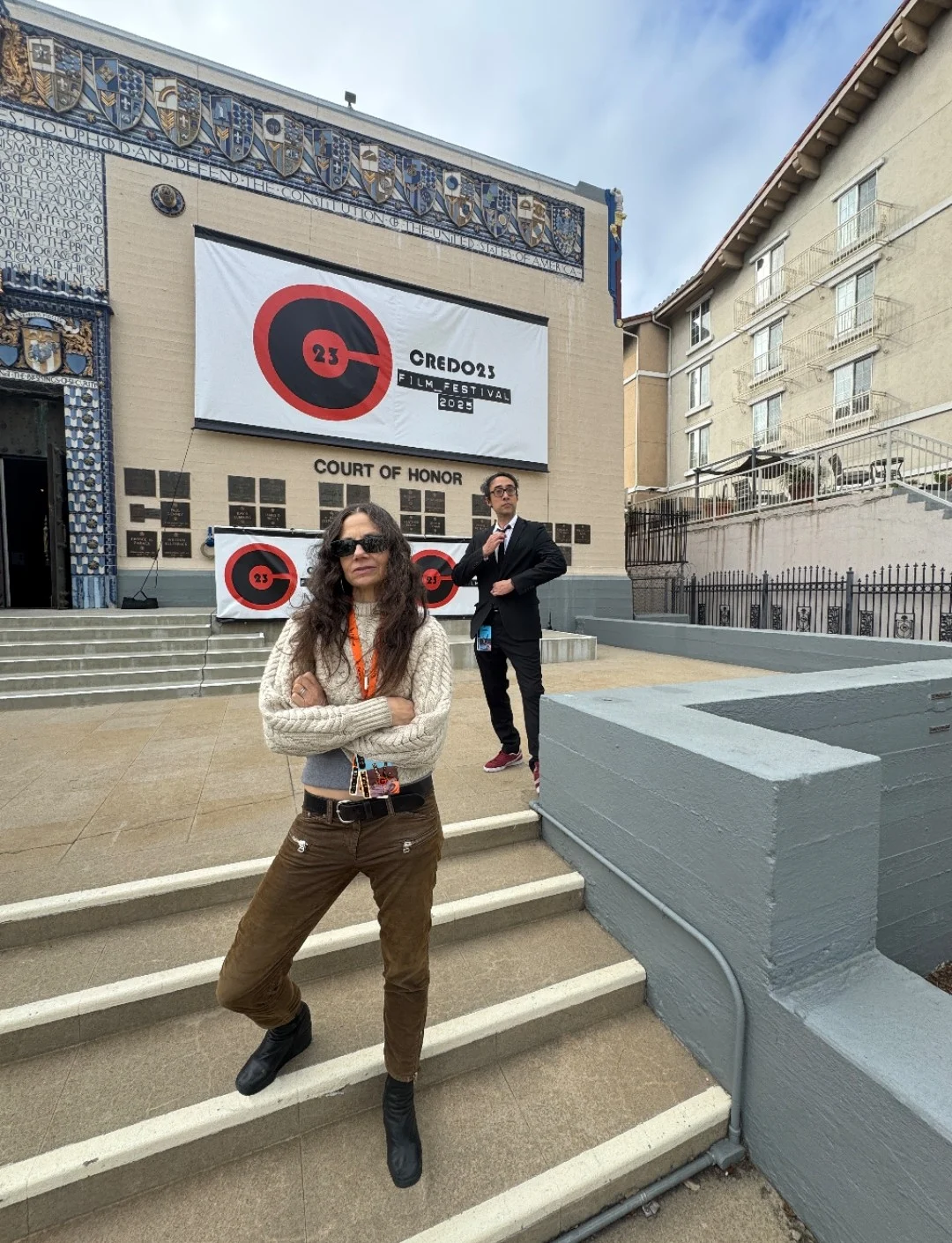
In a significant move championing authentic human artistry, Justine Bateman’s Credo 23 Film Festival, a pioneering initiative dedicated exclusively to human-made cinematic works free from artificial intelligence, has transitioned its carefully curated selection to a global streaming platform. This expansion marks a pivotal moment in the ongoing discourse surrounding AI’s role in creative industries, offering audiences worldwide access to a collection of films and discussions that underscore the irreplaceable value of human ingenuity and craft. The digital "room," accessible via RoomC23.com, will provide unlimited viewing opportunities through July 10, 2024, for a one-time purchase of a $40 "key." This strategic shift aims to broaden the reach of Bateman’s human-centric mission, making the festival’s distinctive offerings available to a much wider demographic beyond its physical Hollywood gatherings.
The Digital Gateway to Human Creativity
The launch of the Credo 23 streaming platform is a direct response to the growing demand for authentic content and a strategic effort to disseminate the festival’s core message. Bateman, a long-standing advocate for human creators in the face of burgeoning AI technologies, articulated the rationale behind this digital expansion to The Hollywood Reporter, stating, "For audiences who weren’t able to make it to the Credo 23 Film Festival, we want to bring our highly-curated collection of accepted films, finalists, panels and Q&As straight to them." This initiative transforms a localized event into an accessible global showcase, allowing cinephiles and industry professionals alike to engage with the principles and products of the "no-AI" movement from anywhere with an internet connection. The online repository features a robust catalog of 44 films and events, encompassing a diverse array of short films, compelling feature-length narratives, and insightful special talks. Notable features include Crystal Gross, starring Lukas Haas, and Bateman’s own directorial effort, Feel, which features David Duchovny. The platform also hosts discussions with influential figures who align with Bateman’s philosophy, such as acclaimed directors Sean Baker and Reed Morano, and Emmy-winning writer-producer Matthew Weiner, whose participation lends significant weight to the festival’s human-centric ethos. These contributions highlight a collective industry concern and a desire to actively support alternatives to AI-driven content creation.
A Principled Stand: Justine Bateman’s Vision Against AI
Justine Bateman’s venture into the "no-AI" film festival landscape is not merely an event but an extension of a deeply held philosophical stance against the encroachment of generative artificial intelligence into creative domains. Her position is unequivocally clear: "Generative AI has no place in filmmaking – based on stolen work, it only regurgitates the past." This statement encapsulates the central argument of the Credo 23 movement, asserting that AI, particularly in its current generative forms, relies fundamentally on existing human-created works for its training data, thus inherently lacking originality and intellectual property rights. Bateman’s critique extends beyond mere technological skepticism; it delves into the ethical implications of AI’s data acquisition and its potential to stifle genuine innovation by merely reconfiguring existing patterns rather than forging new artistic expressions. She contends that while AI might offer superficial ease and speed in content generation, it ultimately leads to a proliferation of derivative "volume content" – a term she uses to describe a deluge of uninspired, algorithmically produced media that lacks the nuanced depth and emotional resonance inherent in human-made art. This philosophy forms the bedrock of the Credo 23 organization, which predates the festival itself, having been established three years prior with the explicit aim of certifying films as AI-free. The organization serves as a crucial validator, ensuring that cinematic works adhere to stringent standards of human creation, providing a transparent assurance for both creators and audiences.
Genesis and Evolution: The Credo 23 Journey
The journey of Credo 23 from a foundational organization to a globally accessible streaming platform illustrates a strategic and determined progression. The Credo 23 organization was established approximately three years ago, initially focusing on the certification of films as entirely human-made, free from any AI input throughout their production lifecycle. This early phase laid the groundwork for defining and upholding the principles that would later characterize the festival. The concept for the Credo 23 Film Festival, a physical gathering devoted to showcasing these "handmade human works," was launched by Bateman in 2023. The inaugural festival served as a proof of concept, demonstrating the appetite within the independent film community and among discerning audiences for content that explicitly rejected AI assistance. Building on this initial success, the second edition of the festival was held in Hollywood in May 2024. This event garnered significant industry attention, drawing support from prominent sponsors such as Kodak, a company deeply rooted in traditional filmmaking and physical media, whose partnership symbolically reinforced the festival’s commitment to tangible, human-driven processes. The consistent growth and increasing recognition of the festival underscored the viability and necessity of such a platform. The latest development – the launch of the digital streaming "room" – represents a natural and logical evolution. It transforms a geographically limited event into an enduring, accessible resource, broadening the festival’s impact and allowing its message to resonate with a much wider, international audience. This chronology reflects a carefully planned strategy to build a movement, first by establishing a clear definition and certification, then by creating a physical showcase, and finally by leveraging digital platforms for widespread dissemination.
Curated Content: A Glimpse into the Festival’s Offerings
The cinematic works presented at the Credo 23 Film Festival, now available for streaming, embody the "handmade human work" ethos championed by Justine Bateman. The festival’s programming is distinguished by its embrace of a raw, authentic aesthetic, often drawing comparisons to the early days of the Sundance Film Festival. This comparison suggests a preference for independent, auteur-driven projects that prioritize artistic vision, narrative integrity, and emotional depth over commercial polish or algorithmic predictability. Such films frequently emerge from passionate, often resource-constrained production environments, where every creative decision is meticulously crafted by human hands and minds. The selection spans a wide spectrum of genres and formats, including a diverse collection of short films that offer concise yet powerful narratives, alongside feature films that delve into complex themes and character studies. The inclusion of Bateman’s own Feel and Lukas Haas’s Crystal Gross highlights the commitment of established talents to this anti-AI movement. Beyond the visual storytelling, the festival’s "special talks" offer invaluable insights into the creative process and the broader implications of AI. The participation of figures like Sean Baker, known for his distinctive independent films shot on unconventional devices; Reed Morano, an acclaimed cinematographer and director; and Matthew Weiner, celebrated for his intricate storytelling in television, signifies a strong endorsement from influential voices within the industry. These talks provide a crucial educational component, fostering dialogue about the future of filmmaking, the preservation of human artistry, and the ethical responsibilities of creators in the digital age. Furthermore, a distinctive feature of Credo 23 is its commitment to the financial well-being of its participating artists. Uniquely, the festival funnels all profits directly back to the filmmakers in the form of grants for future projects. This model not only supports the creation of more human-made films but also underscores a solidarity with artists, providing tangible resources in an industry increasingly grappling with the economic uncertainties posed by AI automation.
The Broader Canvas: AI’s Impact on Hollywood and the Arts
Justine Bateman’s Credo 23 Film Festival operates within a broader context of profound shifts and anxieties gripping Hollywood and the wider creative industries concerning the rapid advancement of artificial intelligence. The debate around AI’s role in content creation intensified dramatically during the 2023 Writers Guild of America (WGA) and SAG-AFTRA strikes, where AI use, particularly in scriptwriting and digital replication of actors’ likenesses, emerged as a major contentious point in negotiations. These strikes underscored a widespread fear among creatives that AI could devalue their work, threaten their livelihoods, and erode intellectual property rights. While many industry figures express concern, Bateman stands out as one of the few who has translated apprehension into concrete action, building a business and an organization specifically designed to counter the automation of art. The speed at which generative AI tools have evolved, from advanced text generators capable of drafting screenplays to sophisticated image and video creation platforms like Midjourney and OpenAI’s Sora, has ignited a global conversation about originality, authorship, and the very definition of creativity. These tools promise unprecedented efficiency and cost reduction, but they also raise critical questions about the uniqueness of content, the potential for market saturation with algorithmically similar products, and the ethical sourcing of the vast datasets used to train these AI models. Bateman’s initiative positions itself as a counter-narrative, a deliberate effort to carve out a space where the human touch remains paramount and explicitly celebrated. Her philosophy posits that while there might be an initial "thirst" for the novelty and ease of AI-generated content, audiences will eventually "tire of such automation," especially as the ease of creation leads to what she terms "higher mountains of slop." This implies a future where a glut of mediocre, AI-produced content will highlight the scarcity and value of truly original, human-driven works.
Economic and Ethical Underpinnings of the "No-AI" Movement
The Credo 23 movement is deeply intertwined with significant economic and ethical considerations that resonate throughout the entertainment industry. Economically, the rise of AI tools presents a dual challenge: the potential for job displacement and the devaluing of human labor. If AI can generate scripts, synthesize music, animate visuals, or even replicate actor performances at a fraction of the cost and time, the demand for human writers, artists, musicians, and actors could diminish. This creates an urgent need for new economic models that protect and compensate human creators. Credo 23’s model of distributing all profits as grants to filmmakers directly addresses this, establishing a micro-economy within the broader industry that prioritizes artist support and sustainable creative practice. Ethically, the "no-AI" stance hinges on the principle of intellectual property and fair compensation. The argument that generative AI is "based on stolen work" stems from the fact that many AI models are trained on vast datasets of existing copyrighted material without explicit permission or compensation to the original creators. This raises fundamental questions about copyright infringement, artistic attribution, and the rights of creators in the digital age. Bateman and her supporters contend that using such data without consent constitutes a form of theft, making the output ethically compromised. By actively rejecting AI, Credo 23 advocates for a filmmaking ecosystem built on respect for creators’ rights and fair practices. This also has implications for the consumer, who, according to Bateman, "deserves to be entertained with dedicated, high-quality, human filmmaking efforts." This statement positions the "no-AI" label not just as an ethical standard for creators, but also as a quality assurance for audiences, suggesting that truly dedicated, high-quality work can only emerge from human intention and effort.
A Beacon for Authentic Storytelling
In an era increasingly dominated by algorithms and the promise of automated content creation, Justine Bateman’s Credo 23 Film Festival and its new streaming platform serve as a vital counter-narrative and a beacon for authentic storytelling. Bateman hopes to establish what she describes as "a tunnel through the current distraction of ‘volume content’ and the near absence of curation." This vision speaks to a desire to cut through the noise of an oversaturated digital landscape, offering a curated alternative where quality and human intentionality are paramount. The festival aims to re-emphasize the importance of the human element in art – the unique perspectives, emotional depth, and inherent flaws that contribute to compelling narratives and meaningful experiences. By actively promoting films that are guaranteed to be AI-free, Credo 23 is not merely resisting technological change; it is championing a specific value system for art. It proposes that the true value of creative work lies not in its efficiency of production or its adherence to popular trends, but in its human origin, its capacity for genuine expression, and its ability to connect with an audience on a deeply human level. The success of this initiative, both as a physical festival and now as a streaming platform, will offer crucial insights into the market’s demand for verified human-made content and could potentially influence broader industry standards and audience expectations for ethical and authentic filmmaking in the years to come.
Looking Ahead: The Future of Human-Centric Cinema
The expansion of the Credo 23 Film Festival into the streaming domain signifies more than just a new distribution channel; it represents a strategic move to solidify and expand a nascent movement. As AI technologies continue to advance, the distinction between human-made and AI-generated content is likely to become increasingly blurred, making initiatives like Credo 23 potentially more crucial. The festival’s commitment to transparency, through its "no-AI" certification, could pave the way for a new form of consumer labeling in entertainment, similar to "organic" or "fair trade" labels in other industries. This could empower audiences to make informed choices based on their values and preferences regarding the origin of their content. The ongoing engagement of influential figures like Sean Baker and Matthew Weiner, coupled with the sponsorship of industry stalwarts like Kodak, suggests that the "no-AI" movement is gaining traction beyond just its founder. This collective support indicates a growing recognition within Hollywood that preserving the human element in filmmaking is not just an artistic ideal but a critical concern for the industry’s future integrity and cultural significance. As the Credo 23 streaming room remains open through July 10, it offers a tangible opportunity for audiences worldwide to participate in this burgeoning movement, to experience cinema crafted entirely by human hands and minds, and to contribute to a dialogue that will undoubtedly shape the future of storytelling. Justine Bateman’s vision, once a solitary voice, is now manifesting into a tangible, accessible platform for a global audience, demonstrating that the pursuit of authentic human artistry in the age of AI is not only viable but increasingly vital.