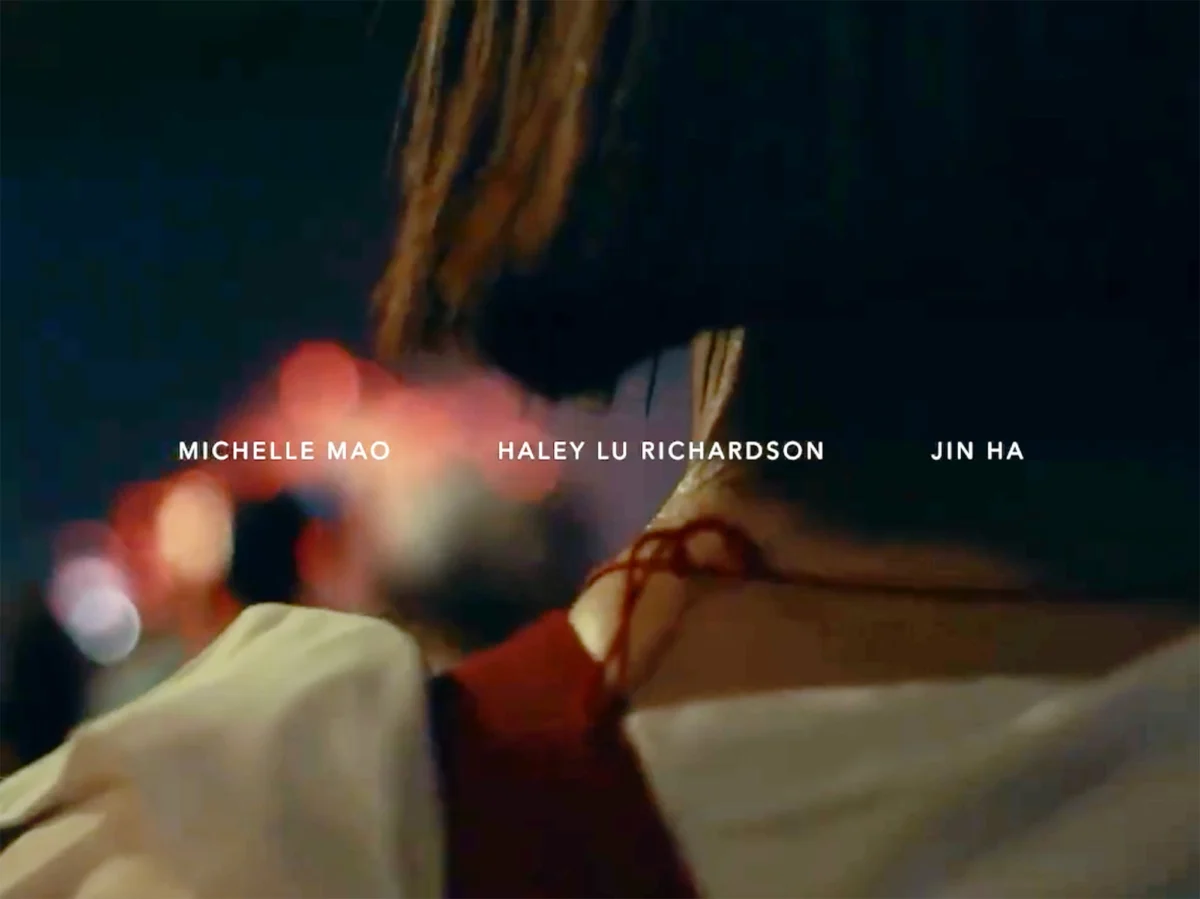
The official trailer for Zi, the latest cinematic endeavor from acclaimed director Kogonada, has been released to the public, offering an atmospheric and contemplative glimpse into a project that was largely shrouded in mystery until its debut at the 2026 Sundance Film Festival. Filmed in secret on the streets of Hong Kong, the movie marks a significant return to the director’s roots in intimate, character-driven storytelling while exploring complex themes of temporal displacement and identity. The trailer, which premiered on April 24, 2026, opens with the evocative question, "Am I in the present or the past?"—a line that serves as the philosophical anchor for the narrative and sets the tone for what critics have described as a "cinematic poem."
A Narrative of Temporal Dislocation and Connection
Zi centers on a young woman, portrayed by Michelle Mao, who finds herself haunted by inexplicable visions of her future self. This supernatural or psychological premise is grounded by the protagonist’s interactions within the vibrant, dense urban landscape of Hong Kong. Her life takes an unexpected turn when she encounters a stranger, played by Jin Ha, leading to a series of events over the course of a single night that challenge her perception of time and destiny.
The film’s narrative structure appears to lean heavily into the concept of recursivity. According to the official program notes from the Sundance Film Festival, Kogonada utilizes a "wavelike confidence" to explore the sense of being "unmoored" in one’s own life. The story is not merely a linear progression but a meditation on personal memory and existential anxiety, themes that have become hallmarks of Kogonada’s filmography. The inclusion of Haley Lu Richardson, a frequent collaborator of the director, adds a layer of continuity to the project, as she joins Mao and Ha in portraying what the festival describes as "transitory misfits."
The Creative Evolution of Kogonada
To understand the significance of Zi, it is necessary to look at the trajectory of Kogonada’s career. The Korean-American filmmaker first gained prominence as a video essayist, known for his meticulous analysis of the visual languages of masters like Yasujirō Ozu, Wes Anderson, and Alfred Hitchcock. This deep academic understanding of cinema transitioned into a celebrated directorial career with his 2017 debut, Columbus. That film was praised for its architectural precision and the quiet, intellectual chemistry between its leads, Haley Lu Richardson and John Cho.

Kogonada followed his debut with the 2022 science fiction drama After Yang, which explored artificial intelligence, grief, and the nature of memory. Starring Colin Farrell and once again featuring Haley Lu Richardson, After Yang solidified Kogonada’s reputation as a director capable of infusing high-concept premises with profound human emotion. Between his feature films, Kogonada has also made significant contributions to television, directing episodes of the sprawling historical drama Pachinko and the Star Wars series The Acolyte.
With Zi, Kogonada appears to be merging the minimalist intimacy of Columbus with the speculative, philosophical inquiries of After Yang. The decision to film in Hong Kong adds a new aesthetic dimension to his work, moving away from the manicured suburbs of Indiana or the sterile futurism of his previous projects and into the kinetic, neon-lit energy of one of the world’s most photographed cities.
Production Chronology and Secret Development
The production of Zi was notable for its unconventional approach. Unlike the high-profile development cycles of A Big Bold Beautiful Journey—another Kogonada project involving major stars—Zi was produced with a lean, mobile crew. Industry reports indicate that the production moved "guerrilla-style" through Hong Kong, capturing the city’s authentic atmosphere without the disruption typical of large-scale film sets.
This clandestine approach allowed the creative team, including producers Chung An, Christopher Radcliff, and Benjamin Loeb, to maintain a high degree of artistic purity. Loeb, who served as the cinematographer, is known for his striking visual work on films like Mandy and After Yang. His involvement suggests that Zi will maintain the high standard of visual composition that audiences have come to expect from a Kogonada production. The film was written, directed, and edited by Kogonada himself, ensuring that his specific vision for the pacing and rhythm of the story remained intact from conception to the final cut.
Critical Reception at the 2026 Sundance Film Festival
Zi premiered in the early months of 2026 at the Sundance Film Festival, where it elicited a polarized but passionate response from the international press. The "mixed" nature of the reviews stems largely from the film’s refusal to adhere to traditional narrative payoffs.

Critics who championed the film praised its "dream-like vibes" and its ability to cultivate a "sense of peace" amidst the chaos of its setting. These reviewers highlighted the performances of Mao and Ha, noting that their chemistry felt organic and deeply felt. On the other hand, some detractors found the film’s pacing to be "meandering and messy," suggesting that the experimental focus on "recursivity" and "temporal loops" occasionally came at the expense of narrative clarity.
Despite these divisions, there was a consensus regarding the film’s technical mastery. The "city symphony" aspect of the film—a term used by The Film Stage to describe its poetic portrayal of Hong Kong—was universally lauded. The film’s ability to capture the soul of the city while focusing on the internal lives of its characters has positioned it as a significant entry in the 2026 independent film calendar.
Thematic Analysis: Recursivity and the Self
The title Zi holds potential thematic significance. In various linguistic and cultural contexts, particularly within East Asian studies, "Zi" can refer to the "self" or "from/beginning." This aligns with the film’s exploration of a woman facing her "future self." Kogonada’s fascination with how humans interact with time—whether through the preservation of memory in After Yang or the lingering influence of architecture in Columbus—reaches a new peak in Zi.
The concept of recursivity, mentioned in the Sundance introduction, suggests a story that folds back on itself. This narrative device is often used in cinema to represent trauma, obsession, or the feeling of being stuck in a specific emotional state. By applying this to a "stylish jaunt" through Hong Kong, Kogonada creates a contrast between the external movement of a city that never sleeps and the internal stasis of a character grappling with her own existence.
Supporting Data and Industry Implications
The release of the Zi trailer comes at a time when independent cinema is increasingly leaning into "surprise" releases and secret productions to bypass the traditional hype cycle. By the time the public was aware of Zi, it had already been completed and accepted into a major festival. This strategy mirrors successful releases by directors like Steven Soderbergh and David Lowery, who have utilized smaller crews to maintain creative control and speed up the production process.

The involvement of Haley Lu Richardson in a producing capacity, alongside her acting role, further signals the growing trend of actors taking greater agency in the development of independent projects. Richardson’s ongoing partnership with Kogonada has become one of the most reliable director-actor collaborations in modern indie film, often compared to the likes of Greta Gerwig and Noah Baumbach or Sofia Coppola and Kirsten Dunst.
Future Outlook and Distribution
Following its Sundance premiere, Zi is scheduled to screen at the Museum of the Moving Image (MoMI) as part of their "First Look 2026" series. This program is dedicated to showcasing innovative new cinema that pushes the boundaries of the medium, making it a fitting venue for Kogonada’s latest work.
As of late April 2026, a wide theatrical or streaming release date has not yet been finalized. However, industry insiders suggest that the film is currently being courted by several boutique distributors known for handling "prestige" indie titles, such as A24, Neon, or MUBI. Given Kogonada’s previous relationship with A24 on After Yang, many expect a similar partnership for the domestic distribution of Zi.
The trailer release serves as a crucial step in building momentum for the film’s eventual commercial rollout. While its "messy" and "meandering" qualities may limit its appeal to a general audience, its status as a "sensitive cinematic poem" ensures that it will remain a point of discussion among cinephiles and critics throughout the year. For an audience increasingly fatigued by formulaic blockbusters, Kogonada’s Zi offers a challenging, beautiful, and deeply personal alternative that reaffirms the power of the moving image to explore the mysteries of the human condition.