Following the widespread critical and commercial success of his 2018 debut feature, Song Lang, director Leon Le has made a highly anticipated return to the cinematic landscape with his sophomore film, Ky Nam Inn. Premiering globally in the esteemed Special Presentations section of the 50th Toronto International Film Festival (TIFF), the work immediately garnered significant attention for its evocative portrayal of 1980s post-war Saigon, continuing Le’s profound exploration of memory, artistic expression, and the intricate tapestry of human intimacy. Shot entirely on authentic 35mm film, a deliberate choice that contributes significantly to its nostalgic aesthetic, Ky Nam Inn not only heralds the long-awaited comeback of acclaimed actress Do Thi Hai Yen but also unequivocally solidifies Le’s standing as one of the most distinctive and compelling voices in contemporary Vietnamese cinema.
The film’s narrative unfolds in the mid-1980s, a pivotal and complex period in Vietnam’s history. This era was characterized by a nation grappling with the profound and lingering scars of a protracted war, simultaneously inching towards a fragile yet hopeful renewal. The socio-economic landscape was undergoing a gradual transformation, anticipating the sweeping reforms of Đổi Mới that would officially begin in 1986. Within this charged historical backdrop, Ky Nam Inn introduces Khang, a contemplative young translator. His professional assignment is to produce a new Vietnamese rendition of Antoine de Saint-Exupéry’s timeless philosophical novella, The Little Prince. Upon his arrival in the bustling, yet still recovering, city of Saigon to commence his work, Khang secures lodging in a dilapidated collective housing unit. It is within the confines of this crumbling, communal dwelling that he encounters Ky Nam, a widowed, older woman originating from the southern regions of Vietnam, who supports herself and contributes to the community by preparing meals for the various tenants.
Initially, a palpable wariness exists between Khang and Ky Nam, a natural consequence of their disparate backgrounds and the cautious atmosphere of the time. However, their tentative companionship gradually takes root, blossoming into a deep and unexpected bond that transcends conventional barriers of age, the pervasive shadow of grief that touches both their lives, and the challenging circumstances that define their existence. A particularly poignant moment that accelerates this connection occurs when Ky Nam sustains an injury, prompting Khang to eagerly volunteer his assistance in the kitchen, a gesture that breaks down their initial reserves and fosters a burgeoning sense of mutual reliance and affection.
The Socio-Political Canvas of 1980s Vietnam
To fully appreciate the layered context of Ky Nam Inn, an understanding of Vietnam in the mid-1980s is crucial. A decade after the fall of Saigon and the reunification of the country in 1975, Vietnam was navigating a period of immense challenge and ideological consolidation. The immediate post-war years had been marked by economic hardship, collectivization efforts, and a significant exodus of refugees. By the mid-1980s, while the government maintained tight control, there was a growing recognition of the need for economic reform. The period was characterized by a delicate balance between strict socialist policies and nascent market-oriented changes. Culturally, the authorities remained highly restrictive, particularly concerning elements perceived to be associated with the former South Vietnamese regime or Western influences. This suppression extended to art, music, and public expression, creating an atmosphere where personal freedoms were often curtailed, and subtle acts of dissent or remembrance carried significant risk. This historical reality forms an invisible, yet potent, character in Le’s film, subtly shaping the lives and interactions of its protagonists.
Meanwhile, within the microcosm of the collective housing unit, the character of Luyen emerges as a significant force. Portrayed as the building’s resident gossip, Luyen takes a keen, almost intrusive, interest in the newcomer, Khang. This fascination fuels her repeated and often vitriolic outbursts directed at Ky Nam, who, in stark contrast, endures Luyen’s antagonism with a remarkable, almost stoic, calm. Luyen’s character is not merely a source of interpersonal conflict; she also subtly introduces one of the film’s more pronounced political dimensions. Her behavior and rhetoric often reflect the underlying, yet persistent, tensions that existed between “Southerners” and “Northerners” in the years immediately following reunification. These tensions, rooted in differing wartime experiences, cultural nuances, and post-war resentments, manifested in various forms, from social ostracization to more overt ideological clashes. Simultaneously, Ky Nam is preoccupied with the intricate and often challenging task of organizing her brother’s wedding, an endeavor made significantly more complex by the era’s stringent official regulations, particularly those concerning cultural elements and practices that might be deemed reminiscent of the former regime. The film artfully conveys how even personal celebrations were subject to state scrutiny.
Meticulous Craftsmanship and Evocative Nostalgia
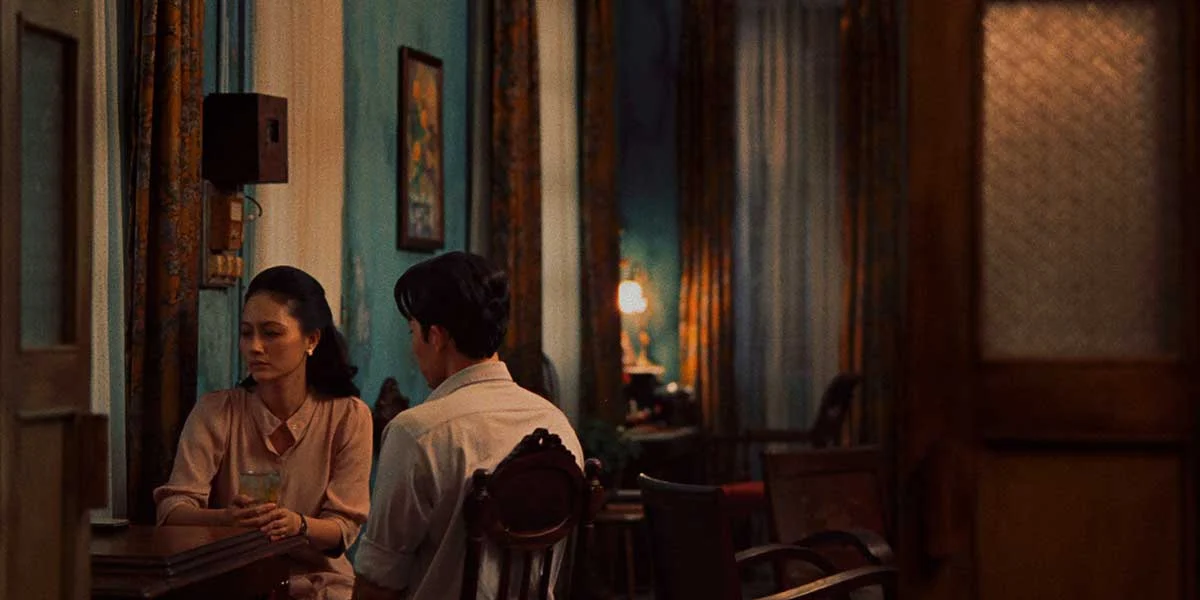
The most immediately striking quality of Ky Nam Inn is its exceptional and meticulous craftsmanship. Much like its acclaimed predecessor, Song Lang, the film is a veritable visual feast, a testament to an extraordinary attention to detail in every frame. The sets, designed with an almost obsessive precision, are rendered down to the smallest historical and cultural nuances. The interiors of the sprawling apartment complex, a central setting for much of the film’s drama, are depicted with an impressive and almost palpable authenticity, transporting the viewer directly into the lived reality of 1980s Saigon. The overall production design consistently demonstrates an extraordinary level of precision and dedication to historical accuracy, avoiding anachronisms and embracing the faded charm of the era.
Bob Nguyen’s masterful cinematography further elevates the film’s visual splendor. Nguyen makes excellent and often ingenious use of framing, particularly evident in scenes where several individuals are crowded into the same small, intimate rooms. His camera work manages to capture the claustrophobia and shared humanity of such spaces without sacrificing clarity or aesthetic appeal. This skilled cinematography, combined with the evocative and rich coloring by Octopus, results in a succession of images that are not merely functional but truly painterly in their composition and emotional resonance. The decision to shoot on 35mm film, an increasingly rare practice in the digital age, is a deliberate artistic choice that significantly contributes to the film’s aesthetic. The characteristic ‘grainy’ texture of film stock naturally enhances the atmosphere of nostalgia, lending an authentic, almost archival quality to the visuals that resonate deeply with the film’s themes of memory and the past.
Equally paramount to the film’s immersive experience is the pervasive atmosphere of nostalgia that permeates the entire narrative. Leon Le depicts the Saigon of the past with an evident and profound longing, a sentiment that feels both personal and universal. This nostalgic effect is significantly heightened by the aforementioned 35mm film grain, which visually anchors the film in its historical period, and by the exquisite musical score composed by An Ton That. Ton That’s music is not merely an accompaniment to the on-screen action; it often takes on a more active role, subtly guiding and occasionally even dictating the emotional landscape of the characters, enhancing the film’s poetic depth.
A Love Story of Subtlety and Restraint
Le’s treatment of the central romantic narrative between Khang and Ky Nam is particularly noteworthy for its profound subtlety and delicate execution. Their burgeoning feelings for one another are portrayed with an exquisite sense of gradual recognition, rather than overt declaration. Both characters, burdened by their individual histories, societal expectations, and the challenging circumstances of their lives, remain hesitant to express their emotions fully. This pervasive restraint renders the few moments where their guardedness momentarily gives way to genuine expression deeply impactful and emotionally potent. Le masterfully avoids explicit depictions, relying instead on the power of implication and the unspoken.
This powerful effect is significantly strengthened by the remarkable performances of Lien Binh Phat as Khang and Do Thi Hai Yen as Ky Nam. Both actors convey a complex web of emotions and inner conflicts with a truly remarkable understatement. Their performances are studies in nuanced communication: a lingering glance, a hesitant gesture, or even a deliberate avoidance of eye contact often communicate far more profound meaning than any dialogue could. The result is a pair of beautifully restrained portrayals that invite the audience to lean in, observe closely, and connect deeply with the characters’ interior worlds.
In deliberate contrast to the subdued leads, Hong Ngoc Ngo delivers a captivating performance as Luyen, offering an entirely opposite approach. Luyen wears her emotions openly on her face, her every frustration, curiosity, and resentment vividly expressed. This provides an effective and dynamic counterpoint to the more internal and quiet performances of Khang and Ky Nam, adding a vital layer of dramatic tension and social commentary to the film. As previously noted, Luyen’s character also functions as a conduit for exploring the complex and often fraught tensions between "Southerners" and "Northerners" in the immediate post-reunification years.
Political Resonance and Cultural Symbolism
While often presented subtly, the political atmosphere of 1980s Vietnam is undeniably palpable throughout Ky Nam Inn. This is particularly evident in its depiction of the strict cultural regulations imposed by the Communist regime, which sought to homogenize national identity and suppress any perceived remnants of the former South Vietnamese culture. The film references bans on certain songs and cultural expressions, illustrating the pervasive nature of state control. A standout scene, depicting an arrest, vividly conveys the oppressive pressure under which individuals lived, highlighting the arbitrary nature of authority during that period. Furthermore, the quiet, yet profound, references to Ky Nam’s late husband carry a significant political resonance, subtly hinting at the personal losses and ideological divisions that continued to ripple through society.
The intentional presence of Antoine de Saint-Exupéry’s The Little Prince within the story is deeply layered with meaning. Beyond its universal themes of love, loss, and the nature of humanity, its inclusion undeniably gestures towards the enduring and complex influence of France in Vietnam. French colonial rule left an indelible mark on Vietnamese society, particularly in cities like Hanoi and Saigon, where French architecture, educational systems, and the French language itself became deeply embedded in the cultural fabric. Le incorporates this significant legacy thoughtfully, suggesting how such cultural artifacts continued to shape intellectual and emotional landscapes even decades after the end of colonial rule, serving as a subtle reminder of a shared, if complicated, past.
Director’s Vision, Festival Acclaim, and Future Implications
Leon Le’s own editing establishes a measured and deliberate rhythm for Ky Nam Inn. While this pacing contributes to the film’s contemplative and nostalgic atmosphere, it occasionally drifts towards a noticeable slowness. Some critical perspectives suggest that the narrative might have benefited from a few additional cuts or a slightly brisker tempo in certain segments to build tension more effectively and avoid the occasional lull. At a running time of 140 minutes, Ky Nam Inn does, at times, feel as though it somewhat overstays its welcome. However, these minor pacing considerations are ultimately overshadowed by the film’s overwhelming aesthetic richness and profound thematic resonance, which ultimately reward the patient and attentive viewer.
The selection of Ky Nam Inn for the Special Presentations section of the 50th Toronto International Film Festival is a significant endorsement, underscoring its international appeal and artistic merit. TIFF is renowned globally as a launching pad for prestige films, and its Special Presentations category is reserved for high-profile premieres and acclaimed works from established and emerging cinematic talents worldwide. This platform provides Ky Nam Inn with immense visibility, facilitating its reach to a global audience and establishing it as a significant contribution to world cinema. The film’s premiere marks a milestone for Vietnamese cinema, showcasing its growing sophistication and ability to tackle complex historical and human stories with universal appeal.
Despite the minor shortcomings related to pacing, Ky Nam Inn emerges as an overwhelmingly visually stunning and emotionally meaningful work. It is a film that is not only exquisitely crafted, showcasing a masterful command of cinematic artistry, but also deeply layered with subtle yet impactful social and political commentary. Leon Le continues to demonstrate his unique ability to weave personal narratives into broader historical tapestries, creating films that resonate long after the credits roll. Ky Nam Inn is poised to be a significant film, contributing to a deeper understanding of Vietnam’s past and present, while solidifying Leon Le’s reputation as a filmmaker whose distinctive voice is essential to contemporary global cinema. It stands as a testament to the power of film to explore memory, heal historical wounds, and illuminate the enduring human quest for connection amidst challenging times.