March proved to be a month of significant literary engagement, beginning with a period of focused revision for an upcoming novel, Sunlit Uplands, slated for publication next year by Tor. The early part of the month was spent in Florence, Italy, where the author not only delved into the creative process but also observed the burgeoning signs of spring. Following this, a transition to Chicago marked the latter half of March, a city experiencing a capricious meteorological shift, oscillating between winter-like conditions and early spring. This period of relocation coincided with a dedicated reading regimen, during which seven books were consumed, several of which were described as profoundly impactful.
The author’s exploration of literature in March yielded a diverse array of titles, each offering unique perspectives and stylistic approaches. These readings provide a window into contemporary and historical literary trends, as well as the author’s own evolving creative and critical sensibilities.
A Deep Dive into Ursula K. Le Guin’s Malafrena
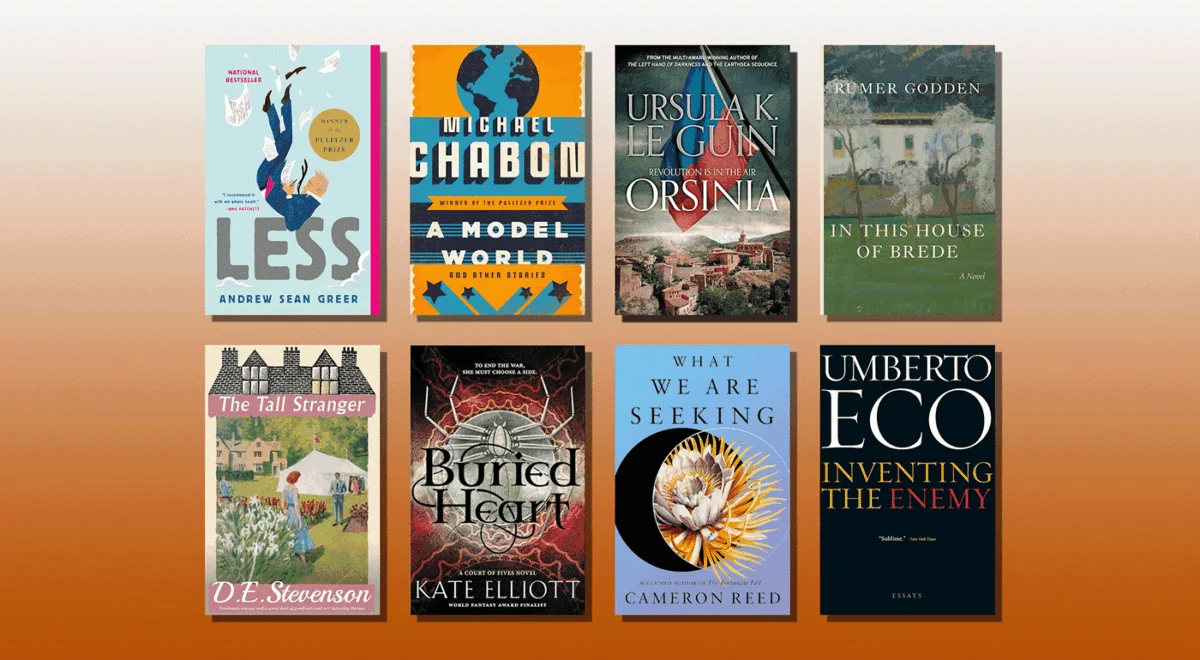
One of the most discussed works from the month’s reading list is Ursula K. Le Guin’s Malafrena, originally published in 1979. This novel presents a departure from conventional science fiction, delving into the complexities of an imagined Eastern European nation, Orsinia. The narrative follows a young man’s journey to the capital with aspirations of societal improvement, a trajectory that unfolds in ways reminiscent of Eastern European literature, drawing parallels to the works of Miklós Bánffy and Milan Kundera.
Malafrena‘s distinctiveness lies in its eschewal of grand revolutionary narratives or the immediate creation of a utopian future. Instead, the novel focuses on the nuanced and often unpredictable consequences of individual action within a richly rendered, specific historical and geographical setting. The protagonist, Itale, is portrayed as a compelling character, and despite the often somber themes, the book is noted for avoiding overwhelming despair. The author expresses a profound appreciation for the novel, particularly for its ability to establish a tangible sense of place. Le Guin’s meticulous world-building imbues Orsinia with a reality so palpable that the author felt as though they could travel to its depicted locations, such as the imagined city of Krasnoy or the surrounding lakes and mountains, via a slightly dilapidated, crowded train, akin to a journey in the 1820s. This powerful evocation of a secondary world, grounded in the register of the real, highlights Le Guin’s mastery of literary realism even within a fictional context.
Michael Chabon’s A Model World and Other Stories: A Contemplation of Futility
Michael Chabon’s A Model World and Other Stories, published in 1991, offers a contrasting literary experience. This collection of mainstream short stories is characterized by its exceptional prose and profound meditations on the perceived futility of existence and the inherent difficulties in human communication. While acknowledging the technical brilliance of Chabon’s writing, the author found the collection challenging to fully embrace on an enjoyment level. The vividness of the characters and the elegance of individual sentences and paragraphs were undeniable, yet the overarching themes of life’s ephemerality and the barriers to connection left a less positive lasting impression. Chabon is recognized as a "dynamite writer," but the author admits that mainstream literary fiction, as a genre, is not their preferred domain. This sentiment suggests a personal preference for speculative fiction or genres that offer different thematic resolutions or narrative structures.
Umberto Eco’s Inventing the Enemy: A Testament to Intellectual Curiosity
Umberto Eco’s Inventing the Enemy, a collection of essays from 2011, provided a different kind of intellectual nourishment. The book, comprising discussions on literature, politics, and a broad spectrum of Eco’s interests and ideas, was found to be a source of considerable enjoyment. The essays, many of which originated as public talks, retained their engaging quality in written form. The collection elicited a sense of fondness for Eco, underscoring his reputation as a profound thinker and a captivating communicator of complex ideas. This essay collection serves as a testament to Eco’s enduring legacy as a public intellectual, offering insights into his wide-ranging intellectual pursuits.
D.E. Stevenson’s The Tall Stranger: Gentle Realism and Enduring Themes
D.E. Stevenson’s The Tall Stranger (1957) represents a return to a more gentle and insightful narrative style, a characteristic the author clearly appreciates in Stevenson’s work. The novel centers on two young women sharing a London flat, a narrative focus that shifts midway through the book to follow the experiences of one of them more closely. The story incorporates classic elements such as an identifiable antagonist, a country-dwelling aunt, and explorations of work-life balance and the appreciation of nature. The heroine’s central dilemma proved to be particularly engaging for the author. While not strictly a genre romance or mystery, The Tall Stranger shares thematic elements with both, notably featuring inheritance as a significant plot device. The author found the book enjoyable and appreciated its thoughtful construction. Stevenson’s ability to weave compelling narratives that resonate with universal themes continues to attract readers who seek comfort and insight in their literary choices.
Kate Elliott’s Buried Heart: A Powerful Conclusion to a YA Fantasy Series
The third and final installment in Kate Elliott’s Court of Fives series, Buried Heart (2017), is identified as a strong example of young adult fantasy, particularly in its post-colonial thematic explorations. The author strongly advises against starting with this volume, recommending a sequential reading of the series. Elliott’s world-building is praised for its intricate magic system, seamlessly integrated into the societal structure. The novel tackles complex issues such as war, politics, and slavery with a realism often absent in the genre. The resolution of the various plotlines is described as highly satisfying, a hallmark of Elliott’s writing. For readers new to Elliott’s work and potentially intimidated by the scope of her longer novels, this series is recommended for its accessible length and its demonstration of the qualities that make her a consistently engaging writer. Buried Heart offers a compelling narrative from the perspective of a young woman of mixed heritage, detailing the struggle of a colonized people to overthrow their oppressors, all within an exciting and well-crafted fantasy setting.
Rumer Godden’s In This House of Brede: A Revisit to a Beloved Classic
Rumer Godden’s In This House of Brede (1969) was a re-read, a testament to its enduring appeal for the author, who has previously written about the novel. The book, a member of the relatively small but consistently appreciated genre of nun-focused literature, is considered one of Godden’s finest works and a significant contribution to 20th-century literature by a notable, though perhaps underrated, female author. The narrative centers on a successful civil servant who chooses to enter a contemplative Benedictine convent. However, the novel expands to encompass the lives of the entire community over several years, offering intimate details about their daily routines, motivations for joining the order, and the profound character studies that emerge from within the convent walls. The characters are rendered with an exceptional degree of realism. The author expresses a long-standing love for this book, suggesting its appeal extends to readers of speculative fiction who enjoy immersing themselves in the unique customs and worlds of different cultures.
Andrew Sean Greer’s Less: A Pulitzer Prize Winner That Provokes Strong Reactions
Andrew Sean Greer’s Pulitzer Prize-winning novel Less (2017) was undertaken as part of a broader contemplation of literary fiction as a genre, prompted by the reading of Chabon’s short stories. The novel follows a novelist on a global journey, a premise that might seem appealing on the surface. However, the author found the world depicted in Less to be intensely "zero-sum," characterized by a cautious avoidance of genuine connection and communication. Despite acknowledging the book’s proficient writing and the creation of great characters, along with moments of humor, the overall experience was overwhelmingly negative, with the author stating, "On the whole I hated it." Further detailed analysis of this work is anticipated.
Notable Recommendations from Previous Months
In addition to the current month’s reading, the author also highlighted several books previously recommended that are now available for wider readership:
- Francis Spufford’s Nonesuch: Described as a great read that should not be missed.
- John Chu’s The Subtle Art of Folding Space: Also lauded as an excellent and unmissable work.
- Cameron Reed’s What We Are Seeking: Singled out as the best of the lot and a personal favorite from the previous year, characterized by its immersive quality, making it a book that one never wants to put down. Readers are advised to approach this novel without spoilers to fully appreciate its impact.
The sustained engagement with a diverse range of literary works throughout March underscores a commitment to exploring the breadth and depth of contemporary and classic literature, contributing to a rich tapestry of critical reflection and creative inspiration. The author’s journey through these narratives, from the intricate world-building of fantasy to the stark realities of mainstream fiction and the contemplative depths of historical fiction, showcases a dynamic approach to literary consumption and appreciation.