The landscape of Los Angeles production real estate is facing a potential seismic shift as Netflix, the world’s leading streaming service, enters discussions to acquire the historic Radford Studio Center. Currently held by the investment banking giant Goldman Sachs following a high-profile debt default, the Radford lot represents one of the most storied and functional production facilities in the San Fernando Valley. This move, reported by industry sources and financial analysts, signals a burgeoning strategy by Netflix to transition from a major leaseholder to a dominant property owner, a shift that could have profound implications for the commercial real estate market and the broader entertainment industry.
For the better part of a decade, Netflix has served as the foundational "anchor tenant" for some of the most prominent office and studio spaces in Hollywood. Its presence at Sunset Studios, owned by Hudson Pacific Properties, has been a cornerstone of the streaming giant’s physical footprint in Los Angeles. Specifically, Netflix occupies the ICON, EPIC, and CUE buildings, which serve as its primary Los Angeles headquarters. Under the current agreement, Netflix leases approximately 722,305 square feet of space from Hudson Pacific, generating roughly $27 million in base annualized rent for the real estate investment trust (REIT). While these leases are secured through 2031, the news of Netflix’s interest in purchasing its own lot suggests the company is looking far beyond its current contractual obligations toward a future defined by asset ownership and operational autonomy.
The Radford Studio Center: From Network Staple to Private Equity Asset
The Radford Studio Center, located in Studio City, has a rich history that mirrors the evolution of the television medium. For decades, it was the crown jewel of the CBS portfolio, serving as the production home for iconic series ranging from "The Mary Tyler Moore Show" to "Seinfeld" and "Big Brother." In 2021, during a period of aggressive asset monetization by Shari Redstone’s ViacomCBS (now Paramount Global), the 55-acre lot was sold to a joint venture between Hackman Capital Partners and Square Mile Capital Management for a staggering $1.85 billion.
At the time of that sale, the market for studio space was at a fever pitch. The "streaming wars" were in full effect, with Disney+, HBO Max (now Max), and Amazon Prime Video all racing to build content libraries that could compete with Netflix. This surge in demand created a shortage of soundstages, leading private equity firms and developers like Hackman Capital to bet heavily on studio infrastructure. The prevailing logic was that while traditional office space was becoming a risky investment due to the rise of remote work during the COVID-19 pandemic, soundstages were "recession-proof" assets that required physical presence and thus guaranteed long-term returns.
However, the economic environment shifted rapidly. By late 2023, the industry was reeling from the dual strikes of the Writers Guild of America (WGA) and SAG-AFTRA. This labor unrest, combined with a broader industry-wide pullback in content spending as Wall Street began demanding profitability over subscriber growth, led to a decline in stage occupancy. Hackman Capital, which had leveraged the Radford acquisition with significant debt, eventually found itself unable to meet its financial obligations. In early 2024, it was revealed that Goldman Sachs had taken over the property after the owners defaulted on a $1.1 billion mortgage.
Financial Dynamics and the Hudson Pacific Relationship
The potential exit of Netflix from its leased facilities at Sunset Studios would represent a significant blow to Hudson Pacific Properties. As of the first quarter of 2024, Netflix is the REIT’s second-largest tenant, trailing only Google in terms of total square footage occupied. During a February earnings call, Hudson Pacific CEO Victor Coleman attempted to project confidence regarding the partnership, stating that the firm remained "fully engaged" with Netflix and maintained that its portfolio offered the "optimal long-term solution" for the streamer’s needs in Los Angeles.
Despite these assurances, Coleman acknowledged in subsequent investor conferences that conversations regarding lease renewals and future expansions are "fluid." The reality of the commercial real estate market in Los Angeles is increasingly complex. With high interest rates and a cooling production market, landlords are finding it more difficult to retain massive tenants who now have the capital and the incentive to own their own production hubs.
Netflix’s financial position has notably strengthened, providing it with the liquidity necessary for such a massive acquisition. The company recently received a $2.8 billion breakup fee following its abandoned pursuit of a merger or partnership with Warner Bros. This windfall, combined with Netflix’s consistent free cash flow, allows the company to consider "trophy" real estate acquisitions that were previously deemed unnecessary. By owning the Radford Studio Center, Netflix would not only eliminate a significant annual rent expense but also gain total control over the renovation and technological integration of the stages.
A Timeline of Netflix’s Global Infrastructure Expansion
The interest in Radford is not an isolated incident but rather the latest step in a multi-year strategy to build a global network of owned-and-operated production hubs. This strategy allows Netflix to mitigate the rising costs of third-party rentals and ensures that its production schedule is never at the mercy of another studio’s availability.
- 2018: Albuquerque, New Mexico. Netflix purchased ABQ Studios, marking its first major studio purchase. The company committed to spending over $1 billion in production in the state over ten years, a goal it is on track to exceed.
- 2021: Long-term Leases in the UK. Netflix solidified its presence at Shepperton Studios, securing a long-term contract that essentially turned the historic site into a Netflix-dedicated facility.
- 2022: The Fort Monmouth Project. Netflix won a bid to build one of the largest production facilities in the world on the former site of the Fort Monmouth army base in New Jersey. The project, estimated at $1 billion, is expected to become the company’s East Coast flagship.
- 2023-2024: International Growth. The company has aggressively expanded its physical footprint abroad, opening a new headquarters in Mexico City, a dedicated office in Buenos Aires, and expanding its Central European hub in Poland.
This global expansion serves a dual purpose. First, it satisfies local content requirements in international markets. Second, it provides a diversified production pipeline that can remain active even if domestic production in the United States slows down due to labor disputes or economic shifts.
Industry Implications: The Shift Toward Studio Ownership
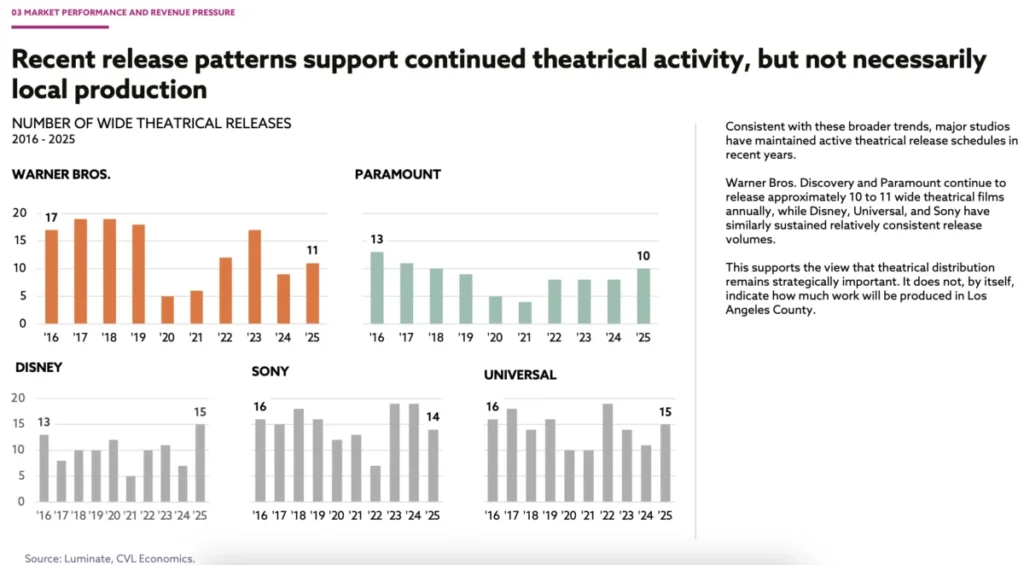
The potential acquisition of Radford by Netflix highlights a broader trend in Hollywood: the consolidation of production infrastructure in the hands of the content creators themselves. For decades, the "Big Six" studios (Disney, Warner Bros., Paramount, Universal, Sony, and Fox) owned their lots, while independent producers and newer players rented space. As Netflix matures into a "legacy-style" studio, it is adopting the same physical asset model that sustained the original Hollywood giants for a century.
This shift poses a challenge to independent soundstage operators and REITs. Companies like Hudson Pacific and Hackman Capital built their business models on the assumption that tech-heavy streamers would prefer to keep their balance sheets "asset-light" by leasing rather than buying. However, the volatility of the rental market and the specific technical requirements of modern filmmaking—such as the integration of LED "volumes" for virtual production and high-capacity data infrastructure for AI-driven workflows—make ownership more attractive for a company of Netflix’s scale.
Furthermore, the uncertainty surrounding Artificial Intelligence (AI) is beginning to influence real estate decisions. As AI workflows potentially reduce the need for massive physical sets or large on-site crews, the value of a studio lot may shift from the number of soundstages to the quality of its data centers and post-production facilities. By owning Radford, Netflix can customize the lot to be an "AI-first" production environment, a move that would be difficult to execute in a leased space subject to a landlord’s approval.
Official Responses and Market Reactions
As of the current reporting period, Netflix has officially declined to comment on the negotiations regarding the Radford Studio Center. Similarly, representatives for Hudson Pacific Properties and Goldman Sachs have remained tight-lipped, citing the confidential nature of real estate discussions.
However, market analysts suggest that the silence is indicative of the high stakes involved. For Goldman Sachs, selling the lot to Netflix would be a clean exit from a distressed asset, allowing the bank to recoup its investment following the Hackman default. For Netflix, it would be a statement of intent, signaling that it intends to remain the dominant force in Los Angeles production for decades to come.
The broader real estate market in Los Angeles is watching closely. If Netflix successfully pivots to an ownership model at Radford, it may prompt other tech-driven giants like Apple or Amazon to follow suit. Amazon has already taken a similar path with its lease and renovation of the Culver Studios, though it does not yet own the underlying land.
Future Outlook: A New Era for Studio City
The acquisition of the Radford Studio Center by Netflix would likely revitalize the Studio City area. While the lot has remained active, the uncertainty of its ownership under a bank-led receivership has limited long-term investment. A Netflix-owned Radford would likely see significant capital improvements, including the modernization of its 18 soundstages and the potential addition of new office space and post-production suites.
In the long term, this move may represent the final stage of Netflix’s evolution. No longer just a Silicon Valley disruptor, Netflix is becoming a physical fixture of the Los Angeles landscape, with deep roots in the same soil that once housed the pioneers of the Golden Age of Television. As the company continues to serve its 325 million global subscribers, its ability to control its own production destiny through the ownership of flagship properties like Radford may be the key to its continued dominance in an increasingly fractured media environment.
The transition from the "anchor tenant" at Sunset Studios to the master of Radford Studio Center would not just be a real estate transaction; it would be a symbolic passing of the torch in the history of Hollywood infrastructure. While the 2031 expiration of its current leases is years away, the decisions being made in the boardrooms of Los Gatos and Manhattan today are already sketching the outline of Hollywood’s physical future.