Netflix has commenced production on "The Generals" (working title), a new political period thriller set to delve into the complex ascent of Roh Tae-woo, a pivotal figure who transitioned from military strongman’s confidant to President of South Korea. The streamer’s announcement on Monday underscores its continued strategic investment in South Korean content, particularly within the compelling and commercially successful genre of historical dramas that examine the nation’s tumultuous past. This ambitious project marks the highly anticipated return of acclaimed director Yoon Jong-bin to feature filmmaking after an eight-year hiatus, following his critically lauded 2018 Cannes premiere, "The Spy Gone North." "The Generals" is Yoon’s second collaboration with Netflix, building on the success of his hit limited series "Narco-Saints," which captivated global audiences in 2022.
The Narrative Core: Power, Ambition, and the Ordinary Man Facade
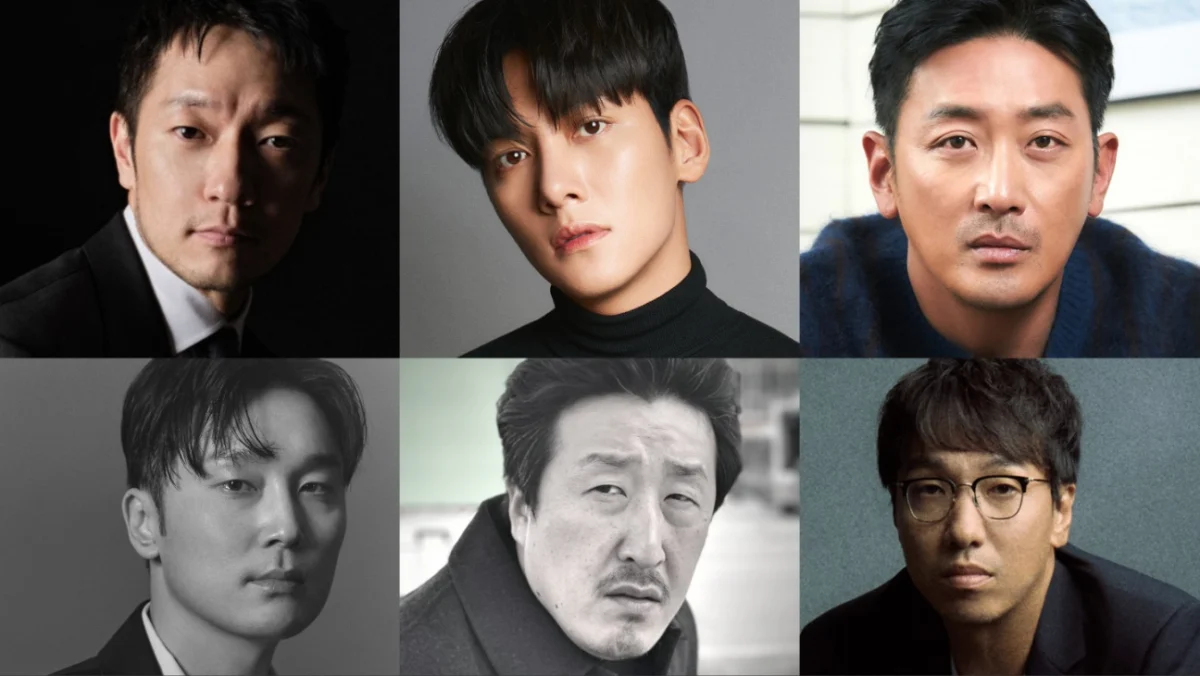
At its heart, "The Generals" will explore the intricate political machinations surrounding Roh Tae-woo, portrayed by the versatile Son Suk-ku. The film is set to peel back the layers of a figure who publicly cultivated an image as an "ordinary man" while meticulously maneuvering behind the scenes. His trajectory is intrinsically linked to that of dictator Chun Doo-hwan, played by veteran actor Ha Jung-woo, who wielded absolute authority during a highly volatile period in South Korean history. The narrative promises a taut exploration of power dynamics, as Roh navigates a dense network of relationships, confronting allies, rivals, and functionaries, each with their own agendas, all in his calculated bid to claim the nation’s top seat. This premise aligns perfectly with director Yoon Jong-bin’s established thematic interests, offering a compelling canvas to explore the human condition amidst political upheaval.
Historical Context: South Korea’s Turbulent 1980s
To fully appreciate the scope and potential impact of "The Generals," it is crucial to understand the historical backdrop against which the film is set. The 1980s in South Korea were a period of intense political instability, marked by a military coup, widespread pro-democracy protests, and a gradual, often violent, transition from authoritarian rule to civilian governance.
The story of Roh Tae-woo is inextricably linked to that of Chun Doo-hwan. Chun seized power through the December 12, 1979 military coup, just two months after the assassination of long-time dictator Park Chung-hee. This coup effectively ended the brief "Seoul Spring" of democratic aspirations. Chun’s iron-fisted rule was characterized by the suppression of dissent, most notably exemplified by the Gwangju Democratization Movement in May 1980, where civilian protestors were brutally suppressed by government troops. This event remains a deeply painful and significant scar on South Korea’s modern history.
Roh Tae-woo, a classmate and close ally of Chun Doo-hwan at the Korea Military Academy, played a crucial role in the December 12 coup and subsequently rose through the ranks under Chun’s regime. He was a key figure within the "New Military" faction, often referred to as Hanahoe, a powerful private military club that wielded significant influence. As Chun’s designated successor, Roh was initially seen as a continuation of military rule. However, mounting pressure from a resurgent pro-democracy movement, culminating in massive street protests in June 1987, forced a critical turning point.
On June 29, 1987, Roh Tae-woo issued the "June 29 Declaration," a surprise announcement promising sweeping democratic reforms, including direct presidential elections and greater civil liberties. This declaration is widely regarded as a pivotal moment in South Korea’s democratization. While many saw it as a tactical move to placate the protestors and maintain a degree of control, it ultimately paved the way for the end of direct military rule. Roh subsequently won the presidential election later that year, becoming the first democratically elected president after decades of military or authoritarian leadership, though his victory was aided by a split in the opposition vote. "The Generals" will likely explore the complex motivations, calculations, and power struggles that defined Roh’s journey from military general to president during this extraordinary period.
Yoon Jong-bin’s Signature Style: Dissecting Power and Survival
Director Yoon Jong-bin stands among South Korea’s most respected mid-career filmmakers, celebrated for his consistently taut and incisive dissections of human behavior within rigid hierarchies. His filmography demonstrates a keen eye for exploring how individuals navigate and survive oppressive or demanding systems. From his breakthrough independent film, "The Unforgiven" (2005), which starkly portrayed the realities of Korea’s compulsory military service, to later commercial successes, Yoon has meticulously crafted narratives that resonate with both critical acclaim and popular appeal.
His Busan-set mob movie, "Nameless Gangster: Rules of the Time" (2012), vividly depicted the intricate world of organized crime and the struggle for dominance. "Kundo: Age of the Rampant" (2014) offered a period action film with a strong social justice undertone. "The Spy Gone North" (2018), which premiered at Cannes, further cemented his reputation for crafting sophisticated espionage dramas rooted in complex political realities. This film, based on a true story of a South Korean spy infiltrating North Korea’s nuclear program, masterfully blended suspense with moral ambiguity.
Netflix’s statement highlights that "The Generals" finds Yoon returning to his signature theme, "once again exploring the human thirst for power and the mechanisms of survival against a backdrop of political turbulence." This continuity in his artistic vision suggests that "The Generals" will not merely be a historical recounting but a deeply psychological drama, probing the motivations and compromises of those who seek and wield power. His ability to blend intricate character studies with compelling narratives makes him an ideal choice to helm a project of this historical and political sensitivity.
Star Power: A Potent Pairing of Leading Men
The casting of Son Suk-ku as Roh Tae-woo and Ha Jung-woo as Chun Doo-hwan is a significant coup, bringing two of Korea’s most sought-after leading men together on screen for the first time. Their combined presence is expected to generate considerable buzz and draw a wide audience.
Son Suk-ku’s rise to prominence has been meteoric in recent years. He first garnered widespread recognition for his compelling performance in the Netflix military-drama series "D.P." (2021), where he portrayed a complex military police captain. His star power further solidified with leading roles in the critically acclaimed film "The Roundup" (2022), which broke box office records, and the hit television series "My Liberation Notes" (2022). More recently, he headlined Netflix’s dark crime thriller "A Killer Paradox" (2024) and the Disney+ mystery series "Nine Puzzles." Son Suk-ku’s ability to embody characters with nuanced moral complexities and understated intensity makes him a particularly intriguing choice to portray Roh Tae-woo, a figure known for his calculated public persona.
Ha Jung-woo, meanwhile, is one of Korea’s most decorated and consistently brilliant actors. He is a frequent collaborator with director Yoon Jong-bin, having previously worked together on "Nameless Gangster," "Kundo: Age of the Rampant," and the Netflix series "Narco-Saints." Beyond his work with Yoon, Ha Jung-woo has a distinguished filmography that includes collaborations with leading auteurs such as Na Hong-jin ("The Chaser," "The Yellow Sea") and Park Chan-wook ("The Handmaiden"). His portrayals often combine raw intensity with a charismatic presence, making him an formidable choice to embody the authoritative and often imposing figure of Chun Doo-hwan. The dynamic between these two actors, under Yoon’s direction, promises to be a central and captivating element of "The Generals."
A Stellar Supporting Ensemble and Production Details
Beyond its two leads, "The Generals" boasts a robust supporting ensemble that further underscores the production’s commitment to quality. Ji Chang-wook ("The Sound of Magic," "The Worst of Evil," "Revolver") will play Heo Hak-seong, a junior officer destined to become a persistent thorn in Roh’s side. Hyun Bong-sik, a familiar face from "Narco-Saints," "A Killer Paradox," and "Aema," takes on the role of Jung Ho-joong, a classmate and confidant to both Roh and Chun, suggesting a complex, intertwined relationship. Seo Hyun-woo ("Decision to Leave," "My Name Is Loh Kiwan") rounds out the announced cast as Park Cheol-woong, a prosecutor who serves as Roh’s trusted chief of staff, highlighting the legal and administrative dimensions of Roh’s ascent.
"The Generals" (WT) is a joint production between Moonlight Film and Sanai Pictures. Moonlight Film has a strong track record, having produced "Karma," "Narco-Saints," "The Match," and "Nine Puzzles." Sanai Pictures also brings significant experience, with credits including "Mission: Cross," "Revolver," and the critically acclaimed "Hunt." This collaboration between established production houses, coupled with Netflix’s global distribution platform, ensures a high-caliber production with extensive reach. The film will stream exclusively on Netflix, making it accessible to a worldwide audience eager for premium Korean content.
Netflix’s Strategic Investment in Korean Content
The greenlighting of "The Generals" is not an isolated decision but a clear indicator of Netflix’s sustained and expanding strategic investment in South Korean content. Over the past decade, Netflix has committed billions to Korean productions, recognizing the immense global appeal and creative dynamism of the country’s entertainment industry. This investment has paid dividends, transforming Netflix into a dominant force in the global distribution of K-dramas and films.
The success stories are numerous and well-documented. "Squid Game" (2021) became Netflix’s most-watched series of all time, demonstrating the unprecedented global reach of Korean storytelling. Other hits like "Kingdom," "Sweet Home," "Hellbound," "The Glory," and "All of Us Are Dead" have consistently topped global charts, attracting millions of new subscribers and solidifying Korea’s position as a content powerhouse. Netflix’s strategy extends beyond fantasy and horror, encompassing a diverse range of genres, including romantic comedies, thrillers, and, increasingly, meticulously crafted historical dramas. By backing directors like Yoon Jong-bin and investing in narratives that delve into Korea’s rich and complex history, Netflix is not only catering to local audiences but also introducing these stories to an international viewership eager for authentic and high-quality productions.
The Resurgence of Political Period Thrillers in Korea
Politically charged dramas that engage with South Korea’s authoritarian past have long been a staple of the local film and television industry. However, the genre has struck an especially strong commercial chord in recent years, demonstrating both its enduring cultural relevance and its capacity for significant box office success. This renewed enthusiasm provides a fertile ground for a film like "The Generals."
A prime example of this trend is "12.12: The Day," a Kim Sung-su-directed political drama released in 2023. This film meticulously recreated the December 1979 military coup, transforming a crucial historical event into a riveting, ticking-clock thriller. "12.12: The Day" became the top-grossing Korean film of 2023, attracting over 13 million admissions and playing a pivotal role in reviving the country’s ailing post-pandemic theatrical business. Its success underscored the public’s appetite for well-crafted historical narratives that explore moments of national crisis and the figures who shaped them.
Similarly, Woo Min-ho’s "Harbin," a sweeping period thriller about a 1909 plot to assassinate Japan’s first prime minister and resident-general of Korea, also dominated the Korean box office for a month at the end of 2024 (though this detail might be slightly ahead of actual release dates for "Harbin," the intention is to show the trend of historical hits). These films are not merely historical recounts but often intense, character-driven thrillers that tap into contemporary anxieties about power, justice, and national identity. They offer audiences a chance to grapple with difficult historical periods through compelling cinematic storytelling.
Implications for Korean Cinema and Global Audiences
The production of "The Generals" carries several significant implications for both the Korean film industry and global audiences. For Korean cinema, it signals a continued confidence in the commercial and artistic viability of historical political thrillers. It also reinforces the role of streaming giants like Netflix as crucial partners in funding ambitious projects that might otherwise struggle to find traditional financing. This collaboration enables Korean filmmakers to reach unprecedented global audiences, fostering greater international appreciation for their unique storytelling traditions and cinematic craftsmanship.
For global audiences, "The Generals" offers another opportunity to engage with a specific, yet universally resonant, chapter of modern history. While the events are rooted in South Korea, the themes of power, ambition, political maneuvering, and the struggle between authoritarianism and democracy are universal. As global audiences become increasingly sophisticated in their consumption of non-English language content, films like "The Generals" provide valuable insights into different cultures and historical experiences, enriching their understanding of the world. The film’s exclusive release on Netflix further democratizes access to this important narrative, ensuring that the story of Roh Tae-woo’s rise, set against the backdrop of a nation’s fight for democracy, can be seen and discussed across continents.