The intersection of extreme geography and athletic perseverance takes center stage in the newly unveiled documentary No Place for Football, a feature-length exploration of the Greenlandic National Football Championship. Directed by Brandon Scott Smith and Derek Smith, the film chronicles the journey of B-67 Nuuk, one of Greenland’s most storied athletic institutions, as they navigate the logistical and physical rigors of the world’s shortest competitive soccer season. Set against the stark, majestic backdrop of the Arctic Circle, the documentary highlights the unique cultural status of football in a region where environmental conditions dictate every aspect of the game.
The production companies, Siloam Road and Good Shoes, Inc., released the first official trailer on April 28, 2026, coinciding with the film’s premiere at the 2026 DocLands Documentary Film Festival. The film is scheduled for a wider release in late 2026, strategically positioned to follow the conclusion of the 2026 FIFA World Cup. By aligning the release with the global peak of soccer interest, the filmmakers aim to draw international attention to the specialized subculture of Arctic athletics and the broader narrative of Greenlandic identity.
The Shortest Season on Earth: Environmental and Logistical Constraints
Greenland’s geography presents an environment that is, in many ways, fundamentally incompatible with traditional outdoor sports. With approximately 80% of the island covered by an ice sheet and no interconnected road system between its coastal towns, the logistics of a national sports league are formidable. No Place for Football documents the reality of the Greenlandic National Football Championship, often referred to as the "Grønlandsmesterskab." Due to the extreme climate and the prohibitive costs of domestic travel, the entire national tournament is condensed into a period of roughly one week.
The documentary follows B-67 Nuuk as they travel from the capital city to Ilulissat, a town located 250 miles north of the Arctic Circle. The journey itself serves as a microcosm of the challenges faced by Greenlandic athletes. Without roads, teams must rely on expensive air travel or lengthy sea voyages, often contending with unpredictable weather patterns that can delay competitions for days. The film captures the physical toll of playing up to six high-intensity matches in a seven-day window, a schedule that would be deemed impossible by most professional European or American leagues.

B-67 Nuuk and the Pursuit of National Excellence
At the heart of the narrative is B-67 Nuuk, a club that has historically dominated Greenlandic football. The film provides unprecedented access to the team’s internal dynamics, led by captain Patrick Frederiksen and head coach Nicolai Nielsen. Frederiksen, a central figure in the documentary, embodies the dual life of many Greenlandic players—balancing the demands of high-level competition with the realities of living in a remote, isolated community.
The documentary frames the 2026 season not just as a quest for a trophy, but as a battle for local pride and community representation. The rivalry between B-67 Nuuk and the hometown favorites, N-48 Ilulissat, serves as the film’s primary dramatic conflict. This rivalry is deep-seated, representing a clash between the urban influence of the capital and the traditional northern strongholds of the island. Through intimate interviews and locker-room footage, the Smith brothers illustrate the psychological weight of these matches, where a single loss in the week-long tournament can invalidate a year of preparation.
Directorial Vision and Production Context
No Place for Football marks the feature directorial debut for Brandon Scott Smith and Derek Smith, who previously gained recognition for their work on the documentary In the Dark of the Valley. Their transition from short-form projects and social-issue documentaries to a sports-centric narrative reflects a commitment to "intimate storytelling" within grand, visual landscapes.
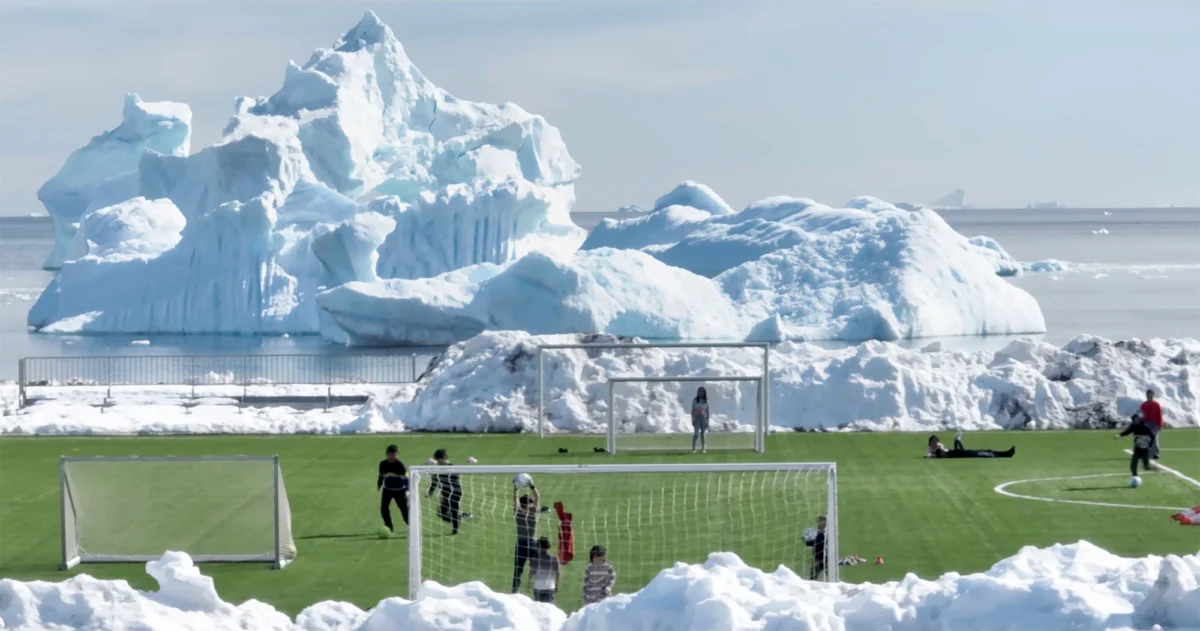
The cinematography utilizes the natural light and stark topography of Ilulissat—famed for its massive icebergs and the UNESCO-listed Disko Bay—to create a visual contrast between the smallness of the human players and the vastness of the Arctic environment. The production team, which includes producer Scott Sorensen, focused on capturing the sensory experience of the game: the sound of boots on artificial turf, the biting wind off the North Atlantic, and the vocal intensity of fans who gather in some of the most remote stadiums on the planet.
Supporting Data: The State of Greenlandic Football in 2026
To understand the context of No Place for Football, one must examine the statistical reality of the sport in Greenland. As of 2026, football remains the most popular sport on the world’s largest island, with approximately 10% of the total population—roughly 5,500 players—actively registered with the Football Association of Greenland (Kalaallit Nunaanni Isikkamik Arsaattartut Kattuffiat).

Despite this high level of participation, Greenlandic football exists in a state of international limbo. Because the island’s climate prevents the growth of natural grass pitches that meet FIFA’s stringent requirements, the national team has historically been excluded from FIFA membership. However, the recent installation of several high-quality, FIFA-certified artificial turf pitches—such as the one in Nuuk featured in the film—has sparked a renewed push for membership in CONCACAF or UEFA. The documentary subtly touches upon these aspirations, framing the local championship as a vital proving ground for a nation seeking broader athletic recognition.
Timeline of Release and Premieres
The rollout of No Place for Football follows a deliberate schedule designed to maximize its impact on the documentary circuit and the sports media landscape:
- April 28, 2026: Release of the official trailer and promotional materials.
- May 2026: World premiere at the DocLands Documentary Film Festival in California.
- June–July 2026: Strategic hiatus during the 2026 FIFA World Cup, allowing the film to avoid being overshadowed by the global tournament while building "soccer-adjacent" interest.
- Late Summer 2026: Targeted limited theatrical release and international film festival tour.
- Late 2026: Debut on major streaming platforms, intended to coincide with the post-World Cup period when audiences are seeking deeper, more niche narratives within the sport.
Official Responses and Anticipated Impact
While official reviews from major outlets are pending the DocLands premiere, early reactions from the documentary community have praised the film’s ability to transcend the "sports movie" genre. Industry analysts suggest that No Place for Football will appeal to a broad demographic, including sports enthusiasts, environmentalists, and those interested in indigenous cultures.
"The film is as much about the endurance of the Greenlandic people as it is about the sport," noted one early preview from the DocLands programming committee. "It challenges the viewer to reconsider what it means to be a professional athlete when the very ground you play on is covered in snow for nine months of the year."
The Greenlandic government and local sports authorities have also expressed support for the project, viewing it as an opportunity to promote Greenlandic culture on a global stage. In a region where tourism is a growing economic pillar, the striking visuals of the Ilulissat icefjords captured in the film are expected to serve as an inadvertent advertisement for the island’s natural beauty.

Broader Implications: Sport as a Cultural Heartbeat
The significance of No Place for Football extends beyond the final score of a championship match. It serves as a case study in how sport can act as a unifying force in geographically isolated communities. In Greenland, where issues of mental health and seasonal isolation are prevalent, football provides a critical social outlet and a sense of shared purpose.
The film also contributes to the ongoing dialogue regarding climate change in the Arctic. While the documentary focuses on the sport, the backdrop of receding ice and changing weather patterns provides a silent commentary on the environmental shifts affecting the players’ lives. As the "shortest season" faces the possibility of becoming even more unpredictable due to climate volatility, the film captures a moment in time for a sporting tradition that is as fragile as it is resilient.
Ultimately, No Place for Football is an examination of the human spirit’s refusal to be sidelined by the elements. By documenting the B-67 Nuuk club’s journey, Brandon and Derek Smith have created a testament to the idea that the "world’s game" belongs to everyone, even those living on the icy fringes of the habitable world. The film is poised to become a definitive document of Arctic sport, providing a rare and necessary glimpse into a culture where the passion for the game burns brightly against a landscape of ice.