Juno Mak’s highly anticipated second feature, Sons of the Neon Night, finally premiered at the 78th Cannes Film Festival in 2025, marking the culmination of a protracted production journey that began in 2017. Despite a lukewarm critical reception, the film unexpectedly garnered eight awards at the 44th Hong Kong Film Awards in 2026, a testament to its formidable ambition and technical prowess. The project, which assembled an impressive ensemble cast, had initially drawn significant attention following the critical and commercial success of Mak’s directorial debut, Rigor Mortis, but faced extensive delays attributed to the global Covid-19 pandemic and complex post-production challenges.
A Vision Forged in Conflict: Thematic Underpinnings and Setting
The film’s Chinese title, translating to "Wind, Forest, Fire, Mountain" (風林火山), is a direct reference to a chapter on military maneuvering from Sun Tzu’s seminal work, The Art of War. This ancient strategic philosophy, encapsulating the principles of "as swift as wind, as quiet as forest, as aggressive as fire, as immovable as mountain," provides a profound thematic framework for the narrative, hinting at the intricate power struggles and violent conflicts that define the film’s underworld.
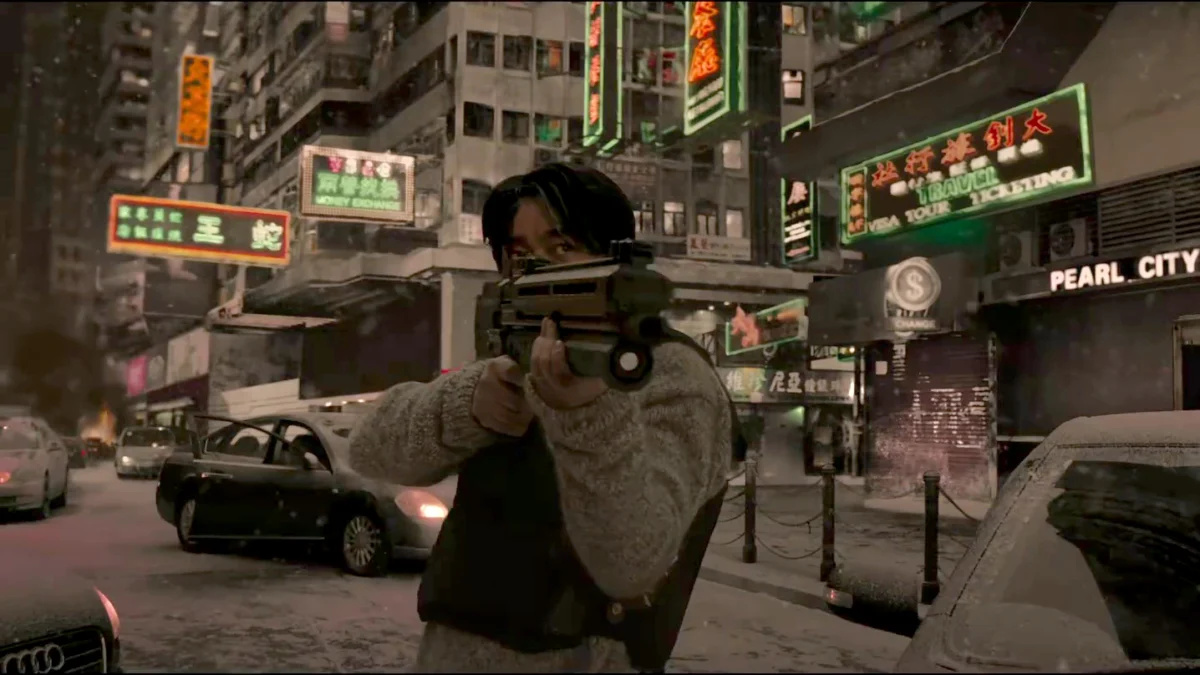
The story itself plunges viewers into a hyper-stylized, lawless rendition of Hong Kong in 1994, a crucial period marked by latent anxiety and uncertainty as the 1997 Handover to mainland China loomed. Mak’s imaginative choice to depict a snow-covered Hong Kong – a stark departure from the city’s subtropical reality – immediately establishes a surreal and almost dystopian atmosphere, elevating the setting beyond mere backdrop to a character in itself. This fantastical element underscores the film’s commitment to an aesthetic vision that often transcends conventional realism.
The narrative ignites on the bustling, neon-drenched streets of Causeway Bay, a district synonymous with Hong Kong’s vibrant urban energy and often depicted as a nexus of illicit activities. Two armed, hooded figures abruptly open fire, plunging the crowded thoroughfare into chaos. The initial police response is spearheaded by Wong Chi Tat, portrayed with compelling intensity by veteran actor Sean Lau Ching Wan, who swiftly moves to contain the escalating violence. During the ensuing fierce exchange of gunfire, Wong is compelled to personally neutralize the attackers, a decisive action that paradoxically escalates the underlying tensions rather than quelling them.
The situation spirals further when Mak, a rogue undercover police officer, executes a meticulously planned assassination. He infiltrates a nearby hospital where the wounded are being treated and detonates a bomb, targeting Li Pak San, a powerful and affluent businessman. Li, the owner of Kiu Yin Group, a major pharmaceutical company, is under police custody at the time, making him a vulnerable yet high-value target. This calculated act of violence is orchestrated not merely for revenge, but with the specific intention of igniting a devastating conflict between rival factions within the city’s clandestine drug trade, thereby plunging the entire underworld into a state of profound turmoil and anarchy.
The Protracted Production Saga: A Timeline of Ambition and Obstacles
2017: Genesis and High Expectations
Production for Sons of the Neon Night commenced in 2017, immediately generating considerable buzz within the industry. Juno Mak’s debut, Rigor Mortis (2013), a critically acclaimed horror film that reimagined the classic jiangshi (hopping vampire) genre, had firmly established him as a director with a distinctive visual style and a bold artistic vision. Its success, both critically and commercially, set a high bar for his sophomore effort, positioning Sons of the Neon Night as one of the most anticipated Hong Kong films of the decade. Mak’s ability to attract a star-studded cast, including some of the most respected names in Asian cinema, further underscored the project’s perceived potential and magnitude.
2018-2020: Filming and Initial Post-Production
The film’s ambitious scope, intricate action sequences, and large ensemble cast necessitated an extended filming schedule. Initial reports suggested a painstaking approach to principal photography, emphasizing Mak’s meticulous attention to detail. However, as the world braced for the unforeseen, a new set of challenges emerged.
2020-2022: The Pandemic’s Shadow and Post-Production Quagmire
The global Covid-19 pandemic significantly disrupted film productions worldwide, and Sons of the Neon Night was no exception. Travel restrictions complicated international collaborations, while safety protocols impacted on-set operations and post-production workflows. More critically, the film reportedly amassed over six hours of raw footage, presenting an immense challenge in the editing suite. This abundance of material, coupled with the film’s complex narrative threads and intricate visual effects, likely contributed to protracted post-production issues. Industry observers noted that such extensive footage often indicates a struggle to condense a sprawling vision into a cohesive feature-length narrative, requiring significant artistic and technical decisions that can prolong the editing process for years.
2025: The Cannes Premiere and Mixed Reception
After years of delays, Sons of the Neon Night finally debuted at the prestigious 78th Cannes Film Festival in 2025. A premiere at Cannes is a significant achievement for any film, particularly an Asian production, often signaling international recognition and critical validation. However, the initial reviews from Cannes were largely mixed, with many critics praising the film’s stunning visuals and undeniable ambition, but concurrently pointing out significant flaws in its narrative coherence and character development. The sheer density of plotlines and characters, seemingly a consequence of the extensive original footage, was frequently cited as a major detractor, leading to a sense of narrative overload and emotional detachment for some viewers.
2026: Hong Kong Film Awards Recognition
Despite the somewhat polarizing critical reception at Cannes, Sons of the Neon Night achieved a remarkable feat at the 44th Hong Kong Film Awards in 2026, securing eight accolades. This outcome highlights a common distinction in film awards: while critics often focus on narrative depth and thematic consistency, awards juries frequently acknowledge excellence in technical categories, performances, and overall artistic ambition, even if the storytelling is deemed imperfect. The wins likely included recognition for its breathtaking cinematography, evocative art direction, original score, action choreography, and standout performances from its stellar cast, reaffirming the film’s significant achievements in craft and execution.
Narrative Ambition Versus Coherence: A Critical Analysis
The most consistent criticism leveled against Sons of the Neon Night revolved around its narrative structure and character development. With such a vast canvas of characters and intertwining plotlines, the film reportedly struggled to provide sufficient depth for each individual, leaving several feeling underdeveloped or even overlooked. This issue is often a byproduct of trying to compress an epic scope into a standard feature film runtime, especially when the original material hints at a much longer form.
Mak’s reliance on familiar storytelling techniques, while perhaps a conscious stylistic choice, was perceived by some as limiting audience engagement. A more inventive or streamlined approach to its complex web of characters and events might have yielded a stronger impact. The revelation that over six hours of footage were reportedly shot strongly suggests the potential for a richer miniseries. Industry analysts have often debated whether certain sprawling narratives are better served by episodic television formats, which allow for more nuanced character arcs and a deeper exploration of thematic elements without sacrificing pacing or coherence. This alternative presentation could have mitigated the narrative density issues and allowed Mak’s ambitious vision to breathe more fully.
A Feast for the Senses: Aesthetic and Technical Achievements
Despite its narrative challenges, Sons of the Neon Night is unequivocally a triumph on a visual and aural level. From its opening frames, depicting Moreton Li awakening within what appears to be the iconic Cross-Harbour Tunnel, the imagery is consistently striking and immersive. The film masterfully employs visual metaphor, such as the poignant moment when a drop of blood collides with a snowflake, blossoming into a crimson flower, instantly setting a tone of eerie beauty and impending doom. These arresting visuals are further enhanced by impressive overhead shots of urban carnage, providing a sweeping, almost operatic perspective on the unfolding chaos.
The film’s extraordinary aesthetic is a testament to the collective genius of its technical crew. Ambrose Chow Sai Hung’s art direction stands out as a major strength, meticulously crafting the unique, snow-covered 1994 Hong Kong setting that blurs the lines between reality and dystopian fantasy. This commitment to world-building is complemented by the exquisite cinematography of Sion Michel and Richard Bluck, whose work imbues every scene with a distinctive mood and visual grandeur. Uma Wong’s costume design contributes significantly to the overall atmosphere, reflecting both the period and the heightened reality of the film’s world, while the detailed set work ensures an immersive experience.
The auditory landscape of the film is equally compelling. The soundtrack, composed by the late, legendary Ryuichi Sakamoto, elevates the mood with his characteristic blend of melancholic beauty and atmospheric tension. Sakamoto’s involvement, a significant draw for cinephiles and music lovers alike, added a layer of profound emotional resonance to the film’s often brutal proceedings. Complementing the score, the action choreography by Xiong Xin Xin and Au Wing Hin is seamlessly integrated into the overall flow, delivering visceral yet stylized sequences that contribute to the film’s unique aesthetic without feeling gratuitous.
A Stellar Ensemble: Performances That Shine
The production undeniably benefited from a star-studded cast, each delivering strong and memorable performances across the board. Sean Lau Ching Wan, as the resolute Wong Chi Tat, anchors the police response with gravitas. Takeshi Kaneshiro, Tony Leung Ka Fai, Louis Koo, and Gao Yuanyuan each leave a notable impression in their respective roles, navigating the film’s complex moral landscape with nuanced portrayals. The presence of such celebrated actors not only elevates the film’s profile but also provides moments of profound human drama amidst the escalating violence.
The supporting cast is equally memorable, adding depth and texture to the sprawling narrative. Nina Paw Hee Ching delivers a powerful performance as Sister Foon, a formidable gun handler, bringing a raw authenticity to her character. Michelle Wai, Richie Jen, and Lo Hoi Pang also contribute strong turns, enriching the film’s intricate tapestry of characters. Alex To, in his role as Maddox Li, the elder son of the Lei empire, delivered a particularly compelling performance that earned him the Best Supporting Actor award, a testament to his ability to stand out even within such an illustrious ensemble. Juno Mak himself makes a brief but impactful appearance as the suicide bomber, a potent symbol of the film’s darker themes.
Among the many standout moments are the heartfelt exchange between Louis Koo and Nina Paw, which provides a rare glimpse of emotional vulnerability in a brutal world, and the intriguing snake soup sequence featuring Takeshi Kaneshiro and Lo Hoi Pang, a scene that blends cultural specificity with subtle character development. These moments, often cited by critics who appreciated the film’s individual strengths, showcase the cast’s ability to imbue their characters with humanity and complexity, even when the broader narrative struggled to fully flesh them out.
Juno Mak’s Ambition: A Testament to Unconventional Filmmaking
Juno Mak’s journey into filmmaking is notably unconventional, given his background in music and fashion and his acknowledged lack of formal filmmaking training. Yet, Sons of the Neon Night stands as a powerful testament to his unwavering ambition and unique artistic vision. It represents a bold and audacious departure from his previous career, showcasing a directorial style that, while occasionally reckless in its narrative construction, consistently prioritizes craft, atmosphere, and aesthetic impact over conventional storytelling coherence.
This unconventional approach, while contributing to the film’s polarizing reception, is also its defining characteristic. Mak’s willingness to push boundaries, to craft a visually stunning and thematically rich world even at the expense of linear storytelling, marks him as an auteur in the making. The film’s critical reception and subsequent awards recognition underscore a broader implication for contemporary cinema: that artistic ambition and technical excellence can, for many, outweigh perceived narrative flaws.
For that reason, Sons of the Neon Night remains a work of significant interest and one that is undoubtedly worth watching. Its enduring value lies less in its ability to deliver a perfectly structured plot, and more in its audacious ambition, its breathtaking aesthetic achievements, and its bold contribution to the landscape of Hong Kong cinema. It solidifies Juno Mak’s reputation not just as a director, but as a visionary who dares to challenge conventional cinematic norms, offering audiences a truly unique and unforgettable sensory experience. The film, in its triumphs and its struggles, reflects the evolving nature of storytelling and the enduring power of a singular artistic vision.