In a significant escalation of the ongoing struggle between high-profile creators and the rapid advancement of generative artificial intelligence, Taylor Swift has filed a series of strategic trademark applications aimed at protecting her voice and visual likeness. The filings, submitted to the United States Patent and Trademark Office (USPTO) on Friday, represent a proactive legal maneuver to establish federal intellectual property protections against unauthorized AI-generated content. As deepfake technology becomes increasingly sophisticated, the move underscores a shift in how the entertainment industry’s most powerful figures are attempting to safeguard their brands in a digital landscape where traditional "right of publicity" laws often fall short.
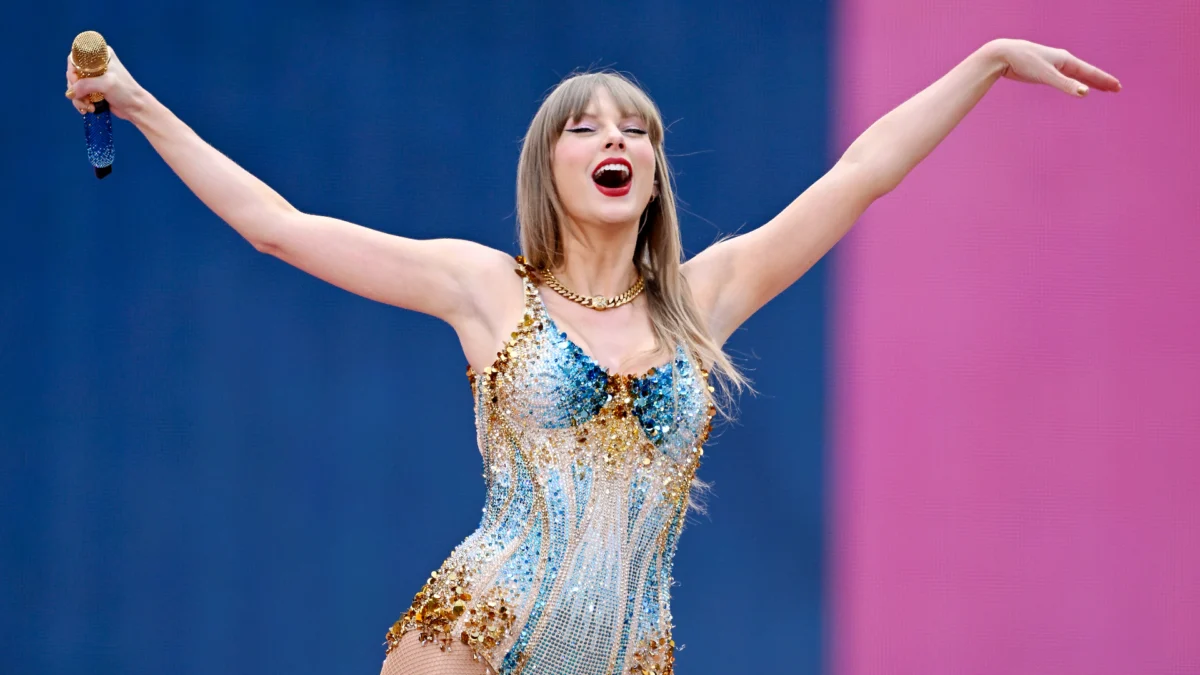
The applications specifically target three distinct areas of Swift’s persona. Two of the filings seek protection for her voice, utilizing audio clips where she identifies herself by saying, “Hey, it’s Taylor Swift” and “Hey, it’s Taylor.” The third application focuses on her visual image, featuring a detailed photograph of the singer holding a signature pink guitar with a black strap, donned in a multicolored bodysuit and silver boots. By registering these specific sensory and visual markers, Swift’s legal team aims to create a federal cause of action that could be used to deplatform AI-generated clones or pursue litigation against companies that train models on her specific vocal characteristics and aesthetic style.
The Strategic Shift to Federal Trademark Protection
The decision to utilize trademark law—rather than relying solely on copyright or state-level right of publicity statutes—is a calculated response to the current legislative vacuum regarding AI. While copyright law protects specific recordings and compositions, it has historically struggled to protect the "sound" of a voice or the "vibe" of a performer. Meanwhile, the right of publicity, which grants individuals the right to control the commercial use of their identity, is governed by a patchwork of state laws.
In states like California and Tennessee, right of publicity laws are robust; however, many other jurisdictions offer little to no protection for a celebrity’s likeness unless it is used to falsely endorse a product. By seeking federal trademarks, Swift is attempting to bypass these regional inconsistencies. A federal trademark registration provides a presumption of ownership nationwide and allows for the recovery of significant damages and attorney fees in the event of infringement.
Swift is not the only celebrity exploring this avenue. Earlier this year, actor Matthew McConaughey successfully navigated several trademark applications for his audio identity. His filings included the iconic phrase “Alright, alright, alright” from the 1993 film Dazed and Confused, as well as visual trademarks of his physical silhouette. These "sensory marks" are rare in the USPTO database but are becoming a vital tool for public figures whose primary value lies in their unique recognizable traits.
Chronology of the AI Threat in the Music Industry
The urgency behind Swift’s filings can be traced through a series of high-profile incidents over the last 24 months that have shaken the music industry:
- April 2023: An AI-generated track titled "Heart on My Sleeve," featuring synthesized voices of Drake and The Weeknd, went viral on TikTok and Spotify. Although it was eventually removed following a DMCA takedown notice from Universal Music Group, the incident proved that AI could convincingly replicate A-list vocalists.
- Late 2023: An AI-generated track titled “The Fate of Ophelia,” which blended Taylor Swift’s synthesized vocals with audio modeled after prominent Brazilian artists, surged into Spotify’s Top 50 chart in Brazil. The track’s success demonstrated the ease with which AI content can bypass traditional gatekeepers and compete directly with an artist’s official catalog.
- January 2024: Explicit AI-generated deepfake images of Taylor Swift proliferated on social media platform X (formerly Twitter), leading to a temporary block on searches for her name. The incident sparked international outrage and prompted calls for federal legislation, such as the proposed "No FAKES Act."
- May 2024: Scarlett Johansson entered a public dispute with OpenAI after the company released a voice assistant, "Sky," which bore a striking resemblance to the actress’s performance in the film Her. Johansson revealed she had previously declined to license her voice to the company, highlighting the "non-consensual" nature of AI voice modeling.
Legal Analysis: The Limitations of the "Likelihood of Confusion" Standard
Despite the high-profile nature of these filings, legal experts caution that trademarks may not be the "silver bullet" many artists hope for. Matthew Asbell, an intellectual property attorney at Lippes Mathias, suggests that the scope of these marks is inherently narrow. "I don’t believe it will be very effective, except for in rare circumstances," Asbell noted. "The voice trademarks are particularly limited to what Taylor is actually saying: ‘Hey, it’s Taylor’ or ‘Hey, it’s Taylor Swift.’"
Under the Lanham Act, the primary test for trademark infringement is the "likelihood of confusion." For Swift to successfully sue an AI creator using these trademarks, she would likely have to prove that the unauthorized use would lead a consumer to believe the AI content was an official communication or product from her brand.
If an AI-generated song uses Swift’s voice to sing original lyrics, but does not use the specific phrase "Hey, it’s Taylor," the trademark for that phrase may not apply. Furthermore, trademark law is designed to protect "marks" that identify the source of goods or services, not to provide a general right to prevent others from imitating a person’s natural voice. There is also the question of whether the phrase "Hey, it’s Taylor" possesses enough "secondary meaning" or distinctiveness to qualify for protection. While Swift herself is a global icon, the phrase itself is relatively generic, posing a challenge for USPTO examiners.
Supporting Data and the Economic Impact of AI Deepfakes
The push for better legal protections comes as the economic stakes of AI deepfakes reach unprecedented levels. According to data from market research firms, the generative AI market in music is projected to grow from roughly $300 million in 2023 to over $2.6 billion by 2032.
A 2023 report by the security firm Home Security Heroes found that deepfake videos online increased by 900% year-over-year. While the majority of these are non-consensual explicit content, the rise of "voice-cloning-as-a-service" platforms has democratized the ability to create high-fidelity vocal replicas. For an artist like Swift, whose "Eras Tour" became the first to gross over $1 billion, the dilution of her brand through thousands of unauthorized AI "covers" or "collaborations" represents a tangible threat to her touring and streaming revenue.
Legislative Context: The ELVIS Act and Beyond
Swift’s legal strategy is unfolding alongside significant legislative developments. In March 2024, Tennessee Governor Bill Lee signed the Ensuring Likeness Voice and Image Security (ELVIS) Act into law. This landmark legislation is the first in the United States to specifically include "voice" as a protected property right, allowing artists to sue those who use AI to mimic them without permission.
While the ELVIS Act provides a model for other states, it only applies within Tennessee’s jurisdiction. At the federal level, the "No AI Fraud Act" and the "No FAKES Act" remain under debate in Congress. These bills aim to create a federal right of publicity, which would provide the exact protections Swift is currently trying to "hack" through trademark law. Until such federal laws are passed, the use of trademarks remains one of the few ways to bring an AI dispute into a federal courtroom.
Broader Implications for the Creative Economy
The outcome of Taylor Swift’s trademark applications will set a vital precedent for the entire entertainment industry. If the USPTO grants these marks, it could open the floodgates for thousands of other performers, voice actors, and influencers to register their own "signature" phrases and visual identifiers.
However, critics of this approach warn of "over-propertization." If every aspect of a human’s voice or appearance can be trademarked, it could lead to a chilling effect on parody, satire, and legitimate creative expression. The legal community remains divided on whether a voice—a biological trait—should be treated as a commercial "mark" in the same way as a logo or a brand name.
For Taylor Swift, the move is consistent with a career-long history of aggressive intellectual property management. From trademarking lyrics like "this sick beat" to re-recording her entire back catalog to regain control of her master recordings, Swift has consistently proven to be a pioneer in artist rights. Her latest foray into AI-focused trademarks is simply the next chapter in her effort to ensure that in an age of synthetic media, the "real" Taylor Swift remains the only one authorized to profit from her identity.
As the USPTO reviews the applications over the coming months, the music and tech industries will be watching closely. Whether these trademarks hold up in court or serve primarily as a deterrent, they mark a definitive end to the era of legal passivity regarding generative AI. The message from the Swift camp is clear: the voice may be synthesized, but the ownership is not up for debate.