The Cannes Film Festival, renowned globally for its discerning curation of cinematic art, recently hosted a notable midnight screening of Rob Cohen’s seminal action film, The Fast and The Furious, commemorating its 25th anniversary. The event, held in the illustrious Grand Théâtre Lumière, marked a significant moment for the festival, signaling a continued embrace of commercially successful genre cinema within its traditionally arthouse-focused Official Selection. This inclusion, particularly in a festival edition characterized by a scarcity of major Hollywood premieres, was perceived by many as a strategic nod towards broader audience appeal, balancing critical prestige with popular culture appreciation.
A Quarter-Century Milestone: The Cannes Homage
The decision to feature The Fast and The Furious, the film that launched a multi-billion-dollar global franchise, in the Official Selection for its silver jubilee, underscores a fascinating evolution in film festival programming. While the Cannes Classics sidebar typically honors meticulously restored masterpieces of cinematic history, the midnight slot provided a distinct platform for a film whose "classic" status, at least in the traditional sense, remains a topic of spirited discussion among cinephiles. This programming choice echoes recent precedents, such as the high-profile premieres of Top Gun: Maverick in 2022 and Mission: Impossible – Dead Reckoning Part One in 2023, both of which saw their stars, notably Tom Cruise, gracing the Croisette. These inclusions suggest a deliberate effort by General Delegate Thierry Frémaux and President Iris Knobloch to integrate mainstream blockbusters, particularly those with significant cultural resonance, into the festival’s prestigious lineup, thereby broadening its appeal and potentially drawing new audiences.
The 25th-anniversary screening, held on a Wednesday night, drew a dedicated crowd, with many attendees defying conventional circadian rhythms to witness the revival of the street-racing juggernaut. For seasoned festival-goers often sifting through hours of independent dramas, the prospect of a "surefire prospect" offered by a film with established merits was a welcome alternative. The original article’s sentiment regarding restorations and revivals — that films enduring beyond their initial festival run have proven artistic or artifactual value — was implicitly extended to The Fast and The Furious, albeit in a distinctly modern, pop-cultural context.
Vin Diesel’s Emotional Return and the Red Carpet Spectacle
The evening was undeniably dominated by the charismatic presence of Vin Diesel, the franchise’s patriarch, Dominic Toretto, whose connection to Cannes dates back to 1995. Before the screening, a palpable anticipation filled the air outside the Grand Théâtre Lumière. Co-stars Michelle Rodriguez and Jordana Brewster, alongside Meadow Walker, daughter of the late Paul Walker, had already traversed the iconic red carpet, awaiting Diesel for a triumphant group photograph. Frémaux and Knobloch were also present, symbolizing the festival’s official imprimatur on the event. Diesel, ever the showman, lingered among photographers and fans, ensuring maximum exposure for his blazer, emblazoned with the diamond-encrusted declaration: "FAST FOREVER." This audacious sartorial statement underscored the actor’s profound belief in the franchise’s enduring power, a conviction seemingly validated by the ongoing development of four Fast & Furious spin-off TV series at Peacock, even as the "final" film installment is slated for 2028.
Inside the packed 2,300-seat theater, Diesel delivered an emotional address to the revved-up audience. His speech, delivered in his characteristic slow, sonorous cadence, repeatedly invoked the film’s "classic" status, despite its technical exclusion from the dedicated Classics sidebar. This self-declared elevation to classic status, while perhaps not formally recognized, reflected the deep personal and professional significance the film holds for its star. Diesel reminisced about his first visit to Cannes in 1995, then a relatively unknown 28-year-old, presenting his 20-minute short film, Multi-Facial, which he wrote, produced, directed, and starred in. Frémaux’s earlier comment to Diesel, "You, Vin, were born in Cannes," resonated deeply, culminating in a visibly moved Diesel, brought to tears by the magnitude of the occasion.
The Franchise’s Enduring Legacy: From Street Races to Global Phenomenon
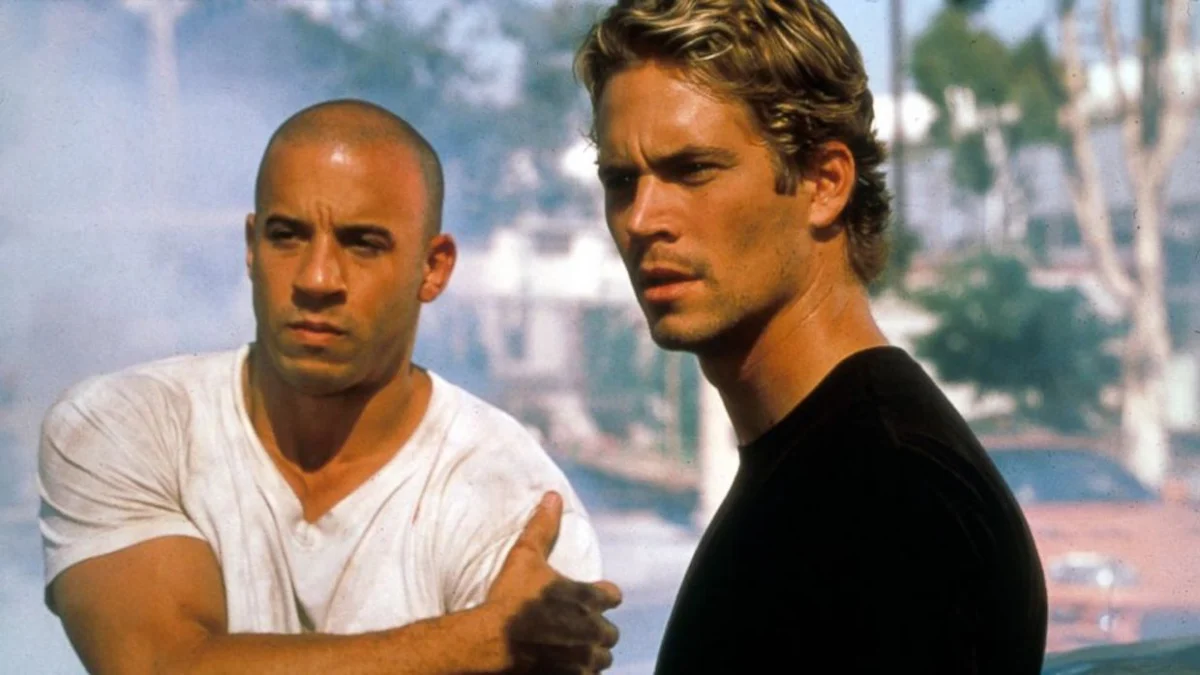
The Fast and The Furious, released on June 22, 2001, burst onto the cinematic landscape as a high-octane exploration of illegal street racing, friendship, and loyalty. Directed by Rob Cohen and starring Vin Diesel and Paul Walker, the film garnered critical acclaim for its adrenaline-pumping action sequences and its exploration of themes that would become synonymous with the franchise: "family" and brotherhood. With a production budget of approximately $38 million, the film went on to gross over $207 million worldwide, a robust performance that immediately signaled the potential for a long-running series.
Over the past quarter-century, the Fast & Furious saga has expanded far beyond its humble origins, evolving from street-level crime dramas into a global espionage thriller series, often featuring physics-defying stunts that have become its hallmark. The franchise, comprising ten main films and one spin-off to date, has collectively grossed over $7 billion globally, making it one of the highest-grossing film franchises of all time. This phenomenal success is not merely a testament to its action spectacle but also to its consistent narrative emphasis on chosen family, a theme that has resonated deeply with diverse audiences worldwide.
Cannes Festival: A Shifting Definition of "Classic"
The inclusion of The Fast and The Furious in the Official Selection, particularly with its star declaring its "classic" status, invites a re-examination of what constitutes a "classic" at an esteemed festival like Cannes. Traditionally, the festival’s Classics section is dedicated to films that have undergone meticulous restoration, often by archives or studios, and are presented to celebrate their historical and artistic significance. These are typically works by auteurs, films that have shaped cinematic language, or those that offer profound cultural insights. While The Fast and The Furious may not fit this mold in the conventional sense, its longevity, immense cultural impact, and the fervent loyalty of its global fanbase present a compelling argument for its modern artifactual value.
The festival’s apparent willingness to embrace such popular cinema reflects a broader trend in the film industry, where the lines between "art" and "commerce" are increasingly blurred. By celebrating a film like The Fast and The Furious, Cannes not only acknowledges its undeniable commercial success but also recognizes its unique position in contemporary popular culture. This strategic move helps to maintain the festival’s relevance in an ever-evolving media landscape, attracting a wider demographic while still upholding its core mission of celebrating cinema.

Revisiting the Original: Simplicity Amidst Spectacle
For those accustomed to the increasingly extravagant and globally expansive plots of later Fast & Furious installments — including one memorable sequence in Fast 9 (2021) that literally ventures into space — revisiting the original film offers a fascinating contrast. The plot of the 2001 movie, at its core, revolves around a series of truck heists targeting VCRs and DVD players. The LAPD, suspecting Dom Toretto’s crew, tasks Officer Brian O’Conner (Paul Walker) with infiltrating their tight-knit circle. This relatively grounded premise, focused on local crime and personal allegiances, exudes a "highly calibrated, hypnotic quality" that some critics have likened to a "Michael Mann for meatheads," a description often delivered as a compliment for its effective blend of style and visceral action.
The narrative simplicity of the first film, juxtaposed against the complex, world-saving missions of its successors, highlights the franchise’s remarkable trajectory. The early focus on street culture, customized cars, and the burgeoning bond between Dom and Brian laid the groundwork for the expansive universe that followed. The initial film’s charm lies in its relative restraint, a quality that allows its core themes of loyalty, family, and the thrill of the ride to shine without being overshadowed by excessively digitalized spectacle.
The Unbreakable Bond: Paul Walker’s Legacy and the "Family" Theme
A poignant aspect of the Cannes screening was the ever-present memory of Paul Walker, who tragically died in a high-speed single-car collision in 2013 during the production of Furious 7. His death profoundly impacted the franchise, leading to a thoughtful and emotional send-off for his character, Brian O’Conner, in Furious 7, which became a global phenomenon and a tribute to Walker’s life and legacy. Vin Diesel’s emotional address at Cannes explicitly honored Walker, whom he affectionately referred to as "Pablo." Diesel declared, "This is the film where brotherhood was introduced to our millennium by myself and my brother Pablo." This statement, made in the early hours of the morning, underscored the deep personal connection that the actors forged, which subsequently became the thematic bedrock of the entire franchise.
Walker’s portrayal of Officer Brian O’Conner in the original film, characterized by a potent blend of determination, anger, and nascent lust, with his distinctive furrowed-brow glare and "Fremen-blue eyes," demonstrated an intensity that some observers trace back to his earlier acting roots. Notably, Walker appeared on the alarmingly long-running soap opera The Young and the Restless in 1993. This background in serialized drama, where complex family dynamics and long-form storytelling are paramount, arguably prepared him for the "byzantine family melodrama" that the Fast & Furious franchise would ultimately become. Indeed, like the soap opera, the Fast & Furious saga has maintained its core identity as a sprawling narrative centered on familial bonds, albeit presented with a unique blend of high-octane action and strangely sultry charisma in its initial outing.
Economic and Cultural Impact: A Franchise That Keeps Accelerating
Beyond its cinematic achievements, The Fast and The Furious franchise represents a significant economic powerhouse within the entertainment industry. Its consistent box office performance, robust merchandising, and expanding multimedia presence (video games, animated series, and now multiple spin-off TV series) illustrate its profound commercial viability. The franchise’s global appeal is undeniable, transcending linguistic and cultural barriers, largely due to its universal themes of family, loyalty, and the underdog spirit.
The cultural impact of The Fast and The Furious is also evident in its influence on car culture, fashion, and even language, with phrases like "living life a quarter-mile at a time" entering popular lexicon. The series has also been instrumental in launching and sustaining the careers of its primary stars, making them household names across continents. The Cannes recognition, therefore, is not just an acknowledgment of a film but of a cultural phenomenon that has shaped a generation of movie-goers and redefined the scope of the action genre.
The Future of the Fast Saga and its Expanding Universe
With a "final" installment currently slated for 2028 and multiple spin-off television series in development, the Fast & Furious universe is far from concluding. This expansion into episodic television suggests a strategic move to diversify the franchise’s storytelling avenues and maintain its presence across different media platforms. The commitment to further narratives, even beyond the main cinematic saga, underscores the immense value and storytelling potential that Universal Pictures sees in the Fast brand. This continued expansion ensures that the "FAST FOREVER" promise emblazoned on Vin Diesel’s blazer is more than just a tagline—it’s a business strategy.
Conclusion: A New Chapter for Film Festival Programming
As the credits rolled and Vin Diesel concluded his second emotional soliloquy shortly before 3 a.m., the Cannes midnight screening of The Fast and The Furious left an indelible mark. It was an event that challenged conventional notions of cinematic prestige, celebrated a quarter-century of a beloved franchise, and highlighted the evolving dynamics between high art and popular entertainment at one of the world’s most esteemed film festivals. For attendees, weary yet exhilarated, the experience was a testament to the enduring power of cinema, regardless of its genre or perceived status. The festival’s decision to embrace such a film, while perhaps initially met with incredulity, ultimately served to invigorate the cinematic discourse, proving that even amidst a lineup of new and notable works, the proven merits of an "artifact" like The Fast and The Furious can still captivate and inspire. This event signals a compelling new chapter in film festival programming, one where the definition of a "classic" is broadened to encompass the cultural touchstones of our time.