Jozef Van Wissem is not a musician who treads lightly. Widely acknowledged as the world’s most prominent contemporary lutenist, he commands a sonic arsenal of eight meticulously crafted string instruments, each boasting unique and remarkable features. This dedication has fueled a prolific career, yielding a discography of nearly 50 titles. His latest offering, "This Is My Blood," is slated for release this May, continuing a tradition of annual Easter compositions.
The Lutenist’s Sanctuary: Warsaw’s Creative Calm
Van Wissem finds his creative sanctuary in Warsaw each Easter. The city, during the holiday period, empties out as residents depart for traditional observances, leaving behind a profound quiet that Van Wissem finds far more conducive to composition than the "noisy" bustle of Rotterdam, where he also maintains a residence. This annual pilgrimage to solitude underscores his meticulous approach to artistic creation, emphasizing the importance of an undisturbed environment for the genesis of his complex musical ideas.
A Deconstructed Legacy: The Art of "Stealing" Melodies
At the heart of Van Wissem’s compositional process lies a fascinating engagement with tradition. He describes his method as "stealing" traditional themes or melodies, a confession that belies the profound transformation these borrowed elements undergo. "It’s stealing, I admit it," he states, yet this "theft" is far from mere imitation. The vast and fluid repertoire of the classical lute, shaped by centuries of travel and re-notation, is, in Van Wissem’s view, inherently open to continuous reinterpretation. This fluidity is amplified by the lute’s diverse tunings. His striking black 14-course theorbo, equipped with "sacrilegious" built-in microphones and a foldable neck, exemplifies this experimental spirit with its reentrant tuning—a technique where strings are tuned to pitches that disrupt the conventional ascending or descending sequence, creating unexpected harmonic possibilities.

Beyond Tradition: Film Scores and Psychedelic Journeys
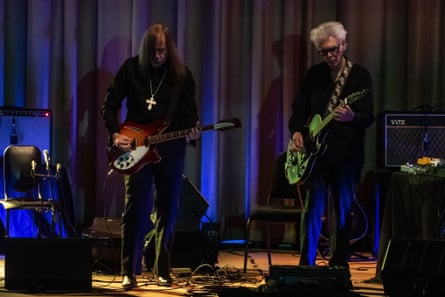
Van Wissem’s musical explorations extend far beyond the concert hall. He is particularly renowned for his film score work, most notably his collaboration with indie cinema icon Jim Jarmusch’s band SQÜRL for the soundtrack of Jarmusch’s acclaimed film Only Lovers Left Alive. His new album, "This Is My Blood," further solidifies this connection, with its music composed for Joaquim Pujol’s documentary Máquina. The film chronicles a journey into the Colorado desert, exploring psychedelic experiences as a therapeutic approach to alcoholism. The album’s opening and closing tracks are described as improvised slide compositions, employing the bottleneck technique, which promises an adventurous and boundary-pushing sonic experience.
Van Wissem acknowledges the divisive nature of his experimental approach: "When I do this at a show, the first people who leave are the classical people. They can’t stand it. The experimental music people love it." This dichotomy highlights his deliberate challenge to established norms and his commitment to an evolving definition of what lute music can be.
The Lute Wars: A Battle for Modern Relevance
Van Wissem has been engaged in a four-decade-long "battle" with what he perceives as academic conservatism surrounding the lute. He expresses frustration with the instrument’s perceived marginalization, stating, "I think people in academic circles are still hiding it, they demean it in a way." His self-proclaimed mission is to re-establish the lute as a "real pop instrument again." He draws parallels to its historical ubiquity, recalling a time before its 250-year "disappearance" when the lute was "omnipresent," found as readily in brothels and taverns as in royal courts. He finds resonance between the lute’s "direct, stripped-back emotion" and the stark, evocative sound of the experimental music collective Coil, an artist he deeply admires.
This "lute war" extends to practical matters, particularly regarding amplification. Van Wissem recounts numerous standoffs with traditionalists over the integration of technology into his instruments. "They don’t want to put a microphone inside," he laments. For Van Wissem, the sheer volume of performances necessitates amplification, as he finds it "always a bother" to explain to venue sound engineers that a lute "needs" to be loud. He views the lute not as a delicate relic but as a potent "rock instrument," capable of captivating and overwhelming audiences.
Roots in Rebellion: From Dutch Punk to Avant-Garde Influence
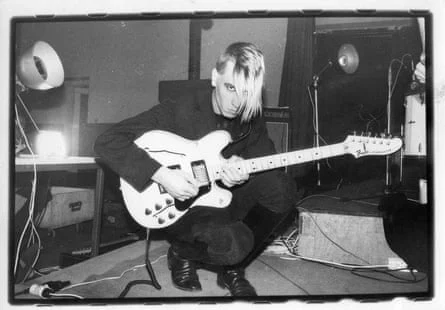
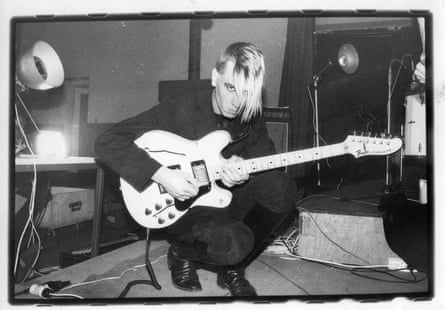
Van Wissem’s penchant for nonconformity is deeply rooted in his formative years within the vibrant Dutch punk scene of the early 1980s. This was an immersive, almost anarchic lifestyle characterized by squatting, confrontations with authority, prolific letter-writing, and the exchange of cassette tapes. His musical influences during this period included bands like Joy Division, and he actively engaged in cultural exchange, traveling to Belgium and the UK to forge artistic connections. Sporting bright orange hair, he was a member of the punk band Mort Subite in 1978 and later the new wave act Desert Corbusier, with whom he toured Yugoslavia. It was in Ljubljana that he encountered Laibach, a band whose conceptual approach—"the idea of making something based on one strong idea"—profoundly impacted Van Wissem’s own artistic philosophy.
A significant turning point in his early life occurred in 1979 when Van Wissem was evicted from his Maastricht squat by a group of soccer fans who subsequently set the building ablaze. This event prompted his relocation to Groningen, a dynamic northern Dutch city that was then the nation’s squatting capital. From 1988 to 1993, he owned and operated "De Klok," a famously riotous bar in the city. However, he grew disillusioned with what he perceived as an increasingly mundane music scene. "I saw Nirvana at Vera, Groningen. But I just became bored with it all. It was the perfect time to start playing the lute," he reflects, marking a decisive shift in his artistic trajectory.
A New Chapter in New York: Embracing the Lute’s Potential
With his social life also spiraling out of control, Van Wissem abandoned his career as a barman and departed for New York in 1993. "I got a letter from a producer and I went to Williamsburg. I found peace," he recalls. Tragically, the building that housed De Klok later exploded after his departure, a testament to the volatile environment he left behind.
In New York, he found a crucial mentor in lutenist Patrick O’Brien. O’Brien, described by Van Wissem as "a very open guy, and a Vietnam vet who had gone to prison for refusing to go back," offered a revelatory approach to the instrument. This contrasted sharply with his earlier experience in The Hague, where a single lesson in lute playing proved stifling. "It was very boring. You have to play these notes exactly as they are on the page. Which is ridiculous! It’s like listening to a Jimi Hendrix solo, then writing it down in staff notation to play it to your students; why would you do that?" Van Wissem’s rebellion against rigid academic interpretation underscores his fundamental belief in the lute’s capacity for dynamic and improvisational expression, akin to the spirit of rock and roll pioneers.
The Future of the Lute: A Call for Openness
Van Wissem remains optimistic about the future of the lute, though he acknowledges the challenges in fostering a new generation of innovative players. He points to Miguel Serdoura as a promising musician, one who embraces modern sensibilities. More broadly, he notes the emergence of "a lot of kids that do stuff like copy Metallica on the lute." However, he issues a cautionary note: "To study lute you need a good six years, and six hours a day. And lute people aren’t really listening to Nurse With Wound and Morton Feldman." This highlights the demanding nature of mastering the instrument and the often-insular world of traditional lute pedagogy, a world Van Wissem continues to challenge with his bold and visionary artistry. His work is not just about playing the lute; it is about redefining its place in the contemporary musical landscape.