Narrative Overview and Character Dynamics
The story centers on Enzo, a 19-year-old portrayed by Diego Murgia, and his 20-year-old sister Carla, played by Romane Fringeli. Having fended for themselves for several years, the siblings have developed a survivalist bond that is abruptly tested when their father, Anthony (Bastien Bouillon), is released from prison. For Enzo, the return of his father represents a "fleeting promise"—a desperate hope that the fragmented pieces of his childhood can be reassembled into a cohesive family unit. He is drawn into what observers describe as a "cyclone of chaos," projecting onto Anthony virtues and qualities that exist more in his yearning imagination than in reality.
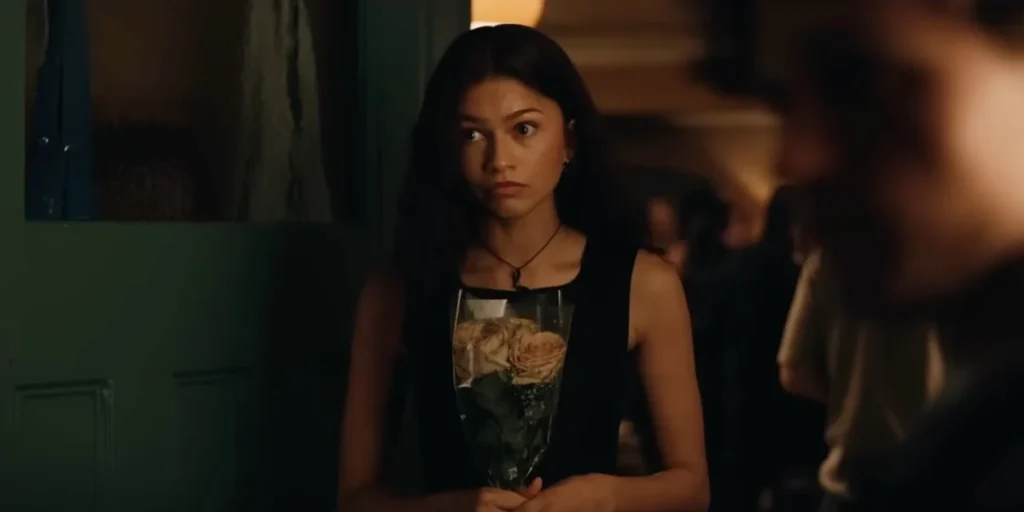
Conversely, Carla represents the hardened reality of their abandonment. For her, the notion of rebuilding a relationship with Anthony is not only inconceivable but repulsive. The mere mention of her father acts as a catalyst for a radical personality shift, transforming her from a composed young woman into a vessel of concentrated rage. The film meticulously tracks this dichotomy: Enzo’s desperate attempts to bridge the gap between himself and his father, contrasted against Carla’s steadfast refusal to leave the safety of her emotional distance. As the plot progresses, a long-hidden reality harbored by Enzo begins to surface, forcing a confrontation with a past that threatens to finish the destruction the family’s original trauma began.
Chronology of the Domestic Unraveling
The chronological progression of The Blow is structured around the immediate aftermath of Anthony’s reentry into society. The film begins with the quiet, functional life Enzo and Carla have built, establishing their interdependence. The inciting incident—Anthony’s release—acts as a stone thrown into still water, creating ripples that eventually become waves.
- The Reentry Phase: Anthony’s initial return is marked by Enzo’s cautious optimism and Carla’s immediate withdrawal. The film establishes the domestic space as a site of tension, where every shared meal or conversation is fraught with the weight of the years lost to incarceration.
- The Escalation of Chaos: As Anthony struggles to reintegrate, his volatile nature begins to bleed into the siblings’ lives. Enzo becomes increasingly entangled in his father’s erratic behavior, while Carla’s resentment boils over into externalized aggression.
- The Revelation: The narrative shifts in the final act toward a series of shocking revelations. These plot points are intended to recontextualize the characters’ previous choices, though critical analysis suggests that the impact of these twists is mitigated by the film’s earlier pacing.
- The Conclusion: The film culminates in a confrontation that highlights the permanent nature of the family’s "seeds of destruction," leaving the audience with a sense of the insurmountable distance that remains between the characters.
Technical Execution and Visual Strategy
The Blow distinguishes itself through a deliberate, if polarizing, visual approach. Director Julien Gaspar-Oliveri utilizes cinematography to make the abstract concept of "distance" tangible. The film frequently employs intimate close-ups, placing the camera inches from the actors’ skin. This technique is designed to capture micro-expressions and involuntary physical responses—an eye twitch or a subtle shift in gaze—thereby inviting the audience into the internal world of the characters.
However, this intimacy is frequently interrupted by long shots and the intermittent use of "shaky cam." While intended to evoke a sense of naturalism and raw energy, the integration of these styles has been noted for its jarring effect. The transition between traditional, stable footage and handheld, erratic movement can lead to a disorienting viewing experience. Furthermore, the use of zoom-ins has been described as occasionally "sloppy," pulling the viewer out of the immersive environment the close-ups work so hard to create.
Performance Analysis: The Weight of the Lead Actors
The success of the film’s emotional beats relies heavily on the performances of Diego Murgia and Romane Fringeli. Murgia, as Enzo, is tasked with the majority of the film’s non-verbal storytelling. His performance is characterized by a "carefully crafted gaze" that communicates a spectrum of emotions: the ecstasy of paternal reunion, the sting of failure, and the burgeoning frustration of self-discovery.
Romane Fringeli’s portrayal of Carla is equally vital, though critics have noted that her character is frequently sidelined in favor of Enzo’s journey. Despite this, Fringeli manages to convey the volatility of a woman whose life has been defined by the vacuum left by her father. The chemistry—and the subsequent friction—between Murgia and Fringeli serves as the film’s emotional anchor, compensating for a screenplay that some argue lacks the depth required for its high-stakes conclusion.
Supporting Data and Industry Context
In the broader context of contemporary French cinema, The Blow fits into a long-standing tradition of social realism that examines the fallout of the carceral system on the family unit. Statistics from the European Institute for Crime Prevention and Control suggest that the children of incarcerated parents are at a significantly higher risk for emotional instability and social displacement, a reality that Gaspar-Oliveri’s script seeks to humanize.
The film’s production reflects the challenges of independent European filmmaking, where the focus is often on character studies rather than plot-driven narratives. With a runtime of 106 minutes, the film has been described by some industry analysts as a "slog," a term often applied to films that prioritize atmosphere and psychological tension over traditional pacing. This "slow-burn" approach is a hallmark of the festival circuit, where The Blow aims to find an audience appreciative of its "singular visual style" and "bold" narrative swings.
Critical Implications and Broader Impact
A fact-based analysis of The Blow suggests a disconnect between the film’s ambitious premise and its final execution. While the synopsis promises a high-stakes emotional drama, the actual experience of the film is often described as "emotionless" due to the underwritten nature of its characters. The "one-dimensional" feel of the protagonists makes the final twists feel less like a natural evolution of the story and more like a forced attempt at shock value.
The broader implication of the film lies in its depiction of the "unraveling of a family unit." It serves as a cinematic case study on how trauma, once sown, continues to bear fruit long after the original incident has passed. The film’s devotion to capturing distance ultimately leaves the audience at a similar remove, a choice that may be intellectually consistent with the themes but emotionally unsatisfying for the viewer.
Conclusion: A Study in Fragmented Potential
The Blow stands as a testament to the promise of its creative team and cast, even as it struggles with the cohesion of its storytelling. The performances by Murgia and Fringeli elevate the material, providing a glimpse into the profound psychological toll of family abandonment. However, the film serves as a cautionary example of how editing and pacing can undermine even the most bold visual and narrative intentions.
As a contribution to the genre of family drama, it offers a stark, unflinching look at the impossibility of return. For the characters of Enzo and Carla, the release of their father is not a homecoming but a final blow to the fragile life they had built in his absence. While the film may not achieve the emotional resonance it strives for, its technical ambitions and the raw talent of its leads mark it as a noteworthy entry in recent independent cinema, inviting further discussion on the limits of reconciliation and the permanence of domestic fracture.