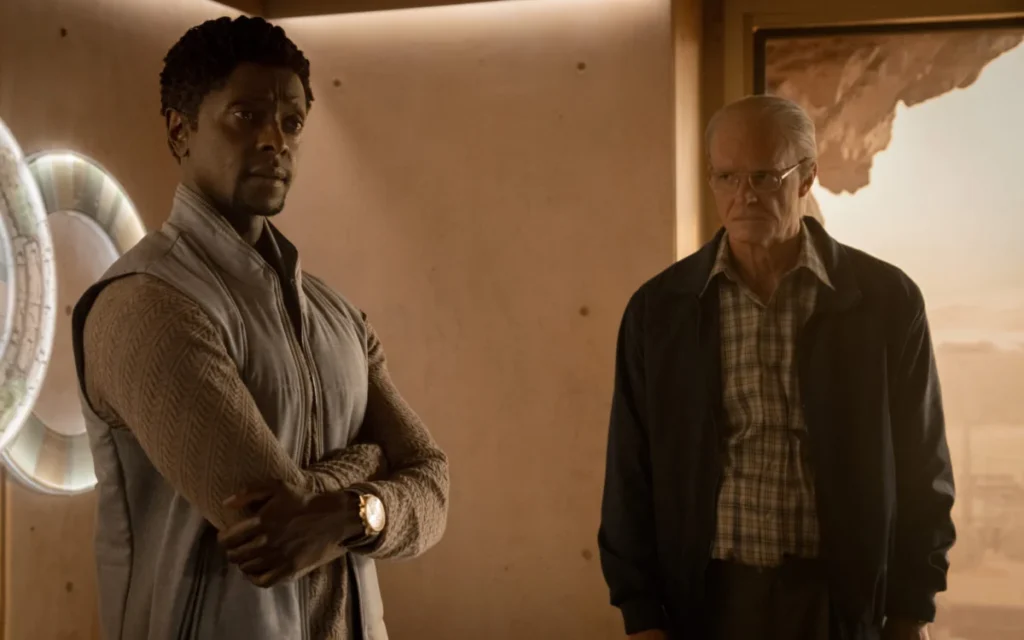
The release of Platform Decay, the eighth installment in Martha Wells’ critically acclaimed Murderbot Diaries series, marks a significant moment for both the beloved author and her millions of devoted fans. This latest entry sees the famously antisocial SecUnit embarking on a perilous rescue mission, navigating complex interactions with unfamiliar individuals, and confronting the ongoing implementation of a mental health module that necessitates regular emotional self-diagnostics. While these elements might seem like a typical day for the cyborg that first captured hearts nearly nine years ago with its ingenious hacking of its own governing software for the sole purpose of uninterrupted media consumption, the reality is far more profound.
Since the debut of All Systems Red in 2017, Murderbot has transcended the boundaries of a literary character to become a genuine cultural phenomenon. Its success, measurable in sales figures and the critical acclaim of its Apple TV+ adaptation—widely regarded as one of the most successful science fiction adaptations in recent memory—is undeniable. However, the truest testament to the series’ impact lies not in these metrics, but in the profound connection it has forged with its readership. In an era often characterized by uncertainty and societal fragmentation, Murderbot has emerged as an unlikely beacon of hope. The Murderbot Diaries, in turn, have become eagerly anticipated releases within the science fiction and fantasy genres, offering solace and validation to a diverse audience. The narrative of an emotionally conflicted cyborg struggling against the machims of ruthless corporations has resonated deeply, providing comfort to readers navigating their own unprecedented challenges. This enduring appeal is encapsulated in the pervasive fan sentiment: “Same, Murderbot, same.”
This burgeoning cultural significance was a central theme in a recent in-depth interview with Martha Wells, conducted by Matthew Byrd. The conversation delved into the genesis of Platform Decay, the enduring appeal of Murderbot’s journey, and, perhaps most compellingly, what lies ahead for the character as Wells contemplates the potential conclusion of the series.
The Genesis of "Platform Decay" and Its Breakneck Pace
Matthew Byrd’s interview immediately addressed the distinctive pacing of Platform Decay, noting how the narrative plunges readers directly into the heart of the mission from its opening pages. This immersive and rapid-fire approach, which caught some readers off guard, prompted questions about its intentionality – whether it was designed to mirror the character’s exhaustion or simply emerged organically during the writing process.
Wells explained that the book’s structure was indeed a product of its organic evolution. “That was basically how it took shape as I worked on it,” she stated. “I was having a little trouble getting it started, as I do pretty much all the Murderbot books, and was looking for a place to really start the story. I tried a couple of other openings that started further back and offered more explanation, but this one just really felt right. I wanted to focus on the Torus setting. So starting right as they got into it just felt like the right way to go.” This approach underscores Wells’s method of allowing the narrative to guide her, rather than imposing a predetermined structure. The focus on the Torus setting as a pivotal location immediately grounds the story and sets the stage for the ensuing action.
Tracking Emotional Growth: The Core of the Murderbot Narrative
Byrd then explored the perceived contrast between the book’s fast-paced narrative and Murderbot’s apparent mental and emotional progress. He queried whether the series’ trajectory is now more closely tracked by Murderbot’s emotional development than by major plot revelations.
Wells confirmed this shift, acknowledging that while it wasn’t the initial intention, Murderbot’s mental health progress has become intrinsically linked to the series’ progression. “It didn’t start out that way, but now it is very closely tracked by Murderbot’s mental health progress,” she revealed. “I think Network Effect was really the only one that had that kind of epic, big story. The series, to me, has always felt really personal. Personal to Murderbot and personal to the reader. I’ve kind of been tending in that direction for a while.” This personal and internal focus has evidently resonated with fans, deepening their connection to the character and the universe.
Balancing Personal Vision with Fan Interpretation
The profound connection fans feel with Murderbot raises questions about how an author navigates their personal artistic vision against the backdrop of a character who has become so significant to so many. Wells articulated a straightforward approach to this delicate balance: “I just try to stay true to what I feel the character is, because I think that’s what people are responding to.” This commitment to authenticity suggests that the character’s universal appeal stems from a core truth that Wells has consistently maintained.
An Unexpected Haven: Murderbot as a Source of Comfort
The question of whether Wells ever anticipated her stories becoming a source of comfort during challenging times was met with a candid admission of surprise. “I didn’t anticipate that, but I didn’t anticipate anything about how popular the series would be,” she confessed. She further elaborated on the personal significance of this, drawing a parallel to her own experiences as a reader. “It’s really nice to hear that it has, because… for me, a lot of books were like that. Basically, my whole life… I started to say when I was growing up, but it’s pretty much the same case now, where a new book comes along from a favorite author, and it’s just such a relief to step out of the world for a while with that author you trust. I’m just really glad it’s become that way for some people.” This sentiment highlights the powerful role of literature in providing escapism and solace, a role that Murderbot has clearly fulfilled for its vast readership.
The Secret to Navigating a Corporate Hellscape
When pressed about the "secret" to writing a character who demonstrably improves their emotional state while existing in a dystopian, corporate-dominated world, Wells offered a relatable answer, laced with humor. "[laughs] I wish I really knew! Basically, my coping mechanism is the same one I gave Murderbot, which is basically TV, movies, stories, books… anything that just kind of takes you away from reality for a while." This mirrors Murderbot’s own reliance on media consumption as a form of self-care and escape, suggesting a shared coping strategy between author and character.
The Cultural Impact of "Sanctuary Moon"
The conversation also touched upon the unexpected popularity of "The Rise and Fall of Sanctuary Moon," the fictional in-universe media that Murderbot consumes. The Apple TV+ adaptation’s portrayal of this soap opera has spawned its own dedicated fandom, prompting Wells to reflect on its impact.

“Not really,” Wells responded when asked if the fan reaction had changed her engagement with the fictional series. “It’s pretty much the same for me. I just think the way they did [Sanctuary Moon] in the TV series was so much fun. Just having so many surprise actors, and just the whole… taking the soap opera, telenovela concept and really pushing it as far as it could go into the outrageous. The costumes, the great music, and the situations. I just think that’s what people are responding to. It’s so silly, and it’s so fun, yet it’s kind of serious stuff. It was just incredibly likable.”
When asked for the best comparison to "Sanctuary Moon," Wells leaned towards "Days of Our Lives," noting that its nature would become even more apparent in the second season of the show, where other fictional programs would also be showcased, highlighting the broader fictional media landscape within the Murderbot universe. This comparison underscores the deliberate embrace of camp and melodrama in the fictional show’s conception.
The Evolving Theme of Community and Found Family
A significant thematic shift in Platform Decay, and indeed in the series as a whole, is the growing emphasis on community and interpersonal relationships, moving beyond Murderbot’s initial themes of independence, ownership, and even slavery. Wells explained the importance of this evolution: “Well… this can sound complicated, but it’s kind of about the ways the nuclear family has kind of been a little imposed on our society. You read about historical communities and how it’s more helpful for people to be in larger groups, found families, and extended families, just forming little, small communities that help people take care of each other.”
She elaborated on how this theme is woven into the narrative, particularly within the diverse segments of the Torus: “So I just like to write about that too. I like to show that in the Murderbot Diaries. I think when they’re traveling on the Torus and going through the different segments that have very different… not just styles of government, but different cultures. It was really a good spot to show the variety in how people were living. The worse a place felt, the more signs of community there were.” This observation highlights a recurring pattern in the series: in the face of hardship and corporate oppression, communities flourish.
Wells further elucidated this by referencing the natural human inclination for connection, contrasting it with the often-imposed societal structure of small, isolated families. “Yeah, I think so. I think humans always want to live in groups, and this whole idea of these very small families being isolated is… It just doesn’t work for many people these days. Especially people who don’t want to get married or don’t want to have a significant other, but who do want to have friends. Or they want a relationship, but they don’t want to have kids, and they don’t mind helping other people with their kids. That kind of thing. It’s just that there are too many variations, and I think people are kind of tired of being put into little boxes as to what their relationship should be.” This perspective speaks to a broader societal shift towards more fluid and diverse definitions of family and belonging, a theme that Murderbot’s journey increasingly embodies.
Unforeseen Narrative Directions
When asked about surprises during the writing of Platform Decay, given her tendency not to plot extensively ahead, Wells pinpointed a significant development: “I don’t think until I really got into it, and they started their escape with Farai, Sofi, and Naja… I didn’t really think of the whole family road trip thing until then. That’s when it really started to come together. So I was kind of surprised by that, but I also really enjoyed how it was trending in that direction.” This highlights the organic nature of her writing process, where key narrative elements can emerge unexpectedly and fundamentally shape the story.
Evolving Relationships: The Case of Three
The evolving dynamic of relationships within the series was also a topic of discussion, with Byrd specifically asking about characters like Three, who has become a fan favorite. Wells noted that Three’s development has deviated from her initial expectations: “I think Three has evolved differently because, at first, I kind of imagined it almost as a friend or sidekick to Murderbot. Basically, I kept thinking about how that feels similar to some of the things I’ve done before. So I’ve kind of been taking it in a bit of a different direction. Murderbot doesn’t have a lot of interest in fixing big problems or activism. It mostly focuses on keeping the people it cares about safe. The fact that Three might be different, and might be exploring that when it goes off on its own on the Torus is kind of playing with that direction a bit.” This suggests that Three’s independent trajectory and potential for different motivations will continue to be a compelling aspect of the series.
Contemplating the End of an Era
A significant revelation from the interview was Wells’s contemplation of the possibility that the next Murderbot story might be the last. When asked for an update, she confirmed this inclination: “Yeah, I mean, it will certainly be the last one for a while. I do want to take a break from it and maybe try something else.” She clarified that she is currently focused on other projects, including the next book in her Rising World series, Hierarch. However, she is contractually obligated to one more book, which could potentially serve as a concluding chapter for Murderbot. “I kind of feel like I’ve taken it to a place where Murderbot is in a really good place right now. Not perfect, but much better than it has been before. So that might be a good place to put a cap on the story, if that’s how it turns out.” This indicates a thoughtful consideration of closure, aiming for a satisfying resolution for the character.
Defining the Moment of Conclusion
Wells outlined her criteria for determining the series’ end, emphasizing a narrative desire to explore a major story arc centered around the Preservation system. “Well, I had an idea for a long time of wanting to do a big story centered around Preservation, the planet, or in the Preservation system, with something happening there. I would like to be able to do that.” She acknowledged that fitting such ambitious ideas into individual books can be challenging, but expressed hope that the next installment would allow for this narrative culmination.
The Unforeseen Arc of Murderbot’s Journey
Reflecting on the series’ origins as a standalone story and its subsequent expansion, Wells revealed that she never seriously considered a tragic or graphic ending for Murderbot. “Not really! In All Systems Red, once I decided, ‘Yeah, Murderbot was going to leave’ and then I had the idea that it would be great to do a story arc getting back to meet up with Dr. Mensa and the others again. That was kind of up to Exit Strategy. Then Network Effect was just me wanting to get ART and Murderbot back together. So it’s always kind of been about more the story I wanted to tell next, and I never really thought of, you know, doing something graphic to the character at the end or anything like that.” This highlights her consistent focus on character development and narrative progression over potentially sensational or bleak conclusions.
The Impact of Success on Creative Freedom
The unexpected, phenomenal success of the Murderbot Diaries has undeniably influenced Wells’s creative output. “I don’t think it’s changed my approach. I think it’s given me the ability to do things that are more out of the box and risky, like Witch King,” she stated. This increased creative freedom allows her to explore diverse genres and narratives, pushing beyond the confines of what might have been considered commercially viable earlier in her career.
Beyond Murderbot: Exploring New Creative Horizons
For readers whose primary introduction to Wells’s work is through Murderbot, her broader literary output might come as a surprise. “Well, a lot of them were just surprised in general and didn’t realize I’d written fantasy before. A lot of them didn’t realize I’d written novels before,” she noted with amusement. This suggests a potential for readers to discover her earlier works and appreciate the breadth of her storytelling capabilities. The conversation underscores the enduring power of Murderbot, not just as a character, but as a gateway to a rich and diverse literary universe.