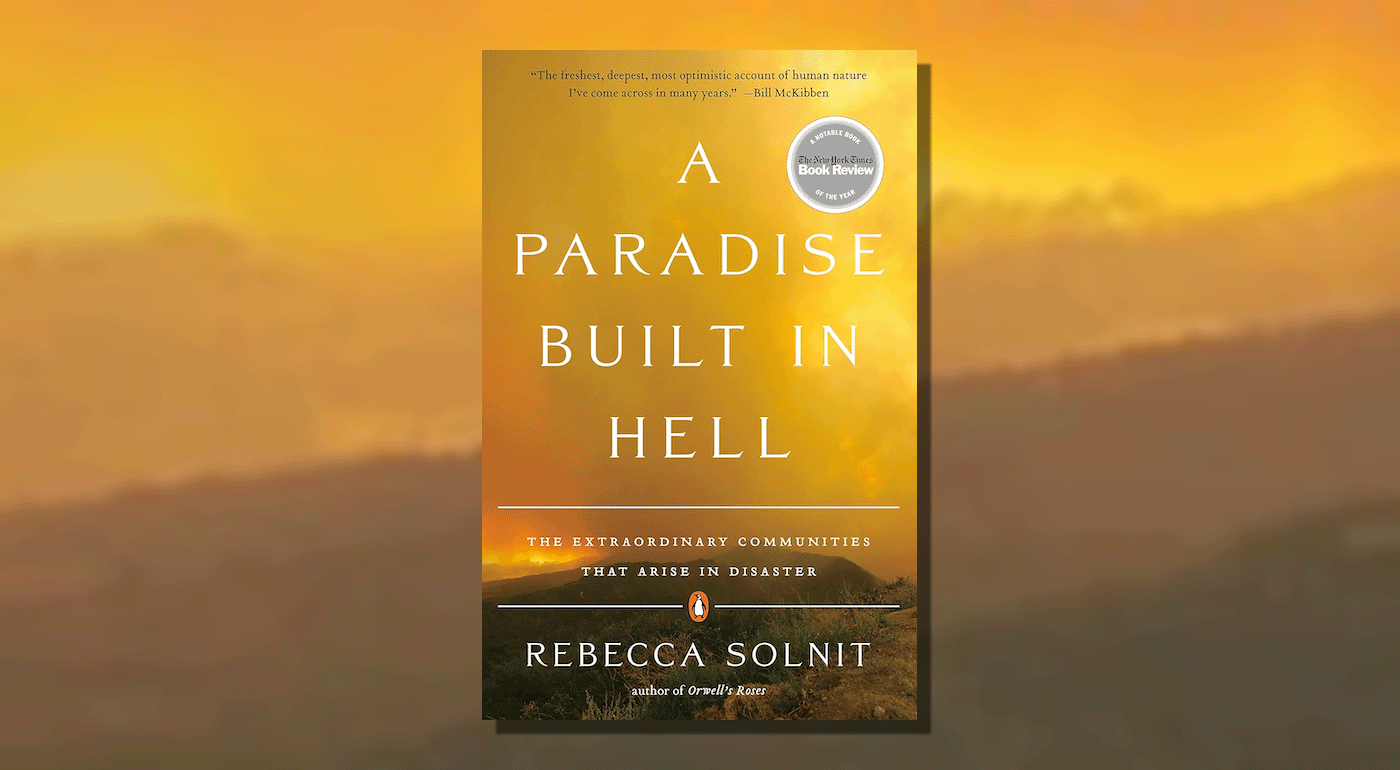
Rebecca Solnit’s seminal work, "A Paradise Built in Hell: The Extraordinary Communities That Arise in Disaster," challenges deeply ingrained narratives surrounding societal collapse and catastrophe. Instead of the expected descent into anarchy and self-preservation, Solnit presents a compelling, data-rich argument that human beings, in the wake of disaster, often exhibit extraordinary prosocial behavior, forming resilient and cooperative communities. This book serves as a critical counterpoint to the ubiquitous dystopian fiction that often dominates speculative storytelling and media portrayals of crises.
Solnit’s research, drawing from anthropological studies, historical accounts, and her own journalistic investigations, reveals a consistent pattern across a range of devastating events. From the 1906 San Francisco earthquake to Hurricane Katrina, the 1985 Mexico City earthquake, and the aftermath of 9/11, the initial response is frequently characterized not by widespread panic and violence, but by spontaneous acts of mutual aid, resource sharing, and the rapid formation of temporary, yet powerful, social bonds. These "disaster utopias," as Solnit terms them, offer moments of profound human connection and solidarity, often overshadowing the material destruction.
The prevailing fictional trope, and often the media’s focus, paints a grim picture: society crumbles, leaving behind a "war of all against all" where survival depends on ruthless individualism and the defeat of marauding gangs. Solnit argues that this narrative is not only inaccurate but actively harmful, shaping public perception and potentially hindering effective disaster response. She posits that this focus on the negative is often perpetuated by authorities who fear the power of emergent community structures and by media outlets seeking sensationalistic stories.
Historical Precedents and Societal Collapse
The San Francisco Earthquake of 1906:
Following the devastating earthquake and subsequent fires that ravaged San Francisco in April 1906, an estimated 80% of the city’s population was left homeless. While the scale of destruction was immense, with fires burning for three days and claiming over 3,000 lives, the immediate aftermath witnessed remarkable community organization. Citizens pooled resources, shared food, and provided shelter and medical care for one another. Many survivors later recounted a profound sense of solidarity and freedom from the constraints of ordinary life, where human connection became paramount.
However, this emergent solidarity was met with a heavy-handed response from the National Guard. Under the mistaken belief that widespread riots were imminent, the Guard was ordered to maintain order, which often translated to aggressive intervention. Historical accounts indicate that soldiers actively interfered with firefighting efforts and, in some instances, fired upon individuals attempting to salvage supplies or rescue those trapped in the rubble. This period highlights a recurring theme: the fear of disorder by authorities can sometimes lead to actions that exacerbate the crisis and undermine the very people they are ostensibly protecting.
Hurricane Katrina and its Aftermath (2005):
The devastation wrought by Hurricane Katrina in August 2005 provided another stark example of Solnit’s thesis. The widespread flooding of New Orleans and surrounding areas left hundreds of thousands displaced and without essential services. Media coverage often focused on scenes of looting and desperation. However, Solnit points to numerous anecdotal and journalistic accounts that documented extraordinary acts of neighborly assistance, community kitchens, and spontaneous rescue operations.
A significant point of contention during Katrina was the disparate media framing of actions by different racial groups. Reports frequently described Black residents "looting" flooded stores, while white residents were often portrayed as "gathering" supplies. This bias, Solnit suggests, reflects and reinforces a prejudiced narrative that is quick to cast marginalized communities as inherently prone to savagery in times of crisis, overlooking their resilience and capacity for mutual aid. The militarized response and the subsequent government failures in providing adequate relief further underscore Solnit’s critique of how authorities can mismanage or actively suppress emergent community efforts.
The Mexico City Earthquake of 1985:
The magnitude 8.1 earthquake that struck Mexico City on September 19, 1985, was catastrophic, killing an estimated 10,000 people and leaving approximately 800,000 homeless. The disaster exposed deep-seated issues of government corruption and substandard construction practices. In the immediate aftermath, however, ordinary citizens galvanized into action. Thousands of volunteers, known as "brigadistas," spontaneously organized to dig through rubble, rescue survivors, and establish makeshift aid stations.

This grassroots movement of solidarity was so powerful that it challenged the authority of the government, which was initially slow and ineffective in its response. When government officials attempted to clear debris with bulldozers, potentially burying survivors, students and residents physically lay down in front of the machinery to prevent further destruction. The prolonged solidarity forged during this crisis led to the formation of lasting social movements, including labor unions and housing rights collectives, that continued to advocate for improved living conditions and greater accountability.
The Role of Authority and Media
Solnit’s analysis critically examines why the "disaster utopia" narrative is so often absent from mainstream discourse. She identifies two primary forces that work against the recognition of emergent community resilience:
- Fear of Disorder and Loss of Control: Established power structures, including government agencies and law enforcement, often perceive spontaneous community organization as a threat to their authority. The desire to maintain "order" can lead to interventions that stifle nascent cooperation, prioritize property protection over human life, and distrust the capacity of ordinary citizens to manage their own recovery. The San Francisco earthquake and the response to Hurricane Katrina both exemplify instances where authorities prioritized control over facilitating organic aid.
- The Sensationalism of Media: Media outlets, driven by the need for ratings and engagement, often gravitate towards dramatic narratives of panic, violence, and depravity. The complexities of mutual aid and solidarity, while perhaps more profound, are less sensational than images of chaos. Solnit argues that this perpetuates a cycle where audiences are conditioned to expect the worst in disasters, reinforcing the very narratives that obscure the reality of human cooperation. The amplification of such narratives, particularly in the digital age, can further exacerbate public fear and distrust.
Data and Implications
Solnit’s work is underpinned by extensive data, including statistical analyses of disaster-related crime rates, which often show a decrease or a stable trend rather than the predicted surge in violence. For instance, studies on the immediate aftermath of major natural disasters have frequently found that crime rates do not necessarily escalate to the degree commonly depicted in fictional scenarios. This empirical evidence stands in stark contrast to the fictional portrayals of widespread lawlessness.
The implications of Solnit’s findings are profound for speculative fiction writers, journalists, policymakers, and the general public.
- For Writers: The book provides a rich source of inspiration for creating more nuanced and realistic disaster narratives. Instead of relying on tired tropes of cannibalistic gangs and lone wolf survivors, authors can explore the challenges and triumphs of building and sustaining community in the face of overwhelming adversity. This opens avenues for stories that focus on the complexities of cooperation, the politics of aid, and the long-term building of new social structures.
- For Journalists: Acknowledging the reality of disaster solidarity can lead to more balanced and informative reporting, moving beyond sensationalism to highlight the resilience and agency of affected communities.
- For Policymakers: Understanding that cooperation is a natural human response can inform disaster preparedness and response strategies, focusing on empowering local communities and fostering trust rather than solely imposing top-down control.
Seeds for Speculative Stories
Solnit identifies two primary "seeds" for speculative fiction drawn from her research:
- The Real Villains: The narrative often focuses on external threats like looters or zombies. Solnit argues that a more compelling and realistic antagonist in disaster fiction would be the oppressive or inept authorities. Examples include the National Guard’s actions in San Francisco, the police response during Hurricane Katrina, and the Mexican government’s attempts to clear rubble in 1985. Stories could explore the tension between emergent community self-governance and the encroaching power of an authoritarian state trying to re-establish control, often at the expense of the survivors. This could involve scenarios where citizens must not only survive the disaster itself but also resist interference from those claiming to be in charge.
- Learning from Paradise: The book highlights that the solidarity and communal spirit of disaster are often temporary. While these moments are powerful, sustaining them requires conscious effort and organization. Solnit poses the question: How can the momentum and lessons learned during the initial "paradise" phase of a disaster be translated into long-term, resilient communities? Speculative fiction could explore the transition from immediate mutual aid to the establishment of sustainable social structures, challenging the notion that such cooperation is merely a fleeting phenomenon. This could involve stories of solarpunk, hopepunk, or climate fiction that focus on building new societies from the ground up, drawing inspiration from disaster-born solidarity.
Expanding the Conversation
Solnit’s work resonates with other critical examinations of human behavior in crisis. Rutger Bregman’s "Humankind: A Hopeful History" similarly argues for a more optimistic view of human nature, challenging cynical narratives by presenting evidence of cooperation and altruism throughout history. For those interested in the practicalities of building lasting communal structures from disaster-born solidarity, Kelly Hayes and Mariame Kaba’s "Let This Radicalize You: Organizing and the Revolution of Reciprocal Care" offers insights into mutual aid work that emerged during the COVID-19 pandemic.
Anthologies like "We Will Rise Again," edited by Karen Lord, Annalee Newitz, and Malka Older, feature speculative stories about protest and resistance movements that embody the spirit of collective action. Izzy Wasserstein’s story "The Rise and Fall of Storm Bluff, Kansas," within such collections, is noted for its clear-eyed depiction of elite panic, a phenomenon often observed in disaster scenarios.
In speculative fiction, Mary Robinette Kowall’s "The Calculating Stars" offers a depiction of communal response to a catastrophic meteor impact, while the "Mad Max: Fury Road" film, despite its embrace of biker gangs, also features compelling depictions of authoritarian versus communal societies. Micaiah Johnson’s novels, "The Space Between Worlds" and "Those Beyond the Wall," further explore these themes, riffing on post-apocalyptic tropes to imagine diverse communities emerging in the wake of disaster. The musical "Come From Away," based on the true story of Gander, Newfoundland, hosting stranded travelers during 9/11, and Jim DeFede’s book "The Day the World Came to Town," offer poignant non-fiction accounts of extraordinary hospitality and community building in the face of unexpected crisis.
"A Paradise Built in Hell" provides a vital corrective to pervasive narratives of societal collapse. By grounding its arguments in historical data and compelling case studies, the book compels readers to reconsider their assumptions about human nature during times of extreme stress, suggesting that our capacity for cooperation and solidarity is not a fragile veneer, but a potent force capable of building profound and lasting communities, even amidst the ruins.