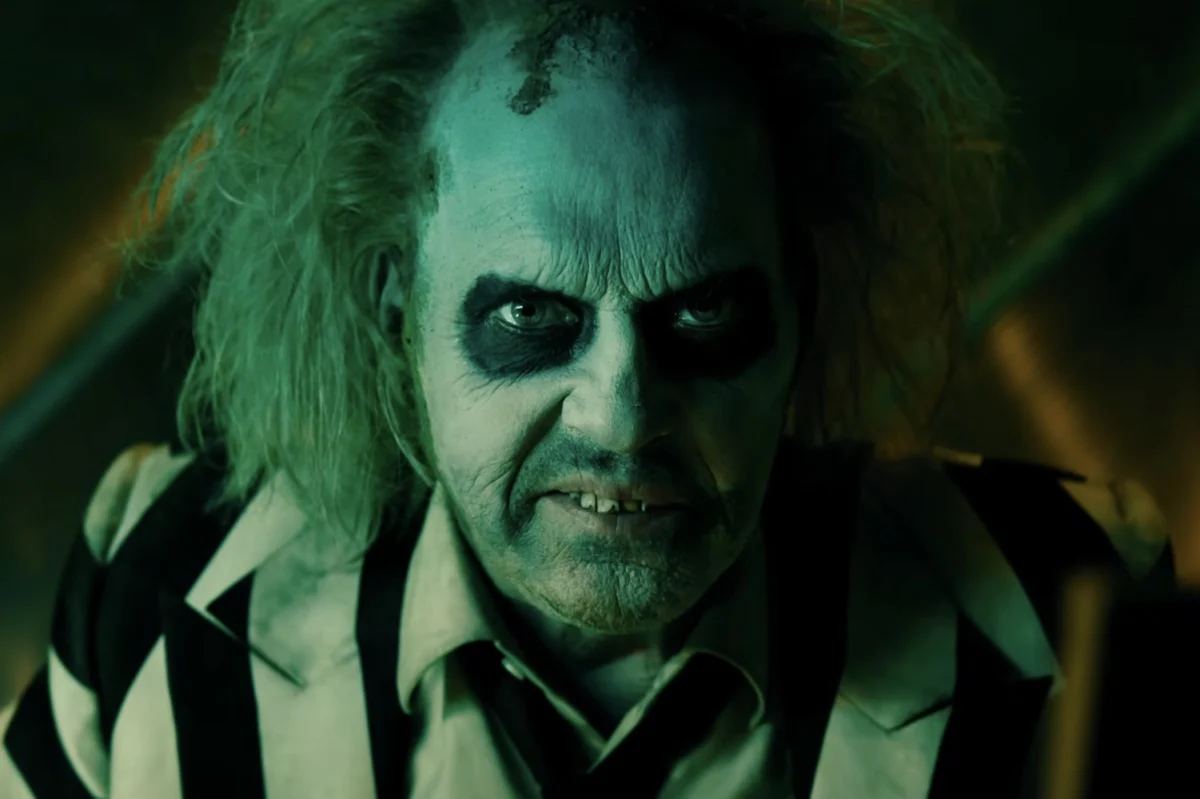
The long-awaited return of Tim Burton’s iconic spectral comedian, Beetlejuice, has finally been heralded by the release of the first teaser trailer for "Beetlejuice Beetlejuice." While the clip offers a glimpse into the supernatural proceedings, its musical choice – a haunted-child trailer cliché rendition of "Day-O" – has sparked discussion regarding its effectiveness and the film’s overall tonal direction. The trailer serves as a potent reminder of the enduring appeal of Burton’s signature aesthetic and the beloved characters he brought to life over three decades ago.
The film marks a significant reunion between director Tim Burton and a core trio of actors from the original 1988 cult classic: Winona Ryder, Catherine O’Hara, and Michael Keaton. Ryder reprises her role as Lydia Deetz, who is now an adult with a family of her own. This generational shift is central to the narrative, as the film appears to explore a cyclical nature of supernatural occurrences, echoing the events that first brought Beetlejuice into the Deetz family’s lives. The teaser hints that Lydia’s distinctive gothic style has remained remarkably consistent over the years, a visual anchor connecting the past and present of the Deetz saga.
The first promotional material for "Beetlejuice Beetlejuice" provides a concise yet intriguing synopsis: "Beetlejuice is back! After an unexpected family tragedy, three generations of the Deetz family return home to Winter River. Still haunted by Beetlejuice, Lydia’s life is turned upside down when her rebellious teenage daughter, Astrid, discovers the mysterious model of the town in the attic and the portal to the Afterlife is accidentally opened. With trouble brewing in both realms, it’s only a matter of time until someone says Beetlejuice’s name three times and the mischievous demon returns to unleash his very own brand of mayhem."
This plot outline immediately positions the film as a direct continuation, rather than a reboot, of the original story. The introduction of a new generation, particularly Lydia’s teenage daughter, Astrid, suggests a narrative arc that balances nostalgia with fresh challenges. The "unexpected family tragedy" serves as the catalyst, forcing the Deetz family back to their ancestral home in Winter River, a town intrinsically linked to the supernatural events of the past. The discovery of a model of the town and an opened portal to the Afterlife are classic narrative devices designed to reintroduce the chaos and mayhem synonymous with the Beetlejuice character.
A Legacy Rekindled: The Genesis of "Beetlejuice Beetlejuice"
The original "Beetlejuice," released in 1988, was a critical and commercial success, solidifying Tim Burton’s reputation as a director with a unique vision for the macabre and the whimsical. The film grossed over $74 million domestically against a $15 million budget, proving that audiences were receptive to its blend of dark comedy, gothic horror, and surreal humor. Its distinctive visual style, memorable characters, and innovative special effects made it an instant classic, spawning a successful animated series and a devoted fanbase that has eagerly awaited a live-action sequel for decades.
The development of "Beetlejuice Beetlejuice" has been a lengthy process, with talks of a sequel circulating for many years. The project gained significant momentum when Warner Bros. officially announced its development in October 2019. Tim Burton’s return to direct was a crucial element in securing fan anticipation, as his involvement is intrinsically tied to the film’s identity. The script was penned by Alfred Gough and Miles Millar, known for their work on the popular Netflix series "Wednesday," with Seth Grahame-Smith also receiving story credit. The original characters were created by Michael McDowell and Larry Wilson. The choice of Gough and Millar, who have demonstrated a knack for blending dark themes with compelling character dynamics in "Wednesday," suggests a strategic effort to capture the spirit of the original while appealing to a new generation of viewers.
A Stellar Ensemble Cast: Familiar Faces and New Additions
The returning cast members bring a wealth of experience and a deep connection to the characters they embody. Winona Ryder, who garnered an Emmy nomination for her role as Joyce Byers in "Stranger Things," has become a prominent figure in the resurgence of 1980s and 90s nostalgia. Catherine O’Hara, a comedy icon known for her roles in "Schitt’s Creek" (for which she won multiple awards) and "Home Alone," continues to be a beloved presence on screen. Michael Keaton, whose portrayal of Beetlejuice is considered one of cinema’s most memorable villains, reprises his role, promising to unleash his signature brand of manic energy and mischievous charm.
The new cast members are equally impressive, bringing fresh talent to the established universe. Jenna Ortega, who gained widespread acclaim for her titular role in "Wednesday," joins the ensemble as Astrid, Lydia’s daughter. Her performance in "Wednesday" showcased her ability to command a darker, more complex narrative, making her a fitting choice to navigate the supernatural chaos of Winter River.
The supporting cast is rounded out by a formidable array of talent: Justin Theroux, known for his work in "The Leftovers" and "Mulholland Drive"; Monica Bellucci, a celebrated international actress recognized for her roles in "The Matrix" sequels and "Malèna"; and the inimitable Willem Dafoe, an Oscar-nominated actor renowned for his versatile and often intense performances. Arthur Conti also features in the cast, adding another layer of talent to the production.
A Familiar Creative Team: Crafting the Burtonesque Aesthetic
Beyond the cast, the film benefits from the return of several key creative collaborators who have worked with Tim Burton on previous projects, ensuring a consistent and authentic aesthetic. Costume designer Colleen Atwood, a five-time Academy Award winner, has a long and fruitful history with Burton, having designed costumes for films like "Sweeney Todd: The Demon Barber of Fleet Street" and "Sleepy Hollow." Her ability to craft visually striking and character-defining wardrobes is paramount to maintaining the unique look of the "Beetlejuice" world.
Neal Scanlan, a celebrated creature effects and special makeup FX creative supervisor, also returns after his work on "Sweeney Todd." His expertise in bringing fantastical creatures and grotesque transformations to life will undoubtedly be crucial in realizing Beetlejuice’s otherworldly presence and the various supernatural elements of the film.
Editor Jay Prychidny, who recently contributed to the success of "Wednesday," joins the team, suggesting a modern approach to pacing and narrative flow. Finally, the iconic composer Danny Elfman, a frequent and essential collaborator with Tim Burton, returns to score the film. Elfman’s distinctive musical style, which has defined many of Burton’s most beloved films, including "Batman" and "Edward Scissorhands," is integral to the emotional and atmospheric landscape of a Burton production. His score for "Beetlejuice Beetlejuice" is anticipated to capture the playful yet eerie spirit of the original soundtrack.
The "Day-O" Dilemma: Trailer Music and Audience Expectations
The inclusion of a "Day-O" rendition in the teaser trailer has ignited debate among fans and critics. While the original film famously featured Harry Belafonte’s iconic song during a pivotal and joyous scene, its use in a teaser trailer, particularly in a seemingly "haunted child" arrangement, has been met with mixed reactions. Some view it as a clever callback that taps into a beloved moment from the original, while others find it derivative and uninspired, suggesting a reliance on nostalgia rather than a bold new creative direction.
The effectiveness of trailer music is a critical component in setting audience expectations and generating buzz. The choice of "Day-O" undoubtedly evokes memories of the first film, but its recontextualization in a darker, more suspenseful trailer might be an attempt to signal a shift in tone or to foreshadow a more menacing return for Beetlejuice. However, the perception of it being a "cliché" raises questions about the trailer’s overall impact and whether it adequately conveys the film’s unique appeal beyond its established brand. The fact that the critic noted it "didn’t even commit fully to the bit" suggests a missed opportunity for a more daring or unsettling interpretation.
Broader Implications and Anticipation
The release of "Beetlejuice Beetlejuice" is poised to be a significant event in the cinematic landscape, capitalizing on the enduring popularity of its predecessor and the strong fanbase cultivated over decades. The film’s success could pave the way for further exploration of this universe, potentially through spin-offs or additional sequels, depending on its critical and commercial reception.
The film’s release date is set for September 6th, positioning it as a late summer blockbuster. This timing allows it to capture audiences looking for entertainment as the summer season winds down. The anticipation for this sequel is palpable, reflecting the deep affection audiences hold for Tim Burton’s distinctive brand of dark fantasy and the unforgettable character of Beetlejuice. The film’s ability to balance nostalgic elements with a fresh narrative, compelling new characters, and the signature Burtonesque aesthetic will be key to its success in satisfying both long-time fans and introducing the world of Beetlejuice to a new generation. The success of the trailer, despite its musical controversies, indicates that the curiosity and excitement surrounding the film remain incredibly high.