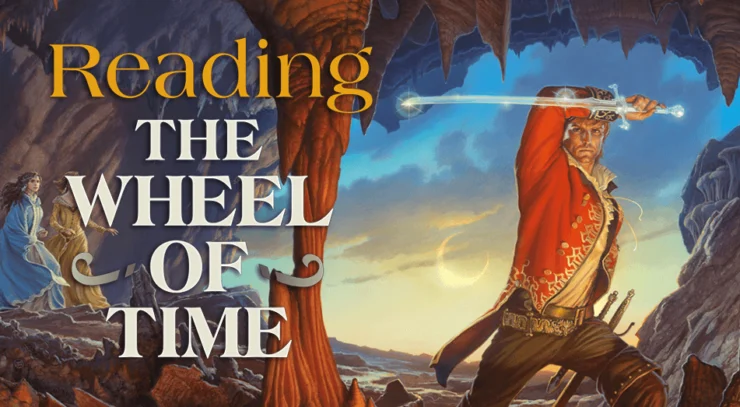
As Robert Jordan’s epic fantasy saga, The Wheel of Time, nears its conclusion, a profound question looms over its devoted readership and critics alike: What is the true nature of the Dark One’s plan, and what will the prophesied Last Battle truly entail? This analysis delves into the intricate thematic threads woven throughout the series, particularly as the narrative approaches the pivotal events within The Gathering Storm, exploring the psychological warfare waged by the Dark One and its potential ramifications for the Dragon Reborn, Rand al’Thor.
The Weight of Prophecy and the Burden of Salvation
Robert Jordan’s initial inspiration for The Wheel of Time stemmed from a desire to explore the immense psychological toll of being designated the world’s savior. The series masterfully chronicles the journey of its protagonists, particularly Rand al’Thor, as they transition from innocent youths in the relatively peaceful Two Rivers to individuals grappling with complex moral quandaries, imperfect choices, and overwhelming responsibility. This narrative arc reflects a deep understanding of how external pressures can accelerate personal growth and force individuals into leadership roles far beyond their initial expectations.
The themes resonate powerfully even years after the books’ initial publication. Echoes of soldierly trauma, perhaps informed by Jordan’s own experiences in the Vietnam War, are evident in Rand’s struggles. However, the core concept of a young person shouldering the weight of the world is a universally relatable experience. Contemporary generations, particularly young adults facing unprecedented challenges such as climate change, rapid technological advancement, and significant social upheaval, may find a profound connection to the protagonists’ forced maturation and the leadership vacuum left by even experienced adults.
Rand’s Descent: The Dark One’s Subtle Weapon
A central theme explored is Rand’s maladaptive belief that he must sever himself from his emotions to achieve victory. This began with his attempts to suppress fear and pain, escalated to an effort to extinguish his capacity for emotion and care, and culminated in his conclusion that even righteous anger is a liability. His path towards "emotionless logic" is presented as the sole means to make the sacrifices necessary to win the Last Battle and avert global annihilation.
However, this journey represents a critical misinterpretation of strength and the role of emotions. Emotions, far from being weaknesses, are vital sources of information and guidance in decision-making. The critical insight, articulated by Min to Nynaeve after witnessing the destruction of Natrin’s Barrow, is that the Dark One’s ultimate plan may be to actively drive Rand to this very state of emotional detachment.
This concern has been voiced by characters like Cadsuane, who fears not only the personal cost to Rand but also the danger he might pose to the world if he defeats the Dark One while becoming almost as formidable and detached. Min’s similar observation, following Rand’s use of balefire on Semirhage’s hideaway, highlights the growing concern:
"This might be what he has to be. The Last Battle is nearly upon us, Min. The Last Battle! Can we dare send a man to fight the Dark One who won’t sacrifice for what needs to be done?"
Min shook her head. "Dare we send him as he is, with that look in his eyes? Nynaeve, he’s stopped caring. Nothing matters to him anymore but defeating the Dark One."
This dialogue suggests that the Dark One’s strategy may not be to directly defeat Rand, but to corrupt him from within, transforming him into something as dangerous as himself.
Challenging Assumptions: The Dark One’s Unpredictable Agenda
Verin’s conversation with Egwene in Chapter 39 of The Gathering Storm offers a crucial perspective: while the Chosen One’s motivations are predictable, the Dark One is anything but. Even after extensive study, Verin remains uncertain of the Dark One’s ultimate goals or motivations, stating with certainty only that "this battle isn’t being fought the way that al’Thor assumes it will be."
This statement challenges long-held assumptions about the Dark One’s objectives. For much of the series, the focus has been on the Forsaken’s attempts to convert or kill Rand, and the Dark One’s ultimate prohibition of his death. The decree to "let the Lord of Chaos rule" was widely interpreted as a strategy to sow discord, destabilize the world, and distract the forces of Light by focusing attention on the Dragon. The assumption was that Rand would be killed when the Dark was fully prepared.
However, the possibility arises that the Dark One does not wish Rand dead at all, but rather needs him alive. The Dark One’s inability to sway Rand through direct temptation or coercion might have led to a more insidious strategy: to inundate Rand with misery, pain, and despair, amplifying his fear, paranoia, and isolation. By orchestrating scenarios of betrayal and danger from supposed allies, the Dark One could make Rand more susceptible to its influence. The erosion of Rand’s humanity—his emotions, empathy, and connections—could effectively blur the lines between him and the Dark One, making their conflict less about opposition and more about a shared path.
The Shrinking Divide: Motivation as the Sole Differentiator
While Rand still ostensibly fights to save the world, this objective has become abstract and less tangible than the immediate goal of defeating the Dark One. His immense suffering and perceived isolation have led to a state where the world itself may cease to matter to him. This emotional detachment could potentially evolve into active hatred for the world, a desire for its destruction.
Egwene’s journey, which parallels Rand’s in many respects, offers a contrasting model. Egwene has retained her emotions and motivations, fighting out of love and using compassion to fuel her strength. She finds philosophical meaning in her trials, whereas Rand views his suffering as proof of universal untrustworthiness. This difference in perspective is critical.
If Rand were to seek the destruction of the world or the Pattern itself, his access to the male Choedan Kal, which Lanfear believed capable of destroying the Dark One and potentially the Creator, could be a terrifying reality. While Lanfear’s assessment involved both Choedan Kal, the Pattern’s current strain and vulnerability might make a single, powerfully wielded Choedan Kal sufficient. Furthermore, the "True Power," with its devastating effects on reality, presents another avenue for catastrophic destruction if fully embraced by Rand.
The Ruse of Tarmon Gai’don: A Lure into Despair?
This line of reasoning leads to the provocative conclusion that the Last Battle, Tarmon Gai’don, might be a strategic ruse. While prophecy dictates its occurrence and the Emond’s Field quintet are clearly positioned to lead it, Tarmon Gai’don itself may not be the primary confrontation. Instead, it could serve as a looming threat, designed to push the Dragon Reborn into the very fear and desperation Rand has experienced since Semirhage’s attack. If Rand succumbs to despair, either turning to the Dark or wishing for the Pattern’s destruction, the Dark One would achieve its ultimate objective without direct confrontation.
The Dark One’s ability to directly influence the world remains limited, suggesting a reliance on manipulation of human beings. Darkfriends are instrumental in recruiting others and bringing the Forsaken into his power. Notably, the Dark One did not create Shadowspawn; that was Aginor’s doing. The Dark One’s direct actions, as the Bore weakens, have primarily involved altering the Pattern’s threads, affecting weather, and creating disturbances. He is touching the Pattern, but direct contact with people is still constrained by the remaining seals on the Bore.
Herid Fel’s belief that Rand must break all the seals to remake the Dark One’s prison may hold a double meaning. The Dark One might also require Rand to break them to facilitate his true assault on the world, as the imperfect seal created by Lews Therin and the Hundred Companions remains effective.
Min’s vision of Dragonmount shrouded in darkness, save for a single pinpoint of light, serves as a potent symbol. Dragonmount, a monument to Lews Therin’s failure to seal the Bore safely and the consequences of saidin‘s tainting, mirrors the darkness and despair Rand currently feels, carrying the weight of those past failures and Lews Therin’s soul within his own consciousness.
A Memory of Light: The Ultimate Confrontation
The title of the final book, A Memory of Light, which was Robert Jordan’s original choice, suggests a climactic moment of confrontation. This moment will likely determine whether Rand succumbs to despair and destruction or remembers the Light—happiness, love, and life. He must rediscover the truth Egwene articulated: that life is "more complicated than a single cause. Life [is] about living. About dreaming, laughing and dancing."
Given that The Gathering Storm, Towers of Midnight, and A Memory of Light can be viewed as a single narrative arc, this pivotal moment could occur at any point in these concluding volumes. However, the escalating tension in recent chapters suggests its imminence, perhaps even by the end of The Gathering Storm.
It is crucial to understand that Rand’s struggle is not a judgment on his character but a testament to the immense pressure he has endured. Egwene herself acknowledges his suffering, noting his imprisonment was worse than hers and his support far less. His journey is one of learning to gain perspective from an extraordinary vantage point. He must learn to see the balance between good and bad, the joy that makes life worthwhile, and the love that makes hardship endurable.
The Dark One’s true power lies in its ability to strip individuals of this perspective, whether through whispers, threats, torture, or the tainting of saidin. The Last Battle may be significant, but the true battle, for Rand and for all who walk in the Light, is the internal struggle against allowing that poison to take root. Verin’s example, a Darkfriend in action but not in soul, illustrates this distinction: she never stopped loving the world or life. The Forsaken, and currently Rand, cannot claim this. The hope lies in Rand finding a true "memory of Light."