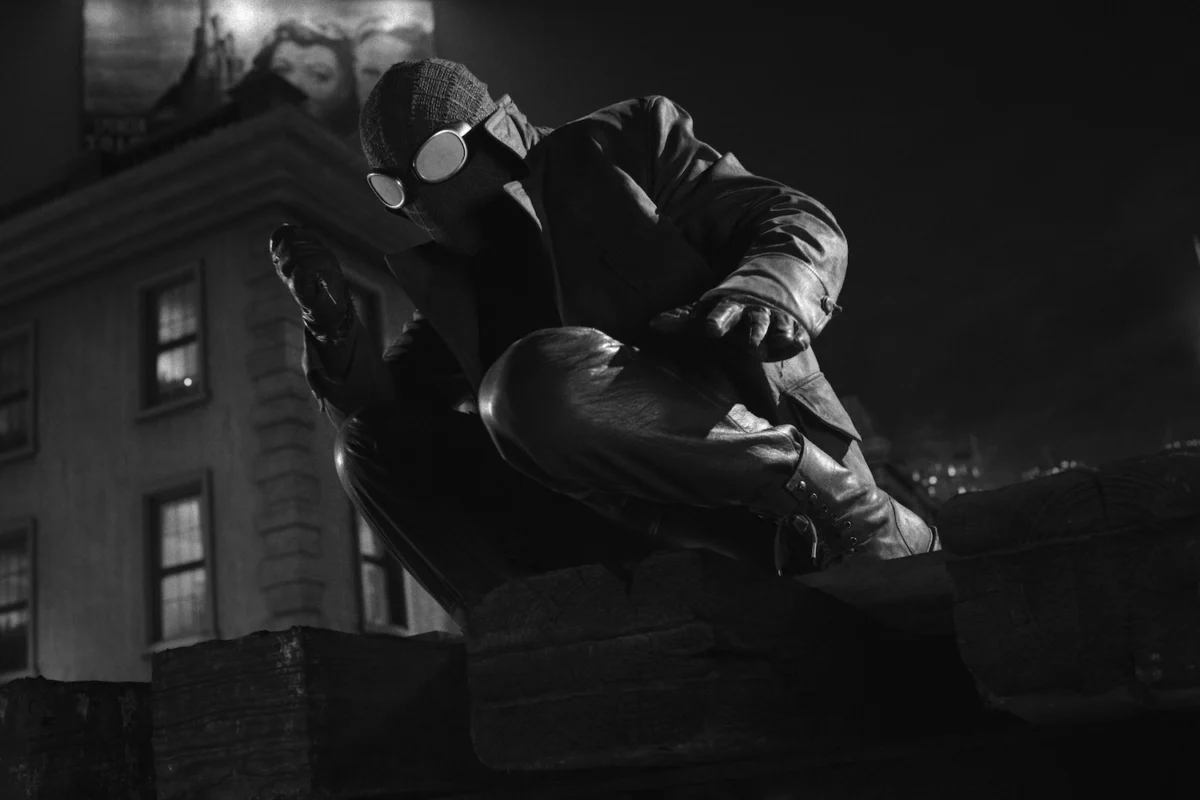
The highly anticipated live-action series Spider-Noir, featuring Nicolas Cage reprising his acclaimed animated portrayal of the titular character, is poised to debut, promising a stark departure from the typical superhero fare. Set against the rain-slicked streets and smoky backrooms of 1930s New York City, the series aims to deliver a brooding, atmospheric detective drama infused with the iconic, albeit world-weary, persona of Ben Reilly. However, early promotional materials have sparked a nuanced discussion among fans and critics, with some questioning the initial execution despite the compelling premise and the star power involved.
A Character’s Genesis and Cinematic Evolution
The character of Spider-Noir, officially designated as Spider-Man of Earth-90214, first captured the imagination of audiences in the groundbreaking animated film Spider-Man: Into the Spider-Verse (2018). Voiced with gravelly gravitas by Nicolas Cage, this iteration of Spider-Man was a seasoned, cynical private investigator operating in a Great Depression-era New York. His distinct aesthetic, characterized by a tattered fedora, a trench coat, and a monochrome visual style, set him apart from his more contemporary counterparts. The film’s success and the character’s memorable introduction naturally fueled a desire for a live-action exploration of this unique corner of the Marvel multiverse.
The journey from animated concept to live-action series has been a deliberate process. Discussions and development for a Spider-Noir project have been circulating within Hollywood for several years, with Nicolas Cage consistently expressing enthusiasm for bringing the character to live-action. The official greenlighting of the series by MGM+ and Prime Video marks a significant milestone, representing a substantial investment in a character whose appeal lies in his noir sensibilities and his grounded, melancholic approach to heroism.
Thematic Resonance and Visual Ambition
Spider-Noir is slated to delve into the personal struggles and the grim realities faced by Ben Reilly in his 1930s New York. The official synopsis from Prime Video highlights a narrative centered on a "seasoned, down on his luck private investigator… forced to grapple with his past life, following a deeply personal tragedy, as the city’s one and only superhero." This premise suggests a focus on character-driven drama and the psychological toll of vigilantism, set against a backdrop of societal hardship and pervasive corruption.
A key distinguishing feature of the series is its bold visual presentation. Prime Video has opted for a dual release strategy, offering viewers the choice between a sleek, noir-appropriate black-and-white presentation, billed as the "authentic" version, and a "true hue full color" rendition. This innovative approach aims to enhance the immersive experience and cater to different audience preferences, underscoring the production’s commitment to stylistic fidelity and artistic exploration. The black-and-white version is expected to lean heavily into the shadows, stark contrasts, and classic cinematic techniques that define the noir genre, while the full-color version will allow for a different interpretation of the era’s palette and atmosphere.
A Rogues’ Gallery of Classic Villains
The series promises a rich tapestry of conflict, featuring a formidable lineup of classic Spider-Man villains reimagined within the 1930s setting. Prime Video has strategically released dedicated promotional content, including a separate video introducing the show’s antagonists, to build anticipation. Among the adversaries confirmed are:
- Silvermane: A notorious crime boss, typically depicted as a technologically advanced villain. His translation to the 1930s might involve a more grounded, mob-oriented persona, potentially leveraging his influence and wealth in the era’s burgeoning criminal underworld.
- Sandman: Flint Marko, whose powers are intrinsically linked to the manipulation of sand, presents an intriguing challenge for adaptation in a pre-modern special effects landscape. The series will likely find creative ways to render his abilities, perhaps emphasizing his raw, elemental nature.
- Tombstone: Lonnie Lincoln, a hulking enforcer known for his pale skin and immense strength. His portrayal in the 1930s could emphasize his imposing physical presence and his role as a brutal instrument of organized crime.
- Megawatt: A character often associated with electrical powers, his inclusion suggests a willingness to incorporate more fantastical elements into the noir framework. His specific role and powers within this historical context remain to be fully revealed.
The presence of these established characters, recontextualized for the Depression era, adds another layer of intrigue to Spider-Noir. Their integration into Ben Reilly’s gritty world is expected to generate compelling narrative arcs and visually dynamic confrontations.
The Creative Minds Behind the Mask
The production team behind Spider-Noir boasts significant pedigree, drawing from established talent in both superhero filmmaking and television drama. The series is co-showrun by Oren Uziel, known for his work on The Lost City, and Steve Lightfoot, who previously helmed The Punisher. Their combined experience suggests a capacity for balancing high-stakes action with compelling character development and a deep understanding of genre conventions.
Furthermore, the project benefits from the involvement of key producers from the critically acclaimed Spider-Man: Into the Spider-Verse, including Phil Lord, Christopher Miller, and Amy Pascal. This connection ensures a continuity of vision and an appreciation for the unique tone and style that made the animated film a phenomenon. Their participation lends credibility to the ambition of translating that distinct aesthetic and narrative approach to live-action.
In a recent interview with Deadline, Christopher Miller emphasized that Spider-Noir is intended to be a standalone narrative, distinct from any larger, interconnected universe. He described the series as "just its own little jewel of a story," suggesting a focus on crafting a self-contained and artistically cohesive experience. This approach, prioritizing narrative integrity over universe-building, may allow the series to explore its themes and characters with greater depth and focus.
Release Strategy and Anticipated Impact
Spider-Noir is set to premiere on MGM+’s linear channel on May 25th, followed by its availability on Prime Video on May 27th. This staggered release strategy aims to maximize its reach and provide flexibility for viewers.
The series arrives at a moment when audiences are increasingly receptive to genre-bending superhero narratives that offer more than just spectacle. Spider-Noir‘s commitment to a mature, character-focused story within a historically rich and visually distinct setting positions it as a potentially significant entry in the superhero television landscape. The success of Into the Spider-Verse has demonstrated a strong appetite for diverse and innovative interpretations of familiar characters, and Spider-Noir appears poised to tap into that evolving market.
The critical reception and audience engagement will likely hinge on the series’ ability to balance its stylistic ambitions with compelling storytelling and authentic character portrayals. The early promotional materials, while intriguing, have also indicated a potential challenge in translating the electric energy of the animated character to a live-action format. The effectiveness of the music and editing in conveying the intended noir atmosphere, alongside the chemistry between the cast members, will be crucial factors in the series’ overall success. The inclusion of seasoned actors like Brendan Gleeson, Jack Huston, and Abraham Popoola alongside Nicolas Cage suggests a strong foundation, but the execution of their interconnected performances will be key.
Broader Implications for the Superhero Genre
The development and release of Spider-Noir represent a broader trend within the superhero genre: the exploration of more niche, character-driven narratives that move beyond traditional action-adventure tropes. By embracing the distinct visual and thematic elements of noir, the series offers a compelling alternative to the often formulaic nature of superhero content.
This approach can attract a wider audience, including those who may not typically engage with superhero stories but are drawn to compelling detective dramas and atmospheric period pieces. The success of Spider-Noir could encourage further experimentation with established comic book characters, paving the way for more diverse and artistically adventurous projects within the genre. It underscores the idea that superhero storytelling can be as varied and nuanced as any other literary or cinematic form, capable of exploring complex themes like loss, redemption, and the struggle against overwhelming odds in richly imagined worlds. The series’ unique dual-presentation format also highlights a growing awareness of how visual presentation can significantly impact viewer experience and narrative interpretation, a development that could influence future streaming and broadcast strategies.