Production and Artistic Vision: A Commitment to Practicality and Stylization
The production of "Demon Dancer: Sua/Nara" stands out for its deliberate embrace of practical stunt work, a characteristic that resonates with a growing appreciation among global audiences and filmmakers for authentic, on-screen action. In an era often dominated by extensive computer-generated imagery (CGI), Korosi’s decision to execute complex sequences under real conditions underscores a commitment to visceral filmmaking. A prime example highlighted in early reception is a high-risk fight sequence staged within a descending car elevator, a feat demanding meticulous choreography, precise timing, and significant on-set bravery. This dedication to practical effects not only imbues the action with a tangible sense of danger and impact but also serves as a distinguishing feature in a crowded genre market.
Beyond its practical foundations, the film draws heavily from the visual and narrative conventions of anime and manga. This influence is evident in its stylized action, character designs, and perhaps even its episodic narrative structure, which unfolds through flashbacks and distinct training arcs. The fusion of these aesthetics with live-action filmmaking is a well-trodden path in East Asian cinema, but "Demon Dancer: Sua/Nara" reportedly integrates these elements with a fresh perspective, creating a unique visual language that appeals to fans of both mediums. This cross-cultural aesthetic blending contributes to the film’s distinct identity and broadens its potential appeal across various demographics.
Filming across Gwangju, Gokseong, Geoje, and Paju provided a rich tapestry of backdrops for the film’s narrative. Gwangju, a major metropolitan hub, likely offered urban settings, while Gokseong and Geoje, known for their natural beauty and coastal landscapes, could have provided more picturesque or isolated environments. The inclusion of Paju, near the DMZ, adds a layer of geographical and potentially symbolic weight. Filming in this sensitive region often entails unique logistical challenges and can evoke a sense of starkness or historical gravitas, even if not directly integral to the plot’s primary supernatural elements. This diverse location scouting allowed for varied visual textures, enhancing the film’s overall production value despite its independent origins.
Narrative Core: A Ballet of Vengeance and Possession
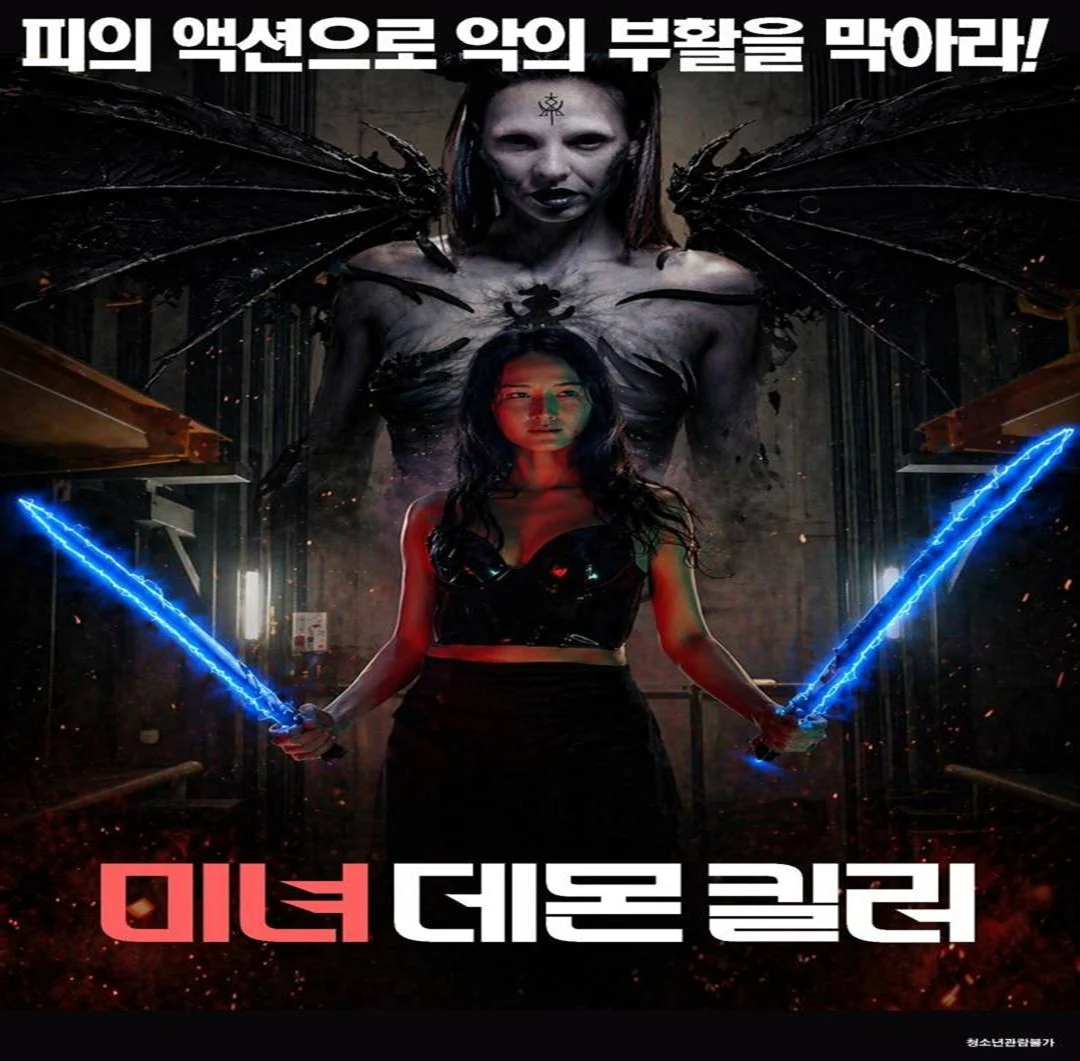
The narrative of "Demon Dancer: Sua/Nara" centers on Sua (Jiyeon Han), a Korean ballerina whose life takes a drastic turn. The story begins in media res with Sua on the brink of death after being brutally attacked while attempting to complete an assignment. As her life ebbs, the film employs a non-linear structure, weaving through her fractured memories to reconstruct the events leading to her current predicament. This narrative device allows for a gradual revelation of a complex backstory steeped in supernatural elements and personal sacrifice.
Central to Sua’s past is the tragic necessity of killing her own husband to liberate his soul from a demonic curse. This act of mercy, born of love and desperation, sets the stage for her descent into a world of vengeful justice. Driven by a profound need to uncover the origins of the curse and to avenge her husband, Sua makes a fateful decision: she intentionally inflicts the same demonic curse upon herself. This act of self-possession introduces Nara (Anita Korosi), a demonic entity, into her body. The dynamic between Sua and Nara forms the core of the film’s character development, as two distinct souls learn to coexist and, more importantly, to fuse their disparate abilities.
The fusion of ballet, Sua’s primary skill, with Nara’s demonic power is a critical thematic and visual element. This unique combination allows for a distinctive fighting style, blending the grace and precision of dance with the raw, supernatural force of a demon. Their shared mission is to identify and confront those responsible for cursing Sua’s husband. The climax of the film reportedly brings Sua to a pivotal decision: to awaken and fight for her justice, or to succumb to the comforting oblivion of her memories and fade away. This psychological dilemma adds an emotional depth to the high-octane action, grounding the supernatural struggle in a very human conflict of will and memory.
Choreography and Action Design: Blending Ballet with Demonic Power
One of the film’s most lauded aspects is its inventive approach to action choreography, which successfully translates the abstract concept of spiritual possession into a distinct and dynamic physical vocabulary. Attila Korosi’s direction frames the training rituals between Sua and Nara not merely as expositional sequences but as high-energy, visually engaging segments. These montages serve a dual purpose: they strengthen the spiritual bond between host and demon, and they meticulously depict Sua’s mastery over the physical and emotional demands of her newfound symbiotic relationship.
The choreography itself is characterized by explosive, close-quarters striking and a low-center-of-gravity footwork, designed to convey the "inhuman" power bestowed by Nara. This emphasis on grounding the supernatural in a technical reality differentiates "Demon Dancer: Sua/Nara" from many genre contemporaries. Instead of relying solely on magical blasts or gravity-defying leaps without explanation, the film builds a foundation through training, making the enhanced abilities feel earned within its internal logic.
A key distinction in the film’s portrayal of possession lies in its inspiration from Eastern folklore rather than conventional Western possession tropes. In many Eastern traditions, spiritual entities can coexist with or lend power to a host, often forming a functional partnership rather than solely a struggle for dominance. This perspective grants the action sequences more creative freedom, allowing for the integration of supernatural weaponry and seemingly impossible acrobatic feats that fit seamlessly within the film’s established rules. The set pieces are frequently highlighted as excellent, with the office complex slaughter and, particularly, the hand-to-hand sequence inside the moving elevator shaft receiving special mention. This latter scene effectively utilizes the cramped, descending environment to amplify the brutality of the trapping techniques and high-impact redirections, showcasing a masterful use of confined space in action design.
Distribution in the Digital Age: IPTV & OTT Platforms
The release strategy of "Demon Dancer: Sua/Nara" on April 30 through South Korean IPTV and OTT platforms such as Tving and Wavve is indicative of evolving trends in film distribution, particularly for independent and genre-specific productions. In recent years, digital streaming services have become increasingly vital avenues for content delivery, offering filmmakers a direct route to audiences without the traditional gatekeeping or extensive marketing budgets often required for theatrical releases.
South Korea boasts one of the world’s most advanced digital infrastructures, with a high penetration rate of both IPTV (Internet Protocol Television) and OTT (Over-The-Top) services. Platforms like Tving, Wavve, and Coupang Play have emerged as major players, competing with global giants like Netflix and Disney+. For a film like "Demon Dancer: Sua/Nara," which might not command the same theatrical marketing spend as a studio tentpole, an exclusive digital release provides significant advantages. It allows for immediate access to a broad audience base, leverages targeted marketing capabilities, and offers flexible viewing options, catering to the modern viewer’s preference for on-demand content.
This distribution model also reflects a broader industry shift, where the line between "theatrical" and "digital" releases is increasingly blurred. For independent films, digital platforms offer a crucial lifeline, enabling niche genres and unique artistic visions to find their audience. The success of "Demon Dancer: Sua/Nara" in gaining attention through these channels underscores the power of digital ecosystems in democratizing film access and fostering a diverse cinematic landscape, both within South Korea and for potential international acquisition.
Challenges and Creative Solutions: Navigating Budgetary Constraints
While "Demon Dancer: Sua/Nara" is lauded for its kinetic energy and innovative action, critical analysis also points to areas where its technical execution and narrative consistency falter. These issues, though present, are often contextualized within the realities of independent filmmaking and potential budgetary limitations, rather than outright creative missteps.
One frequently cited concern is the vague internal logic surrounding the "rules" of possession. Despite extensive training montages, the specifics of how Sua and Nara interact, share power, or are perceived by others remain somewhat ambiguous. For instance, the script states that Nara’s true form is visible only to Sua, yet other demonic entities frequently sense Nara’s presence. This inconsistency creates moments where the protagonists’ stealthy sneak attacks contradict the established heightened senses of their adversaries. Similarly, the mechanics of "body-hopping" are largely left to inference, requiring viewers to piece together the implications of certain actions without clear guidance.
These narrative shortcuts, while sometimes jarring, are not uncommon in lower-budget productions where intricate world-building might be sacrificed for pace and action. Independent filmmakers often face the challenge of conveying complex mythologies with limited resources, leading to a reliance on visual cues or implied understanding rather than explicit exposition. The film’s strength in its action sequences suggests a strategic allocation of resources, prioritizing dynamic choreography and practical stunts over extensive narrative clarification in certain areas. This trade-off is a common practice in indie genre cinema, where the spectacle often takes precedence, and minor plot inconsistencies are overlooked by an audience eager for high-energy entertainment.
Thematic Depth: Sociopolitical Undertones and Missed Opportunities
"Demon Dancer: Sua/Nara" introduces a potentially powerful sociopolitical theme that, while intriguing, is ultimately underdeveloped. The primary antagonist’s motivation is briefly revealed as a "purity of the nation" ideology, specifically targeting mixed-race relationships. This theme, delivered in a single line of dialogue during the finale, feels somewhat "hamfisted" and underwhelming given its late introduction and lack of preceding development.
In contemporary South Korea, discussions around national identity, multiculturalism, and the treatment of mixed-race individuals (often referred to as honhyeol) are complex and ongoing. While the nation has become increasingly multicultural, deeply ingrained social attitudes and historical narratives can still lead to discrimination or a sense of otherness for those who do not conform to traditional notions of ethnic homogeneity. Had this theme been woven more intricately into the narrative from an earlier stage, exploring the societal implications of such an ideology and its impact on individuals, the film could have achieved a far greater thematic resonance.
The decision to relegate such a potent premise to a fleeting reveal suggests a missed opportunity for deeper social commentary. For independent films, which often have the freedom to explore more challenging or unconventional themes than mainstream blockbusters, this could have elevated "Demon Dancer: Sua/Nara" beyond a purely genre-driven action film. However, the choice to prioritize action and a fast-paced plot over extensive thematic exploration is also a valid artistic decision, especially for a film aiming for broad entertainment appeal. Despite this, the mere inclusion of such a theme, even superficially, hints at a broader ambition that could be further explored in future projects by Korosi or other filmmakers inspired by this approach.
Industry Reception and Broader Implications
"Demon Dancer: Sua/Nara" has emerged as a noteworthy entry for fans of international action cinema. Its creative blend of supernatural elements, unique character dynamics, and technically sound fight choreography demonstrates that a compelling premise and strong execution in core areas can overcome the limitations of a lower budget. The film’s success in garnering attention and positive reception, particularly for its action sequences, positions it as a testament to the enduring appeal of practical effects and genre fusion.
For the South Korean film industry, the film contributes to a diverse output that increasingly finds global audiences. While Korean cinema is internationally recognized for its dramas, thrillers, and art-house features, films like "Demon Dancer: Sua/Nara" showcase the vibrant independent action and fantasy scene. This further solidifies South Korea’s reputation as a hub for innovative storytelling and high-quality production across various genres. The film’s digital-first release also highlights the adaptability of Korean filmmakers and distributors in navigating the modern media landscape.
The broader implications for independent filmmakers are significant. "Demon Dancer: Sua/Nara" serves as an example that unique concepts, coupled with a dedicated approach to specific craft elements (like practical stunts), can lead to a highly enjoyable and critically recognized product. It reinforces the idea that originality and execution can be more valuable than sheer budgetary scale, offering inspiration to creators striving to make an impact in a competitive industry. While acknowledging its imperfections, the film’s overall positive reception underscores the audience’s willingness to embrace films that prioritize creativity and excitement.
Conclusion
"Demon Dancer: Sua/Nara" by Attila Korosi is an immensely entertaining genre hybrid that successfully navigates the complex interplay of supernatural elements, stylized action, and a compelling personal quest. Its commitment to practical stunt filmmaking, evident in sequences like the car elevator fight, combined with its anime and manga-inspired aesthetics, delivers a distinctive visual and visceral experience. Despite some acknowledged narrative inconsistencies and the underdeveloped thematic potential of its sociopolitical undertones, the film’s strengths in choreography, character dynamic, and relentless energy shine through. Released strategically on South Korean IPTV and OTT platforms, it exemplifies the resilience and creativity of independent cinema. For enthusiasts of fast-paced, action-packed fantasy, "Demon Dancer: Sua/Nara" stands as a highly enjoyable and memorable contribution, proving that a unique supernatural hook and technically proficient action can carry a film a considerable distance, leaving a lasting impression as a creative, fast-paced effort with much to appreciate.