MetFilm Distribution has officially released the first trailer for Effi o Blaenau, a poignant Welsh-language feature film that marks the latest directorial effort from acclaimed filmmaker Marc Evans. Adapted from Gary Owen’s internationally recognized monodrama Iphigenia in Splott, the film transitions the high-stakes emotionality of the stage to the rugged, expansive landscapes of North Wales. Following its world premiere at the 2026 Glasgow Film Festival, the production is scheduled for a wide theatrical release across the United Kingdom on June 19, 2026. The film stars breakout talent Leisa Gwenllian in the titular role, supported by a cast that includes Tom Rhys Harries, Nel Rhys Lewis, Owen Alun, and Carys Gwilym.
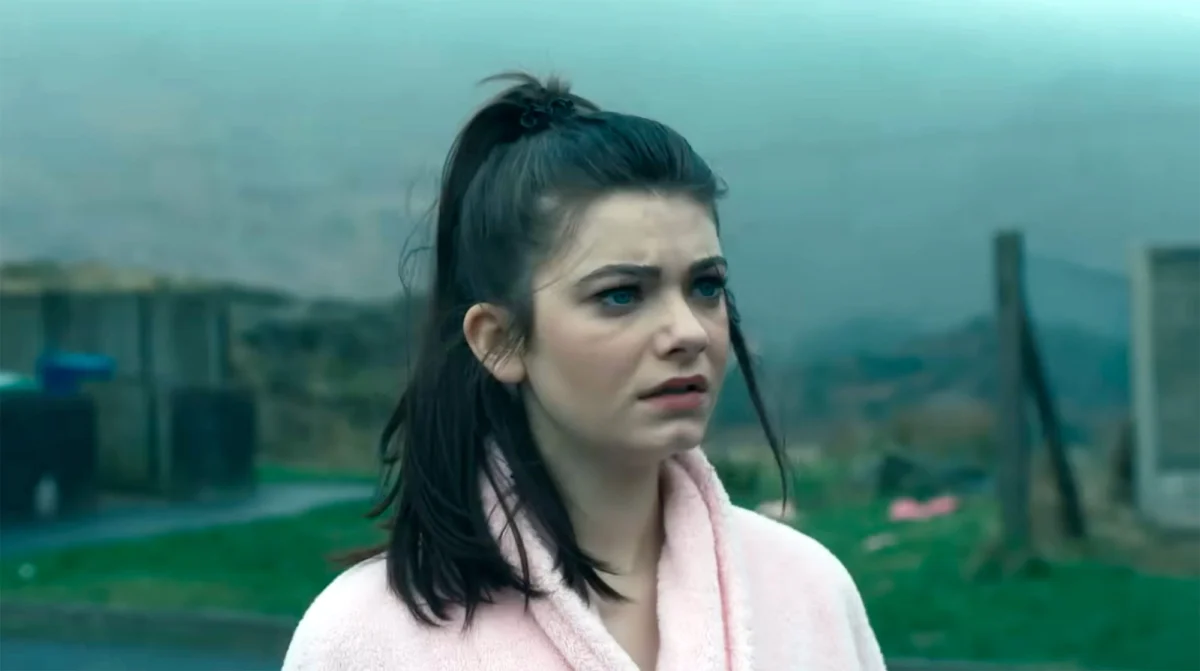
The narrative of Effi o Blaenau centers on a young woman navigating the harsh realities of a post-industrial landscape. Set in a town where economic opportunities have evaporated and social infrastructure is crumbling, the story follows Effi as she grapples with the limitations of her environment. The trailer highlights her domestic life, characterized by her grandmother’s grueling night shifts at a local chip shop and the pervasive sense of stagnation that defines her community. A turning point occurs when Effi meets Lee, an injured soldier portrayed by Tom Rhys Harries, in a Llandudno nightclub. This encounter offers a fleeting glimpse of an alternative existence, though the film remains grounded in the difficult choices forced upon individuals by systemic neglect rather than personal failing.
The Evolution of a Modern Classic
The cinematic adaptation of Gary Owen’s Iphigenia in Splott represents a significant cultural milestone for Welsh storytelling. Originally written as a one-woman play, the source material reimagines the Greek myth of Iphigenia—the daughter of Agamemnon who was sacrificed to appease the gods—within the context of modern-day Cardiff. Since its debut at the Sherman Theatre in 2015, the play has become a staple of contemporary British theater, winning numerous awards and touring extensively through London’s West End and New York City.
In adapting the work for the screen, writer and director Marc Evans has expanded the scope of the original monologue into a multi-character narrative while maintaining the searing political and social critique of Owen’s writing. While the play was rooted in the Splott district of Cardiff, the film shifts the setting to the slate-quarrying landscapes of North Wales. This geographic shift adds a different visual texture to the story, contrasting the claustrophobia of the urban experience with the vast, often indifferent beauty of the northern Welsh terrain.
The decision to film in the Welsh language further underscores the production’s commitment to authenticity. Over the last decade, there has been a notable surge in Welsh-language media finding success on the international stage, often referred to as the "Welsh Noir" movement or the "Welsh New Wave." By utilizing the native tongue, Evans ensures that the film speaks directly to the identity of the region it depicts while contributing to the growing global appetite for non-English language cinema.
Production Timeline and Development
The journey of Effi o Blaenau from conception to the silver screen has been a multi-year endeavor. Pre-production began in late 2024, following the success of Evans’ previous projects, including the Richard Burton biopic Mr. Burton. Principal photography took place throughout 2025, primarily on location in and around Blaenau Ffestiniog and Llandudno. These locations were chosen for their distinct architectural and natural character, which serve as a visual metaphor for the protagonist’s internal struggle.

The film was produced by Branwen Cennard, a frequent collaborator with Welsh talent and a figure instrumental in bringing regional stories to wider audiences. Following the completion of post-production in early 2026, the film was selected for the Glasgow Film Festival, a venue known for championing independent British and international cinema. The reception at the festival was reportedly strong, with critics praising Leisa Gwenllian’s transformative performance and Evans’ ability to balance gritty social realism with cinematic lyricism.
A Cast of Rising and Established Talent
The casting of Effi o Blaenau combines seasoned veterans of the Welsh screen with rising stars of the international industry. Leisa Gwenllian, who takes on the demanding role of Effi, is tasked with carrying the emotional weight of a character who is both a victim of her circumstances and a fierce agent of her own survival.
Tom Rhys Harries, who plays Lee, brings a high level of visibility to the project. Harries has recently gained international attention for his role in the DC cinematic universe’s Clayface, and his involvement in Effi o Blaenau highlights a trend of successful Welsh actors returning to their roots for prestige local projects. The supporting cast, featuring Nel Rhys Lewis, Owen Alun, and Carys Gwilym, provides the necessary ensemble depth to flesh out the world of the town, moving the story beyond a singular perspective into a broader study of a community in crisis.
Director Marc Evans remains one of the most prolific and versatile directors in the UK. With a career spanning several decades, Evans has moved seamlessly between psychological thrillers like My Little Eye and intimate dramas such as Snow Cake. His experience in television, including high-profile series like Manhunt and Steeltown Murders, has honed his ability to handle sensitive subject matter with a focus on human psychology and social context.
Socio-Economic Context and Regional Implications
The thematic core of Effi o Blaenau is deeply intertwined with the socio-economic realities of 21st-century Wales. The film addresses themes of austerity, the decline of the traditional high street, and the lack of specialized healthcare and social services in rural areas. By focusing on the closing of pubs and the disappearance of jobs, the film reflects data-driven trends observed in many Welsh towns over the last twenty years.
According to recent economic reports, North Wales has faced unique challenges regarding youth out-migration and the "brain drain" effect, where young people feel compelled to leave their hometowns to find sustainable employment. Effi’s desperation to escape is a cinematic representation of this demographic reality. Furthermore, the film’s exploration of the "impossible choices" made out of necessity touches upon the broader national conversation regarding the cost-of-living crisis and the erosion of the social safety net.
Industry analysts suggest that films like Effi o Blaenau play a crucial role in regional identity. By centering the Welsh language and North Welsh locations, the film challenges the Cardiff-centric narrative that often dominates Welsh media. This decentralization of storytelling is seen as vital for the continued growth of the Welsh film industry, ensuring that diverse voices from across the nation are represented.

Distribution and Global Outlook
MetFilm Distribution, the company behind the UK release, has expressed confidence in the film’s ability to resonate with audiences beyond the Welsh border. While a US release date has not yet been established, the global success of the original play provides a strong foundation for international interest. The film is expected to follow a traditional theatrical window before moving to streaming platforms, potentially targeting outlets that specialize in world cinema and independent dramas.
The release of the trailer on YouTube has already generated significant engagement within the film community. Early reactions emphasize the film’s visual style—captured by a cinematography team that utilizes the grey-blue hues of the Welsh slate mines and the neon-lit desperation of coastal nightlife—to create an atmosphere of "heightened realism."
As the UK cinema industry continues to recover and evolve in the mid-2020s, independent films like Effi o Blaenau serve as a bellwether for the health of local storytelling. The film’s June 19th release date places it in a competitive summer window, but its unique cultural identity and the prestige of its source material are expected to draw a dedicated audience.
Conclusion and Future Impact
Effi o Blaenau stands as a testament to the power of adaptation and the resilience of regional filmmaking. By taking a celebrated theatrical monologue and reimagining it for a cinematic audience, Marc Evans and his team have created a work that is both intensely personal and broadly political. The film does not merely depict a young woman in distress; it examines the structures that create that distress, making it a timely contribution to the dialogue on social equity in modern Britain.
As the June release approaches, the production team is expected to engage in a series of regional screenings and Q&A sessions across Wales, reinforcing the film’s connection to the communities it portrays. For Leisa Gwenllian, the film marks a potential career-defining moment, while for the Welsh film industry, it represents another successful export of its unique linguistic and cultural heritage. Whether Effi o Blaenau will follow the path of its stage predecessor into the annals of modern classics remains to be seen, but its initial reception suggests it is a formidable entry into the 2026 cinematic calendar.