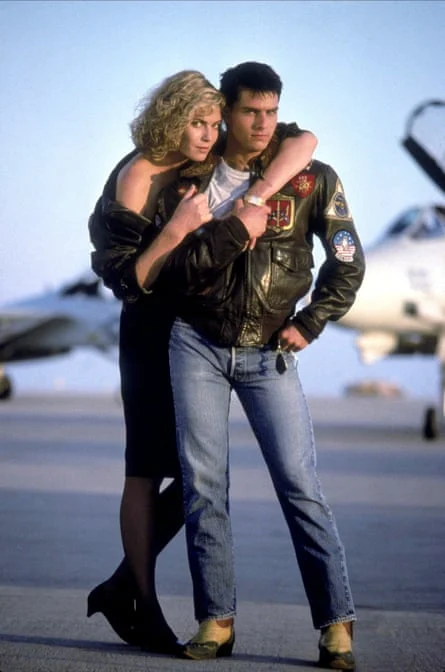
Forty years ago, a groundbreaking film roared onto cinema screens, its sonic booms and high-octane aerial sequences captivating audiences and forever altering the landscape of Hollywood. "Top Gun," a film that celebrated the daring world of U.S. Navy fighter pilots, was more than just an action movie; it was a cultural phenomenon that propelled its lead actor to superstardom, significantly boosted military recruitment, and cemented its place as a timeless classic. The story behind its creation is as dramatic and compelling as the dogfights depicted on screen, involving meticulous research, serendipitous discovery, and a pivotal flight that would solidify the film’s iconic star.
The Genesis of a Sky-High Dream
The genesis of "Top Gun" can be traced back to 1983, when legendary producer Jerry Bruckheimer, then a seasoned Hollywood force, stumbled upon an article in California magazine titled "Top Guns." The piece, by Ehud Yonay, offered a vivid, insider’s glimpse into the lives of elite Navy aviators, describing the intense, high-speed world of fighter pilot training. Bruckheimer, known for his keen eye for commercial potential, immediately recognized the cinematic promise. "I saw the magazine article and it looked like Star Wars on Earth," Bruckheimer, now 82, recalled from Los Angeles. He promptly shared it with his partner, Don Simpson, who was equally enthralled. The duo quickly moved to acquire the rights to the article, envisioning a film that would bring the visceral thrill of aerial combat to the masses.
The concept was then pitched to Jeffrey Katzenberg, who was then the head of production at Paramount Pictures. Katzenberg, a shrewd executive with a knack for identifying future hits, was receptive to the idea. During a breakfast meeting with screenwriters Jim Cash and Jack Epps Jr., Katzenberg presented a handful of potential film concepts, and "Top Gun" was among them. Epps, who held a private pilot’s license, was immediately drawn to the project, seeing it as an unparalleled opportunity. "I said, ‘Wow, this will be great, I get to fly in the jet plane!’" Epps, 76, reminisced from his Santa Monica home. "We didn’t have a movie made yet. Even if it didn’t get made I’d get a jet ride out of it, so that’s a pretty special thing."
Immersion in the Cockpit: The Making of Maverick
A crucial element of Bruckheimer and Simpson’s vision was authenticity. They insisted that the film feature real aircraft and real flying sequences, not merely special effects. This commitment necessitated securing the cooperation of the U.S. military, a significant undertaking that required pitching the project to the Pentagon. Epps described the persuasive approach: "I pitched the idea of how we see these young American heroes and they said, ‘Sounds interesting and we’ll let you use our equipment. You know, you’ll have to fly in a navy jet?’ I said, ‘Oh, no, really?! How fast can I get down there?’"
To fully grasp the world of naval aviation, Epps immersed himself in the culture at Marine Corps Air Station Miramar, the training ground for elite fighter pilots. He interviewed approximately 30 pilots, gaining invaluable insights into their training, their camaraderie, and the immense pressures they faced. The true revelation, however, came when Epps experienced firsthand the brutal reality of flying in an F-14 fighter jet at full throttle. "I had to go through training, which gave me a lot of ideas," he explained. "Before I could go up, I had know how to eject and go through what is called the helo dunker, where they put you under water and you have to go out in a very systematic manner. All these crazy things were great because it gave me a full feeling for it."

The physical toll of high-G maneuvers was profound. Epps recounted, "We got up in the air and they said to me, ‘We shouldn’t be doing this but we’re gonna do it anyway,’ so they did a lot of close passes. We pulled six G’s and I learned that, when you’re pulling G’s, although you do have a special uniform that compresses your legs, you’ve got to grunt to keep the blood up in your brain." The sheer power and precision of the pilots left an indelible mark on Epps. "It was phenomenal and the speed was amazing. I had never felt that in my life. The skill of these guys to be able to pull that hard-G turn, come up over the top, cross each other, barrel roll again, come back and go back in high-speed passes was fabulous." He recognized that these pilots were not just skilled flyers but elite athletes, a realization that shaped the film’s portrayal of competition and dedication.
Crafting the Narrative: Conflict and Camaraderie
While the aerial spectacle was assured, Epps and Cash faced a narrative challenge: the pilots at Miramar, bound by intense teamwork and shared purpose, exhibited remarkable unity. "I’m looking at these guys and they’re all getting along because they’re all about teamwork and I’m going, ‘What am I going to write about? What is the story here? What’s the conflict?’" Epps pondered. The solution emerged from observing the inherent competitiveness within any elite group. "I’m racking my head and I go, ‘Oh, what if one guy doesn’t get along? What if one guy is out to be the star? It’s about him and now you’ve got this bump in this situation.’ That’s the beginning of the character Maverick where we said, ‘OK, here’s where the conflict comes from internally. Somebody wants to be the best here at top gun school.’" This led to the creation of Pete "Maverick" Mitchell, a talented but rebellious pilot who clashes with his peers and instructors.
The emotional core of the film, the tragic death of Maverick’s radar intercept officer, Goose (Anthony Edwards), was inspired by a deeply moving experience Epps had witnessing the lingering grief of pilots who had lost friends in Vietnam. "We went out and we had a coffee together and I was sitting around with about six, seven guys and they started talking about the friends that they had lost in Vietnam. This was 15 years later and I could see they were still deeply mourning the loss of their colleagues and the fellow pilots and I was very taken by the sincere emotions they had." Epps recognized the power of that shared sorrow and aimed to translate it to the audience. "I had a thought to myself as a writer: if I could get the audience to feel what they feel, the sense of loss, I will have achieved something. That’s when I got the idea to lose Goose in the middle because it would bring the audience in, they’d feel a sense of loss, like what it means to lose a pilot, lose a friend, and so we went with that and it’s quite a moment."
The Maverick Choice: Tom Cruise’s Transformative Flight
With the script nearing completion, the crucial casting decision for the role of Maverick loomed. The producers envisioned an actor with immense charisma and a youthful swagger. For Epps, the choice was clear: Tom Cruise. "I was a Tom Cruise fan at that time – still am – so we wrote this with Tom Cruise in mind as Maverick. I loved his movies: he’s such an energetic actor, he connects with the audience." Epps and Bruckheimer conveyed this vision to Cruise, who was then known for his roles in films like "Risky Business" and "Legend," the latter of which had seen him grow his hair long.
However, securing Cruise’s commitment proved to be a challenge. To convince the young star, Bruckheimer orchestrated a pivotal experience: a flight with the Blue Angels, the U.S. Navy’s premier flight demonstration squadron. "We couldn’t quite get him to commit so I arranged for him to fly with the Blue Angels in El Centro, California," Bruckheimer recounted. "He had long hair and a ponytail and they saw this guy walk up and they said, ‘We’ll get this hippy a real ride.’ They sure did and he got out of the plane, walked to a phone booth, because there were no cell phones then, called me up, said, ‘I’m in.’" This exhilarating, and at times nauseating, experience with the Blue Angels not only solidified Cruise’s commitment to the role but also inspired him to become a licensed pilot himself, a passion he has maintained throughout his career. This pivotal flight, where the actor was physically tested by the intense maneuvers, directly mirrored the on-screen persona he would embody.
A Cultural Juggernaut and its Legacy
Directed by the visually dynamic Tony Scott and produced by the powerhouse duo of Bruckheimer and Simpson, "Top Gun" was released on May 16, 1986. The film’s combination of breathtaking aerial sequences, a captivating soundtrack featuring artists like Kenny Loggins and Berlin, and the star power of Cruise, Val Kilmer, and Kelly McGillis, proved to be an irresistible formula. "Top Gun" became the highest-grossing film of 1986, earning over $357 million worldwide. Its impact extended far beyond box office receipts. The U.S. Navy reported a significant surge in recruitment in the years following the film’s release, with recruitment stations often set up in or near cinemas showing the movie. The film’s aesthetic, from its aviator sunglasses to its fighter jet iconography, permeated popular culture.
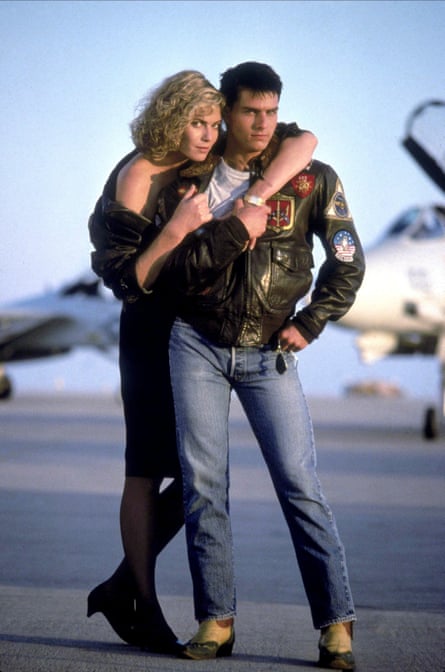
The film’s portrayal of military life, however, also drew criticism, particularly from those on the left who viewed it as a jingoistic recruitment tool. Epps, however, defends the film’s intent, emphasizing its focus on honoring the service members. "These are great American heroes and they put their lives on the line every day for America. They love the country and they’re there to protect us so it’s a little silly to not honour our veterans and our people in the military who basically protect us." He reiterated, "These are heroes. You’re always going to hear somebody say that but in no way was it suggesting that they’re creating wars. They’re basically there to protect. They are the tip of the spear and out there every day putting their lives on the line for us."
Enduring Appeal and Future Horizons
The success of "Top Gun" paved the way for a critically and commercially triumphant sequel, "Top Gun: Maverick," released in 2022, which garnered widespread acclaim and further solidified the franchise’s enduring appeal. This success has led to the announcement of a third installment, ensuring that the legacy of Maverick and the world of naval aviation will continue to captivate audiences.
Jerry Bruckheimer attributes the franchise’s longevity to a single, undeniable factor: "Tom Cruise," he stated emphatically. "He’s the hardest-working actor in Hollywood and has amazing instincts. He is somebody that just won’t let anything go by unless it’s worked out. He wants to make movies for an audience and that’s what he does."
From a magazine article to a global cinematic event, "Top Gun" remains a testament to the power of compelling storytelling, groundbreaking visual effects, and the indelible charisma of its leading man. Forty years on, its echoes are still felt in the roar of engines and the allure of the open sky, a reminder of the film that redefined the blockbuster and launched a legend into the stratosphere.