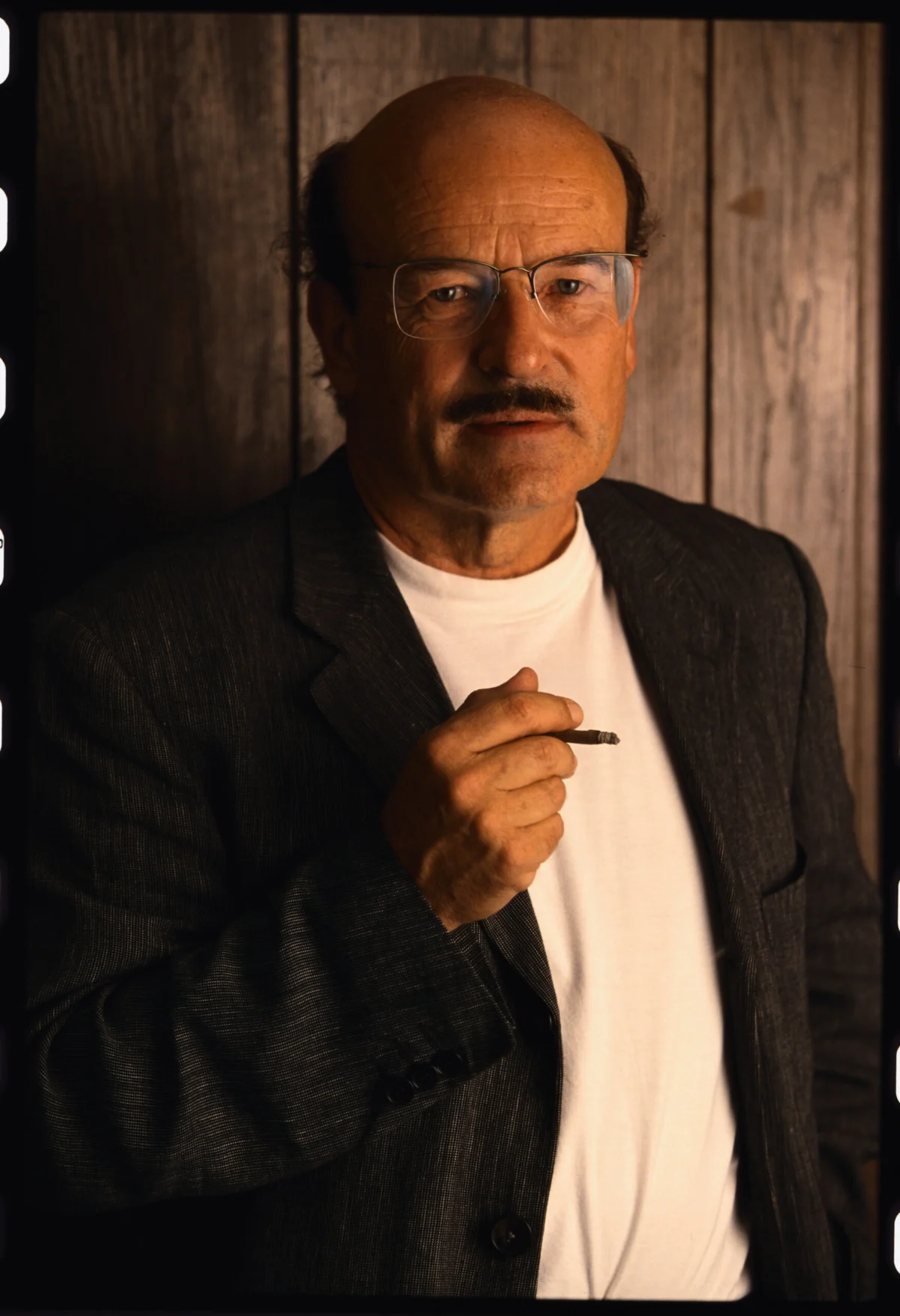
This Cannes, acclaimed German filmmaker Volker Schlöndorff finds himself a guest of honor, freed from the competitive pressures that once defined his illustrious career on the Croisette. At 87, his return to the prestigious festival with his latest work, Visitation, is marked by a palpable sense of ease, a sentiment perfectly encapsulated by the advice from former Cannes chief Gilles Jacob: "Go there for the fun. You got the Palme already." This counsel underscores Schlöndorff’s unique standing in cinematic history, a filmmaker whose journey has not only mirrored but also profoundly shaped the landscape of European cinema for over six decades.
A Legacy Forged in Controversy: The Dawn of New German Cinema
Schlöndorff’s deep connection with the Cannes Film Festival began precisely 60 years ago, on May 15, 1966, with the premiere of his debut feature, Young Törless. An adaptation of Robert Musil’s 1906 novel, the film delved into the disturbing world of cruelty, sadism, and authoritarianism within an Austrian military boarding school. Its unflinching portrayal of moral decay and burgeoning fascism was an immediate jolt to the international film scene and a seminal moment for the nascent New German Cinema movement. This artistic renaissance, emerging from the shadows of post-war Germany, sought to confront the nation’s past and present with a critical, often stark, lens, moving away from the escapist "Papas Kino" (Daddy’s Cinema) of the 1950s. Alongside contemporaries like Rainer Werner Fassbinder, Werner Herzog, and Wim Wenders, Schlöndorff became a standard-bearer for a generation determined to forge a new cinematic identity.
The reception at Cannes was, in Schlöndorff’s own words, a "scandal," though one that proved invaluable for publicity. He vividly recalls a German cultural attaché storming out mid-screening, declaring, "This is not a German film!" This dramatic exit inadvertently cemented the film’s controversial yet vital status, drawing immense attention to its challenging themes and its director’s audacious vision. For Schlöndorff, the true triumph came earlier, at the morning press screening, where the applause from a room of 40 to 50 critics offered "probably the most enjoyable one I ever had in my life." Young Törless not only launched his career but also set the stage for a lifetime of engaging with the complex fault lines of European history and morality.

The Defining Peak: The Tin Drum and the Shared Palme d’Or
After his groundbreaking debut, Schlöndorff returned to Cannes several times in the late 1960s and 1970s, sometimes with films he now jokes have been "fortunately forgotten," such as Degree of Murder (1967) featuring Anita Pallenberg and music by Brian Jones of The Rolling Stones, and Man on Horseback (1969), his early English-language attempt. Yet, Cannes remained a pivotal stage, culminating in 1979 with what he acknowledges as his career’s defining peak: The Tin Drum.
This ambitious adaptation of Günter Grass’s sprawling anti-fascist masterpiece shared the coveted Palme d’Or with Francis Ford Coppola’s monumental Vietnam epic, Apocalypse Now. The pairing was symbolic, a confluence of two cinematic titans at the zenith of their respective movements: New German Cinema meeting New Hollywood. While Coppola’s film wrestled with the trauma of modern warfare, Schlöndorff’s offered a surreal, allegorical journey through European madness, narrated by a child who consciously chooses to stop growing at the age of three as Nazi Germany descends into totalitarianism. The film’s nuanced portrayal of individual resistance against overwhelming historical forces resonated deeply with critics and audiences alike.
Schlöndorff recounts the "David versus Goliath" dynamic, given Coppola’s immense financial and artistic investment in Apocalypse Now. Though Coppola initially worried that sharing the prize might dilute its commercial impact, both films achieved significant success. The Tin Drum went on to win the Academy Award for Best Foreign Language Film, becoming the first German film to do so since the end of World War II. This international recognition solidified Schlöndorff’s reputation and granted him a "tranquility" that allowed him to approach subsequent projects with a more relaxed demeanor, free from the burden of having "anything more to prove." The film grossed over $11 million domestically, a significant sum for a foreign-language film at the time, and cemented its place as a classic, frequently appearing on lists of the greatest anti-fascist films.
A Career Intertwined with History and Politics

Volker Schlöndorff’s filmography is a testament to his unwavering commitment to exploring the intricate relationship between individual lives and sweeping historical events. From The Lost Honor of Katharina Blum (1975), which critiqued the sensationalism of the press and the erosion of civil liberties in West Germany during the era of domestic terrorism, to Coup de Grâce (1976), set against the backdrop of the Russian Civil War, his films consistently trace the fault lines of European history. He navigates themes of fascism, terrorism, war, ideological collapse, and the uneasy compromises between morality and survival with a calm precision born from decades of grappling with these complex subjects.
Born in Germany during World War II, Schlöndorff’s worldview was profoundly shaped by his biography. His formative years, between the ages of 15 and 25, were spent in France, where he attended school and began his cinema apprenticeship under legendary directors like Louis Malle and Jean-Pierre Melville. This immersion in French culture and the intellectual rigor of the French New Wave provided the bedrock for his artistic sensibility. He absorbed the era’s emphasis on auteur theory, political engagement, and cinematic experimentation, which would define his approach to filmmaking.
Later, international success brought him to Hollywood, where he found a different kind of mentor in Billy Wilder, the iconic German-American director. Schlöndorff vividly remembers Wilder’s lessons extending beyond filmmaking to life itself: "Most of all, how to not let your profession entirely take over your life." Wilder, despite his passion for cinema, prioritized friends, art collecting, and, crucially, the analytical discussion of films. This friendship provided a counterweight to Schlöndorff’s intense political engagement, teaching him the value of perspective and balance.
Despite these influences, Schlöndorff unequivocally defines himself as "a political animal." His work consistently reflects his formation amidst the ideological tumult of post-war West Germany in the 1960s and 1970s. Films like The Lost Honor of Katharina Blum, the omnibus film Germany in Autumn (1978), and The Legend of Rita (2000) directly confront the lingering presence of Nazi and authoritarian ideology within German institutions and the radicalization that emerged in response. He sympathized with the anger driving the student movements of the time and challenged those who condemned the radicals, including elements of the Red Army Faction (RAF), who resorted to violence to achieve political ends. While he states, "I never justified political violence," he sought to illuminate the underlying societal conditions – particularly the perceived infiltration of former Nazis into German education and justice systems – that fueled such radicalization, advocating for understanding the motivations behind these desperate acts.
Hollywood Detours and a Return to German Roots

Following the global triumph of The Tin Drum, Hollywood beckoned. Schlöndorff embarked on a series of diverse projects, though he famously turned down an offer from Steven Spielberg to direct an episode of The Twilight Zone. His American period included notable literary adaptations such as Swann in Love (1984) starring Jeremy Irons, a critically acclaimed television adaptation of Arthur Miller’s Death of a Salesman (1985) featuring John Malkovich and Dustin Hoffman, and Voyager (1991) with Sam Shepard and Julie Delpy. He also helmed the first cinematic adaptation of Margaret Atwood’s dystopian novel, The Handmaid’s Tale (1990), starring Natasha Richardson, Faye Dunaway, and Robert Duvall, a film that, while perhaps "now-forgotten" in the shadow of the later successful series, was a significant early exploration of the novel’s themes.
New York became his temporary home, but history intervened once more, pulling him back to Germany. The fall of the Berlin Wall in 1989 and the subsequent reunification presented a monumental challenge and opportunity. Schlöndorff dedicated several years to helping revive the legendary Studio Babelsberg, located in the former East Germany. This historic studio, a cradle of German cinema from its silent era masterpieces like Metropolis to its UFA productions during the Nazi era, faced collapse in the wake of reunification. Schlöndorff described this period as "necessary if frustrating and far removed from filmmaking itself," a transition from creative endeavors to the arduous, politically charged work of financial and commercial restructuring. He lamented losing "five or eight years of filmmaking, plus another couple of years just to recuperate," comparing it to a political shift "from leftist to capitalist." Yet, he acknowledges the profound satisfaction that "otherwise Studio Babelsberg wouldn’t exist. And it does." His efforts ensured the survival and eventual resurgence of one of the world’s oldest and most significant film studios, a monumental achievement that secured a vital piece of German cultural heritage.
A Contemporary Return with Visitation
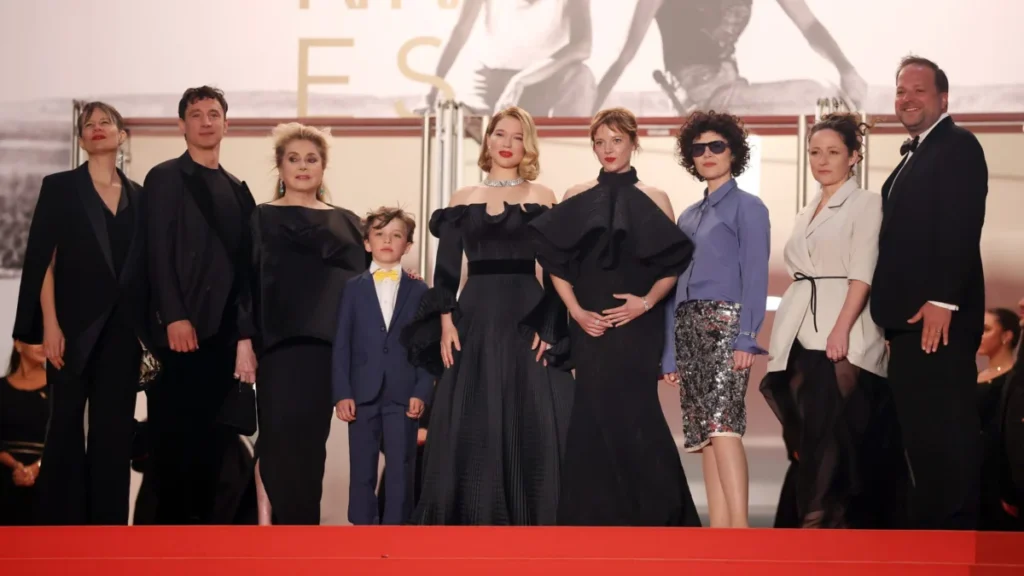
This year, Cannes welcomes Schlöndorff back once more, out of competition, with Visitation (Heimsuchung), an adaptation of Jenny Erpenbeck’s acclaimed novel. Set across several decades at a lakeside property in Brandenburg, the film chronicles the lives of successive inhabitants through the Nazi era, East Germany, and reunification. It meticulously traces how political systems, often subtly, reshape ordinary lives, whether the occupants acknowledge it or not, echoing Schlöndorff’s lifelong thematic concerns. The ensemble cast features prominent German actors Lars Eidinger, Martina Gedeck, Susanne Wolff, and Angela Winkler. StudioCanal is handling international sales for the film, which premiered in the Cannes Première section.
Visitation firmly plants itself in the thematic landscape Schlöndorff has explored throughout his career: the role of the artist under authoritarianism, the fragility of private happiness, and the illusion that anyone can remain untouched by history. He describes how he initially envisioned the film as a "pastoral," a bucolic depiction of the countryside through the seasons. However, during production, the inherent political dimensions of the narrative became strikingly clear. "It was only as we were making it that I saw how the characters think they are enjoying a happy summer, they feel in full control of their private lives, but there are politics looming in the background that will change their lives," he explains. The film serves as a poignant reminder that "we are all shaped by historical events, more than our own will and our own desires."

Reflections on a Six-Decade Journey and an Enduring Legacy
Looking back across six decades marked by Cannes triumphs, scandals, detours, and reinventions, Schlöndorff expresses a surprising sense of unburdened clarity. He speaks about the unpredictability of a filmmaking life with the same unsentimental precision his films bring to history itself. "I can’t help it. I’m the political animal," he affirms, acknowledging his deep-seated involvement in historical and political events. He notes a shift from the activism of the 1960s, where there was a strong belief in the ability to effect change, to a more nuanced understanding today: "you don’t really have the belief anymore that you can change a lot, but you have to partake because politics is what decides our lives."
His response to questions about regrets echoes the iconic words of Édith Piaf: "Je ne regrette rien." While he concedes that "things could have been different" and acknowledges the enormous influence of the world on one’s private life, he identifies one conscious choice that determined everything: "deciding, at age 16 or 17, to go to boarding school in France and then deciding to become a filmmaker." This initial act of will, followed by a decade of intense labor and energy, set the course for a career that would profoundly impact global cinema.
Volker Schlöndorff’s return to Cannes is not merely a nostalgic revisiting of past glories but a reaffirmation of an enduring artistic vision. His presence underscores the festival’s role not just as a marketplace for new films but as a living archive of cinematic history, celebrating figures who have consistently pushed boundaries and engaged with the most pressing issues of their time. His films, characterized by their intellectual rigor, literary depth, and unwavering moral compass, continue to offer vital perspectives on the complexities of human nature against the backdrop of historical upheaval. His journey stands as a testament to the power of cinema to provoke, enlighten, and endure, a legacy etched deeply into the annals of both German and world cinema.