A recent social media post from the White House, featuring an image depicting former President Donald Trump as the iconic Star Wars character The Mandalorian alongside Grogu (colloquially known as Baby Yoda), has ignited considerable discussion, coinciding with Disney’s intensifying promotional campaign for its upcoming theatrical release, The Mandalorian & Grogu. The post, published on May the Fourth – an unofficial holiday celebrated by Star Wars fans worldwide – carried the declaration, "In a galaxy that demands strength – America stands ready. This is the way. May the 4th be with you," drawing immediate attention and a diverse range of public reactions that inadvertently steered discourse around the highly anticipated film. This unexpected intersection of political messaging and beloved pop culture intellectual property presents a complex challenge for Disney and Lucasfilm as they prepare for the first Star Wars movie to hit cinemas in seven years, slated for release on May 22.
The Controversial May the Fourth Post and Its Immediate Repercussions
On the morning of May 4th, an image circulated from official White House social media channels, commemorating "Star Wars Day" with a distinctly political overlay. The image depicted a likeness of Donald Trump donning the beskar armor of Din Djarin, the titular Mandalorian bounty hunter, with Grogu positioned nearby, all against the backdrop of an American flag. The accompanying text, "In a galaxy that demands strength – America stands ready. This is the way. May the 4th be with you," overtly linked the fictional universe’s themes of resilience and creed with a nationalistic message. The phrase "This is the way," a central tenet of Mandalorian culture within the series, was thus appropriated to convey a political stance.
The post quickly became a focal point of online conversation. While some commentators interpreted it as a lighthearted embrace of popular culture, a significant portion of the online community reacted with parody and criticism. The top-voted comments on the platform included AI-generated images transforming the former President into Jabba the Hutt, the corpulent crime lord from the Star Wars saga, highlighting a satirical counter-narrative. Another prominent comment replaced Grogu with Russian President Vladimir Putin, signaling a distinct geopolitical undercurrent to the public’s immediate engagement with the post. These swift and often cutting responses underscored the volatile nature of blending political figures with globally recognized cultural touchstones, particularly those as cherished and commercially significant as Star Wars.
Disney and Lucasfilm’s Deliberate Silence
In the wake of the White House post, Lucasfilm, the production company behind the Star Wars franchise and a subsidiary of The Walt Disney Company, maintained a strict policy of "no comment." This silence, while outwardly neutral, is characteristic of major intellectual property holders navigating politically charged environments. For Disney, a global entertainment conglomerate that prides itself on broad appeal and family-friendly content, direct engagement with such a partisan appropriation of its characters and narratives could prove detrimental.
The brand equity of Star Wars, built over more than four decades, relies heavily on its universal themes of good versus evil, hope, and heroism, which transcend political divides. Any perceived endorsement or rejection of a political figure through its IP could alienate segments of its vast fanbase, complicate merchandising efforts, and potentially impact box office performance. Lucasfilm’s decision to remain silent thus reflects a strategic imperative to protect its brand neutrality and the integrity of its storytelling, allowing the controversial post to fade from the immediate news cycle without official acknowledgment. This approach is a testament to the delicate balance IP owners must strike when their creations become unwitting participants in political discourse, particularly when a major cinematic release is on the horizon.
The Cinematic Return: The Mandalorian & Grogu
The White House’s Star Wars Day post emerged amidst a crucial period for Disney’s Star Wars division. The Mandalorian & Grogu is not merely another entry in the sprawling saga; it marks the first Star Wars film to debut in theaters in seven years, following the conclusion of the Skywalker Saga with Star Wars: The Rise of Skywalker in 2019. This hiatus has significantly heightened anticipation for the new film, positioning it as a pivotal moment for the franchise’s cinematic future.
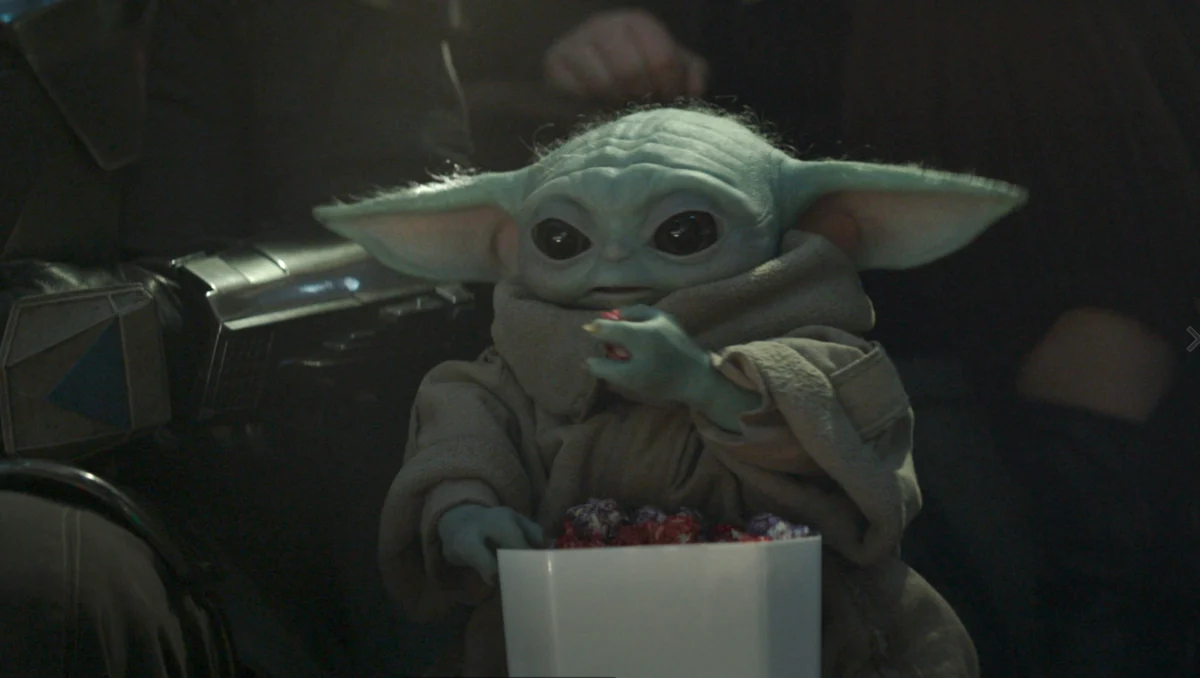
Based on the wildly popular Disney+ series The Mandalorian, the film continues the adventures of Din Djarin, portrayed by Pedro Pascal (primarily through voice acting and body double), the stoic bounty hunter bound by a strict creed, and his adopted son, Grogu, a Force-sensitive child of Yoda’s species. The television series, which premiered in 2019 as a flagship offering for Disney+, was an immediate critical and commercial success. It revitalized the Star Wars universe post-Skywalker Saga, appealing to both long-time fans and new audiences with its Western-inspired aesthetic, compelling character dynamics, and expansion of Mandalorian lore. The series earned numerous accolades, including multiple Emmy Awards, and became a cornerstone of Disney+’s subscriber growth, demonstrating the enduring appeal of Star Wars content when executed with fresh vision and reverence for its roots.
The decision to transition The Mandalorian from a streaming series to a feature film reflects Disney’s confidence in the property’s theatrical viability and its strategy to leverage proven streaming successes for cinematic revenue. The film, directed by Jon Favreau, who also created and executive produces the series, promises to deliver the expansive scale and cinematic grandeur expected of a Star Wars theatrical release. Joining Pascal in the cast are acclaimed actors Jeremy Allen White and Sigourney Weaver, whose involvement further elevates the project’s profile and underscores its importance to Disney’s overall entertainment slate.
Box Office Projections and Market Realities
Early tracking data for The Mandalorian & Grogu suggests an opening weekend projection of approximately $80 million. This figure has prompted varied interpretations within industry circles. From one perspective, it represents a potentially "low" opening for a Disney-produced Star Wars movie. Historically, mainline Star Wars saga films have commanded significantly higher opening weekends. For example, Star Wars: The Force Awakens (2015) opened to a record-breaking $248 million, Star Wars: The Last Jedi (2017) to $220 million, and Star Wars: The Rise of Skywalker (2019) to $177 million. Even spin-off films like Rogue One: A Star Wars Story (2016) debuted with $155 million. The only Star Wars film in the Disney era to open lower than $80 million was Solo: A Star Wars Story (2018), which earned $84.4 million in its four-day Memorial Day weekend opening and ultimately underperformed at the box office, signaling potential audience fatigue or lack of interest in certain spin-off concepts.
However, from another viewpoint, an $80 million opening could be considered a "terrific number" for a movie based on a television show. The transition from the small screen to the big screen, even for a massively popular series, carries inherent risks. Audiences accustomed to consuming the narrative as part of their streaming subscription might hesitate to pay for a theatrical ticket. When compared to other films adapted from TV series, an $80 million opening would place The Mandalorian & Grogu among the top performers, indicating significant crossover appeal. The industry has seen mixed results with TV-to-film adaptations, making The Mandalorian & Grogu‘s performance a crucial test case for Disney’s strategy.
The theatrical market has also undergone significant transformations post-pandemic, with audiences becoming more selective about what they choose to see in cinemas. Franchise fatigue, the rise of streaming, and evolving consumer habits all contribute to a complex box office landscape. Therefore, the $80 million projection must be viewed within this broader context, representing a solid debut that reflects the series’ strong fanbase while acknowledging the challenges facing even the most established franchises in today’s cinematic environment. As Obi-Wan Kenobi famously observed, "Many of the truths we cling to depend greatly on our own point of view," a sentiment that aptly applies to the analysis of these box office forecasts.
The Streaming Landscape: Nielsen’s Star Wars Study
Adding another layer of context to the current state of the Star Wars franchise, Nielsen recently released a study analyzing Star Wars streaming ratings on Disney+. The findings provided intriguing insights into audience preferences and consumption patterns. The study revealed that, contrary to some expectations, the original trilogy (Episodes IV-VI) and the prequel trilogy (Episodes I-III) continued to demonstrate robust popularity in streaming viewership, often outperforming the sequel trilogy (Episodes VII-IX). This suggests a strong nostalgic pull and enduring appeal for the foundational stories of the saga.
Furthermore, the report likely highlighted the significant role of The Mandalorian series itself in driving Disney+ subscriptions and engagement. Its episodic nature, coupled with high production values and compelling storytelling, has cultivated a dedicated viewership that consistently tunes in for new content. Such data underscores the commercial wisdom behind transitioning The Mandalorian into a feature film, as it taps into a proven and highly engaged audience base that has already demonstrated loyalty to the characters and universe.
The Nielsen study’s broader implications extend to Disney’s content strategy across its entire portfolio. Understanding which eras and narratives resonate most strongly with streaming audiences informs future production decisions, potential spin-offs, and even the marketing angles for new releases. It emphasizes the importance of balancing innovation with a deep understanding of fan preferences, ensuring that new content both honors the legacy of the franchise and propels it forward.
Broader Implications: Pop Culture, Politics, and Brand Management
The incident involving the White House’s May the Fourth post highlights a growing phenomenon in contemporary culture: the increasingly intertwined relationship between popular entertainment and political messaging. As political figures and entities seek to connect with broader audiences, they frequently leverage widely recognized cultural icons, symbols, and narratives. While this can sometimes be a harmless way to engage, it also carries significant risks for the intellectual property owners.
For Disney and Lucasfilm, the primary concern is the potential for their meticulously crafted universe to become associated with specific political ideologies or figures, thereby compromising its perceived neutrality and universal appeal. The Star Wars brand has historically thrived on its ability to resonate with diverse demographics across the political spectrum. When a character like The Mandalorian, who embodies a code of honor and protection, is used to promote a particular political agenda, it can inadvertently politicize the character and the franchise, potentially alienating segments of its global fanbase.
The public’s immediate response, characterized by satirical counter-images and critical commentary, further illustrates the challenges. Social media amplifies both the original message and its myriad interpretations and reactions, making it difficult for brands to control the narrative once their IP enters the political arena. This necessitates a proactive and consistent brand management strategy, often favoring a "no comment" approach to avoid being drawn into partisan debates.
As The Mandalorian & Grogu prepares for its theatrical debut, the incident serves as a stark reminder of the delicate balance brands must maintain in an era where cultural touchstones are increasingly subjected to political appropriation. The film’s success will ultimately depend on the strength of its narrative and the enduring appeal of its characters, but the surrounding discourse, however tangential, underscores the complex interplay between entertainment, politics, and public perception in the modern media landscape.