Narrative Overview and Character Dynamics
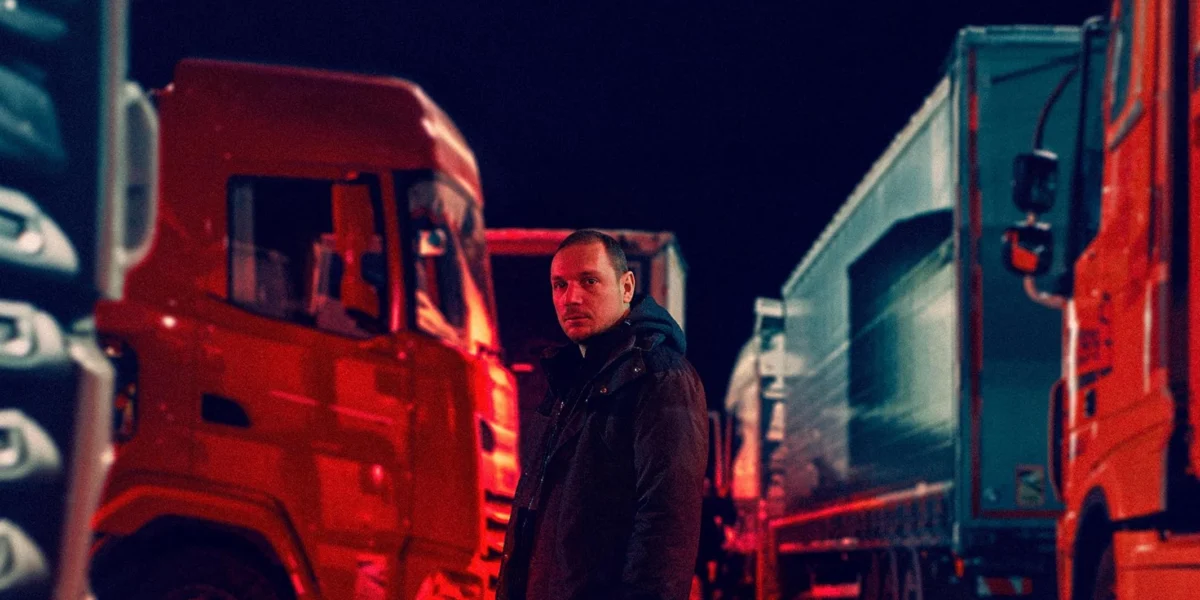
The story follows Étienne, portrayed by Alexis Manenti, a man whose professional life necessitates a state of perpetual motion. His social and romantic interactions are largely confined to the liminal spaces of highway rest stops and parking lots—locations characterized by their anonymity and lack of permanence. This cycle of fleeting encounters is disrupted when Étienne meets Bartosz, a Polish driver played by Julian Świeżewski.
Their initial meeting follows the established patterns of modern queer connectivity, beginning as a purely physical encounter at a truck stop. However, the relationship quickly evolves following a shared moment of tension where Bartosz’s quick thinking prevents a potential legal intervention during a cruising encounter. This event serves as the catalyst for a deeper emotional bond. As their trade routes occasionally overlap, the two men attempt to forge a courtship that is fundamentally at the mercy of their employers’ logistics and the rigid demands of the European supply chain.
Socio-Economic Context of the Long-Haul Industry
The film provides a stark look at the logistics sector, an industry that serves as the backbone of European commerce but often renders its workers invisible. According to industry data from the European Road Haulage Association, the sector faces significant challenges regarding driver mental health, with long periods of isolation and the pressure of "just-in-time" delivery schedules contributing to high rates of stress.
In Made Of Flesh And Fuel, this professional isolation is not merely a background setting but a central antagonist. The film posits that the primary obstacle to the protagonists’ happiness is not individual prejudice, but rather the structural realities of a commerce-centric world. The necessity of constant movement prevents the "quietude" and stability required for a traditional relationship. This is further reflected in the subplot involving Étienne’s colleague, who struggles to adapt to retirement, illustrating how the mechanical pace of the trucking industry can fundamentally alter a person’s internal rhythm, making the concept of "staying still" feel alien and uncomfortable.
A Departure from Traditional Queer Narratives
One of the most notable aspects of Le Gall’s screenplay is its subversion of typical queer cinema tropes. Unlike many films within the genre that focus on the trauma of the "closet" or the struggle for self-acceptance, Étienne’s sexuality is presented as an established fact of his life. Among his peers in the hyper-masculine environment of long-distance trucking, his identity is treated with a matter-of-fact acceptance.
This shifts the dramatic focus from "sexual discovery" to "self-discovery." The conflict is not internal shame, but the external logistics of intimacy. By removing the threat of social ostracization, the film allows for an exploration of how economic structures and professional demands dictate the limits of human connection. The comparison to films like Brokeback Mountain is inevitable due to the blue-collar setting, yet Made Of Flesh And Fuel aligns more closely with modern "yearning" cinema—a trend highlighted by recent cultural interest in narratives of longing and structural separation.
Technical Execution and Aesthetic Direction
Pierre Le Gall demonstrates a sophisticated command of cinematic tone, balancing the "gruff, unpolished" environment of industrial transit with a lush, sentimental aesthetic. The visual language of the film frequently utilizes the very machinery of the trade—the massive lorries and expansive highways—as metaphors for emotional distance. These vehicles act as visual impediments, keeping the characters physically separated even as they communicate across airwaves.
The auditory experience of the film is shaped by composer Paul Sabin. The score, which utilizes sweeping wind instruments, provides a romantic counterpoint to the industrial visuals. This juxtaposition suggests that while Étienne is a reserved and physically constricted individual, he possesses a rich emotional interior. The music serves as a bridge between his stoic exterior and his "heart of a lover," effectively communicating the depth of his pining to the audience.
Performance Analysis
The success of the film relies heavily on the chemistry and individual performances of the lead actors. Alexis Manenti, known for his grounded and intense physical presence, portrays Étienne with a sense of restrained vulnerability. His performance is characterized by subtle movements—specifically the constant scanning of his eyes, which simultaneously look for occupational hazards and express profound emotional longing.
Julian Świeżewski provides a necessary contrast as Bartosz. His portrayal is gregarious and warm, offering a sense of hope and charisma that draws Étienne out of his self-imposed isolation. Together, the two actors create a believable partnership that the audience is encouraged to support, despite the logistical improbabilities of their situation.
Chronology of Production and Cultural Context
The release of Made Of Flesh And Fuel coincides with a broader cultural resurgence of the "yearning" subgenre in media. This trend has been noted by major industry players, including the Criterion Channel, which recently curated a series dedicated to the concept of longing. Le Gall’s film arrives following the success of other high-profile adaptations and original stories that prioritize emotional pining over traditional plot progression.
The production of the film involved a collaborative writing process that sought to ground the romantic narrative in the authentic details of the transport industry. By focusing on the specificities of the Polish-French trucking routes, the writers highlights the intra-European nature of modern labor and the unique challenges faced by migrant workers within the Schengen Area.
Broader Impact and Industry Implications
As a 90-minute feature, Made Of Flesh And Fuel is a concise yet powerful exploration of the human cost of a globalized economy. It serves as a reminder that the "materials and goods" transported across borders are moved by individuals with complex emotional lives. The film’s focus on the "antagonist of structure" rather than the "antagonist of personhood" marks a sophisticated evolution in how independent cinema addresses social issues.
Industry analysts suggest that films like Made Of Flesh And Fuel are crucial for the continued diversification of European cinema. By centering on blue-collar protagonists in a genre often dominated by urban, middle-class narratives, Le Gall opens up new avenues for storytelling. The film’s ability to find beauty in the "less-than-glamorous" truck stops of Europe speaks to a growing appetite for stories that find the extraordinary within the mundane.
Conclusion and Future Outlook
Made Of Flesh And Fuel is a testament to the power of connection in an increasingly fragmented world. It avoids the pitfalls of being overly morose, instead opting for a "chest-clutching" exquisite sadness that celebrates the attempt to love against all odds. For Pierre Le Gall, this debut establishes him as a director capable of handling delicate emotional beats within rugged environments.
As the film enters wider distribution, it is expected to resonate with audiences who appreciate the nuances of longing and the realities of the working class. The story of Étienne and Bartosz is not just a romance; it is a commentary on the endurance of the human spirit in the face of a world that demands constant movement at the expense of stability. The film leaves the viewer with a profound sense of the "unexpected power of love," suggesting that while the road may be unpredictable and the machinery of commerce may be vast, the drive for human connection remains the most powerful fuel of all.