Alice Maio Mackay’s latest cinematic offering, The Serpent’s Skin, has captivated audiences and critics alike, marking a significant milestone in the burgeoning career of the 21-year-old Australian filmmaker. Following a triumphant circuit at international film festivals from London to Montreal, the supernatural romance stands as a testament to Mackay’s distinctive DIY vision, bringing authentic queer narratives to an increasingly wider audience. The film’s American premiere at the esteemed Alamo Drafthouse in downtown Brooklyn underscored its growing prominence within the independent film landscape, positioning Mackay as a formidable and prolific voice in contemporary genre cinema.
A Rising Voice in Queer Cinema
Alice Maio Mackay’s journey through the filmmaking world has been remarkably swift and impactful. At an age where many are just beginning to define their artistic paths, Mackay has already amassed a formidable body of work, with The Serpent’s Skin being her sixth feature film and a seventh already completed, demonstrating an extraordinary commitment to her craft. Her rapid output and unwavering dedication have cemented her reputation as one of the most exciting young directors to emerge in recent years. This prolificacy is not merely about quantity; it is intrinsically linked to her independent spirit and her desire to tell stories that resonate deeply within the queer community, often exploring themes of identity, belonging, and resistance through the lens of horror and fantasy.
The success of The Serpent’s Skin on the festival circuit represents the apex of her career thus far, playing to the largest number of cinemas she has experienced. This broader reach is crucial for independent films, particularly those with specific demographic appeal, as it allows for greater visibility and dialogue. Mackay’s ability to consistently deliver engaging and relevant content has not only garnered critical acclaim but has also cultivated a loyal following eager to witness her next creative endeavor. Her work is characterized by a raw energy and an unvarnished authenticity that sets her apart, making her a vital contributor to the ongoing evolution of queer representation in film.
The Narrative Core: Magic, Romance, and Modernity
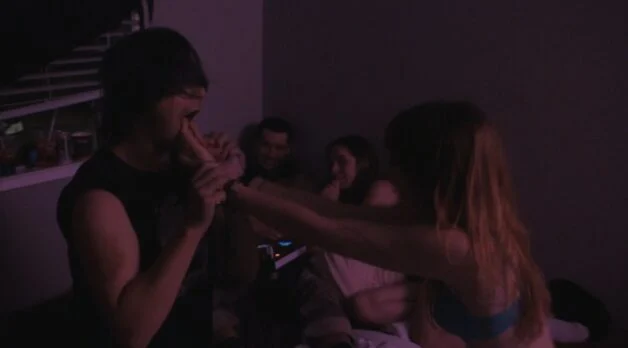
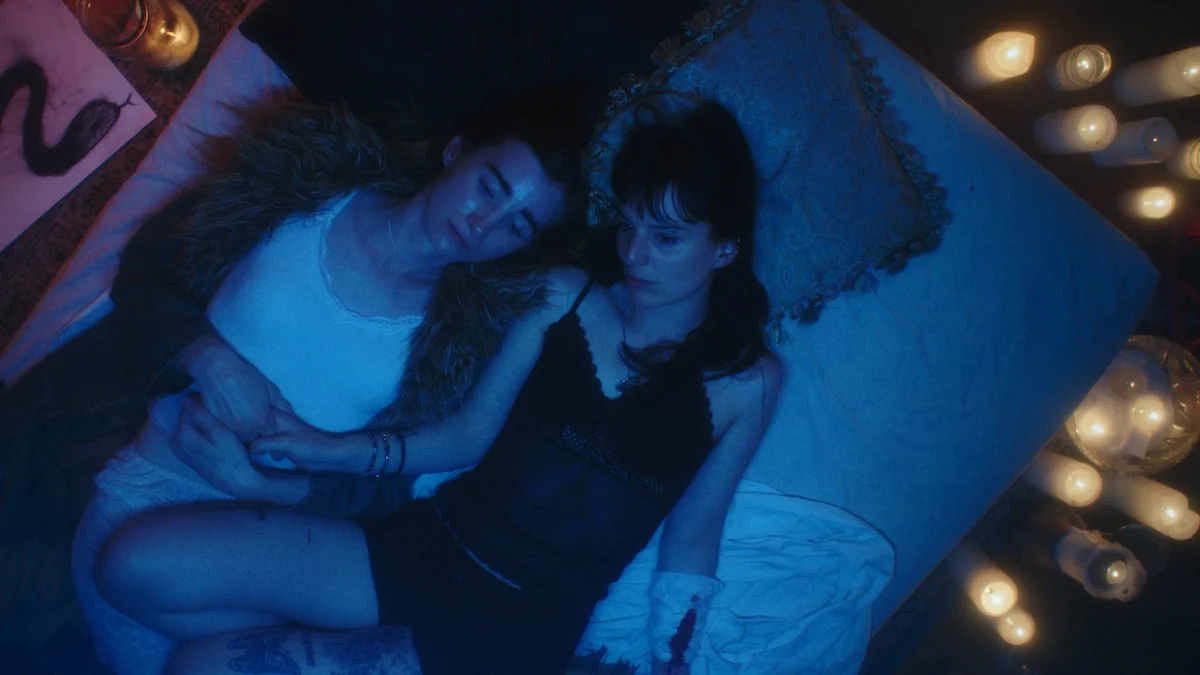
The Serpent’s Skin plunges viewers into a world where magic intertwines with modern queer romance. The film centers on Anna (Alexandra McVicker), an innocent newcomer to town, and Jen (Avalon Fast), a mysterious goth tattoo artist. Their paths converge as they discover a shared connection to magical powers, propelling them into a supernatural conflict against a demon. This malevolent entity has possessed Danny (Jordan Dulieu), the charming alt-boy-next-door whom Anna has recently relegated to the "friend-zone."
This central love triangle is a deliberate subversion of traditional romantic tropes, allowing Mackay to explore complex relationship dynamics within a fantastical framework. The character of Danny, specifically, serves as a pivotal narrative device. Mackay intentionally crafted him not as a straightforward bigoted villain, a departure from some of her previous, more overtly political works. Instead, Danny embodies a "2000s white boy who’s super progressive but also kind of embodies toxic masculinity." This nuanced portrayal offers a contemporary critique of performative allyship and the subtle, insidious forms of patriarchal influence that can persist even in seemingly open-minded individuals. By making the demon’s host a character who is outwardly appealing but harbors underlying issues, Mackay injects a layer of psychological complexity into the supernatural horror, challenging audiences to look beyond surface-level perceptions.
The film’s exploration of queer relationships is explicitly "text" rather than "subtext," a conscious decision by Mackay to move beyond the veiled queer coding often found in earlier genre media. Anna and Jen’s developing romance is central to the plot, their magical bond mirroring and strengthening their emotional connection. This direct approach to queer representation is a hallmark of Mackay’s filmmaking, providing much-needed visibility and validation for LGBTQ+ audiences. The narrative cleverly uses the supernatural elements to amplify the emotional stakes, making the fight against the demon not just a battle for survival but also a journey of self-discovery and the forging of powerful, authentic bonds.
A Symphony of Influences: From Broadway to Bat Out of Hell
Maio Mackay’s distinctive cinematic voice is deeply informed by a rich tapestry of personal artistic experiences. Her admission that she "always liked [theater] more than film" speaks volumes about the theatricality embedded in her work. A former "theater kid" who attended music school specializing in the bassoon, Mackay’s background is far from conventional for a filmmaker. Though she no longer plays the bassoon, she remains proficient in other instruments like piano and guitar, and her past as a competitive dancer from ages eight to fourteen (encompassing ballet, tap, and contemporary styles) further underscores a profound engagement with performance and movement.
This interdisciplinary foundation is palpable in The Serpent’s Skin, particularly in her approach to music and dramatic scenes. Mackay emphasizes the integral role of music in her writing process, describing it as "always at the forefront of my mind." She creates "character playlists" and uses "specific temp music" during editing, illustrating how soundscapes are woven into the very fabric of her narratives. Her affinity for "classic gay music" – citing Madonna and Kylie Minogue – suggests an embrace of anthemic, emotionally charged sound that often accompanies queer narratives, amplifying themes of resilience, self-expression, and community.
A surprising yet profound influence for The Serpent’s Skin was Meat Loaf’s iconic "Bat Out of Hell" trilogy. Mackay explains, "I was really inspired by Meatloaf for this one! Just the vibe of all three volumes of ‘Bat Out of Hell.’ That I listened to a lot." This inspiration, stemming from her mother’s fandom and her own childhood immersion in the music, translates into the "operatic nature" she seeks in her stories. The theatrical grandeur, heightened emotions, and narrative ambition of Meat Loaf’s rock opera albums find a parallel in Mackay’s cinematic vision, particularly in the dramatic arc of love and conflict within The Serpent’s Skin. The inclusion of Bat Out of Hell briefly within the film itself serves as a direct homage to this formative influence, connecting her personal history to the film’s aesthetic and emotional core. This operatic quality is also what she sees connecting Meat Loaf to another key inspiration: the television series Charmed. Furthermore, the influence of acclaimed independent filmmaker Greg Araki, known for his distinct visual style and exploration of queer themes, is acknowledged as "super big" for Mackay, situating her work within a lineage of defiant, boundary-pushing cinema.

Reimagining Teen Witch Tropes for a New Generation
The Serpent’s Skin is deeply informed by 1990s teen witch media, particularly popular television series like Buffy the Vampire Slayer and Charmed. Mackay recalls discovering Buffy first through the movie, then the series, and similarly encountering Charmed at her local library. These shows, alongside others like 90210 and Dynasty, provided a crucial source of escapism during her childhood. The early 2000s boom of supernatural young adult fiction, including Twilight, Beautiful Creatures, and The Mortal Instruments, further solidified her connection to the genre, making it "feel full circle to write something in that vibe."
However, Mackay’s engagement with these influences is not merely nostalgic. She consciously aims to "improve upon" and update these narratives for a contemporary audience. While acknowledging the "really cool characters" in shows like Buffy, she notes the problematic aspects, particularly those associated with creator Joss Whedon. Her primary goal is to take the inherent "queerness" of these narratives and elevate it from subtext to explicit text. As she articulates, "I’m just taking the queerness of it but making it more text than subtext. I mean obviously, there’s Willow and stuff, but it’s not really that much of a thing in that show." This direct approach to queer identity and relationships is a significant evolution from the often-coded or secondary queer storylines of the past, offering a more affirming and visible representation.
The current resurgence of interest in Y2K and early aughts aesthetics in queer film, exemplified by works like Jane Schoenbrun’s I Saw the TV Glow, provides a fascinating backdrop for The Serpent’s Skin. While Mackay doesn’t see her film as "necessarily in conversation" with I Saw the TV Glow due to tonal differences, she recognizes the shared inspiration and the broader cultural appeal of this era for "queer people and people who didn’t really fit into the norm." Her relationship to nostalgia is nuanced; she acknowledges its potential pitfalls but emphasizes her desire to capture the feelings she experienced watching those shows, rather than simply replicating their surface elements. This distinction allows her to create something fresh and relevant while still honoring the foundational narratives that shaped her artistic sensibilities.
The Collaborative Spirit of Independent Filmmaking
A defining characteristic of Alice Maio Mackay’s career is her enthusiastic and consistent collaboration with other creative forces within the queer indie genre scene. This network of artists is crucial to her "distinctive DIY vision" and allows her to bring ambitious projects to fruition with remarkable speed. Her work with Canadian "lo-fi maverick" Avalon Fast, who also stars in The Serpent’s Skin, exemplifies this synergy. Fast’s own unique approach to independent filmmaking aligns perfectly with Mackay’s ethos, fostering a creative environment built on mutual respect and shared artistic goals.
The film’s post-production also benefited from significant collaborative talent, with acclaimed filmmaker and editor Vera Drew, known for The People’s Joker, cutting The Serpent’s Skin. Drew’s sharp editing skills undoubtedly contributed to the film’s polished final form, showcasing the power of skilled artisans coming together on independent projects. Beyond The Serpent’s Skin, Mackay’s collaborative spirit extends to acting in the durational films of director Louise Weard (Castration Movie) and involving Fucktoys auteur Annapurna Sriram in her next project. This intricate web of collaborations highlights a vibrant, interconnected community of queer filmmakers who are actively supporting and elevating each other’s work, collectively pushing the boundaries of genre and representation. This collaborative model is not just a practical necessity for independent filmmaking; it’s a philosophical stance that champions collective creativity and shared artistic purpose over individualistic pursuits.
Beyond the Screen: Maio Mackay’s Broader Artistic Ambitions
While film has become her primary medium, Alice Maio Mackay’s artistic ambitions extend beyond the silver screen. Her background in theater, which she openly prefers to film, continues to inform her directorial choices. She particularly enjoyed filming the conversational scenes in The Serpent’s Skin, especially the final rooftop scene, noting how they "feel very theatrical to me." The decision to rehearse these scenes "like a play and then shot" underscores her deep appreciation for dramatic performance and character-driven dialogue, harkening back to her "theater era." This theatrical sensibility injects a distinct intensity and intimacy into her film narratives, allowing character interactions to unfold with compelling depth.
Before her foray into filmmaking, Mackay’s initial aspiration was to be a novelist, focusing on "just wanted to be a good writer." This background in narrative development is evident in her filmmaking process, where she first develops stories in a "narrative format" before adapting them into screenplays with her co-writer, Benjamin Pahl Robinson. The revelation that "essentially a novel version that exists of all of your films" speaks to her comprehensive approach to storytelling. Her firm declaration of "Yes!" when asked if she would ever write a novel indicates that her multifaceted artistic journey is far from over, suggesting that audiences may one day experience her rich narratives in literary form as well. This broader artistic scope positions Mackay not just as a filmmaker, but as a storyteller across various mediums, continually exploring new avenues for creative expression.
Critical Reception and Broader Impact
The overwhelmingly positive reception of The Serpent’s Skin on the international festival circuit underscores its critical and cultural significance. Reviewers have lauded Mackay’s ability to blend genre conventions with fresh, queer-centric narratives, praising the film’s sharp wit, engaging characters, and distinctive visual style. Its success indicates a growing appetite for authentic and diverse stories within the horror and fantasy genres, moving beyond tokenism to embrace narratives where queer identity is central and celebrated.
The film’s impact extends beyond its entertainment value, contributing to a vital conversation about representation in media. By explicitly centering queer women and challenging traditional masculine archetypes, The Serpent’s Skin serves as a powerful statement on contemporary social issues. Its ability to resonate with both genre enthusiasts and broader audiences highlights the increasing mainstream appeal of inclusive storytelling. Alice Maio Mackay, with her prodigious talent and unwavering commitment to her vision, is not just making films; she is actively shaping the future of independent cinema, inspiring a new generation of filmmakers and proving that authentic, diverse narratives can achieve both critical acclaim and widespread recognition. As her career continues its rapid ascent, her influence on the landscape of queer genre cinema is poised to become even more profound.