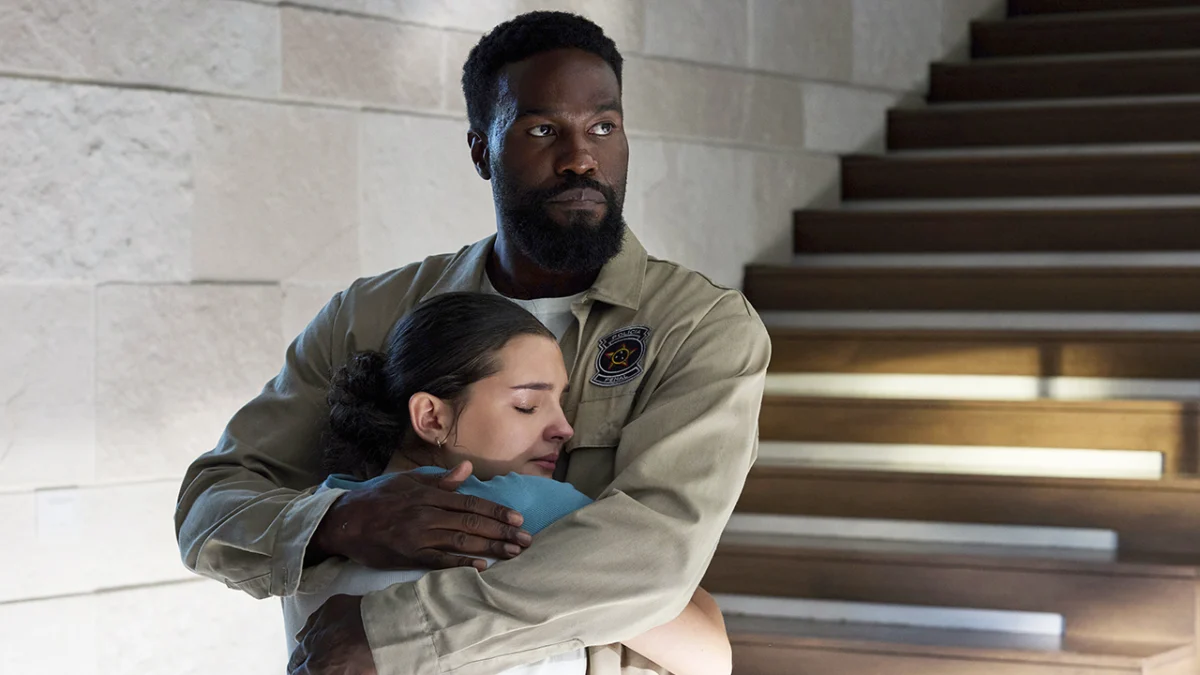
Netflix’s recent adaptation of A.J. Quinnell’s acclaimed novel Man on Fire, a narrative previously brought to the screen in two feature films, most notably Tony Scott’s visceral 2004 rendition, premiered on April 30th, 2026. This gritty action thriller joined a diverse slate of original programming, quickly capturing the attention of a global audience. The series delves into the tormented life of John Creasy, a former soldier grappling with severe PTSD and alcoholism, consequences stemming from a catastrophic mission. In this contemporary Netflix iteration, Creasy, portrayed with compelling intensity by Yahya Abdul-Mateen II, operates as a contractor for the CIA, a departure from his French Foreign Legion background in Quinnell’s original literary works. Across all its forms – literature, cinema, and television – the core of Creasy’s character remains his profound commitment to protecting a teenage girl. For the Netflix series, this pivotal role is filled by Poe Rayburn (Billie Boullet), the adolescent daughter of Creasy’s former military comrade, Paul Rayburn.
The Enduring Legacy of A.J. Quinnell’s Vision
The narrative of Man on Fire possesses a remarkable resilience, having captivated audiences for decades across different media. A.J. Quinnell, the pseudonym of English author Philip Nicholson, introduced John Creasy to the world in 1980. The character resonated deeply with readers, embodying a dark, morally complex hero driven by an unyielding sense of justice and protection. Quinnell’s series ultimately spanned five novels, each exploring Creasy’s journey through various global hotspots and confronting different forms of human depravity.
The first cinematic adaptation arrived in 1987, starring Scott Glenn as Creasy and Jade Malle as the girl he protects. While it garnered a modest following, it was Tony Scott’s 2004 film, featuring Denzel Washington in a career-defining role as Creasy and Dakota Fanning as Pita Ramos, that cemented Man on Fire‘s place in popular culture. Scott’s film was lauded for its stylized visuals, intense action sequences, and Washington’s raw, emotional performance, achieving both critical acclaim and significant box office success, grossing over $130 million worldwide. This version became a benchmark for the action-thriller genre, showcasing a protector’s descent into a brutal quest for vengeance. The Netflix series faces the challenge and opportunity of building upon this rich legacy while forging its own distinct identity for a new generation of viewers. Showrunner Kyle Killen and his team aimed to leverage the episodic format to delve deeper into Creasy’s psychological landscape, exploring the origins of his trauma and the nuances of his relationships in a way that feature films, constrained by runtime, often cannot.
Season 1: A Deep Dive into Creasy’s Torment and Redemption
The inaugural season of Netflix’s Man on Fire immediately immerses viewers in Creasy’s world, scarred by his past. After a devastating bombing claims the lives of Paul Rayburn and the rest of his family, John Creasy embarks on a relentless personal mission. His dual objectives are clear: exact vengeance against the shadowy perpetrators and ensure the safety of Poe, who is a crucial witness to the attack, placing her life in constant peril. The series masterfully tracks their perilous journey, unearthing a complex conspiracy that stretches from the criminal underworlds of Rio de Janeiro to the highest echelons of the CIA and the Brazilian government.
The season culminates in a shocking revelation: Creasy’s former CIA colleague, Henry Tappan (portrayed by Scoot McNairy), is the architect of the betrayal. With the immediate conflict resolved and Poe safely relocated with her grandmother, the narrative offers Creasy a glimmer of potential redemption, albeit through continued violence. An invitation from his old CIA boss provides an opportunity for recompense for Tappan’s treachery, specifically a chance to confront the operatives in Mexico City responsible for the tragic demise of Creasy’s team, an event that ignited his profound PTSD and alcoholism, setting the stage for his initial torment. This concluding development serves as a direct and compelling hook for a potential second season, shifting the geographical and thematic focus to Creasy’s unresolved personal demons.
Pending Renewal: Performance Metrics and Netflix’s Decision-Making Process
As of the time of reporting, Netflix has not yet issued an official announcement regarding the renewal of Man on Fire for a second season. However, early viewing data provides a robust indication of the series’ immediate impact. According to preliminary statistics from FlixPatrol, a platform tracking streaming performance, Man on Fire swiftly ascended to the top of the charts globally. Within its debut weekend, the series achieved the coveted #1 spot in nearly 50 countries, demonstrating widespread international appeal. This impressive list includes significant European markets such as France, Germany, Italy, and Spain, alongside regions like South Africa. Notably, the show also secured the #1 position in both Brazil and Mexico, the primary settings for the first season’s unfolding drama and Creasy’s traumatic past, respectively. In major English-speaking territories, including the United States, the United Kingdom, Canada, and Australia, the action-thriller debuted with considerable strength, holding a comfortable #2 position.
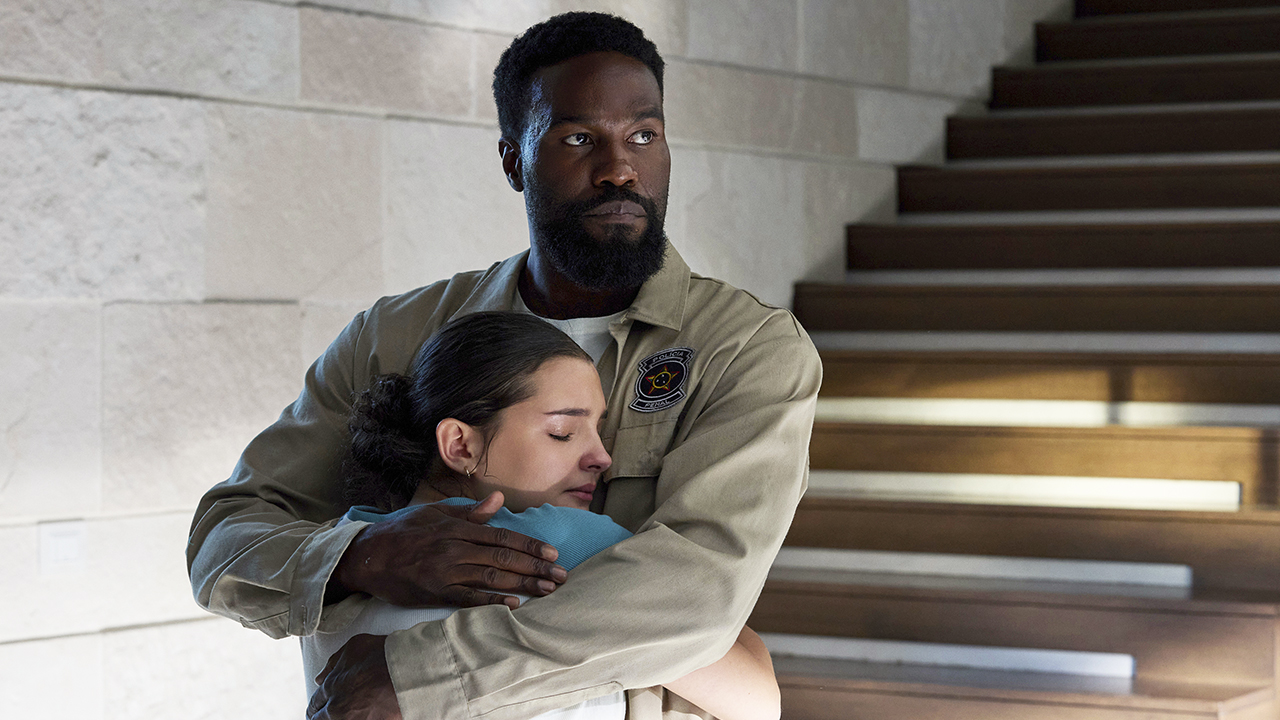
While these early figures from third-party aggregators are highly promising, a clearer and more comprehensive picture of the show’s global performance will emerge with the release of Netflix’s official, full first-weekend viewership numbers, which are anticipated on May 5th, 2026. Netflix’s renewal strategy is notoriously complex and multi-faceted, extending beyond mere top-10 placements. Key metrics include:
- Completion Rate: A critical factor for Netflix is how many viewers who start a series actually complete the entire season. A high completion rate signals strong engagement and viewer satisfaction, indicating that subscribers are invested enough to see the story through.
- Cost vs. Viewership (Efficiency): Netflix evaluates the production cost of a series against the total viewing hours it generates. Shows that deliver high viewership relative to their budget are more likely to be renewed.
- Subscriber Acquisition and Retention: Does the show attract new subscribers to the platform, or does it significantly contribute to keeping existing subscribers engaged, thereby reducing churn?
- Global Reach and Local Impact: While Man on Fire‘s performance in 50 countries is excellent, Netflix also assesses how well a show performs in diverse markets, considering regional content preferences and local relevance.
- Critical Reception and Buzz: While not always the deciding factor, positive critical reviews and significant social media buzz can influence renewal decisions, particularly for high-profile adaptations.
Given the initial strong showing, Man on Fire appears to be well-positioned for a renewal, especially if its completion rates align with its impressive global reach. The action-thriller genre has historically performed well for Netflix, with hits like The Night Agent and the Extraction film series demonstrating the platform’s audience appetite for high-stakes, character-driven action.
Anticipating Season 2: A Return to Mexico City and Evolving Characters
The narrative threads left dangling at the close of Season 1 strongly suggest a clear direction for a potential second season. Yahya Abdul-Mateen II, in an interview with Decider, coyly acknowledged the open-ended nature of the series, stating, "Without giving away everything about the about the show, I think it’s always nice to be able to potentially peer forward into the future," underscoring the creative team’s intention to leave room for further stories.
The most prominent storyline for a follow-up season revolves around Creasy’s unresolved trauma in Mexico City. While he successfully navigated the immediate crisis involving Poe and the intricate web of allies he forged in Brazil, his personal demons remain untamed. The invitation from his former CIA boss is not merely a job offer; it is a direct challenge to confront the ghosts of his past. This setup points towards a second season deeply rooted in Mexico, exploring the layers of conspiracy and corruption within the country that led to the tragic loss of Creasy’s team. Such a setting would offer a stark contrast to the vibrant, chaotic backdrop of Rio de Janeiro, potentially delving into a more somber and introspective investigation.
"Flashes of the Old Creasy": Character Evolution and Creative Vision
The creative team behind Man on Fire has already articulated their aspirations for John Creasy’s evolution in a hypothetical second season. Yahya Abdul-Mateen II, reflecting on the character’s journey, expressed his desire to explore Creasy’s pre-trauma persona. In an interview with Netflix, he articulated, "I would like to see some flashes of the old Creasy before the incident. I would like to see him more in his element in a charming type of way, because he’s definitely got that to him, but he also has this dangerous quality that I think is important for Creasy to keep." This suggests a more nuanced portrayal, allowing viewers to witness the man Creasy was before his world shattered, adding depth to his current tormented state.
Showrunner Kyle Killen further elaborated on Creasy’s psychological shift. Throughout the first season, Creasy maintained an emotional distance, viewing people as "puzzles" – a coping mechanism to avoid genuine connection. However, witnessing the detached, geopolitical sociopathy of the villainous Tappan forces Creasy to a profound realization: such a mindset is "toxic for your soul." This pivotal epiphany suggests that a potential Season 2 would feature a Creasy who is no longer running from emotional connection but actively seeking it, or at least grappling with its possibility. This internal evolution would add a rich layer to the external action and vengeance narrative.
The Role of Poe and a Shifting Ensemble
Season 1 concludes with Poe safely resettled with her grandmother, having found a measure of peace and a path to confront her past without succumbing to regret. Killen highlighted the unique bond between Creasy and Poe, noting that "she’s turning into him," particularly in her experience with a similar flavor of PTSD that initially sidelined Creasy. While Creasy’s mission for a second season points firmly towards Mexico City, his newfound role as a father figure to Poe has given him "a reason to live," as Abdul-Mateen describes. Even if Poe is not directly embroiled in the immediate dangers of Creasy’s next mission, it is highly probable that she will remain a crucial emotional anchor, representing the humanity and connection that Creasy has rediscovered. Her well-being and their evolving relationship could serve as a powerful undercurrent to the unfolding action.

Regarding the wider supporting cast, Creasy and Poe’s eclectic group of allies from Rio, including the resourceful cab driver Melo (Alice Braga) and her friends from the favelas, achieved national hero status by exposing a Brazilian presidential conspiracy. While Melo initially planned to leave Rio with her daughter, she ultimately decided to stay. This open-ended conclusion for the Brazilian characters implies that while their return is not impossible, a new ensemble of allies is more probable for a Mexico-centric second season. This approach allows the series to introduce fresh dynamics and explore new facets of Creasy’s character through different interactions, aligning with the narrative shift to a new location and a new set of antagonists.
Leveraging A.J. Quinnell’s Extensive Source Material
A significant advantage for the Netflix adaptation is the wealth of source material provided by A.J. Quinnell’s Man on Fire series. The first season already demonstrated a willingness to adapt not only the initial novel but also elements from its sequel, The Perfect Kill. Beyond these, Quinnell penned three more Creasy novels, offering a broad canvas for future seasons:
- The Blue Ring (1993): This novel transports Creasy to the Mediterranean, where he confronts another formidable criminal cartel, reportedly with Satanic connections, from which the book derives its name.
- Black Horn (1994): This installment sees Creasy’s journey take him through the heart of Africa, specifically Zambia and Zimbabwe, unearthing a criminal network with ties extending to Hong Kong.
- Message From Hell (1996): The final novel in the series sends Creasy to Vietnam and Cambodia, where the tables are turned, and he finds himself the target of another individual’s revenge mission.
These novels collectively showcase the global scope of Creasy’s adventures and the diverse array of adversaries he encounters. Given Netflix’s established practice of taking creative liberties with its adaptations – as seen with the relocation of the initial plot to Rio and changes to character details – it is unlikely that any future season would be a direct, 1:1 translation of Quinnell’s subsequent books. However, they provide rich thematic elements, diverse geographical settings, and compelling plot points that the showrunners could adapt, modernize, and weave into an overarching narrative arc for the series. This flexibility allows the creative team to maintain the spirit of Quinnell’s work while crafting a story that best suits the episodic television format and contemporary audience expectations.
Broader Implications and Conclusion
The strong initial performance of Netflix’s Man on Fire signals a potentially successful venture for the streaming giant within the highly competitive action-thriller genre. Netflix has heavily invested in this category, recognizing its global appeal and ability to attract and retain subscribers. A renewal would not only solidify the series’ place in the platform’s content library but also provide continued opportunities for the talented cast and crew, including Yahya Abdul-Mateen II, whose star continues to rise.
Fan engagement, often measured through social media sentiment and online discussions, will also play a role in the final decision. The fervent discussions surrounding plot theories, character arcs, and potential future seasons can act as a powerful indicator of audience investment. While Netflix’s renewal decisions can sometimes be unpredictable, the confluence of robust viewing data, clear narrative direction for a second season, and the availability of extensive source material presents a compelling case for Man on Fire‘s continuation. The series has successfully introduced John Creasy to a new generation, proving the enduring power of a story about a man pushed to his limits, seeking redemption through the protection of the innocent and a relentless pursuit of justice.
We will continue to monitor official announcements from Netflix and provide updates on viewership data and any further statements from the cast and crew as they become available. The question of whether John Creasy will ignite his personal mission of vengeance in Mexico City remains, for now, a pending but promising prospect.