Twenty years after its world premiere at the Cannes Film Festival, Guillermo del Toro’s dark fantasy masterpiece, Pan’s Labyrinth (original Spanish El Laberinto del Fauno), continues to captivate audiences and critics alike. Director Guillermo del Toro recently returned to the prestigious French Riviera event, not with a new feature, but to unveil a meticulously restored 4K version of the film, which served as the opening presentation for the festival’s esteemed Cannes Classics selection. This return provided an opportunity for del Toro to reflect on the film’s arduous genesis, its unexpected, triumphant debut, and its enduring thematic relevance in an ever-changing world.
A Triumphant Return to Cannes
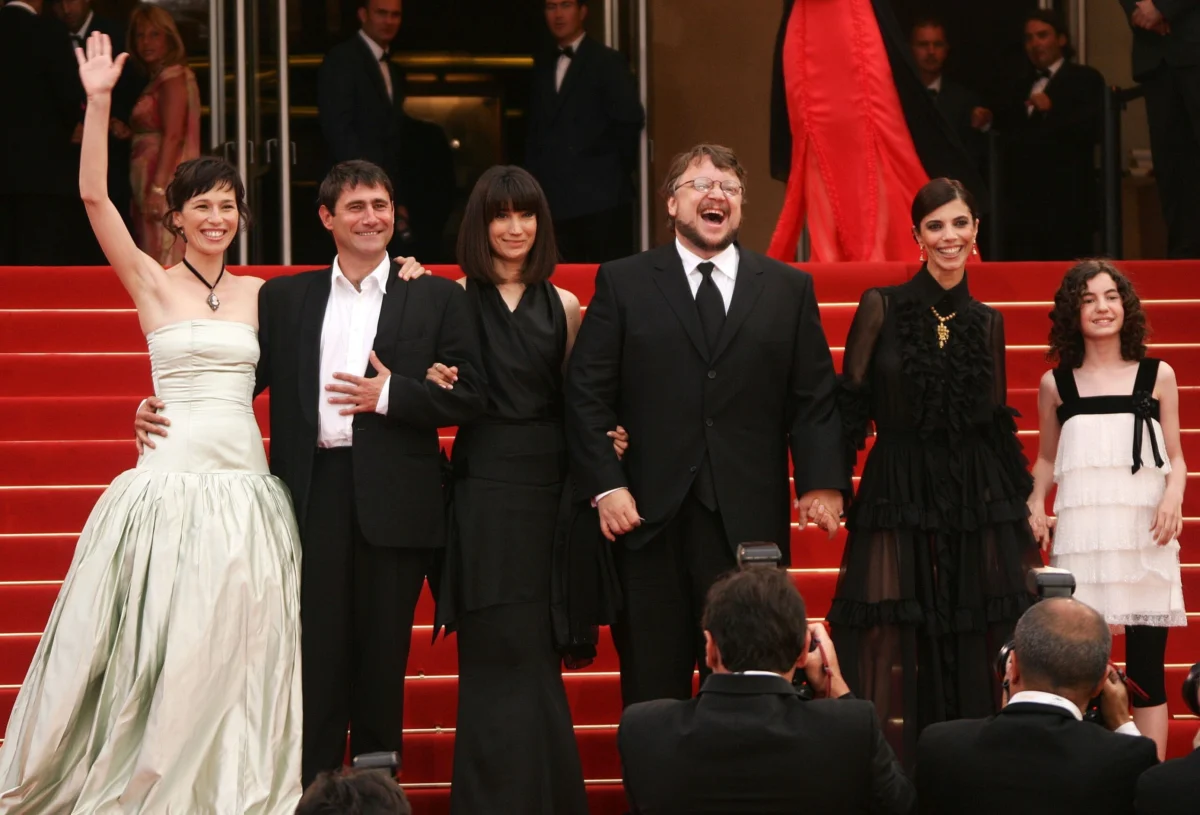
Del Toro’s 2024 appearance at Cannes, presenting the newly restored Pan’s Labyrinth in the Debussy Theatre on May 12, was a stark contrast to his initial arrival in 2006. Two decades prior, he harbored no expectations of a triumph, anticipating instead that his Spanish-language, genre-bending film would be largely overlooked. Speaking to The Hollywood Reporter in Cannes, del Toro recalled the circumstances of its original screening: "A lot of the press was leaving. I was thinking: ‘How many people are going to show up for this, on the final day?’ Then the screening was packed, packed!" The film, a challenging blend of historical drama and mythical fantasy set against the brutal backdrop of Francoist Spain, was the very last to screen in competition that year, a slot often associated with diminishing press attention and waning festival energy. Yet, against all odds, it ignited an unprecedented fervor.
The Unforgettable 2006 Premiere: A Festival Legend
What transpired after the credits rolled in 2006 has since become a cornerstone of Cannes lore. The film concluded to an "explosion of applause that is the largest and most emotional I’ve ever had in my life," as del Toro described it. This culminated in a staggering 23-minute standing ovation, a record that remains unsurpassed in the festival’s illustrious history. "Twenty-three minutes is a commute," del Toro quipped to the audience at the recent Classics screening, emphasizing the extraordinary duration of the emotional outpouring.
Such a reaction was particularly unusual for Cannes, a festival often characterized by its more reserved and "circumspect" critical environment. "Normally Cannes is very circumspect," del Toro explained. "You either get no sound or you get aggressive sound. But rarely do people react to the screen loudly, and then they start reacting. And then it gets more and more emotional." Overwhelmed by the adulation, del Toro admitted to struggling to fully absorb the moment. It was his close friend and fellow Mexican filmmaker, Alfonso Cuarón, who was present with him, who offered a poignant piece of advice: "Let it in. Let the love get in." This anecdote highlights not only the personal impact of the moment on del Toro but also the supportive camaraderie within the "Three Amigos" of Mexican cinema (del Toro, Cuarón, and Alejandro G. Iñárritu).
A Journey Fraught with Challenges: The Genesis of a Masterpiece
The path to that record-breaking ovation was, by del Toro’s own admission, exceptionally arduous. At the Cannes Classics screening, he starkly declared, "This was the second-worst filmmaking experience of my life, the first one being making Mimic with the Weinsteins." The reference to Mimic (1997) is significant, pointing to a period where del Toro experienced intense creative interference and studio struggles, a common plight for many directors navigating the Hollywood system.

For Pan’s Labyrinth, the difficulties began long before cameras rolled. Pre-production was a relentless struggle, with del Toro facing widespread skepticism from potential financiers. "Nobody wanted to finance it," he lamented, underscoring the challenge of securing funding for a Spanish-language dark fantasy that defied easy categorization. The production itself piled on additional layers of complexity, described by del Toro as "difficult production, difficult postproduction. Everything." The film’s print arrived at Cannes "basically just in time," a testament to the eleventh-hour scramble to complete the project under immense pressure. This turbulent journey underscores the sheer tenacity and unwavering vision required to bring such an ambitious project to fruition.
Thematic Depth and Historical Context
The film they ultimately delivered was indeed singular. Set in the grim aftermath of the Spanish Civil War in 1944, Pan’s Labyrinth masterfully intertwines the brutal realities of wartime Spain with a haunting, fantastical underworld. The narrative centers on Ofelia (Ivana Baquero), a young girl living with her heavily pregnant mother and her new stepfather, Captain Vidal (Sergi López), a sadistic and fanatical Francoist officer. In the labyrinthine woods surrounding their isolated military outpost, Ofelia encounters a mysterious faun who reveals her true identity as a princess from an enchanted realm and tasks her with completing three perilous quests to reclaim her rightful place.
Del Toro expertly crafts a powerful juxtaposition: the chilling, monochromatic brutality of Captain Vidal’s fascist regime and the vibrant, often terrifying, yet ultimately hopeful world of Ofelia’s imagination. As in much of del Toro’s oeuvre, the film suggests that imagination is not merely an escape but a profound form of resistance against oppression, a vital tool for survival in a world consumed by darkness. The historical context of Francoist Spain, a period of authoritarian rule and suppression following a devastating civil war, provides a potent backdrop for these themes, resonating deeply with audiences familiar with the struggle against tyranny. Ivana Baquero, who delivered a powerful performance as the young protagonist, was also present at the recent Cannes Classics screening, a poignant reminder of the passage of time. Del Toro noted, "Ivana was about 10 or 12 when she made the movie. She’s now 30. And I was 100 pounds lighter."
Shifting Tides at Cannes: A Genre Breakthrough
Del Toro reflected on the broader impact of Pan’s Labyrinth‘s 2006 debut, viewing it as a pivotal moment for the Cannes Film Festival itself. He observed that the inclusion of his film, alongside Park Chan-wook’s Old Boy, which also screened in competition that year, marked a significant shift in the festival’s programming philosophy. "Old Boy and Pan’s Labyrinth marked a big shift," he stated. "This is early days at Cannes of changing the mentality of the programming from the 10 or 20 directors that normally came to Cannes."
Historically, Cannes had often favored a more traditional art-house cinema, predominantly from established European and American auteurs. While del Toro had previously attended Cannes with his debut feature Cronos in 1992, and Alejandro González Iñárritu with Amores Perros, these entries were typically relegated to sidebar sections rather than the main competition. Pan’s Labyrinth and Old Boy, both genre-inflected films from outside the conventional festival circuit, signaled a new openness, ushering in an era where fantasy, horror, and other genre elements could be recognized for their artistic merit on the world stage. This paradigm shift broadened the festival’s appeal and diversified the cinematic voices it championed, paving the way for future genre successes at major international festivals.
From Cannes to Global Acclaim: Critical and Commercial Success
The momentum generated by the Cannes premiere propelled Pan’s Labyrinth onto an unforeseen trajectory of global acclaim. Following its French debut, the film continued its triumphant festival circuit, earning another standing ovation at the "very circumspect" New York Film Festival, followed by similar accolades at the Toronto International Film Festival. Del Toro recognized this growing buzz: "It was really the beginning of people realizing there was something there."

The film’s critical success was soon matched by its commercial performance and prestigious awards. It garnered six Academy Award nominations, including Best Foreign Language Film and Best Original Screenplay, ultimately winning three Oscars for Best Cinematography (Guillermo Navarro), Best Art Direction (Eugenio Caballero, Pilar Revuelta), and Best Makeup (David Martí, Montse Ribé). Beyond the Oscars, Pan’s Labyrinth secured numerous other accolades, including seven Goya Awards (Spain’s national film awards), three BAFTA Awards, and a Golden Globe nomination for Best Foreign Language Film. Produced on a modest budget of under $20 million, the film went on to gross an impressive $83 million worldwide, a testament to its broad appeal and critical endorsement. Its success demonstrated that a Spanish-language dark fantasy could achieve both artistic recognition and significant commercial viability on a global scale.
The Art of Craftsmanship: A Timeless Vision
Returning to the film for its 20th anniversary, del Toro expressed profound satisfaction with its enduring quality and the meticulous craftsmanship embedded within every frame. "I was quite taken about how beautifully physical the movie is," he reflected. His unwavering commitment to practical effects and tangible artistry was a cornerstone of its creation. "Back then, just as we did with Frankenstein, I was determined that every set was going to be built. We were going to handmake this movie. We did not shoot on location except for the forest. We built every set, every prop, built every piece of furniture."
This deliberate choice to fabricate the world of Pan’s Labyrinth was not merely a stylistic preference but a fundamental aspect of its narrative design. Del Toro aimed to create a stark "juxtaposition between the imaginary world and the round, warm colors and the cool, straight lines of the captain’s world." This visual dichotomy profoundly amplified the film’s thematic resonance, allowing the audience to viscerally experience the contrast between Ofelia’s vivid inner world and the harsh realities surrounding her. Upon re-watching, del Toro admitted, "I was very impacted, just feeling how the craftsmanship is beautiful." This dedication to physical artistry also extended to the film’s groundbreaking blend of animatronics, in-camera effects, and digital visual effects, all of which remain untouched in the new restoration. Del Toro stated his firm belief in the film’s flawless execution: "There’s nothing I would change in Pan’s Labyrinth." He contrasted this with a digital shot in Blade II that he feels "failed," highlighting his rigorous self-critique and the particular perfection he found in Pan’s Labyrinth.
A New Dimension: The 4K Restoration and Immersive 3D Conversion
For its 20th anniversary, Pan’s Labyrinth is not only receiving a stunning 4K restoration but also, for the first time, a 3D conversion. The restored version is set for a theatrical release in the United States via Cineverse and Fathom Entertainment, launching on October 9th – a date significant as it marks del Toro’s birthday. Internationally, StudioCanal has acquired distribution rights, planning theatrical releases in key territories such as Germany, the U.K., France, Benelux, and Australia this autumn, followed by premium Collector’s Editions. Mexican exhibitor Cinépolis will spearhead theatrical distribution across Mexico and Latin America, with StudioCanal managing international sales for the restored version.
The decision to create a 3D version was driven by del Toro’s desire to offer a fresh, compelling reason for audiences, particularly those who experienced it originally, to return to cinemas. "My idea is, what can have people that experienced it in theaters say, ‘I want to experience it in theaters again’?" he explained. His directorial style, characterized by "heavily composed foregrounds," naturally lends itself to the immersive qualities of 3D. Del Toro envisioned a conceptual application for the 3D, using it "as an element of depth" – making the real world appear "a little more shallow" and the imaginary world possess "a little more depth." This expressive use of the format aims to enhance the film’s thematic core.
The intricate 3D conversion is being handled by SDFX Studios (formerly Stereo D), the same company del Toro collaborated with on his epic sci-fi film Pacific Rim. He holds a high regard for their work, noting, "For me, the best version of Pacific Rim is the Imax 3D version. I feel you haven’t seen the movie if you haven’t seen it in Imax 3D." Calibrating Pan’s Labyrinth to achieve a comparable, yet artistically nuanced, result has been an exhaustive process, taking "many months" and requiring meticulous attention to detail. "You don’t want to overdo it. You don’t want to underdo it. The separation of elements has to be really carefully done for it to pop," he emphasized, indicating that the 3D conversion will continue for "many more months to finish."
An Enduring Resonance: Connecting with New Generations

One of the most remarkable aspects of Pan’s Labyrinth‘s legacy, as del Toro has come to understand, is its unique ability to transcend generational boundaries. Unlike some of his other works, which tend to age alongside their initial fan base, Pan’s Labyrinth consistently finds a profound connection with each new generation of young viewers. "If I talk to somebody that likes Hellboy or Blade, they’re 20 years older than when I launched it," he observed. "But if you talk to someone that loves Pan’s Labyrinth, most of the time you get a bunch of them are young people."
Del Toro attributes this enduring appeal to the film’s powerful exploration of youth, resilience, and the universal struggle against oppressive forces. It resonates deeply with young people who, much like Ofelia, often feel misunderstood or challenged by the adult world. "For some reason it connects with the strength of being young, when the world is telling you that you’re wrong and you know that you’re right," he articulated. His motivation for bringing the restored version back to a wide audience is rooted in this desire: "I wanted to put it out in the world in a big way so that I can keep connecting with the spirits that remain young."
The Future of Cinema: Reissues and Resistance
Beyond celebrating his own work, del Toro is a passionate advocate for the broader value of bringing restored films back to theatrical exhibition. He envisions a future for cinema that embraces a hybrid model, stating, "I think the future of theatrical is a mixture of reissues and new movies." He champions the "European model of the art house that exists very much enmeshed in the distribution and exhibition system," lamenting that it "doesn’t quite get embraced outside of Europe, but I think it’s very promising." He fondly recalls his own formative filmgoing experiences, where classic films would return to cinemas years after their initial release: "I would see the Hammer horror films opening weekend, and then three years later they were back in a double program or something. And it was always great — you wanted to revisit them." He cited examples of films he’d eagerly revisit on the big screen, such as George Miller’s Road Warrior (1981) and Ken Russell’s The Devils (1971).
Twenty years after the unparalleled ovation that launched Pan’s Labyrinth into cinematic history, Guillermo del Toro continues to articulate the same fundamental arguments that underpin his film: that imagination is not a frivolous luxury but a potent necessity, and that humanity must steadfastly resist the forces of fascism, fear, and any ideology that seeks to diminish human creativity. His message at Cannes, delivered ahead of the Classics screening, served as a powerful reminder of the film’s timeless relevance in a world grappling with new challenges. "We live in times where they tell us that what we are facing is so formidable that it is useless to resist, and that art can be made by a fcking app," he declared, directly addressing contemporary concerns about artificial intelligence and the devaluation of human artistry. "I feel [that] like the girl Ofelia in Pan’s Labyrinth*, we can hope to leave a mark. If we can put our faith against their faith, and our strength against their strength, there is hope. We have to give in to one of two forces. We can give in to love. We can give in to fear. Never, never, never give in to fear."
This impassioned plea encapsulates the enduring spirit of Pan’s Labyrinth and del Toro’s unwavering commitment to storytelling as a form of cultural and moral resistance. As the film prepares for its renewed theatrical run, it stands as a testament to the power of artistic vision, the resilience of the human spirit, and the timeless importance of choosing imagination and love over the encroaching shadows of fear.