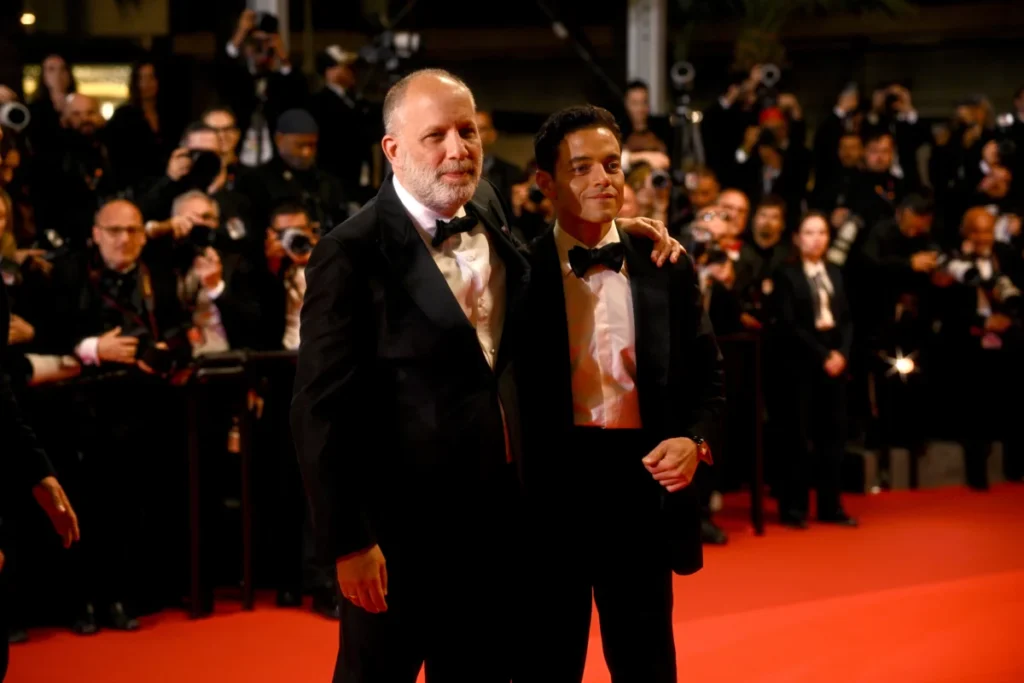
Las Vegas, NV – Legendary filmmaker Steven Spielberg made an unprecedented inaugural appearance at CinemaCon, the annual convention of motion picture exhibitors, on Wednesday, taking the stage to champion the theatrical experience and offer a tantalizing first look at his highly anticipated Universal Pictures release, Disclosure Day. The 79-year-old director, a titan whose career spans over five decades and has redefined cinematic storytelling, received a rapturous ovation from the assembled movie theater owners in a moment that underscored his enduring influence on the industry. His presence at the event, historically reserved for studio executives and talent presenting upcoming slates, marked a significant gesture of support for the beleaguered exhibition sector.
The momentous occasion commenced with an introduction from Colman Domingo, one of the film’s stars, setting a tone of reverence and excitement. Following the thunderous applause, Spielberg was honored with the Motion Picture Association’s (MPA) America250 Award, presented by MPA Chairman Charles Rivkin. This prestigious accolade recognized Spielberg’s unparalleled body of work, which, through its profound narratives and visual grandeur, has consistently celebrated and explored the vast wonders and complexities of the American experience, often reflecting its foundational values and aspirations. Rivkin, in his remarks, highlighted Spielberg’s unique ability to weave stories that resonate deeply with audiences worldwide while maintaining a distinct American voice.
Addressing the audience, Spielberg, known for his humility despite his monumental achievements, playfully remarked, "I haven’t done a Western yet — that’s next." He then expressed his genuine delight at his first CinemaCon experience, promising, "This will not be my last, I promise." This statement, delivered to an audience keenly aware of the industry’s recent challenges, served as a powerful endorsement of the communal moviegoing experience, signaling that one of cinema’s greatest proponents remains committed to its traditional home.
A Titan’s Reflection on Cinema’s Enduring Power
Spielberg’s address transcended a mere promotional appearance, evolving into a poignant reflection on the magic of cinema and its evolving landscape. He vividly recalled his formative, transformative first visit to a movie theater, a memory that undoubtedly shaped his life’s path. "Nothing could compete with sitting in the first three rows of a movie palace, watching a Cecil B. DeMille epic with color by Technicolor. Nothing would ever be the same," he reminisced. This anecdote served as a powerful reminder of the immersive, almost sacred quality of the theatrical experience that first captivated him and countless generations of filmmakers and audiences.
His reflections, however, were not solely nostalgic. Spielberg openly acknowledged the contemporary struggles facing the industry, articulating a sentiment widely shared among exhibitors. "Sometimes, it feels to me like a cage fight between the small screen and the big screen," he admitted, encapsulating the intense competition posed by streaming platforms and home entertainment. He further noted that the theatergoing experience was "clobbered" by the COVID-19 pandemic, a period that saw widespread cinema closures and a dramatic shift in consumption habits. The global health crisis forced an unprecedented reevaluation of release strategies, with many studios experimenting with day-and-date releases or direct-to-streaming debuts, challenging the long-held exclusivity of the theatrical window.
Despite these significant headwinds, Spielberg articulated a clear message of resilience and optimism. "There was reason for hope," he asserted, pointing to a burgeoning recovery and the continued appeal of the big screen. To illustrate this resurgence and the quality of cinematic art that continues to thrive, he specifically praised projects like Chloé Zhao’s Hamnet, a film on which he served as a producer. His commendation of such works underscored his belief in the power of compelling storytelling, regardless of the scale of production, to draw audiences back to theaters.
Later, engaging in a fireside chat on stage with Colman Domingo, Spielberg offered a charming glimpse into his entrepreneurial beginnings within the exhibition business. He recounted inviting his boyhood friends to his parents’ home for screenings of popular titles, an early foray into curating cinematic experiences. With a characteristic twinkle, he quipped, "I made money by charging 12 cents on popcorn," a humorous nod to the enduring revenue streams of the concession stand, a vital component of theater profitability then as now. This personal anecdote resonated deeply with the theater owners in the audience, many of whom started their careers with similar grassroots enthusiasm for film.
Disclosure Day: A Return to the Unexplained
The central focus of Spielberg’s appearance was, of course, Disclosure Day, his latest directorial effort from Universal Pictures, set to release on June 12. The film marks a significant return for Spielberg to a genre he has profoundly influenced: the extraterrestrial and unidentified aerial phenomena (UAP) narrative. He explained that his fascination with potential extraterrestrial life is deeply rooted, stretching back to his childhood. "I’ve been curious ever since I was a little kid about what’s happening in the night sky, what’s happening in the sky during the daytime," Spielberg shared, attributing much of this early curiosity to his father, who would tell him stories about "advanced civilizations" existing beyond Earth. This personal connection to the subject matter hints at a deeply ingrained passion that informs Disclosure Day.
The genesis of Disclosure Day was further ignited by real-world events. Spielberg specifically recalled a seminal 2017 New York Times story that brought UAP into mainstream consciousness, detailing accounts from Navy pilots who had spotted unexplained phenomena via advanced camera systems. "In 2017, I got very curious again," he stated, drawing a direct line between this contemporary interest and his past work. He pointed out that his groundbreaking alien feature, Close Encounters of the Third Kind, was made nearly 50 years ago, released in 1977. "Half a century later, I made Disclosure Day with certainty that there is a lot more truth than fiction to what you’re going to see on June 12," Spielberg declared, a powerful statement that suggests his new film will delve into the factual underpinnings of the UAP phenomenon with an unprecedented level of conviction.
Of Disclosure Day, Spielberg promised an experience that is both intellectually stimulating and viscerally thrilling. "I truly believe that this movie is going to answer questions and cause you to ask a lot of questions," he affirmed, suggesting a narrative that engages deeply with the implications of contact. He further teased the film’s intensity: "This movie is an experience, and all you need to get from the beginning to the end is a seatbelt." This hyperbolic yet evocative description fueled anticipation, positioning Disclosure Day not just as a film but as an immersive event designed for the big screen.
Unveiling the Enigma: First Look at Disclosure Day
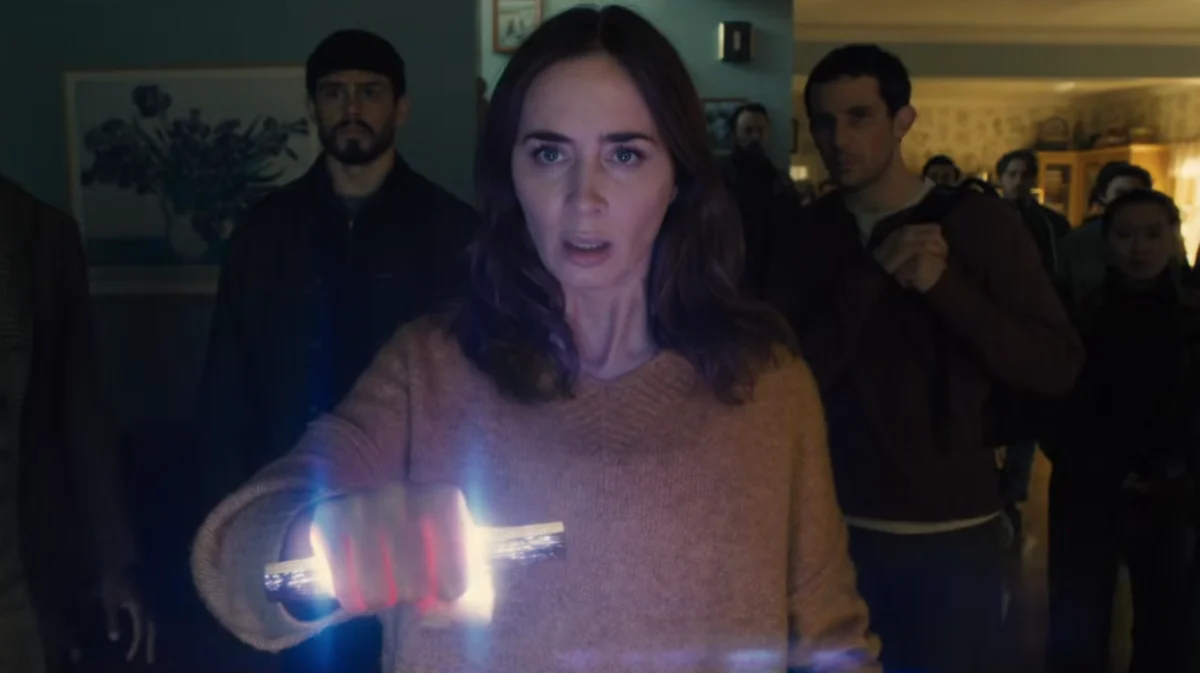
The CinemaCon presentation culminated in the introduction of exclusive new footage from Disclosure Day, offering the audience a concrete glimpse into its narrative and visual style. The film boasts an impressive ensemble cast, featuring Emily Blunt, Josh O’Connor, Colman Domingo, Colin Firth, Wyatt Russell, and Eve Hewson. The footage chronicles a pivotal moment: humanity grappling with the irrefutable proof of non-human intelligent life.
The preview opened with Emily Blunt portraying a meteorologist who experiences a profound, unsettling episode during a live television broadcast. In a scene destined to go viral within the film’s universe, she finds herself suddenly unable to speak coherently, uttering what appears to be gibberish. This moment of public anomaly quickly escalates, as Josh O’Connor’s character, observing the broadcast, reveals a startling comprehension of her disjointed speech. He asserts, "It’s math," suggesting a complex, perhaps universal, language underlying the apparent chaos. This revelation immediately elevates the stakes, hinting at a communication barrier that his character may hold the key to deciphering.
The footage also showcased a deeply emotional meeting between O’Connor and Blunt’s characters. "I know you," he says, to which she replies, "I know you, too." This exchange implies a pre-existing, perhaps cosmic, connection between them, suggesting that their roles in humanity’s first encounter with alien intelligence are not coincidental. Beyond the intellectual and emotional drama, the preview promised plenty of action, including a thrilling sequence where Blunt attempts a daring leap from a car onto a moving train. The footage concluded with the film’s most anticipated reveal: the first glimpse of its alien life form, an image designed to leave the audience with a sense of awe and apprehension.
Disclosure Day represents not just a return to the UFO genre for Spielberg but, as many fans and critics have speculated, a potential spiritual or even direct sequel to his 1977 masterpiece, Close Encounters of the Third Kind. Emily Blunt herself lent credence to this theory in a recent interview with Empire magazine, stating, "There are definitely questions posed by Close Encounters that are answered in Disclosure Day." This comment has further fueled speculation about the narrative connections between the two films, suggesting a deeper, more expansive universe for Spielberg’s exploration of extraterrestrial contact.
Disclosure Day and the Real-World UAP Phenomenon
The release of Disclosure Day comes at a particularly resonant moment, coinciding with a heightened public and governmental interest in Unidentified Aerial Phenomena (UAP). Spielberg himself alluded to this convergence of art and reality during his appearance at the South by Southwest Film & TV festival last month. "I don’t know any more than any of you do, but I have a very strong suspicion that we are not alone here on Earth right now — and I made a movie about that," he stated, positioning his film as a reflection of a growing global consciousness regarding potential non-human intelligence.
This renewed public fascination with UAPs gained significant traction following the aforementioned 2017 New York Times article, which detailed credible accounts from U.S. Navy pilots encountering advanced, inexplicable aerial objects. This report, corroborated by official Pentagon statements and the subsequent declassification of several UAP videos, moved the conversation from the fringes of conspiracy theories to legitimate scientific and national security discussions. Since then, various government agencies, including the Pentagon, have established dedicated offices to investigate UAP sightings, acknowledging the need for greater transparency and data collection.
Further amplifying this real-world context are the ongoing efforts by legislative bodies to compel greater government disclosure. Just a day prior to Spielberg’s CinemaCon appearance, Congresswoman Anna Paulina Luna’s deadline for the Pentagon to declassify and release specific video files related to UAP activity came and went without compliance. Luna, a vocal advocate for UAP transparency, has been pushing for the release of purportedly unseen instances of UAP/UFO activity, arguing for public access to information she believes is crucial.
On Tuesday, Luna posted an update on X (formerly Twitter), expressing her frustration with the Pentagon’s apparent stonewalling: "No one from the Pentagon had responded until we reached out, and it appears that someone did not pass the letter to the appropriate authorities. How convenient. Nonetheless, we will be getting the requested list. We are not waiting for a briefing at some unspecified future date. The Secretary of War is someone I consider a friend and someone who backs the President. The President has authorized the release, so whoever is trying to be cute at the Pentagon can take a hike." Her assertive language highlights the bureaucratic hurdles and potential resistance within governmental structures regarding UAP disclosure, echoing sentiments expressed by other lawmakers and public figures pushing for transparency.
Broader Implications: Art, Science, and Public Consciousness
The timing of Disclosure Day‘s release, amidst this swirling vortex of real-world UAP revelations and congressional demands for transparency, creates a unique and powerful cultural moment. Spielberg’s film is poised to tap into, and potentially shape, the burgeoning public discourse surrounding extraterrestrial life. The interplay between cinematic fiction and unfolding governmental disclosures could prove mutually reinforcing, with the film providing a speculative framework for understanding what "disclosure" might entail, while real-world events lend an eerie verisimilitude to the cinematic narrative.
For Universal Pictures, the confluence of these events presents a potentially unparalleled marketing opportunity. The studio can only hope that any such official UAP videos — which would undoubtedly generate immense public interest and media buzz — are released in time for, or even around, the opening weekend of Disclosure Day on June 12. A major government UAP disclosure could transform the film’s promotional campaign from a standard blockbuster rollout into a culturally significant event, blurring the lines between entertainment and pressing societal questions. This synergy could dramatically boost box office performance, drawing in not only Spielberg’s dedicated fanbase but also a broader audience captivated by the real-world mysteries.
Spielberg’s return to the genre is also significant for its potential to re-legitimize or re-contextualize the UAP discussion within mainstream culture. His previous work, particularly Close Encounters of the Third Kind, played a pivotal role in shaping public perception of extraterrestrial contact, moving it beyond mere invasion narratives to explorations of wonder and communication. Disclosure Day, with its promise of addressing "truth" rather than pure fiction, could further evolve this cultural narrative, encouraging audiences to consider the profound implications of non-human intelligent life in a world increasingly grappling with its own scientific and governmental transparency.
Conclusion: Spielberg’s Enduring Vision
Steven Spielberg’s landmark appearance at CinemaCon was more than a promotional stop; it was a reaffirmation of his unwavering belief in the power of cinema and a strategic unveiling of a film deeply connected to contemporary anxieties and curiosities. His passionate defense of the theatrical experience, coupled with the intriguing premise of Disclosure Day — a film that promises to explore the "truth" behind extraterrestrial encounters amidst real-world UAP disclosures — positions him once again at the forefront of cultural conversation. As June 12 approaches, Disclosure Day stands ready to not only entertain but also provoke thought, answer some questions, and undoubtedly inspire many more, securing Spielberg’s legacy as a filmmaker who consistently pushes the boundaries of storytelling to reflect and influence the human condition.