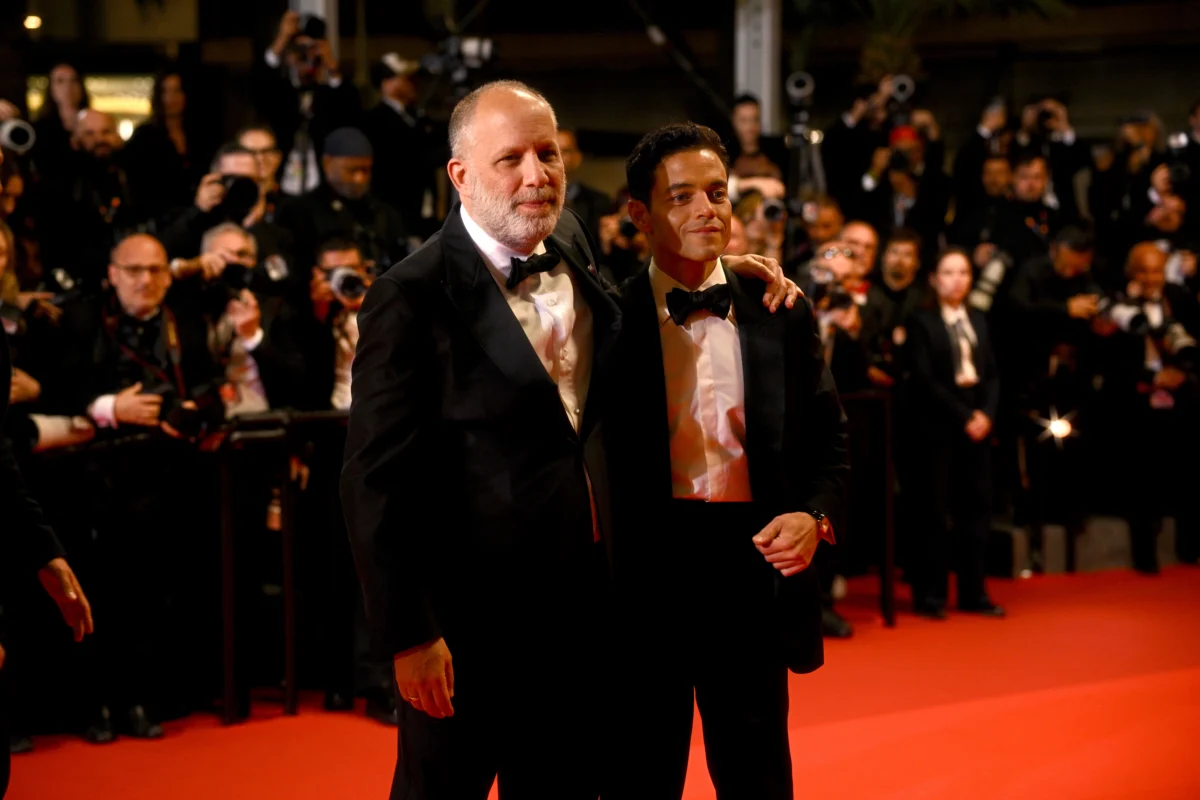
Ira Sachs’ latest cinematic offering, The Man I Love, premiered to an overwhelmingly enthusiastic reception at the 79th Cannes Film Festival on Wednesday night, earning a prolonged standing ovation that stretched for over seven minutes. The gala screening, held in the prestigious main competition, saw director Ira Sachs joined by his lead cast members — Rami Malek, Tom Sturridge, and Luther Ford — as they ascended the iconic Palais des Festivals steps, marking a significant moment for the film and its creators. The palpable emotion and critical buzz surrounding the premiere instantly positioned the film as a potential highlight of this year’s festival and a strong contender in the ongoing awards conversation.
A Poignant Narrative Set Against the Backdrop of 1984 New York
The Man I Love plunges audiences into the vibrant yet fraught world of New York City in 1984, a period indelibly marked by the nascent but rapidly escalating AIDS crisis. The film centers on Jimmy George, portrayed with profound depth by Rami Malek, a beloved queer entertainer navigating life with an AIDS diagnosis. Defying the encroaching shadow of his illness, Jimmy remains steadfast in his artistic pursuits, determined to mount a new theatrical production even as time becomes an increasingly precious commodity.
His existence is intricately woven with the lives of those around him: his devoted partner, Dennis, brought to life by Tom Sturridge, provides an unwavering anchor amidst the turbulence. Adding a layer of complex emotional tension is Jimmy’s simmering affair with Vincent, a younger neighbor. Luther Ford, in what is being hailed as a beguiling feature-film debut, embodies Vincent with a compelling blend of youthful allure and vulnerability, further complicating Jimmy’s already multifaceted emotional landscape. The film delicately explores themes of love, legacy, artistic defiance, and the search for meaning in the face of mortality, all set against the stark realities of a community grappling with a devastating epidemic.
The decision to set the film in 1984 is particularly significant. This year marked a pivotal moment in the AIDS crisis, as the medical community began to understand the disease more, but effective treatments remained elusive, and public fear and prejudice were rampant. For the queer community, it was a time of immense loss, activism, and profound resilience. Sachs’ choice of setting allows the film to explore not only personal struggles but also the broader societal and communal impact of AIDS, highlighting how art and connection became vital forms of survival and expression.
An Emotional Premiere: Tears, Cheers, and Collective Memory
The atmosphere within the Grand Théâtre Lumière at the Palais des Festivals was electric following the screening. As the credits rolled, the premiere audience erupted in applause, which continued unabated as the house lights illuminated the theater. The roaring ovation underscored the profound impact the film had made, creating an emotional crescendo that few in attendance would soon forget.
Rami Malek, making his debut at the prestigious festival, appeared visibly overwhelmed by the outpouring of affection and recognition. A camera zooming in on his face captured the raw emotion, his eyes welling with tears as he slowly turned, seemingly attempting to etch every detail of the momentous occasion into his memory. The intensity of the spotlight, however, soon prompted a characteristic humility; Malek dissolved into a grin, gracefully attempting to share the attention with those around him – director Ira Sachs, his co-stars Tom Sturridge and Luther Ford, and even festival director Thierry Frémaux, who was present to witness the powerful moment. This emotional display resonated deeply with the audience, further cementing the perception of a truly impactful performance.
Malek’s portrayal of Jimmy George has, by all accounts, thrust him firmly into the early awards conversation. A standout moment, described by attendees as a genuine showstopper, occurs when Jimmy mournfully sings Melanie’s 1970 B-side, "Look What They’ve Done to My Song, Ma," to his family. This performance is said to be a masterclass in emotional vulnerability, capturing the essence of Jimmy’s spirit and his confrontation with his own mortality, rendered with a poignant beauty that captivated the Cannes audience.
Ira Sachs on Art, Love, and Enduring Memories
Following the extended ovation, Ira Sachs took to the microphone, his voice tinged with emotion and gratitude. "Well, this is lovely," he began, a simple yet profound acknowledgment of the moment. He then eloquently articulated the film’s core message: "This is a film about what we can bring to each other, through art, through love, through pain, through memory, and I hope there are some memories we share for this evening, for this festival, and for our love of cinema."
Sachs continued, reflecting on the transient nature of life and the permanence of shared experiences: "None of us will be here forever, just to say. But there are moments that we will remember, and I tried with this movie, with this incredible cast, to fill this movie with things that I want to remember. And now this night will be added to that." His words resonated deeply, framing the film not just as a narrative, but as a vessel for collective human experience and enduring memory.
In a gesture of profound appreciation, Sachs paused to acknowledge the extensive team behind the film, requesting that everyone who contributed to its creation – an estimated 100 individuals – raise a hand. He then specifically lauded his lead actors, gesturing to Malek, Sturridge, and Ford, and expressed his gratitude for "the three men who gave of their souls to make this film possible." This public acknowledgment highlighted the collaborative spirit inherent in filmmaking and the deep personal investment of the cast.
Creative Inspirations and a Prolific Filmmaker
Ira Sachs, who co-wrote the script for The Man I Love with his longtime collaborator Mauricio Zacharias, drew significant inspiration from the lives of real-life experimental artists. These were individuals who, like Jimmy George, continued to create and express themselves until their final days, embodying a spirit of defiance against the constraints of illness and mortality. Among those who influenced the narrative were Ron Vawter of The Wooster Group, a groundbreaking experimental theater ensemble, and pioneering gay comedian Frank Maya. Both figures were known for their innovative work and their candid engagement with themes of identity, illness, and the human condition, making them fitting muses for a story about an artist facing his own mortality during the AIDS crisis.
Sachs’ career is characterized by a "quietly prolific and critically admired run" in American independent cinema. The Man I Love arrives only 16 months after his previous feature, Peter Hujar’s Day, demonstrating a remarkable pace of artistic output. His filmography boasts a consistent track record of critical acclaim, with four of his last seven features earning Spirit Award nominations for best feature. This includes the highly praised Passages, which further solidified his reputation for crafting intimate, emotionally resonant dramas that often explore complex relationships and queer experiences. Sachs’ work consistently delves into the nuances of human connection, often set against the backdrop of his beloved New York City, creating a distinctive voice within contemporary independent filmmaking.
The supporting cast of The Man I Love further enriches its narrative tapestry. Rebecca Hall and Ebon Moss-Bachrach deliver performances as Jimmy’s sister and brother-in-law, grounding the protagonist’s artistic world within his family dynamics. Adding an authentic layer to the film’s theatrical milieu are dozens of real New York artists whom Sachs has known over the years, many of whom fill out Jimmy’s vibrant and boisterous theatrical troupe. This casting choice not only lends verisimilitude to the film’s artistic setting but also pays homage to the vibrant creative communities that thrived in New York during the period, especially within the queer arts scene.
Cannes and Beyond: Distribution and Awards Prospects
The Cannes Film Festival, celebrating its 79th edition, stands as one of the most prestigious and influential cinematic events globally. Being selected for its main competition is a significant achievement, indicating a film’s artistic merit and potential for international recognition. A standing ovation of the magnitude received by The Man I Love is often considered a strong indicator of a film’s critical and audience appeal, frequently signaling future success on the festival circuit and during awards season. Historically, films that garner such enthusiastic responses at Cannes have gone on to receive significant accolades, including the Palme d’Or and nominations for major international awards.
The film’s strong reception at Cannes provides crucial momentum as it navigates the competitive landscape of film distribution. The Man I Love is currently seeking U.S. distribution, with MK2 Films handling international sales and WME Independent representing North American rights. The overwhelmingly positive buzz generated at Cannes is expected to significantly enhance its appeal to potential distributors, positioning it as a highly desirable acquisition. For independent films, securing strong distribution is paramount, and a robust festival premiere like this can be a game-changer, ensuring that the film reaches a wider audience and gains the visibility necessary for critical and commercial success.
Industry analysts are already speculating about the film’s potential for awards season. Rami Malek’s deeply emotional performance, coupled with Sachs’ masterful direction and a poignant script, could resonate strongly with critics and awards committees. The film’s themes of love, loss, and artistic resilience, particularly within the historical context of the AIDS crisis, offer a powerful narrative that often garners significant attention during awards cycles. As the festival progresses, further critical reviews and audience reactions will continue to shape the film’s trajectory, but its Cannes premiere has undoubtedly laid a strong foundation for what promises to be a significant cinematic journey.
Broader Impact and Cultural Resonance
The Man I Love joins a vital canon of films that explore the AIDS crisis and queer experiences, contributing to a deeper understanding of this pivotal period in history and its enduring legacy. By focusing on an artist’s determination to create amidst adversity, the film underscores the power of art as a means of expression, resistance, and memory. In an era where conversations about queer history, health equity, and artistic freedom remain highly relevant, Sachs’ film offers a timely and deeply human perspective. Its success at Cannes highlights the continued importance of nuanced storytelling and the universal resonance of narratives centered on love, struggle, and the indomitable human spirit. The film serves not only as a powerful piece of cinema but also as a cultural touchstone, inviting audiences to reflect on the past while considering its implications for the present and future.