A Maestro’s Cinematic Journey: From Hip-Hop Icon to Auteur
RZA, born Robert Diggs, first rose to prominence as The Abbot and de facto leader of the legendary Wu-Tang Clan, a collective that revolutionized hip-hop with its gritty narratives, intricate lyricism, and groundbreaking production. His signature sound, often characterized by sampled martial arts film snippets, soulful loops, and dark, atmospheric beats, created "audio movies" long before he stepped onto a physical film set. Albums like Enter the Wu-Tang (36 Chambers) (1993), Tical (1994), and Only Built 4 Cuban Linx… (1995) (produced for Raekwon) were lauded for their cinematic scope, painting vivid sonic landscapes that transported listeners into a world steeped in kung fu lore, street philosophy, and intricate crime narratives. This inherent storytelling ability and a deep appreciation for visual artistry formed the bedrock of his eventual transition into filmmaking, a journey spanning nearly three decades.
RZA’s formal cinematic beginnings can be traced to Jim Jarmusch’s acclaimed 1999 urban samurai film, Ghost Dog: The Way of the Samurai. For this elegiac masterpiece, RZA composed the entire score, an innovative fusion of hip-hop beats and atmospheric soundscapes that perfectly complemented the film’s meditative yet violent narrative. He also appeared in a minor role, gaining invaluable firsthand experience on a professional film set. This collaboration with Jarmusch, a director known for his distinctive independent vision, proved formative. Following this, RZA made several cameo appearances, often as himself, in a trio of early aughts comedies: Coffee and Cigarettes (2003), which reunited him with Jarmusch; Scary Movie 3 (2003), where he appeared alongside fellow Wu-Tang members Method Man, U-God, and Raekwon; and Be Cool (2005). These early roles, while largely comedic, allowed him to acclimate to the rhythms and demands of film production from an actor’s perspective.
His acting career then progressed to more substantial and dramatic supporting roles, providing a deeper immersion into the craft. Films such as the thriller Derailed (2005), Ridley Scott’s critically acclaimed crime epic American Gangster (2007), and Judd Apatow’s dramedy Funny People (2009) offered RZA opportunities to hone his acting chops alongside seasoned professionals. These experiences were crucial, not only in refining his performance skills but also in expanding his understanding of storytelling from within the narrative structure.
The pivotal moment arrived in 2012 with his directorial feature debut, The Man with the Iron Fists. This martial arts film was a comprehensive creative endeavor for RZA, as he not only directed but also starred, co-wrote the screenplay (with Eli Roth), and composed the score. It was a direct homage to the kung fu films that had profoundly influenced his music, demonstrating his ability to translate his passion for the genre into a full-fledged cinematic vision. The film, backed by Universal Pictures and executive produced by Quentin Tarantino, garnered mixed critical reviews but was praised for its stylistic ambition and RZA’s clear artistic voice. It grossed approximately $20 million worldwide against a production budget of $15 million, signaling RZA’s viable entry into the realm of feature film direction.
The Evolution of a Filmmaker: Diverse Genres and Deepening Craft
Since his ambitious debut, RZA has continued to expand his directorial repertoire, demonstrating a clear artistic restlessness and a desire to explore diverse genres. His subsequent films include the hip-hop drama Love Beats Rhymes (2017) and the New Orleans-set crime drama Cut Throat City (2020). While these films allowed him to further refine his directorial skills, RZA notes a key distinction: he did not write their screenplays. As a director, he still injected his vision through "director’s notes" and creative input, but the core narrative originated elsewhere. Love Beats Rhymes, starring Azealia Banks, explored themes of poetry and self-discovery within the hip-hop world, appealing to a different demographic than his martial arts epic. Cut Throat City, featuring Shameik Moore, focused on the aftermath of Hurricane Katrina, offering a gritty look at survival and desperation, and garnered more favorable critical attention, with many praising its atmospheric tension and social commentary. This period of directing others’ scripts was invaluable, allowing RZA to focus solely on the visual storytelling, performance direction, and overall cinematic execution.
RZA’s path to becoming a director was significantly shaped by a series of crucial mentorships and practical experiences. He initially conceived of his music as "audio movies," aiming to transport listeners into a world through sound alone. However, the idea of directing a physical film solidified later. Influences from fellow Wu-Tang member GZA, who directed some of the group’s early music videos like "4th Chamber," offered an initial glimpse into the visual medium. The turning point, however, came through interactions with cinematic giants. Conversations with action maestro John Woo provided early insights, followed by his experience working with Jim Jarmusch on Ghost Dog.
Yet, it was his encounter with Quentin Tarantino that proved most transformative. "After meeting Quentin Tarantino, that is when the brain meld happened," RZA recounted. "That’s when I realized that the wavelength he’s on is the wavelength I’m on. I’m just doing this." This profound connection led RZA to boldly ask Tarantino if he could shadow him. Tarantino extended an invitation to the set of Kill Bill in Beijing, China. RZA promptly packed his bags, spending three weeks immersing himself in the intense production environment, learning the intricate details of filmmaking. He subsequently followed the production to Mexico, further solidifying his understanding of large-scale filmmaking. This informal "college," as RZA refers to Tarantino’s sets and crew, became his practical film school.
His experience as a composer also served as a crucial learning ground, particularly in understanding the often-overlooked post-production phase. For Ghost Dog, RZA humorously admitted to being "a bad composer to hire," arriving at unconventional hours, unaware of standard union schedules. While the score was lauded, this experience taught him about the disciplined workflow of film production. On Kill Bill, the rules were stricter: he was required to have his equipment in the editing room and be present daily. This intensive period, lasting "20 weeks at least," potentially up to "30 weeks," forced him into a rigorous schedule, starting at 9 a.m. and often staying until midnight. During this time, he worked alongside legendary editor Sally Menke, who edited all of Tarantino’s films until her passing, and Joe D’Augustine, who was then an assistant editor and has since become RZA’s consistent editor for The Man with the Iron Fists, Cut Throat City, and now One Spoon of Chocolate. This prolonged immersion in the editing suite provided him with an unparalleled education in the rhythm, structure, and meticulous craft of filmmaking.
Crafting "One Spoon of Chocolate": Vision, Inspiration, and Production Realities
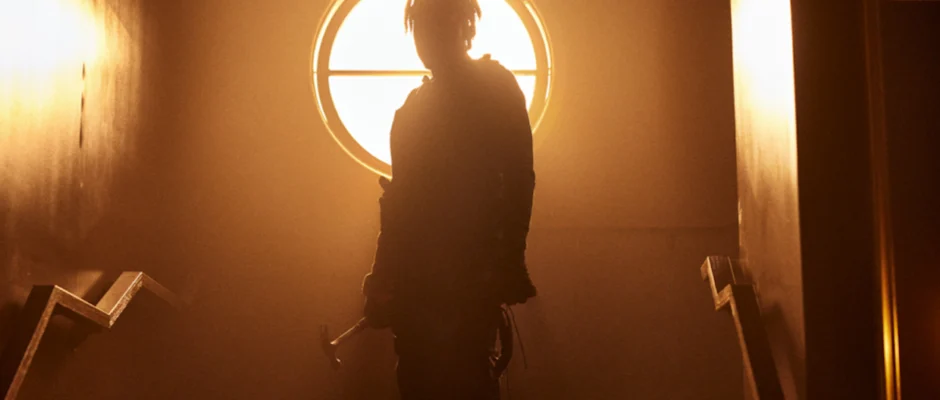
One Spoon of Chocolate marks a significant artistic milestone for RZA, as it is his first film since The Man with the Iron Fists where he holds sole writing credit. This return to full authorship allowed for an "unfiltering" process, as he described it, letting the narrative "breathe" and reflecting his purest creative vision. The film, categorized as an "offbeat exploitation homage," stands apart from his previous works, showcasing his deliberate approach to genre diversification, akin to the distinct thematic universes he created for each Wu-Tang Clan album. Just as Only Built 4 Cuban Linx… was a "mafia album," leading him to envision a mafia movie (like the unrealized Blood Brothers), and Gravediggaz leaned into horror, One Spoon of Chocolate infuses elements of horror and intense drama into its unique framework. Similarly, Love Beats Rhymes was his attempt at a "pop" story with a female protagonist, echoing the romantic undertones of Method Man’s "All I Need" from Tical.
The film is set in Ohio, a place where RZA lived for a period, grounding the story in a sense of personal geography. Its intense narrative draws heavily from autobiographical elements, albeit fictionalized and exaggerated. The protagonist, named Unique, carries the weight of a personal connection, as Ason Unique was the birth name of his late cousin and fellow Wu-Tang member, Ol’ Dirty Bastard. His brother in the film is named Ramsey, further underscoring the theme of familial bonds. RZA openly shared how his "love for my family is in there. My love for ‘what if he was able to be a hero’ is in there." This personal investment imbues the characters with a deep emotional resonance.
The film also channels RZA’s past experiences, particularly a harrowing memory from his youth: being chased by individuals in pickup trucks with bats in Staten Island during the 1980s. This visceral experience of confrontation and vulnerability informs the film’s central theme: "no matter what happens, you got to be prepared." He posits that "preparation" is the crucial difference between the hero and the villain, a philosophical underpinning that drives the narrative and character arcs. Furthermore, RZA incorporates elements inspired by articles he read about "insidious things that take place in the medical world," exaggerating these real-world concerns to create a more sinister backdrop for his exploitation homage. This blend of personal history, social commentary, and genre tropes is a hallmark of RZA’s storytelling.

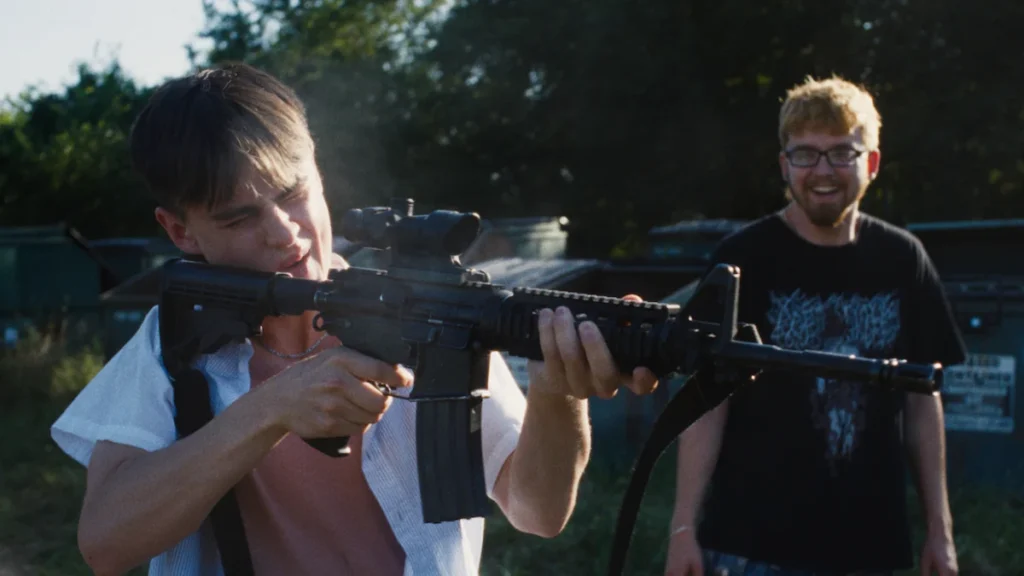
The film’s intensity is largely derived from its blunt, physical violence, a deliberate stylistic choice that diverges from stylized shootouts. This approach reflects RZA’s deep affection for classic kung fu movies, particularly those that prioritized hand-to-hand combat and close-quarters struggles. He intentionally removed guns from the initial conflicts and obscured the specific time period, challenging the audience to "make a decision on what time it is" and question the absence of firearms. This narrative device serves a dual purpose: it heightens tension and allows for a more primal form of confrontation. There’s also a logical in-world reason for the villains’ preference for physical violence—they must protect their "product," making guns a liability.
RZA explicitly cited his disdain for kung fu flicks that heavily relied on guns, preferring the purity of martial arts. He drew inspiration from specific films like The Duel (also known as Duel of the Iron Fists), a Shaw Brothers classic starring David Chiang and Ti Lung, where the entire movie is a 75-minute spectacle of bloody knife fights, with guns only appearing at the very end when the police army intervenes. Similarly, Bruce Lee’s The Chinese Connection (aka Fists of Fury) provided another template, with Lee fighting throughout the film without firearms until the climactic confrontation with the military. These cinephile influences directly shaped the visceral and unglamorous depiction of violence in One Spoon of Chocolate.
Financing an independent film like One Spoon of Chocolate presents considerable challenges, a reality RZA knows well, as evidenced by the struggle to fund his mafia movie, Blood Brothers, despite securing big names like Michael B. Jordan. For One Spoon of Chocolate, the solution came from a deeply personal source: his wife, Shurhonda Ambrose. "I talked to my wife. Straight up, bro," RZA revealed. She not only supported the vision but actively leveraged personal assets to finance the production. With the guidance of their long-standing team of advisors, Shurhonda stepped into a crucial producer role, managing the financial intricacies, flying to Atlanta to establish an office, and liaising with banks and finance teams. Her direct involvement underscores the profound personal investment and belief in the project required to bring such independent visions to fruition.
The production itself was a testament to efficiency and experience. The film was shot in a mere 30 days, following an eight-week prep period—shorter than RZA’s preferred 12 weeks but necessitated by economic realities. His prior experience directing the TV series Wu-Tang: An American Saga proved invaluable, particularly in understanding the strategic advantages of building sets on a stage versus utilizing multiple real-world locations. This knowledge allowed him to optimize resources and time. RZA confidently stated, "Every time I do something, I’m taking the best of that knowledge and moving it to the next piece… A man has to evolve." This iterative learning process enabled the team to achieve a visual scope that, despite the tight 30-day schedule, "looks like more than the 30 days it took."
The Battle for the Big Screen: A Director’s Unwavering Commitment
For RZA, One Spoon of Chocolate was explicitly "made for theaters. Everything else is ancillary." This declaration places him firmly among a growing number of filmmakers who staunchly defend the theatrical experience in an era dominated by streaming platforms. He believes there’s a fundamental difference in how films are conceived and executed for the big screen versus television. "If I make TV shows, like I did a TV show, and I’m writing another TV show, I make that for TV. There’s a rhythm to that. There’s a reason for that. There’s a meaning for the fucking lens to me for that."
His technical choices for One Spoon of Chocolate reflect this philosophy. The use of "anamorphic lenses from the ’50s," combined with multi-camera setups for wide shots of figures running through fields or drone shots capturing chases through junkyards filled with "1,000 cars," are all designed to be appreciated on a grand scale. "I want you to see that on the big screen or you’re not fucking seeing what I’m doing," he asserts, highlighting how crucial the immersive visual scope is to his artistic intent.
Beyond the visuals, the sound design plays an equally critical role in creating the theatrical experience. RZA enlisted the talents of renowned sound designers Greg Hedgepath and Bobbi Banks, who have lent their expertise to major productions like Straight Outta Compton, 2 Fast 2 Furious, and Queen & Slim. Having previously collaborated on Love Beats Rhymes, their return for One Spoon of Chocolate ensured a meticulously crafted sonic landscape specifically engineered for cinema speakers. "They put a lot of work into the sound design on this movie, bro, for the movie theater. When they did it, we had a stage. That’s the speakers we tested it on," RZA explained, emphasizing the deliberate process of optimizing the film for theatrical exhibition.
The film’s positive reception at Tribeca, where it "plays great with an audience," validates RZA’s belief in the collective viewing experience. His fervent hope is to continue making films for theaters, even expressing a desire to include contractual clauses for theatrical distribution when working with streamers like Netflix. "I’m going to try to stick in my contract that you got to put my movie in the movie theater. I’m a cinema director," he declared, embodying a passionate stand for the enduring relevance of the big screen in a rapidly evolving industry.
Broader Impact and RZA’s Legacy in Film
RZA’s journey from hip-hop architect to independent filmmaker positions him as a unique and compelling figure in contemporary cinema. His career trajectory exemplifies the power of artistic evolution and the successful crossing of creative mediums. He brings to filmmaking a distinct sensibility, informed by decades of musical storytelling, a deep well of genre knowledge (particularly martial arts and exploitation cinema), and a philosophical approach to narrative.
His commitment to exploring diverse genres, from kung fu epics to intimate dramas and now offbeat exploitation homages, demonstrates a refusal to be pigeonholed, continuously challenging audience expectations and expanding his own artistic boundaries. The personal investment in One Spoon of Chocolate, both creatively as a writer and practically through his wife’s financing, highlights the passion and resilience required to operate within the independent film landscape.
Moreover, RZA’s vocal advocacy for the theatrical experience serves as an important voice in the ongoing debate about the future of cinema. In an era where many filmmakers and studios are shifting focus to streaming, his insistence on the big screen—and the technical choices he makes to support it—is a powerful statement about the cultural value and artistic integrity of communal film viewing. His collaborations, from legendary editors to acclaimed sound designers, further cement his status as a serious and respected "cinema director."
As RZA continues to build his body of work, he solidifies his legacy not just as a music icon, but as a genuine auteur, whose distinct vision and unwavering dedication to the art of filmmaking continue to enrich the cinematic landscape. One Spoon of Chocolate is not merely another film; it is a reaffirmation of an artist’s personal narrative, a tribute to his influences, and a testament to his enduring belief in the magic of movies.