The highly anticipated feature film Backrooms (2026), directed by Kane Parsons, a cinematic expansion of his viral YouTube series, delves into the unsettling intersection of internet lore, collective anxiety, and the paradoxical nature of nostalgia. This adaptation, building on a phenomenon that began with a single enigmatic photograph, meticulously crafts a narrative that navigates the transition from 20th-century analog agoraphobia to 21st-century cyber-dissociation, presenting a poignant reflection on our increasingly mediated reality.
The Genesis of a Digital Mythos
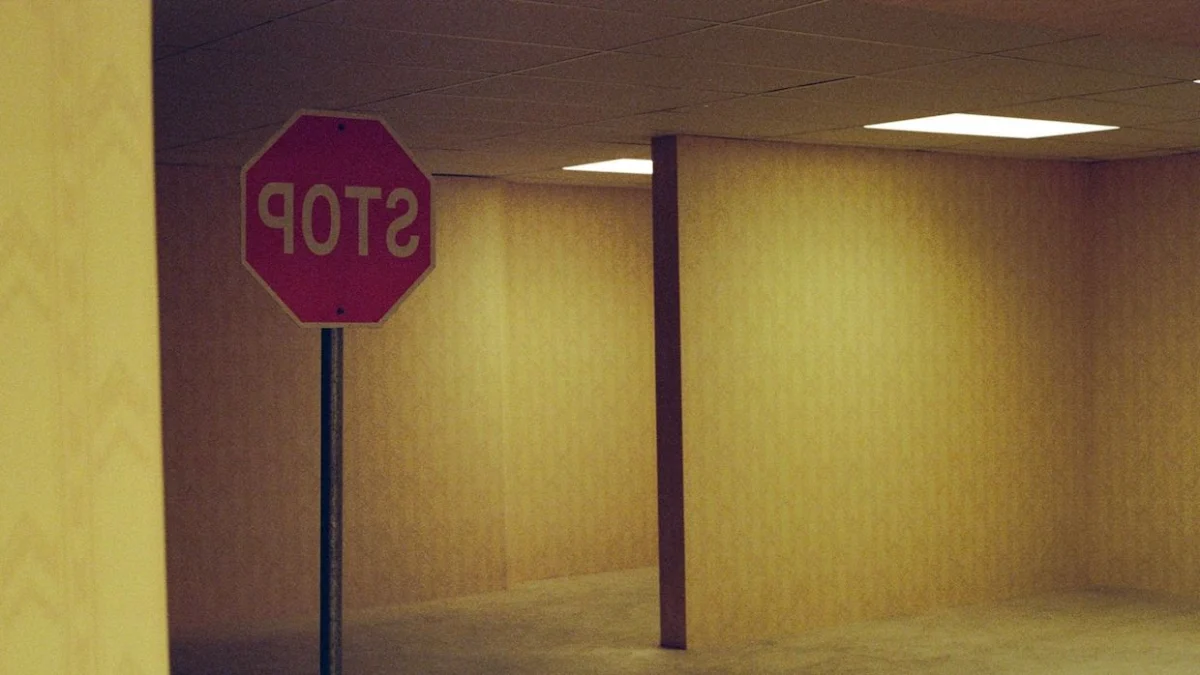
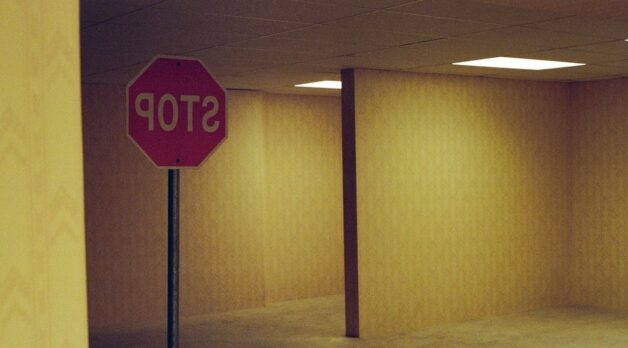
The Backrooms phenomenon, a cornerstone of modern internet folklore, traces its origins to a seemingly innocuous photograph uploaded to 4chan in 2019. The image depicted a former furniture store undergoing renovations in Oshkosh, Wisconsin, taken in 2003. This mundane snapshot, devoid of human presence and bathed in an eerie, yellowish light, inadvertently tapped into a collective subconscious fascination with liminal spaces – transitional areas that feel unsettlingly familiar yet devoid of specific context or purpose. From this solitary image, a sprawling, Lovecraftian latticework of anonymous mythmaking began to take shape, quickly evolving into a popular creepypasta.
The initial concept, centered on the idea of "noclilpping" out of reality into an endless labyrinth of generic office spaces, resonated deeply with online communities. The lore rapidly migrated from 4chan to Reddit, fostering distinct communities of "originalists" and "revisionists." Originalists sought to maintain the austere, unsettling simplicity of the initial concept – yellowing wallpaper, buzzing fluorescent lights, damp carpets, and an oppressive sense of emptiness. Revisionists, conversely, expanded the universe, introducing diverse levels, entities, and complex narratives, much like a collaborative, decentralized horror game. This prolific output underscores a unique form of hypermodern digital creativity, predicated on the surreal anachronism of physical spaces that predate the widespread advent of Web 2.0, all tinged with a curdled nostalgia for a less hyper-connected past. These spaces, characterized by drop ceilings, stained or unfinished walls, sodium-vapor fluorescents, and cheap linoleum tile, evoke the architectural trappings of early-aughts retail and domestic environments, but crucially, they appear ominously empty, transforming into an Escheresque maze to be explored at one’s own risk. The collaborative nature of this myth-making saw hundreds of thousands of users contributing to wikis, fan art, short films, and elaborate narrative arcs, collectively shaping a shared nightmare landscape.
From YouTube Phenomenon to Feature Film
Kane Parsons, then a teenager, emerged as a pivotal figure in the Backrooms narrative, translating the diffuse internet lore into a compelling visual series on YouTube. His short films, beginning in 2022, quickly garnered millions of views, demonstrating an uncanny ability to capture the essence of the Backrooms aesthetic and its underlying dread using found footage and clever visual effects. Parsons’ work was lauded for its atmospheric tension and its fidelity to the core principles of the lore, proving that a complex, collaboratively built internet narrative could be successfully adapted to a more structured visual medium. The transition from a viral web series to a major feature film marks a significant moment for internet-born intellectual property, showcasing the growing influence of user-generated content on mainstream entertainment.
The film Backrooms (2026) aims to expand this vision, charting the transformation of a 20th-century anxiety—agoraphobia, the fear of inescapable places—into a 21st-century digital malaise: cyber-dissociation. The endless nooks and crannies of its titular setting uneasily host the ghosts of technologies past alongside the latest versions of our own technodystopian anxieties. Parsons’ film, co-written with Will Soodik, operates like an extended episode of The Twilight Zone set within the uncanny valley of the present, where familiar spaces warp into alien territories.
A Nostalgic Gaze into 1990: The Film’s Setting
The narrative deliberately transports viewers to a specific temporal and geographical setting: Santa Clara, California, in June 1990. This choice is not arbitrary; it meticulously establishes a pre-internet cultural milieu that paradoxically resonates with contemporary digital anxieties. The film paints a vivid picture of anonymous suburban sprawl: clear blue skies, tree-lined streets slightly cracked and largely empty, and vast, low-slung strip malls. Inside these establishments, past heavy curtains, plush brocade armchairs sit atop off-white wall-to-wall carpets, surrounded by cheap blonde wood fixtures. These precise details are designed to evoke immediate familiarity for many American millennials, who experienced such environments firsthand, but also for younger generations who encounter them through the curated lens of digital nostalgia.
For Gen Z, these sites are the raw material for #nostalgiacore and #liminalcore videos on platforms like TikTok and Instagram. These hashtags have surged dramatically in popularity, especially since the onset of the global pandemic. The pandemic, by disrupting collective senses of time and challenging the perceived safety of common spaces, created fertile ground for yearning for an "unplugged" past. Social media users now actively reckon with the algorithmic hegemony of the present by indulging in a sentimental longing for a bygone era, often manifested through deceptively curated "retrobait" content or AI-generated imagery. While some of these videos maintain an ostensibly positive tone, depicting "unsupervised kids at play outside" or "grandma’s house in 2003," many more present a vision of the ’90s or Y2K era in a state of decay: Blockbuster stores overgrown with weeds, low-resolution shots of parking lots with tipped-over shopping carts, faded Toys ‘R’ Us signs, and vacant malls. Even at their most ominous, these videos are frequently sentimentalized, highlighting a paradoxical mash-up of technologies and time periods that is central to their aesthetic and emotional weight.
The Ambivalent Nature of Digital Nostalgia
The article posits that this specific strain of digital nostalgia, often manifesting as an "entropic solipsism," is predicated on a deep sense of loss directly attributable to the modern internet itself. The common online refrain, "I want to go there," encapsulates a yearning for an idealized past, a desire that Backrooms interrogates with nuanced understanding. As both academic observers and amateur Reddit commentators have noted, this nostalgia is a double-edged sword, offering both comfort and anxiety. It presents an imagined escape to "simpler times," yet simultaneously underscores the impossibility of returning to them, particularly for those born after the idealized moment has passed. This digital journey backward also serves to augment the accelerationist instability of the present, creating a feedback loop of yearning and disillusionment.
Colette Shade, in her 2025 book Y2K: How the 2000s Became Everything, argues that "Nostalgia is a surrender to the world as it is." This perspective suggests a "worrisomely metastatic duality" within nostalgia-bait media, acting as a carcinogen that mutates the present into something brittle, passive, and self-annihilating. Backrooms, through its design as a "vibe piece," provides a surprisingly sophisticated understanding of this paradox. It acknowledges that the past was never truly simpler, and the pursuit of it through digital means is inherently futile. This futility generates a quiet ambiance of despair that permeates Parsons’ film, positioning 1990 not as a golden age, but as a technological and cultural point of no return, a precipice before the digital deluge.
Characters and the Impending Technological Shift
The film introduces characters whose personal struggles embody these broader societal shifts. Clarke (Chiwetel Ejiofor) runs "Ottoman Empire," a furniture store on the verge of liquidation, his cheap wares symbolic of a failing economic model. His therapist, Mary (Renate Reinsve), is haunted by the demolition of her childhood home, a physical space replaced by "prefab condos," representing the erasure of personal and architectural memory. Her act of preserving a chunk of the sidewalk bearing her youthful handprints serves as a poignant talisman against further dislocation, a tangible link to a vanishing past.
Cybertechnological progress looms as a pressing specter throughout the film. Backrooms opens with Blair Witch-style DV-cam found footage of the titular impossible byways, quickly establishing the film’s roots in early digital media. Subsequent scenes feature floppy disks and chunky old computer monitors, clashing with the terror of an unseen explorer. Consciously outdated low-budget cable TV ads and self-help cassettes duel for attention on clunky TV sets, with announcers asking questions like, "Are you still using paper folders?" These elements highlight a world on the cusp of a profound transformation, where the physical and the digital are in an uneasy transition. The film also touches upon the human cost of this rapid change, with one character observing, "We used to build MRI machines. Now we do this," a stark commentary on evolving production demands and the obsolescence of once-specialized skills.
The Labyrinth of Collective Anxiety and Cyber-Dissociation
A core tenet of Backrooms is the pervasive sense that "No one has any idea what’s going on." The world is changing too fast, becoming too vast and complex to comprehend, and individuals risk getting lost in this "cultural dead end," a labyrinth that constantly remakes itself. Mary’s observation to her patients, "We all have our loops," refers to the cyclical patterns of anxiety and behavior we repeat. The rooms Clarke comes to believe are windows into his own mind are, in fact, a "backdated representation of internet-enabled collective intelligence." The film posits that technology, far from being a purely connecting force, compels us to share these "loops"—to "doomscroll each other’s septic mindsets"—even as it paradoxically fosters a sense of isolation.
The film’s sharpest intercession into technoskepticism lies in its inherent ambivalence: the world these characters inhabit, on the eve of today’s technological regime, wasn’t viable either. This crucial nuance prevents Backrooms from being a simplistic condemnation of modern technology; instead, it suggests an inherent fragility in human systems, both analog and digital. Given these circumstances, the film asks, what recourse is there other than to "go through the looking glass, become a glitch?" This metaphor implies a surrender to the absurd, a dissolution of individual identity into the chaotic, generative void of the digital age.
Narrative Nuances and Meta-Hauntology
While the film’s surface narrative might lean into "run-of-the-mill, heavy-handed horror trauma-plotting" and "therapeutic psychobabble," credit is due to writer Will Soodik for committing to a "highly calibrated ambiguity." The reason for the Backrooms’ existence is (thankfully) never explicitly explained, but their appearance at the precise moment when history is poised to "end"—before new media irrevocably reshapes the world—transforms the film into a "ghost story for the noncybernetic individual self." In this sense, Backrooms transcends conventional horror to become a "meta-hauntological tone-poem," reflecting on the ambivalent nature of our engagement with online nostalgia and the internet itself from our current vantage point.
A significant thematic thread connects the Backrooms phenomenon to artificial intelligence. Both are predicated on "predictive models of iteration." The film’s recurring analogy, "It’s like describing a dog to someone who’s never seen a dog and then asking them to draw it," vividly illustrates how generative processes—whether human-driven online myth-making or AI algorithms—can create distorted "memories" of people, places, and things, mutating ad infinitum. Ejiofor’s Clarke, fundamentally devoid of human connection, financial stability, or a viable future, ultimately succumbs to the false comfort of his "own personal form of AI hallucination." He becomes, in essence, just another creepypasta on a Reddit subthread, made briefly tangible on film before returning to the liminal, ever-evolving space of internet discourse once more.
Backrooms thus offers a profound commentary on the digital age. It’s a film that not only adapts internet lore but also embodies its very essence: collaborative, iterative, unsettling, and deeply intertwined with our collective anxieties about technology, memory, and the elusive nature of reality itself. Its release in 2026 is poised to spark further discussion on the cultural implications of user-generated content evolving into mainstream media, and the enduring power of empty spaces to reflect our deepest fears.