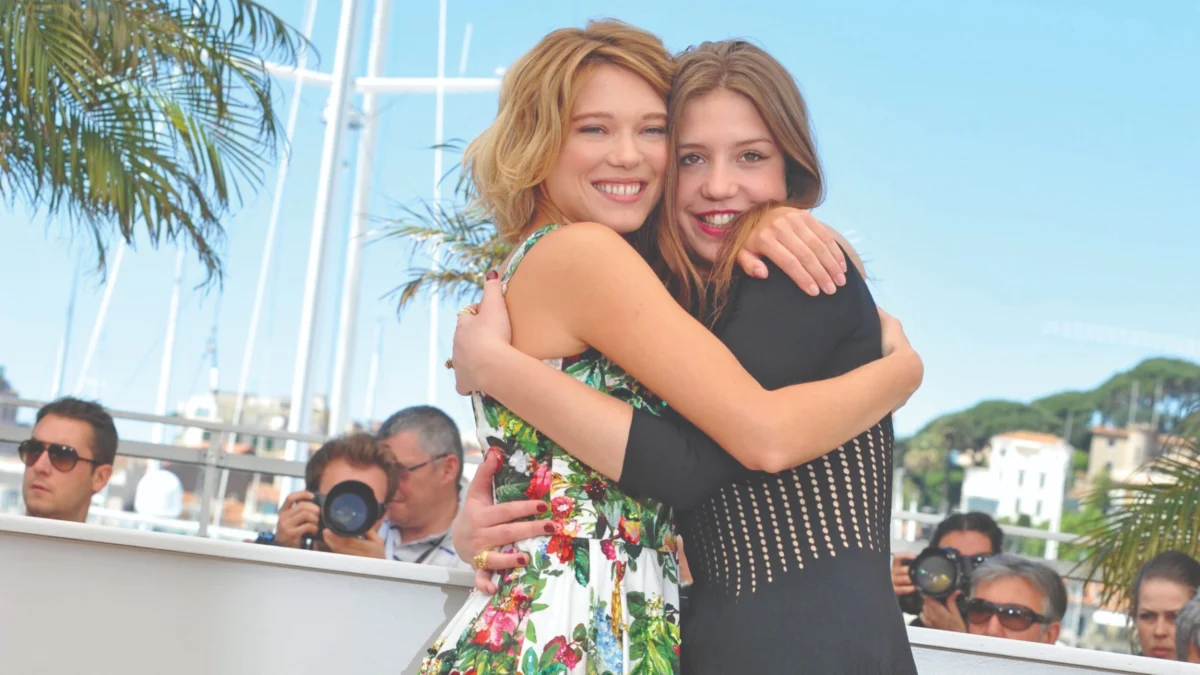
The names of French actresses Léa Seydoux and Adèle Exarchopoulos will forever be intertwined in the annals of the Cannes Film Festival, a connection forged by an unprecedented Palme d’Or triumph, and it is a noteworthy coincidence that both are making prominent returns to the current edition of the esteemed festival. Their shared cinematic history dates back to 2013, when they delivered searing performances in director Abdellatif Kechiche’s controversial yet critically acclaimed film, Blue Is the Warmest Color. The narrative explored the sexually charged relationship between two young women, Adèle and Emma, instantly becoming a global sensation for its raw honesty and explicit portrayal of intimacy. The Hollywood Reporter critic Jordan Mintzer succinctly captured its essence, noting, "Sure to raise eyebrows with its showstopping scenes of unsimulated female copulation, the film is actually much more than that: It’s a passionate, poignantly handled love story." This initial reception set the stage for one of the most memorable and debated awards ceremonies in Cannes history.
The Genesis of a Cinematic Landmark: Blue Is the Warmest Color
Blue Is the Warmest Color, originally titled La Vie d’Adèle – Chapitres 1 et 2 (Adele’s Life – Chapters 1 and 2), captivated audiences and critics alike with its unflinching depiction of first love, desire, and heartbreak. Based on Julie Maroh’s 2010 graphic novel "Le Bleu est une couleur chaude," the film transported the story from the 1990s to contemporary France, focusing on Adèle (Exarchopoulos), a high school student who discovers her sexuality when she falls for Emma (Seydoux), an art student with blue hair. The film’s extended runtime, clocking in at three hours, allowed for an immersive and granular exploration of the characters’ emotional and physical journey, from their initial spark to the tumultuous complexities of their relationship.
Director Abdellatif Kechiche, known for his naturalistic and often improvisational filmmaking style, pushed the boundaries of cinematic storytelling. The film’s visual language was characterized by numerous close-ups, emphasizing the intense emotional states and physical expressions of the protagonists. This approach, while praised for its authenticity, also drew significant scrutiny, particularly regarding the extended and explicit sex scenes. These sequences sparked widespread discussion about artistic intent, realism in cinema, and the ethics of their production, issues that would later surface prominently in post-festival interviews and analyses. Despite, or perhaps because of, these controversies, Blue Is the Warmest Color firmly established itself as a landmark work in LGBTQ+ cinema, celebrated for its nuanced portrayal of a lesbian relationship that transcended typical cinematic representations.
The Unprecedented Palme d’Or Triumph
Leading up to the awards ceremony at the 2013 Cannes Film Festival, there was considerable speculation regarding Blue Is the Warmest Color‘s chances for the coveted Palme d’Or. While its artistic merit was widely acknowledged, some critics and industry handicappers believed its explicit content might prove too audacious for the jury, particularly one headed by the iconic American director Steven Spielberg. Spielberg’s reputation for family-friendly blockbusters and socially conscious dramas led some to predict a more conservative choice for the festival’s top prize.
However, the jury, which also included Nicole Kidman, Ang Lee, Christoph Waltz, and Cristian Mungiu, delivered a stunning surprise at the closing night ceremony. They not only awarded the Palme d’Or to Blue Is the Warmest Color, marking a significant recognition of its artistic courage and emotional depth, but also took the unprecedented and "exceptional step" of declaring that the honor should be shared by the director, Abdellatif Kechiche, and his two lead actresses, Léa Seydoux and Adèle Exarchopoulos. This decision was virtually without precedent in the festival’s history, typically awarding the Palme d’Or solely to the director. The jury’s rationale was that the performances of Seydoux and Exarchopoulos were so integral, so profound, and so inseparable from the film’s success that they merited equal recognition.
During the subsequent press conference, the actresses reflected on the film’s broader resonance. Adèle Exarchopoulos articulated the universal appeal of their story, stating, "It’s universal. It’s a love story. If it’s also a hymn to tolerance, then that’s all the more gratifying." Léa Seydoux echoed this sentiment, emphasizing the human connection that underpinned their work: "What brought us together was the love that existed between us, and perhaps our sense of humor." Their words underscored the film’s core message, attempting to shift focus from the controversial aspects to its profound exploration of human connection and affection.
Immediate Aftermath and Lingering Debates
While the Palme d’Or win launched Blue Is the Warmest Color into global prominence, its aftermath was not without significant turbulence. Following the festival, both Seydoux and Exarchopoulos publicly voiced criticisms regarding the film’s arduous production conditions and director Kechiche’s methods. They described the filming process as emotionally and physically draining, citing long hours, repeated takes of intimate scenes, and a challenging working environment. These revelations sparked a broader industry debate about directorial control, actor welfare, and the boundaries of artistic pursuit, particularly concerning explicit content. Kechiche, in turn, expressed his disappointment with the actresses’ comments, leading to a public dispute that overshadowed some of the film’s critical triumph.
Despite these controversies, the film garnered immense international attention. It was released to critical acclaim worldwide, earning numerous awards and nominations, including a nomination for the Golden Globe Award for Best Foreign Language Film. Its box office performance was robust for an art-house film, demonstrating its crossover appeal and the public’s fascination with its narrative and the discussions it provoked. The film’s lasting impact includes its role in broadening the representation of LGBTQ+ relationships in mainstream cinema and its continued presence in film studies curricula and critical discourse.
Divergent Paths to Stardom: Léa Seydoux’s Global Ascent
The Palme d’Or shared recognition acted as a significant launchpad for both actresses, though their careers have since followed distinct, albeit equally impressive, trajectories. Léa Seydoux, already an established presence in French cinema with roles in films like Quentin Tarantino’s Inglourious Basterds (2009) and Woody Allen’s Midnight in Paris (2011), solidified her status as an international star. Her post-Blue Is the Warmest Color career has been marked by a remarkable versatility, effortlessly transitioning between critically acclaimed auteur projects and high-profile Hollywood blockbusters.
Seydoux became a familiar face in major franchises, notably portraying Madeleine Swann in the James Bond films Spectre (2015) and No Time to Die (2021), a role that brought her global recognition far beyond the art-house circuit. She also became a muse for several acclaimed directors, appearing in multiple films by Wes Anderson (The Grand Budapest Hotel, The French Dispatch) and starring in David Cronenberg’s thought-provoking Crimes of the Future. Her filmography showcases a preference for challenging roles that allow her to explore complex characters, often with a subtle intensity that has become her hallmark. Seydoux’s elegance and enigmatic screen presence have made her a sought-after talent, frequently gracing the covers of international fashion and lifestyle magazines, embodying a modern French cinematic icon. Her consistent presence at Cannes, both as an actress in competition films and as a jury member, further cements her standing in the global film community.
Adèle Exarchopoulos’s Evolving Artistry
Adèle Exarchopoulos, a relative newcomer to international prominence at the time of Blue Is the Warmest Color‘s release, experienced an even more dramatic shift in her career trajectory. Her raw, uninhibited performance as Adèle earned her the César Award for Most Promising Actress and established her as a formidable talent with a unique, visceral acting style. Unlike Seydoux, Exarchopoulos largely focused her subsequent career on French-language cinema, cultivating a reputation for choosing roles that highlight her naturalistic approach and emotional depth.
She has collaborated with a diverse range of French directors, demonstrating her ability to inhabit a wide array of characters, from comedic roles to intensely dramatic performances. Notable films include The Anarchists (2015), Orphan (2016), and Sibyl (2019), where she continued to impress critics with her authenticity and powerful screen presence. Exarchopoulos has become known for her ability to convey complex inner lives with minimal dialogue, relying instead on nuanced expressions and body language. While she has made fewer forays into English-language productions compared to Seydoux, her impact within European cinema has been profound, earning her a loyal following and critical accolades for her consistently compelling work. Her career trajectory underscores a commitment to artistic integrity and a focus on challenging, character-driven roles that resonate deeply with audiences.
A Decade Later: Their Resplendent Return to Cannes
Ten years after their groundbreaking win, the 202X edition of the Cannes Film Festival sees both Léa Seydoux and Adèle Exarchopoulos making highly anticipated returns, each presenting new works in the prestigious Competition section. This serendipitous reunion on the Croisette underscores their enduring relevance and continued artistic evolution.
Adèle Exarchopoulos stars in Jeanne Herry’s French drama Another Day (or Je verrai toujours vos visages in its original French title, "I Will Always See Your Faces"), a film that explores themes of restorative justice. Herry, known for her sensitive and poignant character studies such as In Safe Hands (2018), brings a nuanced touch to social dramas. Exarchopoulos’s involvement in a film tackling such weighty subject matter further highlights her commitment to roles that resonate with contemporary societal issues, allowing her to showcase her profound empathetic acting. The film’s inclusion in the main competition is a testament to both Herry’s directorial vision and Exarchopoulos’s continued draw as a lead actress.
Léa Seydoux, demonstrating her prolific output and versatility, appears in not one but two competition titles at this year’s festival. The first is Marie Kreutzer’s Gentle Monster. Kreutzer, who garnered significant international acclaim for her historical drama Corsage (2022), is known for her distinctive female-centric narratives. The presence of legendary French actress Catherine Deneuve alongside Seydoux in Gentle Monster adds another layer of intrigue, promising a powerful cinematic experience driven by strong performances. Seydoux’s second competition entry is Arthur Harari’s The Unknown (or Le Bleu du Caftan / Onoda, 10 000 nuits dans la jungle for his earlier works). Harari, whose previous film Onoda: 10,000 Nights in the Jungle was a critically lauded historical epic, now delves into a more intimate and surreal narrative. The Unknown is described as a Neon pickup about a man who, after a one-night stand, wakes up in the body of the woman he seduced. This premise suggests a genre-bending, psychologically complex film, perfectly suited for Seydoux’s capacity to portray characters grappling with existential dilemmas and profound transformations. Neon, a prominent independent distributor, acquiring the film for distribution signals its potential for significant impact in the arthouse market.
Anticipation and Implications
The simultaneous presence of both Seydoux and Exarchopoulos in the main competition ten years after their historic joint Palme d’Or win creates a unique narrative arc for the festival. It offers a powerful testament to their individual career resilience and artistic growth, evolving from controversial newcomers to seasoned, respected figures in global cinema. While a direct "bump into each other on this year’s red carpet" might be a casual remark, the symbolic reunion of the two actresses, whose professional lives were indelibly linked by Blue Is the Warmest Color, resonates deeply within the film community.
Their continued success, particularly within the competitive landscape of Cannes, underscores the festival’s role not just as a showcase for new films but also as a barometer for the enduring careers of its celebrated talents. Their multiple entries highlight the vibrant health of contemporary French cinema and its capacity to produce actresses of international stature. Beyond the individual achievements, their return collectively reinforces the legacy of Blue Is the Warmest Color as a pivotal film that not only challenged cinematic conventions but also launched two extraordinary careers that continue to shape the global film landscape. The festival, therefore, provides an opportunity not just to celebrate new cinematic achievements but also to reflect on the significant journeys of two artists whose destinies became irrevocably entwined by a singular, unforgettable moment in Cannes history.