Adam Driver, one of Hollywood’s most acclaimed actors, has finally broken his silence regarding controversial on-set behavior allegations made by Lena Dunham in her recent bestselling memoir, Famesick. During a press conference at the Cannes Film Festival on Sunday for his new film Paper Tiger, Driver was directly questioned by The Guardian about Dunham’s accounts. His response, delivered with a wry smile and eliciting laughter from the assembled press, was: "I have no comment on any of that – I’m saving it all for my book." This statement marks the first public acknowledgment from Driver concerning the claims, which detail a series of difficult experiences during their collaboration on the HBO comedy-drama Girls.
The Genesis of the Allegations: Dunham’s Memoir and Girls
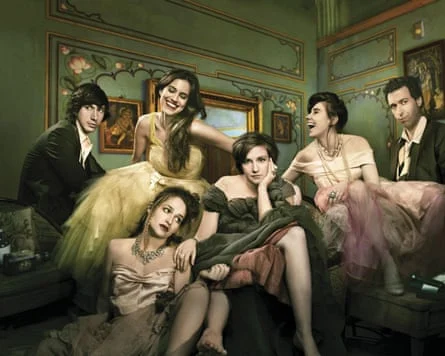
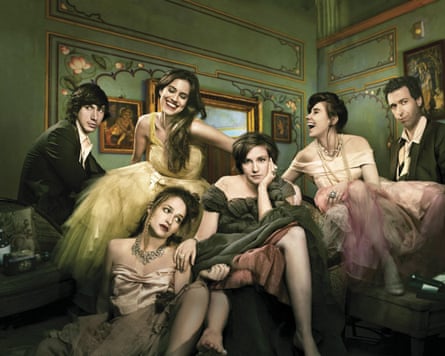
Lena Dunham’s Famesick, which rapidly ascended to the New York Times bestseller list following its April release, recounts several challenging incidents from the set of Girls. The series, which aired from 2012 to 2017, was instrumental in launching the careers of both Dunham, as its creator and star, and Driver, who portrayed the complex character Adam Sackler. Dunham’s narrative paints a picture of intense creative pressure and interpersonal friction.
One particularly striking anecdote from the memoir describes a late-night rehearsal where, according to Dunham, Driver exhibited what she termed "verbally aggressive" behavior. The incident reportedly occurred after Dunham forgot her lines during a scene. Dunham alleges that Driver then "hurled a chair at the wall next to me," accompanied by expletives aimed at rousing her. In her book, she vividly recalls the moment: "I remember doing a fight scene with Adam and how scary it was to meet someone so totally present with such absence. Late one night, as we practised lines in my trailer, I found that mine were suddenly gone. I knew I’d written them. I’d known them only minutes before. But when I opened my mouth, all that came out was a stammer – until finally, Adam screamed, ‘FUCKING SAY SOMETHING’ and hurled a chair at the wall next to me. ‘WAKE THE FUCK UP,’ he told me. ‘I’M SICK OF WATCHING YOU JUST STARE.’”

Dunham further details a subsequent scene, the characters’ first on-screen sexual encounter, where she felt a loss of control. She wrote that "careful blocking went out the window" as Driver "hurled me this way and that." The experience left her momentarily speechless and questioning her directorial authority and preparedness. "Stunned, I couldn’t speak for a moment," she recounted, "unsure of what had happened – had I lost directorial authority, allowed the scene to go off the rails, not given proper instructions?"
Driver’s Career Trajectory and the Weight of Accusation
Adam Driver has since established himself as one of Hollywood’s most sought-after and respected actors. His performances have garnered critical acclaim, including two Academy Award nominations for his roles in Spike Lee’s BlacKkKlansman (2018) and Noah Baumbach’s Marriage Story (2019). His burgeoning career has seen him take on diverse and challenging roles, solidifying his reputation as a formidable talent. Until his statement at Cannes, Driver had maintained a public silence regarding Dunham’s detailed accusations, leaving the industry and fans to speculate on his perspective.
Paper Tiger and Broader Thematic Concerns at Cannes
The press conference at Cannes was primarily focused on James Gray’s latest directorial effort, Paper Tiger, a crime drama set in the 1980s. The film, a Palme d’Or contender, stars Driver and Miles Teller as brothers entangled in a perilous scheme involving the Russian mafia. Scarlett Johansson, also a key cast member, was notably absent from the event due to prior commitments.
Beyond the film’s narrative, director James Gray seized the platform to articulate a broader critique of contemporary American capitalism. He described the unchecked ascendance of market forces as a "devastating" phenomenon. "My own view of the world today is that when you cannot monetise integrity, when the idea of being a good person doesn’t actually make you money, what happens?" Gray posited. "You get someone like the current American president, who is a symptom of what I’m talking about, totally transactional. This ethos becomes everything. The only thing that matters is to make a lot of money." Gray explained his choice to set Paper Tiger in 1986, identifying it as "the beginning of the moment in which the market became God."
The Specter of Toxic Masculinity and Political Commentary
The discussions at Cannes also touched upon broader societal issues. Javier Bardem, promoting his film The Beloved, directly addressed the concept of toxic masculinity. He condemned the "big-balls men" mentality, citing figures such as Donald Trump, Vladimir Putin, and Benjamin Netanyahu as prime examples of this mindset. This commentary from Bardem further underscored the festival’s engagement with themes of power, behavior, and societal influence, creating a backdrop against which Driver’s own reticence and subsequent brief statement gained added significance.
Analysis and Implications
Driver’s deliberate deflection of the Famesick allegations, framed as material for his own future book, is a calculated move. It acknowledges the existence of the claims without engaging in a direct refutation or admission, thereby maintaining a degree of control over the narrative. This approach can be seen as a strategy to:
- Preserve Narrative Control: By stating his intention to address the matter in his own future publication, Driver suggests a more comprehensive and perhaps nuanced account is forthcoming, potentially offering his perspective on the events and his own professional development.
- Avoid Premature Defense: Engaging in a public debate or detailed denial at a press conference dedicated to a new film could have overshadowed Paper Tiger and potentially led to further entrenchment or public scrutiny of his character.
- Leverage Anticipation: The statement is likely to generate significant public interest and anticipation for his future book, potentially creating a commercial opportunity.
The allegations themselves, detailed within Famesick, raise pertinent questions about power dynamics on set, the pressures of creative collaboration, and the impact of high-stakes production environments. Dunham’s account highlights the potential for intense emotional and psychological strain, particularly in the early stages of an actor’s career and a showrunner’s development. The fact that these claims are resurfacing now, during a high-profile international film festival, underscores the enduring impact of such narratives and the ongoing conversations surrounding workplace conduct in the entertainment industry.
The lack of a more direct response from Driver at this juncture leaves the public and industry observers awaiting further clarification. His chosen method of engagement – a brief, almost dismissive remark followed by a promise of future disclosure – is a testament to the complex and often guarded nature of celebrity communication in the face of public scrutiny. The industry will undoubtedly be watching to see how and when Driver chooses to elaborate on his experiences, and how these revelations, whenever they emerge, will shape the ongoing discourse about artistic integrity, professional conduct, and the lasting legacies of collaborative creative endeavors.