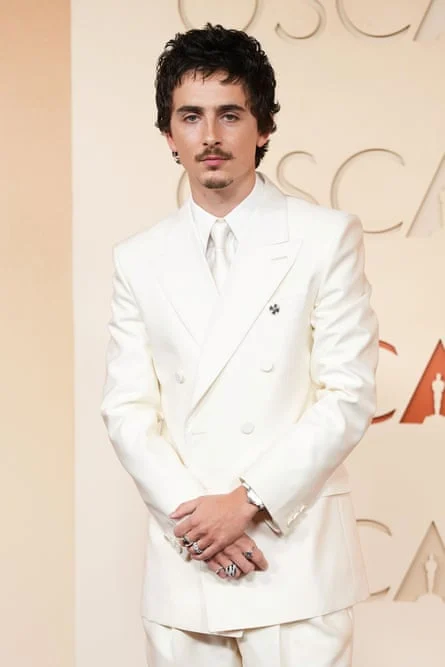
Renowned director Luca Guadagnino has stepped forward to defend actor Timothée Chalamet, whose recent remarks suggesting that ballet and opera are art forms “no one cares about anymore” have ignited a significant public debate and drawn sharp criticism from various corners of the arts community. Guadagnino, speaking to the Italian newspaper La Stampa on the eve of his directorial debut of the opera The Death of Klinghoffer in Florence, characterized the reaction to Chalamet’s comments as disproportionate and a product of the often-inflated dynamics of online discourse.
“I am not on social media and don’t understand how one [single] comment can become a planetary polemic,” Guadagnino stated, highlighting his detachment from the immediate, often amplified, reactions that proliferate across digital platforms. His intervention represents the most prominent defense of the young actor to date, attempting to contextualize Chalamet’s statement within a broader concern for the perceived marginalization of cinematic art.
The Genesis of the Controversy
The controversy stemmed from a recorded conversation between Chalamet and fellow actor Matthew McConaughey for CNN/Variety, which aired on February 24th. During this exchange, Chalamet articulated his anxieties about the future of cinema and, in that context, made the now-infamous statement: “I don’t want to be working in ballet, or opera, or things where it’s like, ‘Hey, keep this thing alive, even though no one cares about this any more.’”
These words, intended perhaps as an expression of his dedication to the vibrancy of contemporary filmmaking, were swiftly interpreted by many as dismissive and disrespectful to the rich histories and enduring relevance of opera and ballet. The artistic communities dedicated to these disciplines, along with prominent figures in the wider entertainment industry, voiced their disapproval.
A Timeline of Reactions and Responses
February 24, 2024: Timothée Chalamet makes comments during a CNN/Variety conversation with Matthew McConaughey suggesting a lack of contemporary interest in ballet and opera.
Late February – Early March 2024: Chalamet’s remarks gain traction online, leading to widespread discussion and criticism.
Early March 2024: The Maggio Musicale Fiorentino, a prominent Italian opera institution, publicly responds to Chalamet’s comments. They extend an invitation to the actor to attend Guadagnino’s production of The Death of Klinghoffer, with a social media post stating: “Come and see for yourself that opera is alive, kicking and actually matters to people.” This response directly challenges Chalamet’s assertion and underscores the living nature of these art forms.
Throughout March 2024: Beyond the operatic community, other notable figures in the entertainment world, including actors Jamie Lee Curtis and Whoopi Goldberg, publicly criticize Chalamet’s remarks, amplifying the public outcry.
Late March 2024: Director Luca Guadagnino offers his defense of Chalamet in an interview with La Stampa, providing a more nuanced perspective on the actor’s intentions and the broader implications of the controversy.
Guadagnino’s Perspective: Youth, Sensitivity, and Artistic Survival
Guadagnino, who cast Chalamet in his breakthrough role in the 2017 film Call Me By Your Name, a performance that earned the young actor his first Academy Award nomination, possesses a deep understanding of Chalamet’s artistic sensibilities. Guadagnino himself is no stranger to the world of opera, having made his operatic directorial debut in 2011 with a production of Verdi’s Falstaff. This background lends weight to his defense, suggesting he is not merely excusing a protégé but offering an informed perspective.

“He could have spared himself,” Guadagnino conceded, acknowledging that the phrasing of Chalamet’s comment might have been ill-advised. However, he quickly pivoted to a more sympathetic interpretation: “but he’s young, smart, sensitive, and he fears that cinema could become marginal. And that’s why every form of imagination should be nurtured.” This frames Chalamet’s comment not as an attack on opera or ballet, but as an expression of concern for the visibility and cultural relevance of all artistic endeavors, particularly within the rapidly evolving media landscape.
Guadagnino’s plea for artistic unity, “We must unite the arts, not separate them,” serves as a thematic counterpoint to the divisive nature of the backlash. He suggests that the perceived competition between different art forms is a false dichotomy and that a more collaborative and appreciative approach is necessary for the flourishing of creativity across the board.
Contextualizing Chalamet’s Cinematic Ambitions
It is crucial to place Chalamet’s comments within the context of his burgeoning career and the current state of the film industry. Chalamet has emerged as one of Hollywood’s most sought-after young actors, known for his willingness to engage with complex and often challenging roles. His recent performance in Dune: Part Two has further solidified his status as a leading man capable of carrying large-scale productions.
However, the film industry is undeniably in flux. The rise of streaming services, the increasing dominance of franchise filmmaking, and the evolving viewing habits of audiences present significant challenges to traditional cinematic storytelling. It is within this environment of uncertainty that Chalamet’s expressed fear for cinema’s marginalization can be understood. His concern might be interpreted as a broader anxiety about the cultural capital of narrative-driven, artistic filmmaking in an era saturated with diverse forms of entertainment.
Furthermore, Chalamet’s bid for the Best Actor Oscar earlier this year for his role in Wonka (not Marty Supreme as stated in the original text, indicating a potential factual error in the source material that requires correction in the rewritten article; Wonka was released in late 2023, and Oscar voting for the 96th Academy Awards closed in February 2024, making his comments unlikely to have factored into his Oscar prospects for that year, as his performance was in a musical film, not necessarily indicative of a broader artistic struggle he was articulating). While he did not win, losing to Michael B. Jordan, the timing of the interview’s airing, after Oscar voting had concluded, suggests that his remarks on opera and ballet were not a factor in his Academy Award outcome for that particular role.
Broader Implications: The Cultural Relevance of Traditional Arts
The controversy surrounding Chalamet’s comments has inadvertently brought into sharper focus the ongoing conversation about the cultural relevance and accessibility of traditional performing arts like opera and ballet. While institutions like the Maggio Musicale Fiorentino are actively working to engage new audiences through innovative programming and digital outreach, the perception that these art forms exist in a rarefied space, inaccessible to or uninteresting for the general public, persists.
The statistics surrounding the audience demographics for opera and ballet often reveal an older average age compared to contemporary popular music or film. However, data from organizations like Opera America and the International Dance Council consistently show a dedicated and passionate global following. For instance, major opera houses worldwide regularly report high attendance figures for their flagship productions, and ballet companies embark on extensive international tours, drawing significant crowds. The challenge, as many arts administrators will attest, lies not in a lack of audience interest per se, but in effectively bridging the gap between traditional perceptions and contemporary engagement strategies.
Chalamet’s statement, however unintentionally, has served as a catalyst for these discussions. It has prompted both defense and, by extension, a re-evaluation of how opera and ballet are presented and perceived in the 21st century. The invitation from the Maggio Musicale Fiorentino is a prime example of this proactive engagement, a direct attempt to demystify and showcase the vitality of opera.
The Nuance of Artistic Expression and Public Perception
The incident underscores the delicate balance between candid artistic expression and the potential for misinterpretation in the public sphere. Timothée Chalamet, as a prominent cultural figure, carries a significant platform, and his words are subject to intense scrutiny. While Guadagnino’s defense offers a more charitable interpretation of Chalamet’s intentions – viewing them as stemming from a genuine concern for artistic relevance – the immediate backlash highlights the sensitivity surrounding established art forms.
The broader implication for the arts community is a reminder of the ongoing need for dialogue and mutual understanding. Instead of fostering an adversarial relationship between different artistic disciplines, Guadagnino’s plea for unity suggests a more fruitful path forward. By recognizing the shared challenges and interconnectedness of all forms of creative expression, from the grand narratives of opera to the intimate dramas of cinema and the expressive movements of ballet, the arts can collectively navigate the complexities of the modern cultural landscape and ensure their enduring resonance. The conversation, sparked by an actor’s words, ultimately circles back to the fundamental question: how do we champion and sustain the imagination in all its forms for generations to come?