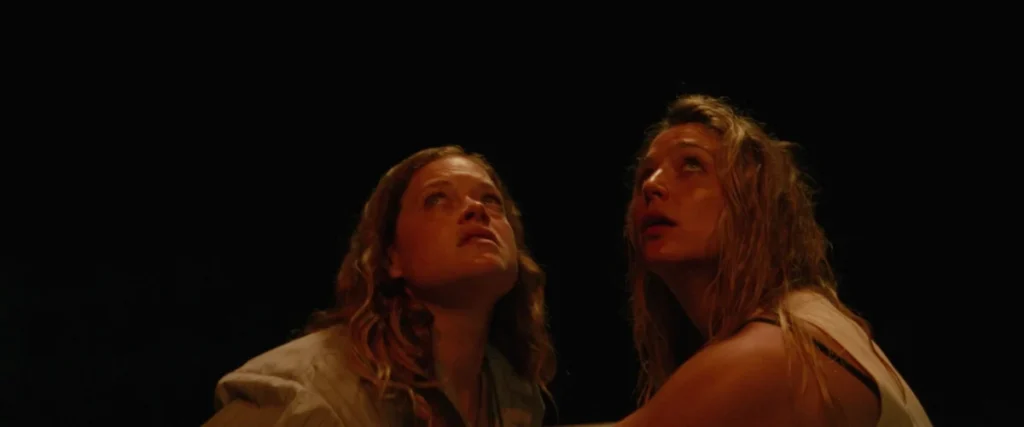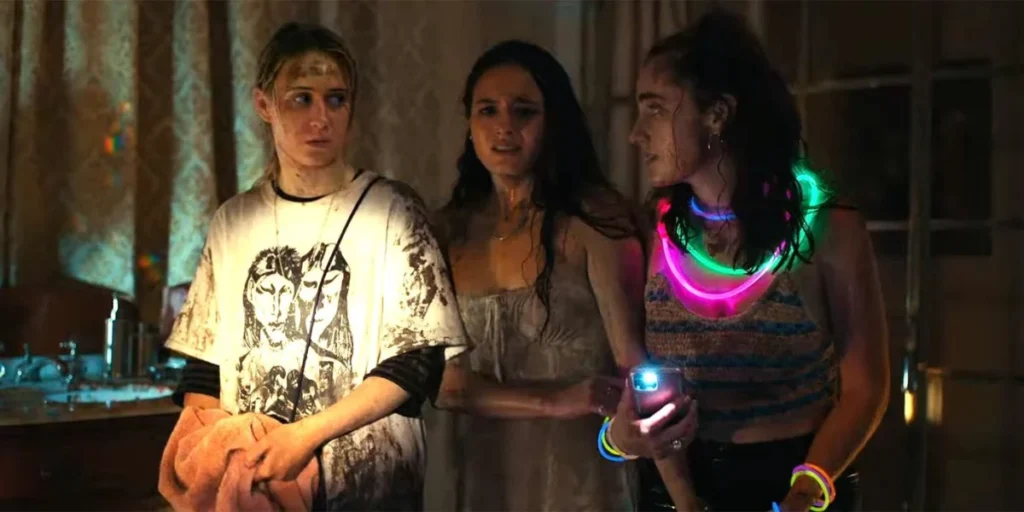
Writer and director Adrian Chiarella’s new film, Leviticus, has arrived, aiming to tackle significant themes of homophobia, repression, and queer identity within a horror framework. While the film boasts striking visuals and commendable central performances, it ultimately struggles to fully realize its ambitious narrative, falling into a pattern of derivative storytelling and a hesitant exploration of its core subject matter. The film’s visual landscape, depicting an industrial and suburban wasteland in Australia with its stark smoke stacks and abandoned mills, offers a unique aesthetic that hints at underlying decay and isolation. However, the overarching execution, pacing, and thematic resonance draw heavily from established horror tropes, most notably echoing the narrative and stylistic elements of the critically acclaimed It Follows.
A Visual Tapestry of Industrial Decay
The visual design of Leviticus is one of its most immediate strengths. Chiarella crafts a world that is both bleak and strangely beautiful. The industrial backdrop, with its imposing structures and signs of past labor, serves as a potent metaphor for societal stagnation and the suppression of individual identity. The suburban sprawl, juxtaposed with this industrial decay, creates a sense of unease and the feeling that beauty is being systematically erased or buried. This visual approach contributes to the film’s atmosphere, effectively setting a tone of foreboding and melancholic isolation that mirrors the internal struggles of its characters. The choice of setting is not merely aesthetic; it actively contributes to the film’s thematic exploration of societal pressures and the feeling of being trapped or overlooked.
Echoes of "It Follows": A Familiar Foundation
A significant point of critique for Leviticus lies in its perceived lack of originality, particularly its strong parallels to the plot, execution, style, and themes of David Robert Mitchell’s 2014 film It Follows. The comparison arises from several direct allusions: the manifestation of threats appearing without warning, a slow-burn pacing that builds dread, and the concept of a pursuing entity that is directly linked to personal choices, specifically sexual encounters. The industrial and suburban gothic aesthetic employed in Leviticus also bears a striking resemblance to the visual language established in It Follows, further cementing the perception of subconscious or deliberate influence.

It Follows, released to critical acclaim and considerable box office success, explored themes of STDs and the anxieties surrounding burgeoning sexuality through a supernatural lens. The film’s central premise, where a supernatural entity is passed through sexual contact and relentlessly pursues its victims, proved highly influential. The critical observation regarding Leviticus suggests that while the debt may not be intentional, the echoes are so pronounced that they overshadow the film’s unique contributions. This resemblance raises questions about creative distinctiveness and the challenge of forging a new path within a genre that often relies on established conventions.
The Struggle for Boldness: Earnestness vs. Impact
Despite its commendable intentions to address issues of homophobia and repression with honesty, Leviticus is often described as being "cripplingly earnest." This earnestness, while well-intentioned, can inadvertently dilute the impact of its powerful message. The film’s exploration of the queer male experience, particularly within the context of societal judgment and internal conflict, could have benefited from a bolder and more direct approach. Critics suggest that the film, in its attempt to be sensitive, becomes "neutered," lacking the raw sexual charge that one might expect from a narrative centered on repressed queer passion.
The review highlights a significant missed opportunity in the depiction of queer love and desire. While the emotional ache between the two lead characters is palpable, the film’s portrayal of their connection remains largely chaste. The single sexual scene is described as "softened and cute," which, in the context of a film about repression and the fight for identity, feels like a compromise. The argument is that for a film aiming to explore the dangers and intensity of queer experiences in a world that seeks to suppress them, a more visceral and explicit depiction of what is being fought for—and what is being denied—would have been more impactful. The missed opportunity lies in not fully embracing the "you can’t repress this. This is who we are. It’s impossible to" sentiment, which could have been powerfully conveyed through a more assertive sexual narrative.
The Romance at its Core: A Salvageable Element
Where Leviticus finds more solid footing is in its depiction of romance. The film functions most effectively as a dramatic exploration of two lovers caught in circumstances that keep them apart. The tragic dynamic inherent in their situation provides a strong dramatic foundation, allowing the performances of Joe Bird and Stacy Clausen to shine. Their emotional connection and the palpable yearning between them elevate the material, suggesting a deeper potential for the film if its romantic core had been more consistently supported by its genre elements. This aspect of the film suggests that Chiarella possesses a talent for crafting compelling interpersonal relationships, even if the surrounding narrative falters.

However, even the romantic narrative is hampered by the underdeveloped mechanics of the film’s horror elements. The rules governing the supernatural threat are described as "messier, less effective, and way less scary" than those in It Follows. This inconsistency in the horror mechanics leads to a convoluted and confusing experience for the viewer, preventing the subtext of queer repression from fully blossoming into a more explicit and impactful thematic statement. The review posits that a more refined script, with clearer rules and a stronger separation between its own innovative ideas and borrowed concepts, could have resulted in a more cohesive and powerful film.
Performances That Transcend the Script
Despite the narrative shortcomings, the performances of Joe Bird and Stacy Clausen are consistently praised as a significant redeeming factor. The review notes that their emotional depth and commitment elevate the script, particularly when the character interactions on paper might appear somewhat juvenile or overly simplistic. Bird, in particular, is highlighted as delivering a potentially "star-making performance." His portrayal of a young queer man is described as effective, honest, and believable, even when the protagonist, on paper, is presented as a character with limited agency, being moved from one set piece to another by an unseen force. This ability of the actors to imbue their characters with authentic emotion and complexity suggests a strong directorial hand in guiding their performances, even if the overall vision for the film’s narrative structure was less successful.
The review acknowledges that the characters’ interactions sometimes lean into conventional dramatic beats, such as the "we’re gonna fight, and then we’re gonna kiss" trope, which can feel out of place in a film striving for naturalism. However, the genuine heart and sincerity brought by Bird and Clausen manage to overcome these structural weaknesses, making their characters relatable and their plight compelling.
Fleeting Scares and Missed Opportunities in Horror
The horror elements in Leviticus are described as sparse and, at times, ineffective. However, the film does manage to deliver a few "exceptional" scares. One such instance involves a character being pulled into darkness by an invisible force outside a gas station, a scene that is praised for its simplicity, non-violence, and gothic undertones. This moment demonstrates Chiarella’s potential for effective horror filmmaking. The review also points out a well-executed jump scare that, despite the often-maligned nature of such scares, is considered earned and impactful, arriving precisely at the moment the reviewer began to question the film’s ability to frighten.

Despite these moments of success, the overall assessment is that the film fails to fully embrace its horror potential. The review concludes by lamenting that Leviticus is, in essence, a film for queer audiences, yet it squanders the inherent connection between queer narratives and horror. Horror, by its nature, often deals with outsiders, the marginalized, and the uncanny, themes that resonate deeply within queer experiences. When a queer drama utilizes horror as a mere packaging device, it represents a missed opportunity to fuse these two powerful modes of storytelling.
The Urgent Message of Queer Erasure
The film’s most significant contribution lies in its urgent and powerful subtext concerning queer erasure. The review strongly emphasizes that Leviticus is addressing critical issues, particularly the increasing marginalization and erasure faced by queer individuals. The film’s narrative, at its core, speaks to the horrors of this erasure and the dangerous repercussions that arise when society attempts to suppress or obliterate queer identities. The analogy of paving over land to build suburbs, only for nature to "reappear somewhere else and destroy your basements," serves as a potent metaphor for the resilience and enduring presence of queer communities.
However, the critique remains that the film itself does not fully commit to its own horror. The message about the dangers of erasure is clear, but the execution of the horror genre elements—the scares, the suspense, the visceral impact—is deemed insufficient to fully convey the terror and urgency of the themes being explored. The final sentiment is a desire for the film to have exhibited a greater interest in, and a more robust engagement with, its own horror genre underpinnings, thereby amplifying its crucial message about queer existence and societal resistance. The film’s overall impact is thus diminished by a reluctance to fully unleash the potential of its chosen genre.