A seismic shift is underway in Hollywood, not just in terms of who is making the movies, but also in the familial dynamics influencing career trajectories. The spring season has been dominated by the unexpected success of two independent films, "Backrooms" and "Obsession," both helmed by a pair of young YouTubers who have seemingly been handed the keys to the kingdom. These breakout hits have outperformed not only the latest installments in long-standing franchises like "Star Wars" and the most recent superhero blockbuster, "Supergirl," but also a recent offering from legendary director Steven Spielberg. This phenomenon marks arguably the most significant upheaval in the film industry since the rise of New Hollywood in the 1970s, signaling a potent new wave of talent and a reevaluation of traditional pathways to cinematic success.
However, the most intriguing and perhaps surprising development in this evolving landscape is a tangential story that underscores a different, yet equally significant, aspect of Hollywood’s intricate web: the emergence of the "nepo dad." This week, it was announced that Jeff Barker, the father of "Obsession" director Curry Barker, is embarking on his own filmmaking venture. His upcoming project, a horror short titled "Medium Rare," is slated to begin production this summer and boasts a notable cast, including comedian Dane Cook and the acclaimed, Oscar-nominated actress Lesley Ann Warren. This announcement follows closely on the heels of "Good Tape," another horror short directed by Jeff Barker, which is currently in post-production.
A closer examination of Jeff Barker’s professional filmography reveals a striking pattern. Prior to these two upcoming shorts, his IMDb page lists no other directorial or significant production credits. He is credited as a script consultant on his son Curry’s film "Obsession" and even made an uncredited cameo as a trivia bar host. This suggests that Jeff Barker’s foray into filmmaking, with established actors and professional production, has materialized directly on the coattails of his son’s remarkable ascent. This dynamic raises the distinct possibility of a "nepo dad" phenomenon, a reversal of the more commonly discussed "nepo baby" narrative, where a parent leverages their child’s success to launch or reignite their own career.
The Rise of the YouTube Filmmaker: A New Hollywood Paradigm
The success of "Backrooms" and "Obsession" represents a fundamental disruption of the established Hollywood order. These films, born from the digital realm of YouTube, have demonstrated that compelling storytelling and audience engagement can transcend traditional studio gatekeeping. Curry Barker, along with the director of "Backrooms," has effectively bypassed the conventional routes of film school, short film festivals, and independent financing that have historically served as stepping stones for aspiring filmmakers. Their ability to capture the zeitgeist and resonate with a global audience, evidenced by their box office performance exceeding major studio releases, underscores the growing influence of online platforms as incubators for creative talent.
This new generation of filmmakers, often referred to as Gen Z filmmakers, are not merely replicating existing formulas. They are innovating, drawing inspiration from internet culture, gaming lore, and a distinct aesthetic sensibility that speaks directly to their peers. The rapid ascent of these creators from online content creators to mainstream cinematic figures is a testament to their adaptability, entrepreneurial spirit, and understanding of audience demand in the digital age. Their success is not just a statistical anomaly; it signifies a potential paradigm shift, where established studios may increasingly look to digital platforms for the next generation of directorial talent.
The Emergence of the "Nepo Dad": A Role Reversal in Hollywood’s Family Tree
While Hollywood has long been a breeding ground for "nepo babies" – the children of established stars and industry professionals who benefit from familial connections – the emergence of the "nepo dad" presents a fascinating counterpoint. Traditionally, the narrative has focused on the advantages bestowed upon offspring due to their parents’ influence. However, the case of Jeff Barker, and other similar instances, highlights a scenario where a parent, witnessing their child’s success, decides to seize an opportunity for themselves, often appearing to capitalize on their child’s newfound fame.
This phenomenon is distinct from parents who have always been involved in creative fields and whose children later follow suit. The defining characteristic of a "nepo dad" is the apparent timing of their professional emergence: it directly correlates with their child’s breakthrough in the entertainment industry. This suggests a motivation that might stem from a desire to participate in the lucrative and glamorous world their child has entered, or perhaps a sense of rekindled ambition spurred by proximity to success.
Case Studies in "Nepo Parenting"
The most prominent example of this trend is Rob Grant, the father of Grammy-winning artist Lana Del Rey. Grant, who previously worked in advertising and property development, released his own album in 2023, shortly after his daughter achieved significant global recognition. Demonstrating a keen awareness of his position, Grant leaned into the "Nepo Daddy" moniker, even selling merchandise bearing the phrase, turning what could have been a point of contention into a self-aware marketing strategy.

Another instance involves Mitch Winehouse, the father of the late soul singer Amy Winehouse. Mitch leveraged his daughter’s enduring legacy into a music career of his own, releasing an album titled "Rush of Love." While the motivations in such cases can be complex, the timing of their professional endeavors, coinciding with their children’s fame, places them within the "nepo parent" category.
Furthermore, the concept can extend into a cyclical pattern of nepotism. Margaret Qualley, herself a "nepo baby" due to her mother Andie MacDowell’s established acting career, is reported to have advocated for MacDowell to be cast in the television series "Maid." This move was seen by some as an effort to revitalize MacDowell’s career, illustrating how a successful "nepo baby" can, in turn, create opportunities for their established parent.
Distinguishing True "Nepo Parenting"
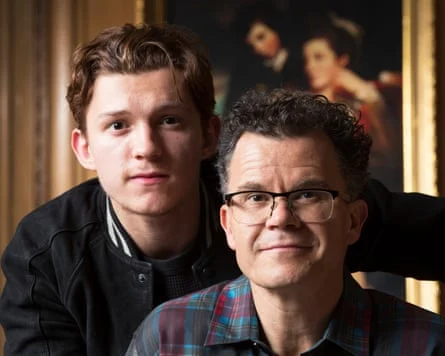
It is crucial to differentiate genuine "nepo parenting" from established professionals whose children also enter the industry. For instance, Dominic Holland, father of actor Tom Holland, is a comedian whose stand-up routines often reference his son’s role as Spider-Man. However, Dominic Holland was a performing comedian long before his son’s global fame. His inclusion of his son’s success in his act appears to be an acknowledgment of a significant life event rather than a direct attempt to capitalize on an established career. This distinction is key: true "nepo parenting" suggests a career launch or significant boost directly enabled by a child’s established success, rather than an established career that simply intersects with a child’s fame.
The Spectrum of Parental Involvement: Beyond Talent
The "nepo parent" phenomenon, while less discussed than its "nepo baby" counterpart, exists on a spectrum, with varying degrees of perceived talent and motivations. In the more palatable instances, like Jeff Barker, Rob Grant, and Mitch Winehouse, there is an underlying assumption that the parent possesses some level of demonstrable skill in their chosen field – writing, singing, or composing. Their children’s success, in these cases, may have provided the platform and the impetus for them to pursue their artistic inclinations more seriously or professionally. The success of their children, rather than solely opening doors, may have served as a catalyst for dormant talents.
However, there are instances where parental ambition, when coupled with a perceived lack of inherent talent, can lead to more problematic outcomes. The careers of some parents of famous children have veered into reality television, a domain often criticized for its reliance on manufactured drama and superficial engagement. The parents of Lindsay Lohan, Dina and Michael Lohan, serve as a stark example. Following Lindsay’s initial surge of fame, both parents actively sought the spotlight. Dina Lohan appeared on "The Real Housewives of New York City" and her own E! reality show, "Living Lohan." Michael Lohan’s attempts at an acting career, including a cameo in the obscure film "Horrorween," were overshadowed by his subsequent appearances on "Celebrity Rehab" and tabloid fodder. These ventures, often characterized by public disputes and personal struggles, painted a far less flattering picture of parental ambition, where the pursuit of fame appeared to overshadow any genuine artistic endeavor.
The Implications for Hollywood’s Future
The concurrent rise of digitally native filmmakers and the evolving dynamics of familial influence in Hollywood signal a period of profound transformation. The success of YouTube-created films like "Backrooms" and "Obsession" challenges the long-held dominance of traditional studios and their established pipelines. This suggests a future where talent can emerge from unexpected corners, demanding a more agile and inclusive approach from the industry.
Simultaneously, the "nepo dad" phenomenon, while potentially controversial, also points to a complex interplay of ambition, familial support, and opportunity. If Jeff Barker’s foray into horror filmmaking is indeed a collaborative effort, blessed by his son’s success, it raises questions about the nature of artistic inheritance and the blurring lines between mentorship and self-promotion. The critical reception and audience engagement with "Medium Rare" will undoubtedly provide further insight into this evolving dynamic.
Ultimately, the narrative of Hollywood is being rewritten by a confluence of factors: the democratization of content creation, the evolving definition of stardom, and the intricate, often surprising, ways in which familial relationships intersect with professional ambition. As the industry grapples with these shifts, the lines between creator and curator, established star and digital influencer, and even parent and protégé, are becoming increasingly fluid, promising a dynamic and unpredictable future for the silver screen and beyond. The key takeaway remains that talent, regardless of its origin, is increasingly finding its audience, and the pathways to success are becoming more diverse and less predictable than ever before.