The initial episodes of the animated series Chainsmoker Cat, recently reviewed in conjunction with its inclusion in the Summer ’26 Preview Guide, present a viewing experience that can only be described as audaciously unhinged. This characterization, however, is intended as a testament to the show’s unwavering commitment to portraying the unvarnished, tobacco-tinged excesses of its anti-heroine, Yani Neko, and her milieu. The narrative does not shy away from depicting lifestyles that many might find off-putting or even offensive, suggesting an intentional design to provoke a visceral reaction from its audience. Despite the potentially repellent subject matter, the series, produced by Bibury Animation Studios, maintains a surprisingly high production value, and Yani’s often darkly comedic antics create a paradoxical compulsion to continue watching, drawing viewers into the "furry abyss" of her existence.
The decision to continue engaging with Chainsmoker Cat beyond its introductory episodes hinges significantly on an individual’s tolerance for visceral and often crude depictions of squalor and vice. The show excels in its ability to immerse the viewer in the layered filth and degradation of Yani and her associates’ living environments. Every visual element, from the texture of surfaces to the minutiae of animated actions, is meticulously crafted to convey a sense of raggedness and grime, pushing the boundaries of what can be visually represented within the color spectrum of modern animation. The animation team has dedicated significant effort to rendering the crinkling of cigarette packs, the physicality of hacking coughs, and the visual representation of noxious smoke with remarkable detail.
At the core of this chaotic narrative is Yani Neko herself, a character defined by her crippling nicotine addiction and pervasive poverty. She is depicted as a conduit for every conceivable odor and unsavory substance, often manifesting in ways that border on the nightmarish. Episode 3, for instance, features a particularly graphic scene where Yani expectorates onto her landlord’s bald head. This act is not merely a visual gag; the landlord’s reaction serves to underscore the putridity, describing the cat-girl’s saliva as a radioactive amalgamation of coffee, cigarettes, and aged feet. Such moments, designed to elicit a strong physical reaction, test the limits of viewer endurance, prompting an almost instinctual search for a means of immediate disengagement.
While a relentless focus on bodily fluids and sophomoric humor might position Chainsmoker Cat as a niche, albeit passable, late-night comedy, the series introduces a more profound element: a palpable undercurrent of melancholy fatalism. This somber tone permeates the show, seeping through the meticulously rendered decrepitude of its settings. While not explicitly a comedy-drama, Chainsmoker Cat‘s aggressive and uncompromising portrayal of its characters and their world cultivates a uniquely dark atmosphere. The series subtly but consistently highlights the marginalized status of the Beastfolk in its alternate universe, with Yani herself living in extreme squalor. Her diet consists of scavenged garden weeds and stolen cabbage, a stark indicator of her destitution. Her closest confidante, Yaku Neko, struggles with hard drug addiction, and Yani herself is haunted by the specter of lung cancer, a consequence directly linked to her pervasive smoking habit.
The bleakness continues into Episode 3 with a visit to Yani’s friend Aruko, who exhibits clear signs of alcoholism. Their boozy interactions are punctuated by a disturbingly grim moment when Aruko narrowly avoids choking to death on her own vomit. This juxtaposition of crude humor and genuine peril raises a critical question about the show’s intent: is it inviting the audience to laugh at the characters’ self-destructive addictions and bleak circumstances from a detached perspective, or is it subtly urging for empathy through the very shock value of its gross-out humor? Three episodes into its run, the series appears to be straddling both approaches, offering a complex and often uncomfortable viewing experience.
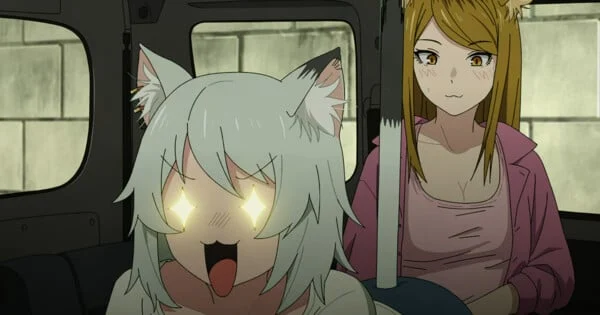
A particularly illustrative segment concludes Episode 3, featuring Yani and Yaku participating in a public service announcement campaign in Nyagamihara, alongside their friend Kansai, focused on the proper disposal of cigarettes and waste. The educational mission is derailed when Yani unleashes a flatulence of such extreme potency that it nearly incapacitates everyone in the sound truck with its noxious fumes. Kansai and the others, tasked with societal improvement, find themselves strangely captivated, almost mesmerized, by the comedic potential of Yani’s olfactory assault broadcast through the loudspeakers. This scene serves as a potent encapsulation of Chainsmoker Cat‘s artistic ethos: a relentless pursuit of comedic payoff, derived from the most abject and degrading aspects of its characters’ lives. The show seems intent on extracting every possible "choking laugh" from the compromised existence of its protagonists, even if the pursuit of humor comes at a significant cost to their well-being.

Production Context and Timeline
The production of Chainsmoker Cat by Bibury Animation Studios, a company known for its work on series such as The Quintessential Quintuplets and Azur Lane, represents a notable departure from their previous, more conventionally appealing projects. The initial development and concept phases for Chainsmoker Cat likely began in late 2024 or early 2025, with the Summer 2026 anime season being a targeted release window. The animation process, involving detailed character design, background art, and fluid motion, would have commenced in earnest throughout 2025. The decision to adopt such a provocative and graphic style, particularly for a mainstream streaming platform like Netflix, suggests a strategic effort to capture a specific, albeit potentially controversial, audience demographic. The development of the Summer ’26 Preview Guide, an industry-standard practice for promoting upcoming anime seasons, would have involved early access screenings for critics and reviewers in the preceding months, likely around April or May of 2026.
Supporting Data and Industry Trends
The animation industry has seen a growing trend towards more mature and niche content, catering to diverse audience preferences. While traditionally dominated by shonen and shojo genres, the proliferation of streaming services has allowed for greater experimentation with themes and aesthetics. Shows that push boundaries in terms of graphic content, dark humor, or unconventional storytelling have found significant followings. For instance, series like Devilman Crybaby (2018) and Cyberpunk: Edgerunners (2022) achieved critical acclaim and popular success by embracing mature themes and intense visual styles. Chainsmoker Cat‘s approach, while perhaps more focused on visceral gross-out humor, aligns with this broader industry shift towards exploring darker and more challenging narratives within the anime medium. The success of such ventures often depends on a delicate balance between shock value and genuine narrative depth, a balance Chainsmoker Cat appears to be actively navigating.
Potential Implications and Audience Reception
The unflinching portrayal of addiction, poverty, and squalor in Chainsmoker Cat carries significant implications for audience reception. While some viewers may find the show’s commitment to its premise refreshing and darkly humorous, others are likely to be repelled by its graphic nature and bleak outlook. The series risks alienating a broad audience by prioritizing shock value over universal appeal. However, for a dedicated segment of viewers who appreciate transgressive art and dark comedy, the show could become a cult hit. The critical analysis of the show’s artistic philosophy – "We’re going to squeeze every last choking laugh that we can from the diseased bodies and broken spirits of these cat-girls, even if it kills them" – suggests an awareness of its provocative nature and a deliberate intent to provoke a strong, perhaps even extreme, reaction. The long-term impact of such a bold creative choice will be determined by its ability to sustain viewer engagement beyond the initial shock, offering a narrative or thematic resonance that justifies its extreme content.
Streaming and Accessibility
Chainsmoker Cat is currently accessible to a global audience through major streaming platforms. Netflix, a prominent player in the international anime distribution market, has secured streaming rights, making the series available to its vast subscriber base. Additionally, the anime is available on OceanVeil, a platform that often specializes in a wider range of anime titles, potentially including those with more niche appeal. This dual availability suggests a strategic effort by the production and distribution companies to maximize viewership and cater to different market segments within the anime community. The inclusion on Netflix, in particular, indicates a belief in the series’ potential to reach a broad, mainstream audience, despite its unconventional and potentially divisive content.
Critical Reception and Ratings
While the provided text includes placeholders for episode ratings, a formal critical assessment of the initial episodes of Chainsmoker Cat suggests a highly polarized reception. Early reviews, such as the one provided, indicate that the show’s strengths lie in its audacious commitment to its depraved premise and its surprisingly high production values, particularly in the detailed animation of grimy environments and character actions. However, the show’s reliance on visceral gross-out humor and its unflinching depiction of severe poverty and addiction are likely to be significant barriers for many viewers. The narrative’s ability to balance its shocking content with genuine comedic timing and any underlying thematic depth will be crucial in determining its critical and popular success. The question of whether the show aims for detached mockery or empathetic exploration of its characters’ plights remains a central point of discussion among early critics.
James, a writer with extensive commentary on anime and popular culture, contributes his insights to BlueSky, his personal blog, and his podcast. Chainsmoker Cat is currently streaming on Netflix and OceanVeil.