Cantona premiered at the 79th Cannes Film Festival in the Special Screening section, marking a significant cinematic exploration of one of association football’s most polarizing and influential figures. Directed by the acclaimed filmmaking duo Ben Nicholas and David Tryhorn, the documentary provides an exhaustive 115-minute portrait of Eric Cantona, the French forward whose arrival at Manchester United in the early 1990s is widely credited with altering the trajectory of English football history. Nicholas and Tryhorn, who previously collaborated on high-profile sports features such as Pelé (2021) and The Figo Affair: The Transfer that Changed Football (2022), utilize a blend of archival restoration and intimate modern-day testimonies to deconstruct the "King Eric" persona. The film does not merely recount a series of matches but seeks to understand the psychological architecture of a man who was frequently dismissed as unmanageable by the French football establishment, only to be canonized as a revolutionary in the United Kingdom.
Historical Context and the French Exile
To understand the narrative weight of the documentary, one must consider the status of Eric Cantona prior to his arrival in England. In the late 1980s and early 1990s, Cantona was regarded as the most gifted French footballer of his generation, yet his career in Ligue 1 was defined by a series of disciplinary infractions and public outbursts. He moved through several clubs, including Auxerre, Marseille, Bordeaux, Montpellier, and Nîmes, often leaving under a cloud of controversy.
The documentary highlights a pivotal moment in 1991 when, while playing for Nîmes, Cantona threw the ball at a referee. Following a disciplinary hearing where his ban was doubled after he walked up to each member of the committee and called them "idiots," Cantona announced his retirement from football at the age of 25. This period of "permanent exile," as the film describes it, serves as the prologue to his English redemption. It was only through the intervention of Michel Platini and the advice of psychoanalysts that Cantona was persuaded to restart his career across the English Channel, first with Leeds United and eventually with the club that would define his legacy.
The Ferguson-Cantona Synergy and the Manchester United Dynasty
The core of the documentary focuses on the five years Cantona spent at Manchester United under the stewardship of Sir Alex Ferguson. When Cantona signed for the club in November 1992 for a fee of £1.2 million, Manchester United had not won a top-flight league title in 26 years. The film meticulously documents how Cantona’s arrival acted as the "spark to ignite a dynasty." Within six months of his arrival, United secured the inaugural Premier League title, beginning a period of unprecedented dominance in English football.
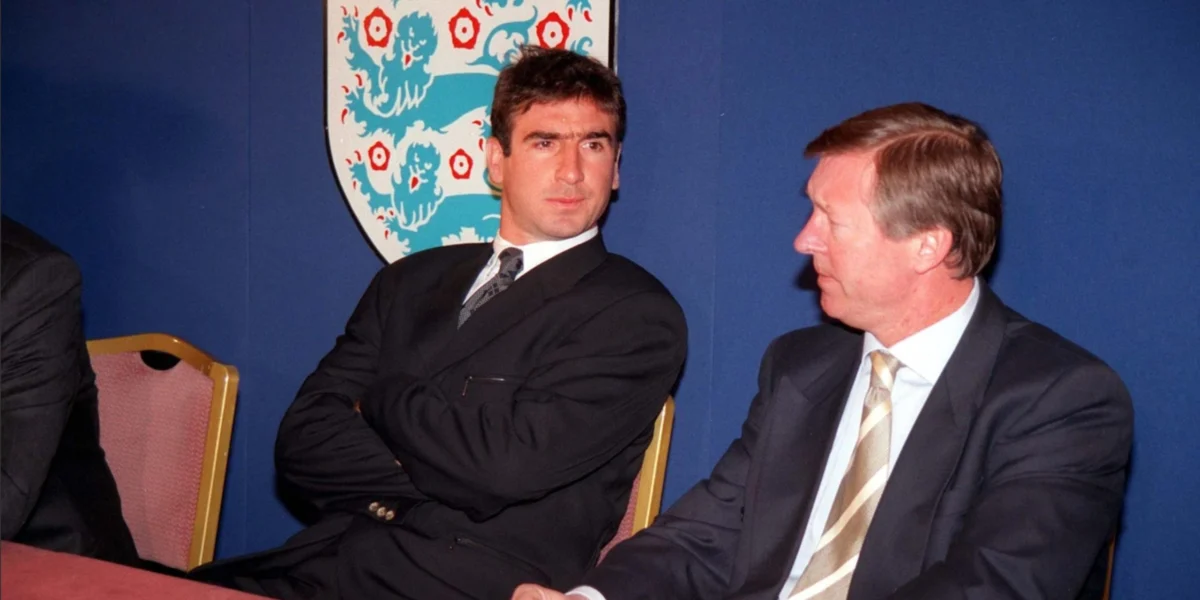
A significant portion of the film’s runtime is dedicated to the unique relationship between the "strictest disciplinarian in football" and the "unmanageable libertine." Through present-day interviews, both Ferguson and Cantona reflect on a bond that transcended the typical player-manager dynamic. Ferguson’s willingness to accommodate Cantona’s eccentricities—such as his refusal to adhere to the standard dress code or his philosophical detachment—is presented as a masterclass in man-management. The documentary features an poignant "Easter egg" involving Guy Roux, Cantona’s first manager at Auxerre, who reveals that Ferguson sought his counsel on how to handle the volatile star. Roux’s advice was succinct: "Love him."
Chronology of a Career: The Five Seasons Structure
The filmmakers employ a structured chronological approach, dividing the narrative into five distinct "Seasons," interspersed with three "Flashback" segments that delve into Cantona’s upbringing and early career. This format allows the audience to track the escalating tension between Cantona’s brilliance on the pitch and the mounting media scrutiny that followed his every move.
- The Arrival (1992-1993): The transition from Leeds to Manchester and the immediate impact on a struggling squad.
- The Double (1993-1994): Manchester United’s ascent to the top of English football, culminating in the League and FA Cup double.
- The Incident (1994-1995): The events leading up to and following the January 1995 match against Crystal Palace at Selhurst Park.
- The Return (1995-1996): Cantona’s eight-month ban and his triumphant comeback, leading a young squad (the "Class of ’92") to another double.
- The Departure (1996-1997): The final season, the physical and mental toll of fame, and the shock retirement at the age of 30.
Analysis of the Selhurst Park "Kung Fu" Incident
The documentary identifies the January 1995 "kung fu" kick directed at a Crystal Palace supporter as the definitive moment of Cantona’s career. The film provides a granular look at the incident, utilizing archival footage that captures the visceral nature of the assault. However, the true value of the documentary lies in Cantona’s candid reflection on the event nearly three decades later. Rather than offering a standard corporate apology, Cantona remains steadfast in his conviction, stating, "I should have kicked him harder, because he deserved it."
This section serves as a broader analysis of the relationship between athletes and abusive spectators. The film highlights the immense tabloid pressure of the 1990s and the psychological burden placed on foreign players in the English game. The aftermath of the incident—including a two-week prison sentence (later reduced to community service) and a global ban from football—is portrayed as a period of profound introspection. The documentary also revisits the famous "seagulls follow the trawler" press conference, framing it not as a nonsensical outburst, but as a deliberate critique of the media’s predatory nature.
Supporting Data and Technical Perspectives
The film benefits from a "stripped-down" interview approach, focusing on a small group of key witnesses rather than a broad array of pundits. This group includes:
- Sir Alex Ferguson: Providing the managerial perspective on tactical integration.
- David Beckham: Representing the younger generation of players who viewed Cantona as a mentor.
- Albert and Eleonore Cantona: Offering insight into the family values and the "fire" that drove Eric from a young age.
- Guy Roux: Detailing the foundational years of Cantona’s development in France.
Data presented in the film underscores Cantona’s efficiency. During his time at Manchester United, the club won four Premier League titles in five seasons. In the only season they failed to win the title (1994-1995), Cantona was absent for the final four months due to his suspension. His statistical contribution—82 goals in 185 appearances—only tells part of the story; the documentary emphasizes his role as a "catalyst" for the development of players like Beckham, Paul Scholes, and Gary Neville.
Broader Implications and Post-Football Life
While the film primarily focuses on the footballing years, the final act touches upon Cantona’s transition into the arts. Since his retirement in 1997, Cantona has established a successful career as an actor, notably starring in Ken Loach’s Looking for Eric (2009), and has pursued interests in painting and poetry. The documentary observes that the same "flame" that caused his outbursts on the pitch now fuels his creative endeavors.
However, some critics have noted that the film’s treatment of Cantona’s post-1997 life is relatively brief. While it captures him painting in a field—a sequence that illustrates his continued rejection of traditional structures—it spends less time on his political activism and his work in French cinema. Nevertheless, the film successfully argues that Cantona’s retirement at 30 was not an act of surrender, but a calculated decision to preserve his integrity and avoid the slow decline often seen in professional athletes.
Conclusion and Legacy
"Cantona" functions as both a tribute to a sporting icon and a psychological study of the conflict between individual expression and institutional discipline. By securing the participation of Sir Alex Ferguson and Eric Cantona together, Nicholas and Tryhorn have produced a definitive account of a partnership that redefined the modern era of the Premier League.
The documentary concludes that Cantona’s legacy is not defined by his trophies alone, but by his role as a "philosopher-king" who proved that a professional athlete could be both a fierce competitor and a thoughtful, if volatile, artist. For football fans, the film provides a nostalgic journey through the 1990s; for non-fans, it offers a compelling look at the complexities of fame, the necessity of forgiveness, and the enduring power of the father-son dynamic in a professional setting. As the credits roll, the film reinforces the notion that Cantona was never truly "unmanageable"—he simply required a leader who understood that brilliance often comes with a degree of darkness.