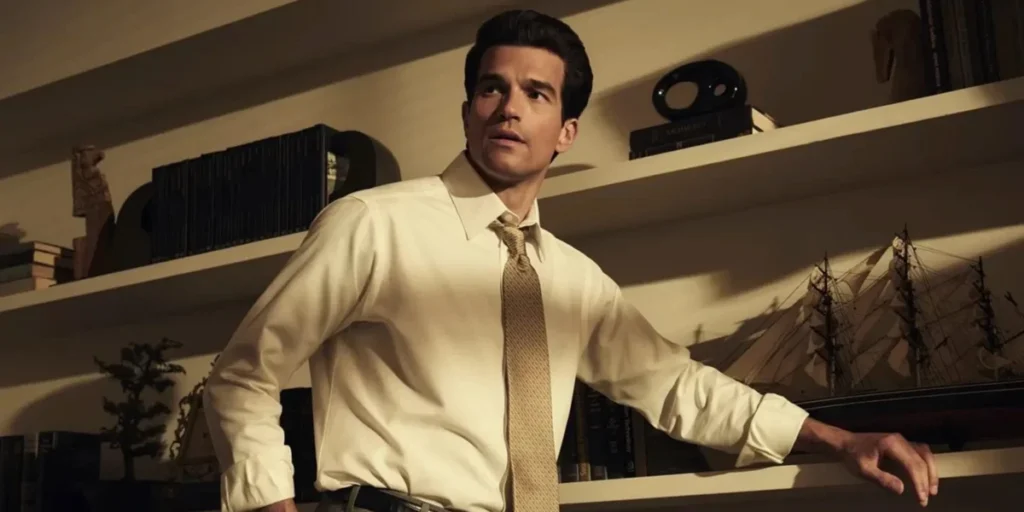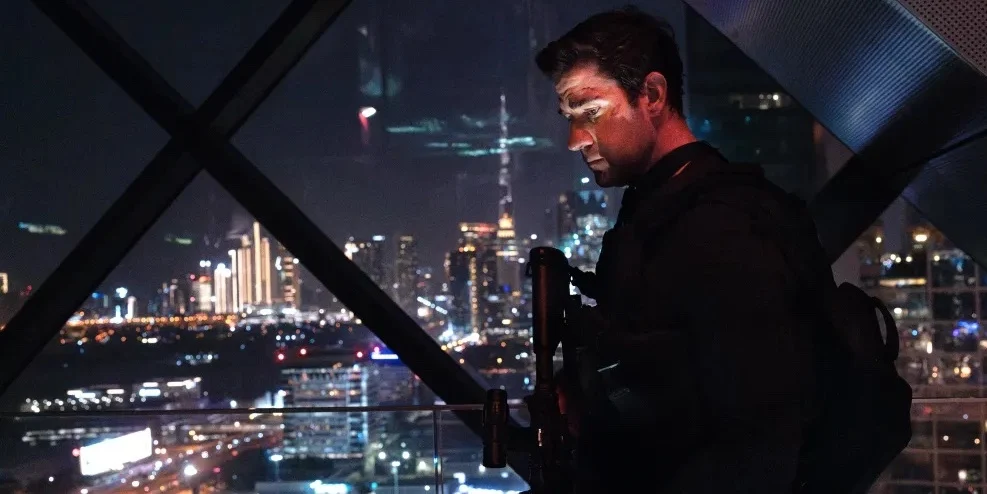
The release of Jack Ryan: Ghost War marks a significant milestone in the modern adaptation of Tom Clancy’s literary works, transitioning the long-running Amazon Prime Video series into a standalone feature film format. Directed by Andrew Bernstein and written by Aaron Rabin alongside lead actor John Krasinski, the film aims to provide a definitive chapter for the titular CIA analyst-turned-field-agent. Following a four-season television run that began in 2018, this 105-minute production seeks to consolidate the narrative threads of the series while introducing a high-stakes geopolitical conflict centered in Dubai. The project reunites core cast members Wendell Pierce and Michael Kelly, while introducing Sienna Miller and Max Beesley to a franchise that has become a cornerstone of contemporary espionage media.
The Transition from Television Series to Feature Film
The journey of John Krasinski’s Jack Ryan has been one of significant transformation, both for the character and the actor. Krasinski, who first gained international fame as Jim Halpert on the American sitcom The Office, underwent a rigorous image rebranding to inhabit the role of a reliable action protagonist. His tenure as Jack Ryan has lasted longer than any of his predecessors, including Alec Baldwin, Harrison Ford, Ben Affleck, and Chris Pine. This longevity allowed for a slow-burn character development across thirty episodes of television, a luxury not afforded to previous cinematic iterations of the character.
Jack Ryan: Ghost War serves as a bridge between the serialized storytelling of the Prime Video era and the traditional blockbuster structure. The decision to move from an eight-episode season format to a 105-minute feature film reflects a shifting strategy in streaming content, where established intellectual properties (IP) are leveraged for "event" programming. While the television series focused on intricate, multi-layered conspiracies that unfolded over several hours, Ghost War condenses its narrative into a more streamlined, action-oriented trajectory. This shift has necessitated a change in pacing, focusing heavily on immediate threats and tactical operations rather than the methodical intelligence gathering that defined earlier seasons.
Chronological Context of the Jack Ryan Character
To understand the significance of Ghost War, one must look at the historical trajectory of the Jack Ryan character in popular culture. Created by novelist Tom Clancy, Ryan first appeared in the 1984 novel The Hunt for Red October. The character was envisioned as an intellectual counterpoint to the era’s more flamboyant spies, relying on historical knowledge and analytical prowess rather than gadgetry or brute force.
- The 1990s Era: Alec Baldwin debuted the character in the 1990 film adaptation of The Hunt for Red October. Harrison Ford subsequently took over the mantle for Patriot Games (1992) and Clear and Present Danger (1994), establishing the character as a family man caught in the crosshairs of international politics.
- The 2000s Reboots: Ben Affleck attempted a younger version of the character in The Sum of All Fears (2002), which updated the Cold War themes for a post-9/11 world. Later, Chris Pine starred in Jack Ryan: Shadow Recruit (2014), an original story not based directly on a Clancy novel, which struggled to launch a sustained franchise.
- The Streaming Era: In 2018, Amazon MGM Studios launched the Jack Ryan television series. By casting Krasinski, the studio aimed to blend the intellectual curiosity of the book version with the physical capabilities required for modern television audiences.
The arrival of Ghost War in the mid-2020s represents the latest evolution, attempting to maintain the grounded realism of the series while delivering the spectacle expected of a feature-length thriller.
Narrative Overview of Jack Ryan: Ghost War
The plot of Ghost War finds Jack Ryan attempting to transition into civilian life in New York City. Following the events of the series’ fourth season, Ryan has sought to distance himself from the moral ambiguities of the intelligence community. However, this period of domesticity is interrupted when James Greer (Wendell Pierce), now serving as the Deputy Director of the CIA, requests Ryan’s assistance for a mission in Dubai. What is initially presented as a routine information exchange quickly escalates into a complex conspiracy involving a rogue special operations soldier named Crowne, portrayed by Max Beesley.
The narrative centers on the resurgence of "Starlight," an unsanctioned, clandestine "kill-squad" that had been thought defunct. As Ryan and his long-time associate Mike November (Michael Kelly) delve deeper into the operation, they discover that the threat is linked to Greer’s own past operations. This personal connection adds a layer of internal conflict to the mission, as the protagonists must navigate a "treacherous web of betrayal" where the enemy appears to have intimate knowledge of the CIA’s tactical protocols. The inclusion of Sienna Miller as Emma Marlow, an MI-6 operative, introduces a third-party perspective to the investigation, highlighting the complexities of international intelligence cooperation.
Performance Analysis and Character Dynamics
A primary draw for the franchise has been the chemistry between John Krasinski and Wendell Pierce. Their dynamic—balancing the mentor-protege relationship with a peer-to-peer friendship—has been a stabilizing force throughout the series. In Ghost War, however, the narrative places these characters at odds, testing their mutual trust as secrets from the past come to light. Analysts of the film have noted that while the intensity remains high, the compressed runtime of a feature film limits the room for the dry, comedic wit that characterized their interactions in earlier seasons.
Michael Kelly’s Mike November continues to serve as the high-functioning, quip-heavy tactical expert. His character provides the necessary physical momentum for the film’s second act, though some critics suggest the character’s development has reached a plateau. Sienna Miller’s performance as Emma Marlow has been highlighted as a sophisticated addition to the ensemble. Marlow is depicted as a stoic, highly capable agent whose motivations are initially obscured, providing a foil to Ryan’s more idealistic approach to espionage.
Despite the strong ensemble, the film faces challenges regarding character growth. Having spent four seasons developing these roles, the feature film format struggles to find new emotional territory to explore. Jack Ryan himself remains a somewhat "stagnant" figure, a criticism that has followed Krasinski’s portrayal. While he is a dependable and capable lead, some industry observers argue he lacks the "gravitas" seen in Harrison Ford’s more vulnerable and weary interpretation of the character.
Technical Direction and Screenwriting Contributions
Director Andrew Bernstein, a veteran of high-end television who has worked on series such as Ozark and The Americans, brings a polished, cinematic aesthetic to Ghost War. The film utilizes its Dubai locations to provide a sense of scale, with cinematography that emphasizes the contrast between the high-tech urban landscape and the surrounding desert. However, the film has faced scrutiny regarding its action sequences. Unlike contemporary peers like the Mission: Impossible or John Wick franchises, Ghost War prioritizes tactical realism over stylized choreography, which can sometimes result in set pieces that feel functional rather than memorable.
The screenplay, co-written by Aaron Rabin and John Krasinski, delves into the "geopolitical nitty-gritty" that is a hallmark of the Tom Clancy brand. The plot involves themes of private military contractors, unsanctioned government programs, and the ethics of preemptive strikes. While the story credit includes Noah Oppenheimer, known for his work on Jackie and The Maze Runner, the final script leans heavily into established spy thriller tropes. Some thematic elements have been described as "cartoonish," particularly the portrayal of the Starlight kill-squad, which leans away from the grounded realism of the show’s first season toward a more conventional "super-soldier" narrative.
Industry Data and the Streaming Landscape
The production of Jack Ryan: Ghost War is a strategic move for Amazon MGM Studios. Following Amazon’s $8.5 billion acquisition of MGM in 2022, the company has sought to maximize its ownership of iconic IPs. The Jack Ryan franchise is one of the most successful properties on the Prime Video platform. According to industry data from Nielsen and internal Amazon metrics, the series consistently ranked among the top original streaming programs during its release windows.
- Viewership Trends: Spy thrillers and military procedurals have shown high "stickiness" for streaming services, appealing to a broad global demographic.
- Production Costs: Feature films derived from existing series are often more cost-effective than launching new IPs, as the sets, costumes, and core cast are already established.
- Market Positioning: Ghost War is positioned to compete with theatrical releases in the same genre, such as the Bourne series or the 007 franchise, despite its primary distribution being digital.
The decision to limit the film to 105 minutes is also a data-driven choice. While "prestige" films often push toward the three-hour mark, action-thrillers intended for streaming often perform better when they maintain a brisk pace, catering to home viewing habits where shorter runtimes correlate with higher completion rates.
Broader Implications for the Tom Clancy Franchise
The release of Ghost War raises questions about the future of the "Ryanverse." Amazon has already expanded the universe with the 2021 film Without Remorse, starring Michael B. Jordan as John Clark, another major character from Clancy’s novels. There have been long-standing rumors of a crossover project or a "Rainbow Six" adaptation that would bring these characters together.
However, the "middling" reception of Ghost War by some critics suggests a potential for franchise fatigue. The challenge for future installments lies in finding fresh perspectives on the espionage genre in an era where real-world geopolitical tensions often eclipse fictional narratives. The film’s tendency to "undo" emotional beats from the series’ final season for the sake of a new conflict is a common pitfall in franchise filmmaking, often leading to a sense of narrative "limbo" for the audience.
As an entry in the Tom Clancy canon, Jack Ryan: Ghost War serves as a competent, if formulaic, extension of a well-loved brand. It reinforces John Krasinski’s status as a modern action star while highlighting the difficulties of transitioning a serialized television narrative back into the constraints of a feature film. For fans of the series, the film offers a familiar reunion with beloved characters; for the broader industry, it serves as a case study in the ongoing evolution of streaming-era franchise management. Whether Jack Ryan will continue to evolve or remain a relic of 20th-century geopolitical storytelling remains to be seen as the studio evaluates the performance of this latest mission.