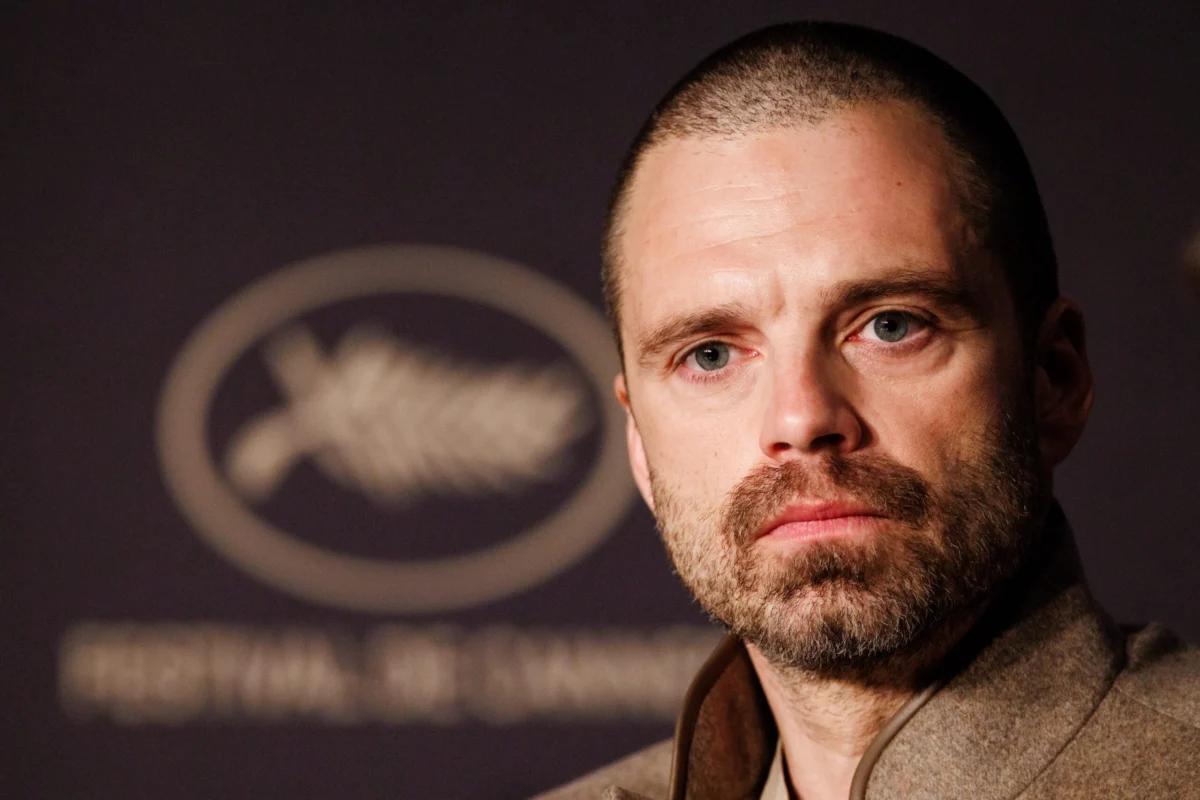
The 77th Cannes Film Festival, a global epicenter for cinematic innovation and cultural discourse, witnessed a profoundly candid and politically charged intervention from actor Sebastian Stan, who leveraged his platform to articulate deep concerns about the current state of global society. Stan, present to promote his critically acclaimed new film Fjord, delivered a somber assessment of contemporary challenges, emphasizing the erosion of free speech, media consolidation, and escalating societal divisions, themes that resonated powerfully given his previous role portraying Donald Trump in The Apprentice. His remarks, made during a Tuesday press conference, underscored a palpable tension between artistic expression and political realities, marking a significant moment in the festival’s ongoing dialogue with the world.
The Lingering Shadow of The Apprentice and its Controversies
Stan’s return to the Croisette came over a year after his previous appearance, where he unveiled The Apprentice, a biographical drama delving into the early career of Donald Trump. That film, which explored Trump’s rise in New York real estate and his complex relationship with mentor Roy Cohn, premiered just months prior to the highly contentious 2024 U.S. presidential election. The timing was anything but coincidental, and the film immediately became a lightning rod for controversy. Stan revealed at the press conference that he is "still purging" from the role, a testament to the intensity and potentially fraught nature of inhabiting such a polarizing public figure.
The production of The Apprentice itself was reportedly plagued by external pressures, hinting at the broader issues Stan would later address. Reports circulated that the film faced significant legal challenges and distribution hurdles, particularly from Donald Trump’s legal team, who reportedly issued cease and desist letters and threatened lawsuits over the film’s depiction of the former president. These challenges created a climate of uncertainty for the filmmakers, who, according to Stan, were unsure if the movie would even screen at Cannes just three days before the festival. This unprecedented situation speaks volumes about the extent to which political sensitivities can impact artistic freedom, even on an international stage like Cannes. The film’s creative team, including director Ali Abbasi and screenwriter Gabriel Sherman, had reportedly worked under immense scrutiny, navigating a landscape where the subject matter alone was enough to trigger significant pushback. Stan’s recollection of these pre-Cannes anxieties painted a vivid picture of the "consolidation of the media, censorship, the threats, the supposed lawsuits that seemingly never end," which he argued were clear indicators of a deteriorating societal environment.
A Sobering Assessment of the Global Climate
When The Hollywood Reporter inquired how his understanding of the president had evolved since his last Cannes visit—a period during which Trump had again assumed the presidency—Stan’s initial reaction was a downward gaze and a shake of the head. This gesture, misinterpreted by many in the press room as an evasion and met with laughter, was quickly clarified by the actor with a fierce, unwavering expression that silenced the room. "It’s just not a laughing matter, to be honest. It isn’t," he stated emphatically. "I think we’re in a really, really bad place. I really do."
Stan’s words were a stark warning, reflecting a growing sentiment among many public figures and citizens regarding the state of democratic discourse. He elaborated on his concerns, pointing to specific phenomena: the increasing consolidation of media ownership, which can limit diverse perspectives and control narratives; overt and subtle acts of censorship, stifling dissenting voices; and the proliferation of legal threats and lawsuits seemingly designed to intimidate or silence critics, often without substantial legal merit but with significant chilling effects. He lamented that "the writing was on the wall" for these trends, suggesting that the challenges faced by The Apprentice were not isolated incidents but symptoms of a wider systemic issue affecting artistic freedom and public discourse. His reference to "Jimmy Kimmel and Stephen Colbert" implied that the public discussion and scrutiny around The Apprentice occurred long before it became a mainstream topic of late-night commentary, highlighting the film’s pioneering, and perhaps painful, encounter with these pressures.
"Fjord": A Deep Dive into the Conflict of Values
In stark contrast to the political firestorm surrounding his previous role, Stan’s latest cinematic endeavor, Cristian Mungiu’s Fjord, explores a different but equally potent societal fault line: the clash between traditional and progressive values. For this role, Stan underwent a dramatic physical transformation, sporting a severely shaved head and a prominent bald spot to embody Mihai, a conservative Christian father of five. The film centers on Mihai’s family, who find themselves entangled with Norway’s child protective services—portrayed as both progressive and "draconian"—sparking intense debates about freedom of speech and freedom of religion. Renate Reinsve stars as Lisbet, the family’s matriarch, completing a cast that grapples with profound ethical dilemmas.
Fjord is not merely a regional drama; it is a meticulously crafted exploration of universal questions. It provocatively asks who is more culpable of imposing their values on others: the traditionalist family steadfast in their faith, even praying in school, or the progressive state apparatus that intervenes by removing their children? This nuanced inquiry resonated deeply with festival-goers, earning the film a remarkable nine-and-a-half-minute standing ovation at its Monday night premiere. Such an enthusiastic reception has positioned Fjord as a formidable front-runner for the prestigious Palme d’Or, the festival’s highest honor, signaling its profound impact on critics and audiences alike.
Cristian Mungiu’s Vision: Unpacking Societal Division
Director Cristian Mungiu, a Palme d’Or laureate himself (for 2007’s 4 Months, 3 Weeks and 2 Days), meticulously crafted Fjord based on extensive research. His inspiration stemmed from years of news reports, particularly those from Norway, detailing instances where children from immigrant families, raised with traditional values, were separated from their parents by state authorities. To ensure authenticity and depth, Mungiu undertook a comprehensive investigative journey, traveling to Norway to conduct interviews with a wide array of stakeholders, including police officials, judges, non-governmental organizations, and journalists. This rigorous approach underscores his commitment to presenting a multifaceted and unbiased portrayal of a deeply complex issue.
Mungiu articulated his driving motivation during the press conference: "What I really wish to do, like always, is speak about something that I consider to be one of the most important issues in our contemporary global society, which is this conflict of values, and especially between these kind of traditional values and these progressive values." He lamented the observable outcome of this conflict: "And we see that this led to the splitting of the society into groups of people that really detest each other. We say that nowadays we live in a global world, but we couldn’t be more divided." The director emphasized that the film’s thematic resonance extends far beyond the borders of Romania and Norway, encompassing societies like the U.S. and France, which are similarly grappling with profound ideological cleavages. He issued a pointed challenge to progressive societies, urging them to "doubt every now and then about the values that you wish to impose on others. If they are this good, you need to convince them not to impose them." This statement serves as a potent call for dialogue and understanding over coercion, advocating for persuasion rather than imposition in the realm of deeply held beliefs.
A Personal Journey for Sebastian Stan
For Sebastian Stan, Fjord represented more than just another acting role; it was a deeply personal quest. Born in Romania, Stan’s early life was marked by displacement, moving first to Vienna with his single mother, a pianist, before eventually settling in Rockland County, New York, where he learned English. This journey instilled in him a desire to reconnect with his roots. "Personally, certainly, it’s been a journey for me to reconnect with Romania," he shared. "I left in a very chaotic way and I’ve really tried to educate myself about the country, and I found through film I can learn more easily."
His admiration for Mungiu’s work long predates Fjord. Stan recounted taking his mother to see Mungiu’s 2016 film Graduation at the New York Film Festival, cementing his respect for the director’s unique cinematic voice. The opportunity to work with Mungiu and to speak Romanian on screen was a significant draw. For research, Stan and co-star Renate Reinsve immersed themselves in the world of Pentecostal churches, gaining firsthand insight into the community depicted in the film. Beyond external research, Stan found a profound connection to the character through his own upbringing. "Even though my time really was split between America, Vienna, and Romania, I still grew up with pretty traditional Romanian upbringings, and so I kind of understood a lot of what was going on in the script," he explained, highlighting the authentic foundation of his performance.
Parenthood and the Weight of Values
The themes of upbringing, family values, and the intergenerational transmission of beliefs resonated particularly deeply with Stan due to a recent personal development. Just one night before Fjord‘s premiere, at the Kering Women in Motion dinner, Stan and his girlfriend, Annabelle Wallis, revealed they are expecting their first child. This impending parenthood has naturally amplified his reflections on the film’s core questions.
"I’ve been reflecting about having children and trying to understand what it means to be a parent in today’s world, and so that fueled a lot of things," Stan admitted. This personal context adds another layer of emotional weight to his portrayal of Mihai, a father fiercely protective of his children and his family’s traditional values in the face of external pressures. The intersection of his personal journey towards fatherhood and his professional engagement with a film about the complexities of parenting in a divided world underscores the profound impact Fjord has had on the actor.
Art as a Catalyst for Conversation Against Discrimination
During the press conference, a Spanish journalist posed a question about experiencing ostracization due to accent or language skills. Stan deftly broadened the scope of the inquiry, framing it within the larger issue of discrimination. "I think you’re talking about discrimination, right, on all levels, which is sort of happening around all of us," he replied, recognizing the universal nature of the concern.
He then posed a rhetorical question to the room: "I mean, how are we all dealing with it?" His answer offered a personal philosophy: "I think the only way to do it is just to remain as honest as possible, and to think about your own morals and your own values, and to be the example that you, that you want to see in the world." This statement emphasizes individual responsibility and ethical conviction as antidotes to societal prejudice.
Stan also reflected on his role as an actor in addressing these profound issues. Acknowledging the limitations of his profession, he stated, "I’m an actor — whatever — but I’m not on the front lines, I’m not in an operating room, I’m not being shot at." However, he quickly asserted the unique power of his medium: "But this is my medium, this is my lane, and all I can do is try to involve myself in movies that bring up conversations and different points of view." He recalled a profound quote about art, suggesting that its purpose is not necessarily to solve problems, but rather to "embody them correctly." This philosophy, he argued, is crucial for fostering meaningful dialogue and challenging prevailing narratives. "And I think as long as we can continue to do that fearlessly, then I think we can actually push back against those things," Stan concluded, advocating for a courageous and unyielding artistic pursuit of truth, even in the face of intense societal and political pressure.
Broader Implications and the Role of Cannes
Sebastian Stan’s powerful statements and the resonant themes of Fjord highlight the enduring significance of the Cannes Film Festival as more than just a showcase for cinema. It serves as a vital international platform where art directly intersects with global sociopolitical realities. Both The Apprentice and Fjord, though vastly different in their narratives, tap into deep-seated anxieties of the modern era: the fragility of democratic institutions, the polarization of political discourse, and the clashing ideologies that divide societies.
The challenges faced by The Apprentice underscore the increasing difficulty of creating politically charged art without incurring significant pushback, particularly when the subject matter is a powerful, litigious figure. This raises critical questions about freedom of expression in an increasingly sensitive and politically charged world. Conversely, Fjord‘s overwhelmingly positive reception at Cannes, and its strong contender status for the Palme d’Or, demonstrates the festival’s continued embrace of films that bravely confront complex societal issues, even when they provoke uncomfortable introspection.
Stan’s dual presence at Cannes, first with a film that provoked political ire and now with one that elicits profound moral and ethical debate, positions him as an actor willing to engage with the most pressing issues of our time. His personal reflections, informed by his heritage and impending fatherhood, add a layer of authenticity to his advocacy for art as a means of fostering understanding and challenging discrimination. The dialogue sparked by Stan and Mungiu at Cannes reverberates far beyond the Croisette, inviting audiences worldwide to engage with the difficult but necessary conversations about values, freedom, and the future of a deeply divided global society.