The Genesis and Evolution: A Chronology of Serialization
The initial launch of "Every Adventure Needs a Weapon!" in Monthly Action in December 2023 positioned it within a competitive landscape of seinen manga, targeting adult male demographics with its blend of fantasy, adventure, and humor. Monthly Action, a respected publication by Futabasha, had a history of hosting diverse and innovative titles. However, the print manga magazine market has faced increasing pressures in recent years, including declining print sales, rising production costs, and the surging popularity of digital platforms. These macroeconomic factors often lead publishers to re-evaluate their portfolios and distribution channels.
The announcement in February 2024 of Monthly Action‘s disbandment sent ripples through the industry, affecting several ongoing series. For "Every Adventure Needs a Weapon!", this development necessitated a rapid strategic pivot. Futabasha, demonstrating its commitment to its creators and their works, facilitated the transfer of the series to its Web Comic Action platform by April 2024. This move not only ensured the continuity of Madoguchimoto’s work but also placed it squarely within the burgeoning ecosystem of digital manga, where accessibility and direct reader engagement often thrive. The transition from a monthly print schedule to a potentially more flexible web serialization model can offer creators new freedoms and opportunities for direct interaction with their readership, while also reaching a wider, digitally native audience.
Unpacking the Premise: Rudy’s Inventive Quest in Whale’s Maw
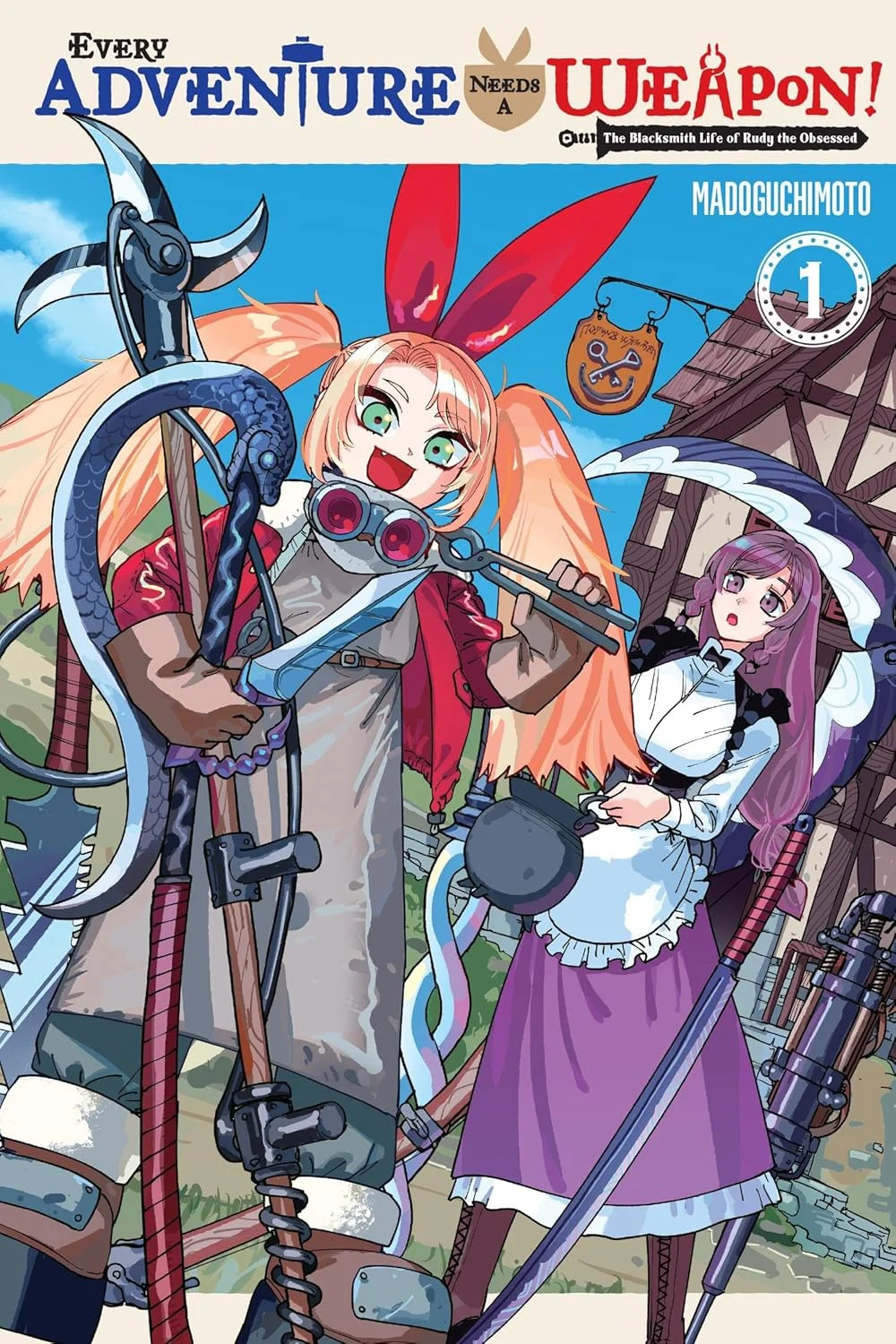
At the heart of "Every Adventure Needs a Weapon!" lies the compelling protagonist, Rudy, an apprentice at a hardware shop whose true passion and prodigious talent lie in the creation of highly unconventional, borderline impossible weapons for adventurers. Much to the chagrin of her pragmatic boss, Rudy dedicates the bulk of her time to her fantastical blacksmithing endeavors. Her daily life unfolds in Whale’s Maw, a bustling dungeon town teeming with adventurers, a setting ripe for both peril and opportunity. Rudy firmly believes that these seasoned explorers would achieve far greater success if they abandoned their "basic" armaments in favor of her imaginative, if aesthetically eccentric, creations.
The core comedic and narrative tension arises from Rudy’s struggle to convince potential customers at her side stall. Her weapons, often described as looking like "something a kid would dream of," are perceived as utterly impractical by the battle-hardened adventurers. This perception clashes directly with Rudy’s unwavering conviction in their efficacy. Determined to validate her unique approach, Rudy embarks on a solo expedition into a dangerous dungeon. It is during this perilous venture that she encounters Solophia, a legendary elf fighter and commander, who intervenes to save Rudy from an attack. This pivotal interaction ignites Rudy’s enthusiasm even further, fueling her resolve and leading her to involve her only friend, Nico, a cook at her mother’s tavern, in her escalating "shenanigans."
The narrative gains significant momentum when a formidable female adventurer presents Rudy with a commission for a weapon that truly appears impossible to forge. This challenge serves as a crucial turning point, pushing Rudy’s creativity and resolve to their limits, and promising to be the catalyst for her eventual recognition. The detailed world-building of Whale’s Maw, combined with the distinct personalities of its inhabitants, creates a vibrant backdrop for Rudy’s journey of self-discovery and innovation.
Madoguchimoto’s Vision: Art, Humor, and Thematic Depth
Madoguchimoto’s "Every Adventure Needs a Weapon!" has drawn comparisons, particularly in its thematic approach, to popular series like Ryoko Kui’s "Delicious in Dungeon." While "Delicious in Dungeon" ingeniously focuses on the culinary preparation of dungeon monsters, Madoguchimoto’s work shifts the spotlight to weapon crafting within a similar fantasy-dungeon context. This focus on the "preparation" aspect rather than solely on direct combat is a refreshing take on the dungeon-crawler genre, appealing to readers who appreciate world-building and character-driven narratives alongside action.
One of the primary wellsprings of comedy in the series is the sheer ludicrousness of Rudy’s weapon designs. These creations, often defying conventional logic and physics, provide ample opportunities for visual gags and humorous character reactions. The second major comedic element stems from the dynamic between Rudy and her boss – a classic master-apprentice relationship characterized by the boss’s oscillating emotions of exasperation, understanding, and undeniable pride in his disciple’s unorthodox genius. This interplay adds a layer of warmth and human connection to the narrative, grounding the fantastical elements in relatable emotional experiences.
The manga’s emphasis on preparation over explicit battles, while not entirely neglecting action sequences, allows for a deeper exploration of its unique premise. The two major battles depicted in the initial volume are crafted with impressive detail, demonstrating Madoguchimoto’s ability to deliver impactful action when necessary. A notable structural and artistic choice is the detailed presentation of food preparation – a subtle nod to the genre’s broader influences – and the consistent ending of each chapter with an analytical breakdown of both the monster encountered and the weapon utilized or created. This analytical segment serves as a clever narrative device, offering readers deeper insights into the world’s mechanics and Rudy’s inventive process.
Thematically, the series subtly explores profound concepts. While not overtly didactic, the overarching message underscores the value of chasing one’s dreams with unwavering passion. Rudy’s intense obsession with creating the perfect, albeit unconventional, weapons serves as a metaphor for how deep dedication to a specific craft or vision can ultimately lead to greatness and recognition, even when initially met with skepticism. This narrative arc is particularly resonant in creative industries, where innovation often challenges established norms.
Artistic Execution and Readability
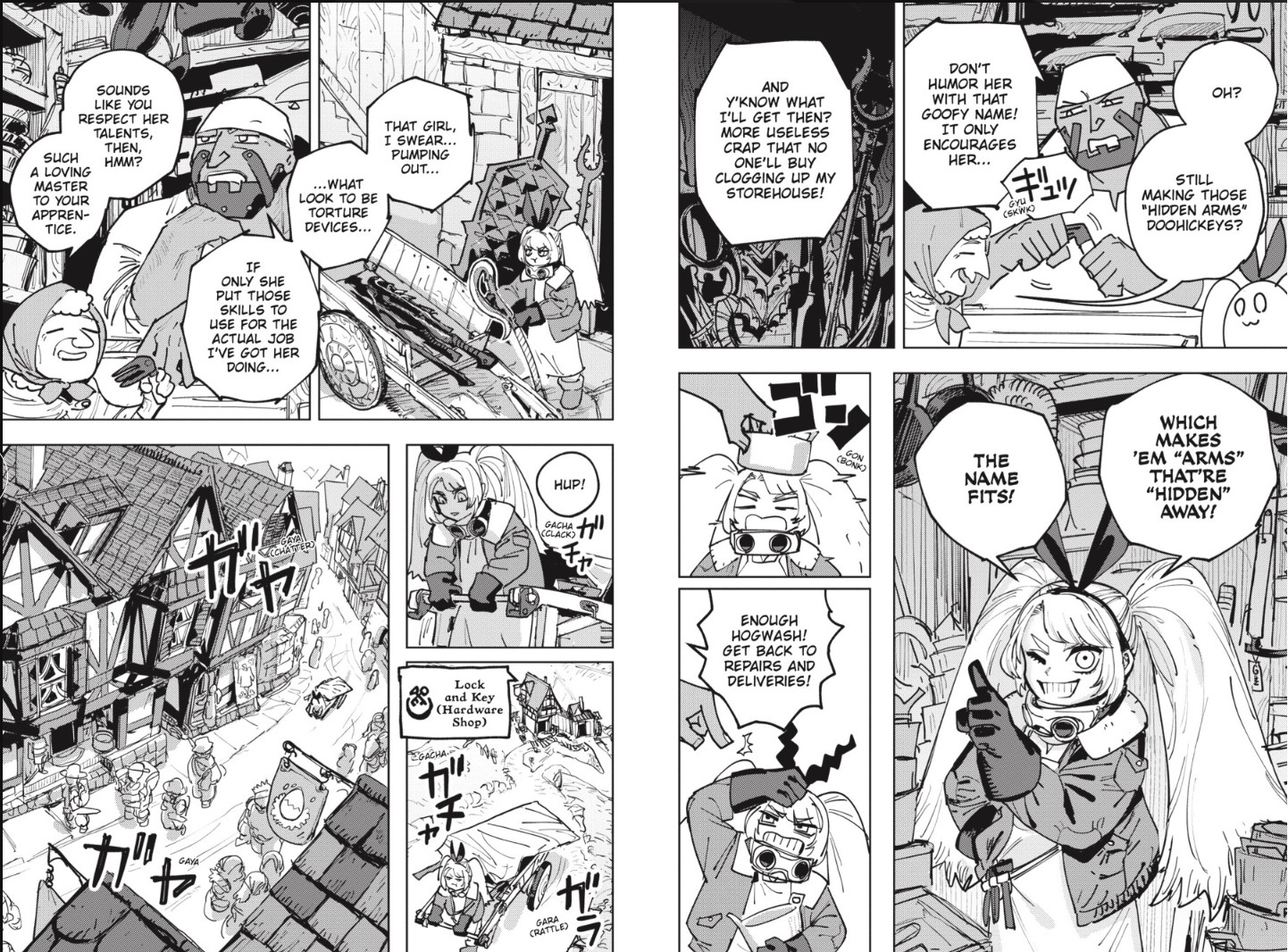
Madoguchimoto’s artistic style is characterized by small, densely packed panels, rich with intricate details and dialogue. While this can occasionally become visually demanding, potentially leading to a "tiresome" reading experience for some, it also contributes to the immersive quality of the world. However, the series demonstrates its artistic versatility in one of its most compelling chapters, which delves into Rudy’s mother’s past and childhood. This chapter features a series of truly impressive one-page spreads, showcasing Madoguchimoto’s capacity for expansive and impactful visual storytelling. These singular pages stand out as a highlight, demonstrating a mastery of composition and emotional conveyance.
The character designs are meticulously detailed, incorporating subtle exaggerations that contribute to the manga’s overall whimsical yet grounded aesthetic. The monsters, in particular, benefit from these artistic exaggerations, perfectly aligning with the series’ humorous and fantastical tone. This consistent art direction ensures that the visual elements complement the narrative, enhancing both the comedic timing and the emotional weight of various scenes.
The Landscape of Manga Publishing: Futabasha’s Strategy and Yen Press’s Role
The transition of "Every Adventure Needs a Weapon!" from a print magazine to a digital platform by Futabasha reflects a broader trend in the Japanese publishing industry. Many traditional publishers are increasingly investing in and prioritizing their digital divisions to adapt to changing consumer habits. The cost-effectiveness, wider reach, and potential for more flexible content delivery of web-based manga are undeniable advantages. For Futabasha, ensuring the continuity of a promising new series like Madoguchimoto’s on Web Comic Action is a strategic move to nurture talent and retain intellectual property within its ecosystem, even as print publications face headwinds. This approach helps maintain reader engagement and builds a loyal following for the title in its new format.
Yen Press’s decision to release the English version of "Every Adventure Needs a Weapon!" underscores its position as a major player in bringing diverse Japanese manga to Western audiences. Known for its extensive catalog spanning various genres, Yen Press has a keen eye for titles that resonate with the global market. The selection of this series likely stems from its unique premise, its blend of popular fantasy elements with slice-of-life and crafting themes, and its demonstrated ability to adapt to changing publishing landscapes in Japan. Yen Press’s role is critical in facilitating the global expansion of manga, making these stories accessible to a non-Japanese speaking readership through high-quality translations and distribution.
Industry Reactions and Broader Implications
While specific official statements from Madoguchimoto regarding the English release are not yet widely available, authors typically express immense gratitude and excitement for the opportunity to share their work with a global audience. The successful transition from print to web serialization, followed by an international release, is a testament to the series’ inherent appeal and the creator’s vision. A hypothetical statement from Madoguchimoto might highlight the challenges of the initial serialization shift and the renewed vigor found in the digital space, coupled with immense pride in seeing Rudy’s adventures reach new shores.
A spokesperson from Futabasha might emphasize the company’s commitment to supporting its creators through evolving industry models, noting the successful digital transfer as an example of adaptability and foresight. The move to Web Comic Action ensures that titles with growing fanbases can continue to flourish, maintaining the integrity of the creative work.
From Yen Press’s perspective, a representative might articulate the strategic appeal of "Every Adventure Needs a Weapon!". They might point to the increasing demand for unique fantasy narratives that blend action with humor and heartwarming character development. The series’ distinct focus on crafting, reminiscent of the popular "isekai" subgenre’s emphasis on skills and world-building, makes it a strong candidate for success in the competitive English manga market. Its underlying themes of pursuing dreams and finding value in unconventional paths also resonate broadly.
The broader implications of this release are significant. It further solidifies the trend of manga transcending traditional print boundaries, with digital platforms playing an increasingly vital role in discovery and sustained serialization. It also highlights the growing sophistication of the global manga market, which is now receptive to a wider array of genres and narrative approaches beyond the traditionally dominant action-adventure titles. The success of titles like "Every Adventure Needs a Weapon!" demonstrates that niche concepts, when executed with creativity and charm, can achieve widespread appeal and contribute to the rich tapestry of international comics. This hybrid publishing model—beginning in print, transitioning to digital, and then expanding globally—may well become a blueprint for future manga releases, ensuring longevity and maximum audience reach.
Target Audience and Market Reception
"Every Adventure Needs a Weapon!" is poised to appeal to a diverse readership. Its overall approach, characterized by a lighthearted tone, vibrant art, and accessible themes, points towards a younger audience who will appreciate the imaginative escapism and humorous situations. However, its sophisticated world-building and character dynamics also make it suitable for older readers who enjoy fantasy dungeon crawlers infused with a strong comedic sensibility. Fans of "crafting" or "skill-based" fantasy narratives, a popular subgenre often seen in light novels and manga, will find much to appreciate in Rudy’s dedicated pursuit of blacksmithing innovation. The blend of adventure, comedy, and a touch of heartwarming character interaction ensures that the series carves out a distinct niche within the crowded fantasy manga market.
In conclusion, "Every Adventure Needs a Weapon!" by Madoguchimoto represents a compelling new entry into the fantasy manga landscape. Its journey from print to digital serialization in Japan, culminating in its English release by Yen Press, is a testament to its unique appeal and the adaptability of modern publishing. With its endearing protagonist, imaginative premise, and blend of humor and heartfelt themes, the series is well-positioned to captivate a global audience and stands as a vibrant example of the evolving and expanding world of manga.