The feature film directorial debut of Academy Award nominee Andy Garcia, titled Diamond, represents a culmination of nearly two decades of creative development, merging the aesthetics of classic hard-boiled detective fiction with the complexities of contemporary Los Angeles. Garcia, who also stars in the titular role and serves as the film’s writer, has crafted a narrative that functions as both a genre-specific homage and a psychological exploration of escapism. At age 70, Garcia’s transition to the director’s chair marks a significant milestone in a career defined by performances in iconic films such as The Godfather Part III and Ocean’s Eleven. Diamond, a 118-minute neo-noir, introduces audiences to Joe Diamond, a private investigator who exists in a self-imposed temporal displacement, operating by the codes of 1940s cinema within the high-tech landscape of modern-day California.
The Narrative Framework and Character Archetypes
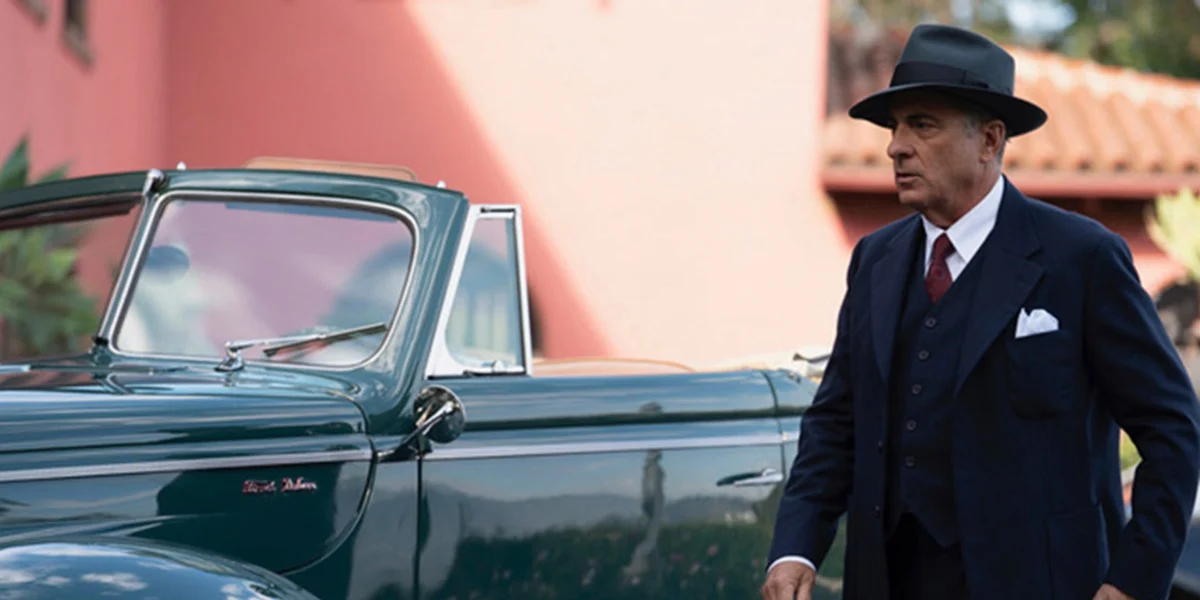
The story centers on Joe Diamond, a man whose reputation as an "urban legend" precedes him in the digital sphere, despite his personal refusal to engage with modern technology. The film’s introduction establishes Diamond’s routine within a spartan, brick-walled apartment, where the protagonist adheres to a ritualistic preparation involving vintage attire, a fedora, and a complete absence of mobile communication. This psychological anchoring in the past is the film’s primary engine; Diamond views himself as a traditional gumshoe, driving a classic vehicle and operating out of a period-accurate office staffed by a traditional secretary.
The central conflict arises when Diamond is retained by Sharon Cobbs, portrayed by Vicky Krieps, a wealthy woman whose husband has been found murdered. The Los Angeles Police Department, represented by Detective Danny McVicar—played by Brendan Fraser—initially views the case as a straightforward investigation with Cobbs as the primary suspect. Diamond’s involvement introduces a friction between modern forensic methodology and his own intuitive, "old-school" observation skills. While the police rely on data and conventional procedure, Diamond utilizes a combination of street smarts, interpersonal charm, and a refusal to accept the surface-level reality of the crime.
A Decades-Long Development Timeline
The genesis of Diamond dates back approximately 20 years, originating from a domestic academic setting. Garcia has noted in production interviews that the character of Joe Diamond first emerged while he was assisting his daughter with a high school assignment focused on the works of Raymond Chandler and the tropes of noir storytelling. This exercise in genre study led to improvised scenes and voiceover narrations that Garcia preserved for two decades.
The long gestation period of the project is evident in the "lived-in" quality of the protagonist. Industry analysts note that such passion projects often undergo significant evolution; in this case, the character of Joe Diamond transitioned from a stylistic exercise into a vehicle for Garcia to explore themes of aging, memory, and the comfort of nostalgia. The film’s dialogue, which features a blend of scripted noir-speak and more naturalistic modern exchanges, reflects this long-term refinement process.
Strategic Casting and Ensemble Dynamics
One of the film’s most notable attributes is its high-profile ensemble cast, which Garcia leveraged through his extensive industry connections. The casting of Brendan Fraser as Danny "Danny Boy" McVicar follows the actor’s recent career resurgence, providing a grounded, modern foil to Garcia’s stylized protagonist. The inclusion of veteran actors such as Dustin Hoffman and Bill Murray adds a layer of "old Hollywood" gravitas to the production.
Hoffman portrays Dr. Harry Kleiman, a local coroner whose interactions with Diamond provide both levity and technical exposition. Bill Murray appears as Jimbo, a character who serves as both Diamond’s legal counsel and his bartender, embodying the blurred lines of professional and personal loyalty common in the noir genre. The supporting cast is rounded out by Rosemarie DeWitt as a mysterious figure named Angel, Danny Huston as a high-stakes lawyer, and Demián Bichir as a gardener caught in the crosshairs of the investigation. While the film is centered on Garcia’s performance, the presence of these established performers creates a textured social environment that validates Diamond’s eccentricities.
Production Logistics and Visual Language
Despite the film’s expansive feel and high-caliber cast, Diamond was produced on a disciplined schedule, with principal photography completed in just 25 days. This rapid production required a highly efficient approach to location scouting and cinematography. Working with cinematographer Tim Suhrstedt, Garcia utilized dozens of authentic Los Angeles locations to establish the city as a primary character.
The visual style of Diamond draws heavily from non-cinematic influences, including the melancholic urban realism of painter Edward Hopper and the high-contrast street photography of Fan Ho. By utilizing natural lighting and practical light sources, Suhrstedt and Garcia sought to evoke the atmosphere of classic 35mm film while shooting on modern digital formats. The result is a visual palette that emphasizes the shadows of downtown Los Angeles, creating a bridge between the grit of the modern city and the romanticized "City of Angels" found in mid-century cinema.
The auditory landscape of the film is equally intentional. The score, a collaboration between Garcia and renowned jazz musician Arturo Sandoval, features muted trumpets and classic jazz cues. This musical choice serves as a psychological barrier, reinforcing Diamond’s isolation from the contemporary world and maintaining a dreamlike, rhythmic pace that diverges from the aggressive soundtracks typical of modern crime thrillers.
Critical Analysis: Genre Subversion and Thematic Depth
While Diamond utilizes the framework of a murder mystery, critics and industry observers have noted that the film eventually pivots into a character study regarding trauma and the human psyche. The "mystery" of Sharon Cobbs’ husband serves as a secondary concern to the mystery of Joe Diamond himself. This shift in focus has been identified as a potential point of contention for audiences expecting a traditional procedural climax.
A pivotal moment in the film involves an off-screen altercation where Diamond is injured. The decision to keep the violence off-camera—revealing only the aftermath—serves as a narrative device that emphasizes Diamond’s internal experience over external action. This choice highlights the film’s ultimate theme: the use of fantasy as a defense mechanism against a reality that has become too painful to inhabit. As the narrative progresses, the "sloppy" construction noted by some early viewers is revealed to be an intentional reflection of the protagonist’s fractured state of mind.
Broader Implications for the Neo-Noir Genre
The release of Diamond arrives at a time when mid-budget, character-driven dramas are increasingly rare in the theatrical market, often finding homes on streaming platforms instead. Garcia’s insistence on a traditional noir aesthetic, combined with a cast of veteran actors, positions the film as a niche offering for an older demographic that retains an affinity for the cinematic styles of the 1970s and 1980s.
Furthermore, the film contributes to the ongoing evolution of "Los Angeles Noir," a subgenre that includes landmarks like The Big Sleep, Chinatown, and L.A. Confidential. By setting the story in the present day but stripping away the digital infrastructure of the 21st century, Garcia explores the "anachronistic man" trope in a way that feels uniquely personal. The film’s moderate pacing and lack of overt violence differentiate it from the "neo-noir" action hybrids currently popular in global cinema, such as the John Wick franchise.
Conclusion and Market Reception
Diamond stands as a testament to Andy Garcia’s enduring commitment to a specific era of storytelling. While the film’s narrative momentum may fluctuate, the sincerity of its execution and the depth of its central performance provide a compelling argument for the continued relevance of the noir genre. The project demonstrates that even within the constraints of a 25-day shoot, a clear directorial vision can produce a film that feels both expansive and intimate.
As Diamond enters the distribution cycle, its success will likely be measured not just by box office returns, but by its ability to resonate with audiences who value atmospheric, actor-driven cinema. It is a film that, much like its protagonist, refuses to conform to the frantic pace of the modern era, choosing instead to dwell in the shadows of a romanticized past. For Garcia, Diamond is more than a directorial debut; it is a twenty-year labor of love that serves as a tribute to the icons of the genre and a nuanced exploration of the masks people wear to survive the present.