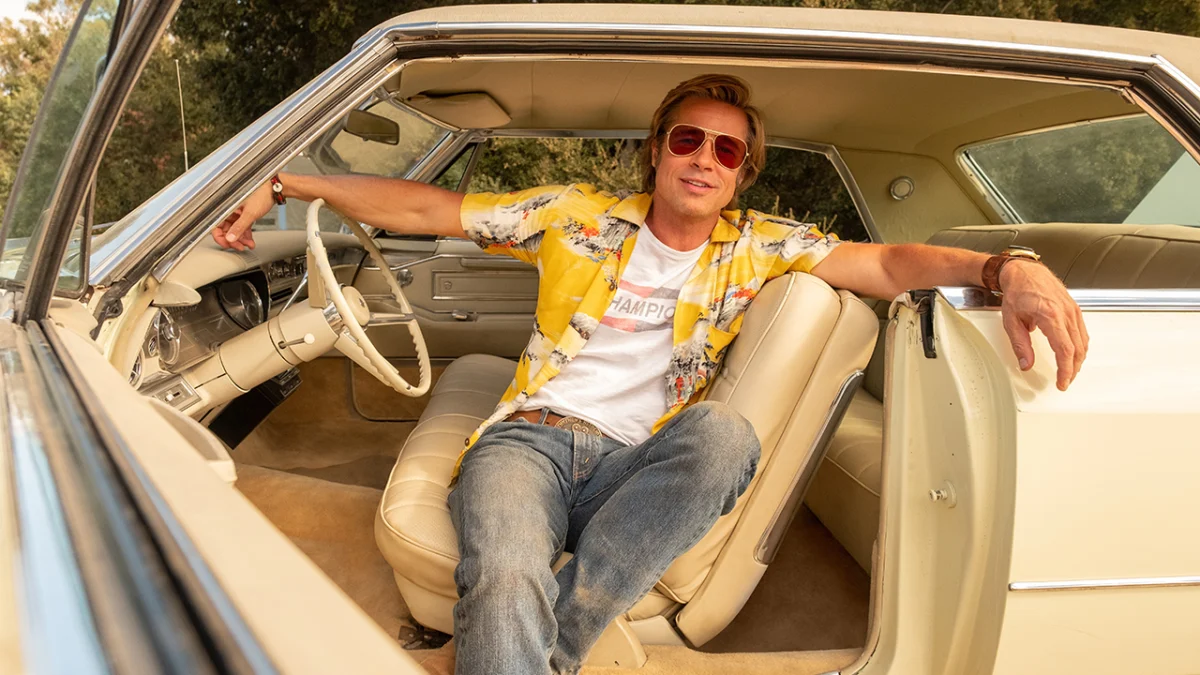
In what is poised to be one of the most anticipated cinematic events of the coming years, streaming giant Netflix has officially confirmed a groundbreaking collaboration that unites two of modern cinema’s most acclaimed auteurs, David Fincher and Quentin Tarantino, with Academy Award-winning actor Brad Pitt. Pitt is set to reprise his iconic, Oscar-winning role as stuntman Cliff Booth from Tarantino’s 2019 critically acclaimed film, Once Upon a Time… in Hollywood, for a new feature film. While the official title remains under wraps, the project is slated for a high-profile holiday release in 2026, including an exclusive theatrical window.
This unprecedented team-up signals a significant strategic move for Netflix, securing a project that combines formidable directorial talent, a beloved character from a recent hit, and an A-list star. The film, which has been the subject of industry whispers for months, will transport audiences to 1977 Hollywood, offering a fresh yet familiar landscape for Booth’s continued adventures.
A Convergence of Cinematic Titans
The convergence of David Fincher, known for his meticulous direction, dark psychological thrillers, and visually arresting narratives, with Quentin Tarantino, celebrated for his distinctive dialogue, non-linear storytelling, and encyclopedic knowledge of film history, is a monumental development for cinephiles worldwide. Adding Brad Pitt, an actor with whom both directors have achieved significant critical and commercial success, elevates the project to a rare pedigree.
Fincher, whose filmography includes masterpieces like Seven, Fight Club, Zodiac, and The Social Network, has a long-standing creative relationship with Pitt, having collaborated on several of these seminal works. His directorial style is characterized by a precise, often grim aesthetic and a deep exploration of human psychology, often through the lens of crime or societal dysfunction. His move to Netflix for projects like Mindhunter and Mank has demonstrated his comfort and capability within the streaming environment, allowing for creative freedom often unattainable in traditional studio systems.
Quentin Tarantino, meanwhile, stands as a singular voice in contemporary cinema, with films such as Pulp Fiction, Reservoir Dogs, Inglourious Basterds, and Django Unchained having redefined cinematic language. His screenplays are renowned for their sharp, witty, and often lengthy dialogues, intricate plotting, and a distinctive blend of homage and original vision. The decision to pen a continuation of a character from Once Upon a Time… in Hollywood, a film that earned him an Academy Award nomination for Best Director and Best Original Screenplay, speaks volumes about his connection to the character of Cliff Booth.
Cliff Booth: A Return to the Anti-Hero
Brad Pitt’s portrayal of Cliff Booth in Once Upon a Time… in Hollywood earned him the Academy Award for Best Supporting Actor, lauded for its nuanced depiction of a loyal, stoic, yet morally ambiguous stuntman navigating the changing landscape of late 1960s Los Angeles. Booth served as the unflappable best friend and stunt double to fading Western star Rick Dalton (Leonardo DiCaprio), embodying a bygone era of Hollywood machismo and loyalty. His character’s mysterious past, combat skills, and effortless cool resonated deeply with audiences and critics alike.
The official logline released by Netflix succinctly sets the stage: "Brad Pitt returns to his Academy Award-winning role as Cliff Booth, only this time it’s 1977 and it’s a very different Hollywood." The shift to 1977 is crucial, placing Booth in an era vastly different from the one he navigated in the original film. The late 1970s in Hollywood was a period of significant transition – the decline of the New Hollywood auteur era, the rise of blockbuster filmmaking with Jaws and Star Wars, the changing social mores, and the burgeoning punk and disco scenes. How Booth, a man seemingly out of time even in 1969, will adapt or clash with this new cultural and cinematic landscape promises rich narrative possibilities. This temporal leap allows Tarantino to explore new themes and Fincher to craft a distinct visual and atmospheric palette, moving beyond the nostalgic glow of 1969.
Strategic Release and Theatrical Ambitions
Netflix is implementing an unconventional release strategy for this high-profile project, signaling a flexible approach to its distribution model for tentpole features. The film will first debut with an exclusive two-week global engagement in IMAX theaters, commencing on November 25, 2026. This limited theatrical run will precede its worldwide streaming debut on Netflix on December 23, 2026.
This two-tiered release schedule is a significant deviation from Netflix’s traditional straight-to-streaming model. It underscores the company’s evolving strategy to cater to filmmakers who desire a theatrical experience for their work, while still prioritizing its subscription service. The choice of IMAX specifically highlights the film’s presumed cinematic grandeur and its appeal to "cinephiles," as noted by industry sources. It also allows the film to qualify for major awards, a factor increasingly important for streamers seeking critical validation.
The December 23rd streaming date is particularly noteworthy, as it was the slot initially reserved for Greta Gerwig’s highly anticipated The Chronicles of Narnia: The Magician’s Nephew. With the Narnia adaptation reportedly moving to an "eventized" full theatrical release in early 2027, the prime holiday viewing window became available. This strategic maneuver allows the Fincher-Tarantino collaboration to capitalize on maximum viewership during the lucrative Christmas and New Year period, a time when family viewing and high-profile entertainment are in peak demand. Industry analysts suggest this move indicates Netflix’s willingness to leverage prime theatrical slots for projects that warrant the big screen, even if only for a limited window, signaling a pragmatic and less dogmatic approach to their theatrical policy. While this strategy is being employed for this specific title, sources emphasize it does not represent a permanent overhaul of Netflix’s broader theatrical release strategy but rather a tailored approach for a film that "demands the biggest screen possible."
Production Details and Creative Team
Behind the camera, David Fincher is bringing his trusted team of collaborators, ensuring the signature aesthetic and production quality associated with his work. The film is being produced by Fincher’s long-time producing partner Ceán Chaffin, alongside Brad Pitt himself, who has a strong track record as a producer through his company Plan B Entertainment.
While specific crew names beyond the producers were not fully detailed in the initial announcement, the expectation is that Fincher will reunite with key personnel responsible for his distinct visual and sonic landscapes. This typically includes acclaimed cinematographers, production designers, and editors who contribute to his meticulous and immersive filmmaking style. The synergy between Fincher’s precise technical approach and Tarantino’s vibrant narrative vision is expected to yield a unique cinematic experience, blending Fincher’s atmospheric tension with Tarantino’s character-driven storytelling.
Further casting announcements are expected in the coming months. While Brad Pitt is confirmed to lead, the collaborative history of Fincher and Tarantino suggests a high likelihood of a stellar ensemble cast, potentially featuring actors who have worked with either director in the past. The presence of such a high-caliber team, both in front of and behind the camera, reinforces the project’s status as a major awards contender and a significant cultural event.
Contextualizing 1977 Hollywood
The decision to set the film in 1977 is ripe with narrative potential. By this point, the counterculture idealism of the late 1960s had largely faded, replaced by economic anxieties, the rise of disco and punk rock, and a shift in cinematic tastes. The gritty realism of New Hollywood was giving way to the spectacle of blockbusters. Figures like Francis Ford Coppola and Martin Scorsese, who had dominated the early 70s, were still active, but the industry was changing rapidly.
For Cliff Booth, a character firmly rooted in a slightly earlier era of Hollywood, 1977 would present a bewildering new landscape. The studio system he knew would be further eroded, stunt work might be evolving with new technologies, and the social fabric would have changed dramatically. This setting allows for exploration of themes such as aging in a youth-obsessed industry, the struggle for relevance, and the cultural clashes between generations. Tarantino’s love for period detail and Fincher’s ability to craft atmospheric worlds will undoubtedly bring 1977 Hollywood to vivid, authentic life, much as Once Upon a Time… in Hollywood meticulously recreated 1969 Los Angeles.
Implications for Netflix and the Industry
This collaboration represents a significant coup for Netflix, reinforcing its commitment to attracting top-tier talent and producing prestige content. By securing a project with the combined star power of Fincher, Tarantino, and Pitt, Netflix not only enhances its subscriber appeal but also strengthens its position as a legitimate player in the high-end film production landscape, directly competing with traditional studios for major cinematic events.
The hybrid release strategy, particularly the IMAX window, could serve as a litmus test for future Netflix tentpoles. If successful, it might encourage more filmmakers to bring their ambitious projects to the streamer, knowing that a theatrical component is a possibility. It also highlights the growing fluidity between traditional theatrical distribution and streaming platforms, with boundaries becoming increasingly blurred as companies adapt to changing consumer habits and industry demands.
Furthermore, the project’s potential impact on the awards season cannot be overstated. With Fincher’s meticulous direction, Tarantino’s compelling script, and Pitt reprising an Oscar-winning role, the film is expected to be a strong contender for major accolades, including the Academy Awards. This would further burnish Netflix’s reputation for quality and attract critical attention, something the streamer actively pursues for its original content.
As the release date approaches, anticipation for this untitled Cliff Booth project is set to reach a fever pitch. The combination of directorial genius, a compelling character, and a star actor, all set against the backdrop of a pivotal moment in Hollywood history, promises a cinematic experience that will be discussed and dissected for years to come. For Netflix, it’s a bold statement about its ambitions and its capacity to deliver truly premium, event-level cinema.