Craiova, Romania – The Craiova International Shakespeare Festival, a beacon for global theatrical innovation, recently hosted the acclaimed Japanese performing arts company KAKUSHINHAN with their groundbreaking production, "Titus Andronicus: Reborn." Founded by visionary director Ryunosuke Kimura, KAKUSHINHAN’s arrival marked a significant cultural exchange, presenting William Shakespeare’s most violent tragedy not as a dusty relic, but as a visceral, breathing entity of words, gestures, profound wounds, and enduring questions. The company’s core philosophy, "creating words and bodies that will live on 400 years from now," found a remarkably apt canvas in "Titus Andronicus," a play often relegated to the fringes of Shakespeare’s canon for its perceived excess, yet one that speaks with alarming contemporary resonance about the relentless cycles of revenge, the burdens of inheritance, the corrupting nature of power, and humanity’s innate, often desperate, need to transmute suffering into some semblance of meaning.
The Craiova International Shakespeare Festival: A Global Stage for Innovation
The Craiova International Shakespeare Festival, established in 1994, has grown to become one of the world’s most prestigious theatrical events, celebrated for its ambitious programming and its commitment to fostering international dialogue through the Bard’s enduring works. Held biennially in the historic city of Craiova, Romania, the festival consistently attracts leading theatre companies, directors, and scholars from across the globe. Its mission extends beyond mere performance, aiming to explore new interpretations of Shakespeare, bridge cultural divides, and challenge conventional theatrical boundaries. Over its three-decade history, the festival has hosted hundreds of productions, workshops, and symposia, solidifying its reputation as a vital platform for cross-cultural artistic exchange and innovative theatrical practices. KAKUSHINHAN’s participation in this year’s edition underscores the festival’s continued dedication to presenting cutting-edge interpretations that resonate with global audiences, particularly those that dare to reinterpret classical texts through diverse cultural lenses. The festival typically runs for several weeks, drawing thousands of attendees, including critics, academics, and theatre enthusiasts, all eager to witness Shakespeare’s works reimagined for the 21st century.
KAKUSHINHAN’s Vision: Reimagining Shakespeare for a New Era
KAKUSHINHAN, under the astute direction of Ryunosuke Kimura, has carved a distinctive niche in the international theatre landscape. Known for its rigorous approach to classical texts and its audacious integration of traditional Japanese performing arts with contemporary theatrical experimentation, the company consistently seeks to uncover the universal truths embedded within narratives, regardless of their origin. Kimura’s directorial ethos is rooted in the belief that theatre must be alive, dynamic, and capable of sparking immediate connection with modern audiences. His work often delves into themes of existentialism, societal pressures, and the human condition, presenting them with a raw intensity that is both challenging and deeply moving.
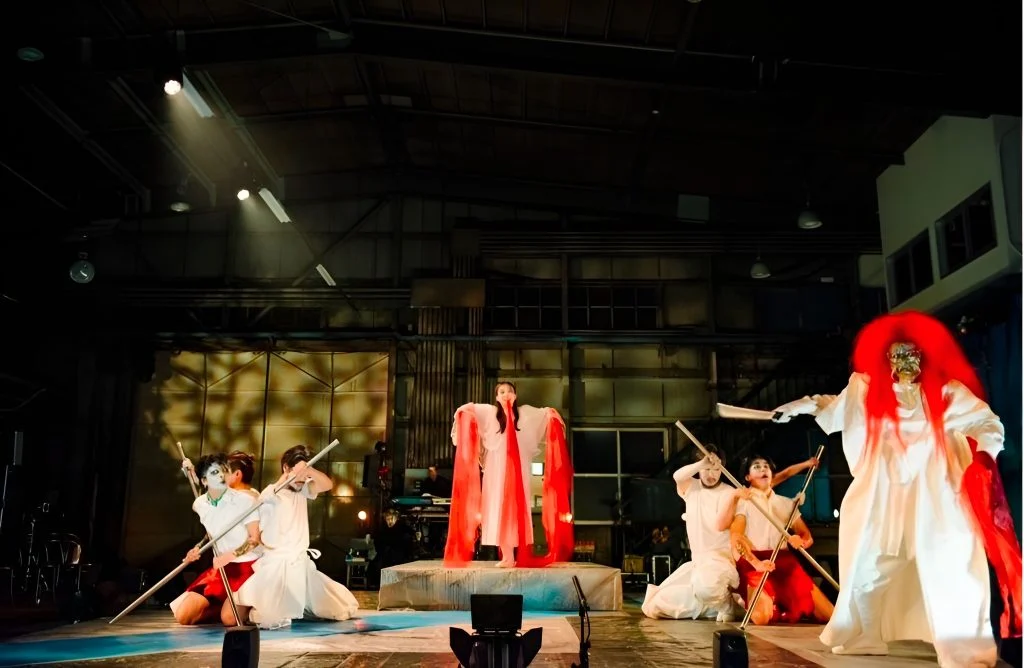
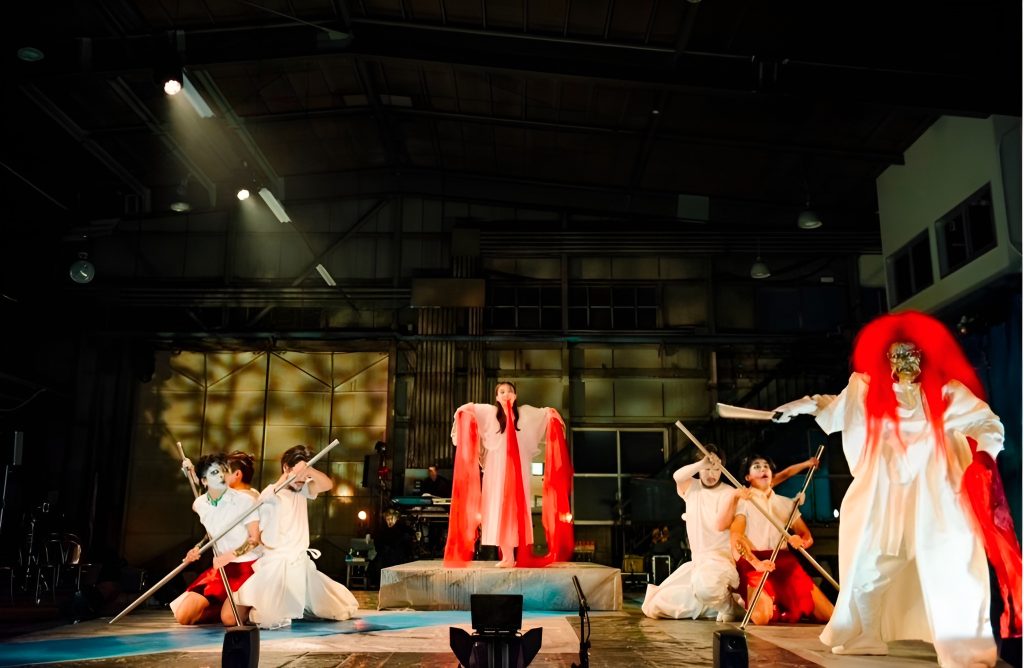
For "Titus Andronicus: Reborn," Kimura, utilizing Kazuko Matsuoka’s acclaimed Japanese translation, meticulously wove together a rich tapestry of Japanese performance traditions, including the stylized drama of Noh, the comedic storytelling of Rakugo, contemporary dance, ritualistic movement, traditional music, and avant-garde theatrical techniques. Crucially, these elements were not employed as superficial adornments but as integral components for deconstructing and rethinking the very mechanics of tragedy. This profound integration elevates "Titus Andronicus: Reborn" beyond a mere staging of Shakespeare’s bloodiest play; it transforms into a philosophical inquiry. The production grapples with fundamental questions: What persists in the aftermath of violence’s exhaustion? Can theatre truly serve as a sanctuary where the dead find not vengeance, but a transcendent release? This approach aligns perfectly with KAKUSHINHAN’s mission to create art that speaks across centuries, proving Shakespeare’s continued relevance in a rapidly changing world.
"Titus Andronicus": A Timeless Tragedy Reborn
"Titus Andronicus," believed to be Shakespeare’s earliest tragedy, stands out in his oeuvre for its relentless depiction of brutality, mutilation, and cannibalism. Written around 1593-1594, it tells the grim tale of Titus, a revered Roman general, whose triumphant return from war with Gothic prisoners sets off an unstoppable chain of vengeance. His decision to sacrifice Tamora’s eldest son initiates a horrifying cycle of retribution that engulfs not only his enemies but also his own family and the Roman society around him. Tamora, the captive Queen of the Goths, morphs from victim to ruthless perpetrator, while characters like the emperor Saturninus, the villainous Aaron, the tragically maimed Lavinia, and Titus’s son Lucius, are inexorably drawn into a world where the lines between justice and retaliation become irrevocably blurred.
Historically, "Titus Andronicus" has often been met with discomfort, sometimes dismissed as immature or excessively gruesome. However, in contemporary interpretations, particularly those like KAKUSHINHAN’s, its stark portrayal of unchecked violence, political corruption, and the dehumanizing effects of war finds chilling resonance. In an era marked by geopolitical conflict, cycles of generational trauma, and public discourse often steeped in retributive justice, the play’s themes feel acutely pertinent. KAKUSHINHAN’s "Reborn" seeks to amplify this contemporary relevance, exploring how ancient narratives of revenge continue to mirror modern societal woes, offering a powerful, albeit disturbing, mirror to our own times.
Narrative Innovation: The Boy, The Raven, and The Cycle of Violence
Kimura’s adaptation distinguishes itself by reframing the familiar tragedy through the unique journey of a Boy. This young protagonist navigates the desolate landscape of the play, guided by the enigmatic figure of the Raven. The Raven, a potent symbolic presence, embodies both the spirit of Shakespeare himself and the accumulated, haunting voices of the past, imbuing the production with a reflective and meta-theatrical structure. Instead of merely presenting violence as a spectacle, the staging compels the audience to witness, with stark clarity, how cruelty is transmitted, almost genetically, from one generation to the next.
The Boy is no mere distant observer. He traverses a world saturated with the echoes of bloodshed, the weight of memory, and the sting of accusation. Through his eyes, the audience gradually comprehends that revenge is not simply a personal act born of individual grievance, but a self-perpetuating mechanism, an autonomous system that continues its destructive work long after its original cause has faded into obscurity. The Boy’s impressive attire and demeanor are a highlight, signaling his symbolic importance. His eventual transformation from an observer to an active participant further underscores the production’s meta-level commentary, suggesting that understanding and perhaps breaking cycles of violence requires active engagement rather than passive witness. This narrative choice provides an emotional anchor and a moral compass, guiding the audience through the relentless brutality with a glimmer of hope for future generations.
Thematic Depth: Blood as Memory and the Autonomy of Revenge
In "Titus Andronicus: Reborn," blood transcends its literal function as a marker of physical violence. It becomes the central, multifaceted image of the production, embodying memory, inheritance, burden, and contamination. Once spilled, blood ceases to belong solely to the body from which it originated. It spreads insidiously across the world of the play, staining landscapes, characters, and even time itself, transforming every act of revenge into another link in an unbreakable chain of imprisonment. Visually, this is powerfully manifested, from the vivid depiction of Lavinia’s maimed body to the symbolic crimson cloud that envelops the entire narrative, serving as a constant, haunting reminder of omnipresent suffering.
The production’s most compelling intellectual contribution lies in its conceptualization of revenge. It evolves from a raw emotional reaction into an autonomous, almost sentient system. Characters, believing they act in the noble names of honor, grief, or justice, are revealed to be unwitting servants of a pre-existing, self-sustaining structure of retribution. This structure precedes them, dictates their actions, and will inevitably outlive them, perpetuating the cycle indefinitely. This insightful reframing challenges audiences to look beyond individual acts of vengeance and consider the systemic forces that perpetuate violence across societies and generations, a particularly poignant observation in the context of global conflicts.
The Ensemble and Craft: Bringing the Vision to Life
The casting choices in "Titus Andronicus: Reborn" significantly reinforce the production’s ritualistic and symbolic dimensions. Tsunao Yamai, a distinguished Noh performer and a Kokuho (Living National Treasure), embodies Titus Andronicus. This choice immediately situates the character within a venerable tradition of controlled intensity, formalized suffering, and embodied historical memory. A particularly memorable moment arrives near the play’s conclusion, when Yamai sheds the "contemporary" Shakespearean guise to fully inhabit a Noh persona, a powerful transformation that resonates deeply with centuries of Japanese artistic heritage.
Fuka Haruna’s portrayal of Lavinia stands as the emotional core of the tragedy. Her silent, maimed presence is not just a symbol of suffering but a visceral root from which much of the play’s tragedy springs, rendered with haunting vulnerability. Miki Takii, as Tamora, masterfully carries the dual weight of a grievously wounded mother and an ultimately destructive force, navigating her character’s complex arc with chilling precision. The supporting cast—Go Kijima as Saturninus, Mark Yudai Iwasaki as Bassianus, Rion Yanagimoto as Lucius, Ryo Morimoto as Martius, Natsuyama Tatsumoto as Quintus, Makoto Hikage as Mutius, and Seiji Miyagawa as Marcus—collectively creates a world where familial bonds, political maneuvering, and endemic violence are inextricably intertwined. Hirokazu Tategata’s dual role as Aaron and the God of Revenge is pivotal, providing a direct, terrifying embodiment of the malevolent force driving the tragedy forward. The overall acting approach, characterized by a deliberate excessiveness in both line delivery and movement, is in perfect resonance with Kimura’s overarching vision, becoming one of the production’s most distinctive and impactful traits.
The technical team further elevates this fusion of classical text and contemporary theatrical language. Izumi Matsuoka’s evocative set design, Maya’s intricate costume design, and Hisato Iwasaki’s traditional Noh mask design collectively conjure a visual world deeply rooted in symbolic rather than literal expression. The deliberate excessiveness noted in the performances is mirrored in these visual elements, with the stark black of the Crow, the pristine white of the Romans, the motley array of the barbarians, and the almost omnipresent, vivid red of blood creating a truly unforgettable aesthetic impact. Naoyoshi Negoro’s sophisticated lighting design is essential in orchestrating the seamless transitions between human suffering, ritualistic space, and a mythic atmosphere. Koji Ozono’s music and sound design, combined with Takashi Yoshida’s original compositions, powerfully underscore the sense that this is not merely a story being narrated, but a profound lament being performed. The strategic choice of a live musician performing all the music throughout the play is not only impressive but functionally vital to the production’s immersive quality. Ami Rokuhara’s choreography is central to the production’s physical identity, particularly in KAKUSHINHAN’s treatment of Shakespeare’s language as something inseparable from the body, with modern dance elements particularly standing out. While some minor lagging was noted in the final acts, extending the play beyond its indicated duration, this did not significantly detract from a show that remained captivating from its intense opening to its resonant close.
Transcending Despair: Finding Release and Rebirth
Despite the profound darkness inherent in "Titus Andronicus," KAKUSHINHAN’s "Reborn" consciously resists succumbing to despair. Against the inherited, seemingly inescapable logic of violence, the production actively seeks and amplifies another voice – one that resonates across diverse cultures and historical epochs. The strategic inclusion of Noh, Rakugo, modern music, contemporary dancing, and even unexpected elements like golf and a Romanian-speaking narrator who encouraged audience photography, injects a distinctly modern and appealing note into the narrative, significantly enhancing its entertainment value without undermining its gravitas. These diverse traditions and elements are presented not merely as expressions of Japanese identity, but as manifestations of a broader, universal human impulse: the drive to give form to grief, to expose folly, to allow the dead to find peace, and to transform private pain into shared healing. In this context, the title "Reborn" signifies more than just a fresh interpretation of Shakespeare’s tragedy. It powerfully suggests the possibility of a spiritual rebirth, a profound transformation that can only truly commence when humanity ceases to conflate revenge with genuine justice.
Broader Implications: Cross-Cultural Dialogue and the Future of Theatre
"Titus Andronicus: Reborn" stands as a compelling testament to the enduring power of theatre to engage with complex human issues across cultural boundaries. Its international perspective is profoundly significant. While deeply rooted in Japanese performance traditions and artistic sensibilities, the production simultaneously looks outward, addressing a shared human condition. It masterfully bridges East and West, past and present, language and body, ancient ritual and modern technology. In doing so, it embodies KAKUSHINHAN’s central, provocative question: if William Shakespeare were alive today, what urgent truths would he speak to our world?
The production’s success at the Craiova International Shakespeare Festival offers valuable insights into the future of classical theatre. It demonstrates that radical reinterpretation, when executed with profound artistic integrity and cultural sensitivity, can unlock new layers of meaning in canonical texts, making them profoundly relevant for contemporary global audiences. Such cross-cultural collaborations are crucial for fostering mutual understanding and appreciating the universal threads that connect diverse human experiences. "Titus Andronicus: Reborn" is not merely a performance; it is a vital conversation, a meditation on trauma, memory, and the elusive hope for healing in a world still grappling with its own cycles of violence.