Director Na Hong-jin’s highly anticipated new feature, Hope, is poised to challenge conventional genre boundaries, presenting itself as an alien-invasion thriller while simultaneously delving into the profound collision between cosmic dread and the deeply ingrained, often vanishing, textures of a specific Korean rural existence. While Na has deliberately maintained an unspecified setting for the film, its visual language persistently evokes a recognizable Korean historical and geographical imagination, characterized by minefields, antiquated billboards advertising a now-defunct North Korean spy-reporting hotline, and the analogue infrastructure of landlines. These elements collectively suggest a borderland region suspended culturally and technologically somewhere in the 1980s, creating a narrative tapestry where abstraction is intended, but the film truly resonates when a bygone rural sensibility confronts an otherworldly force of sudden, overwhelming violence.
Thematic Core: Universal Terror Meets Local Identity
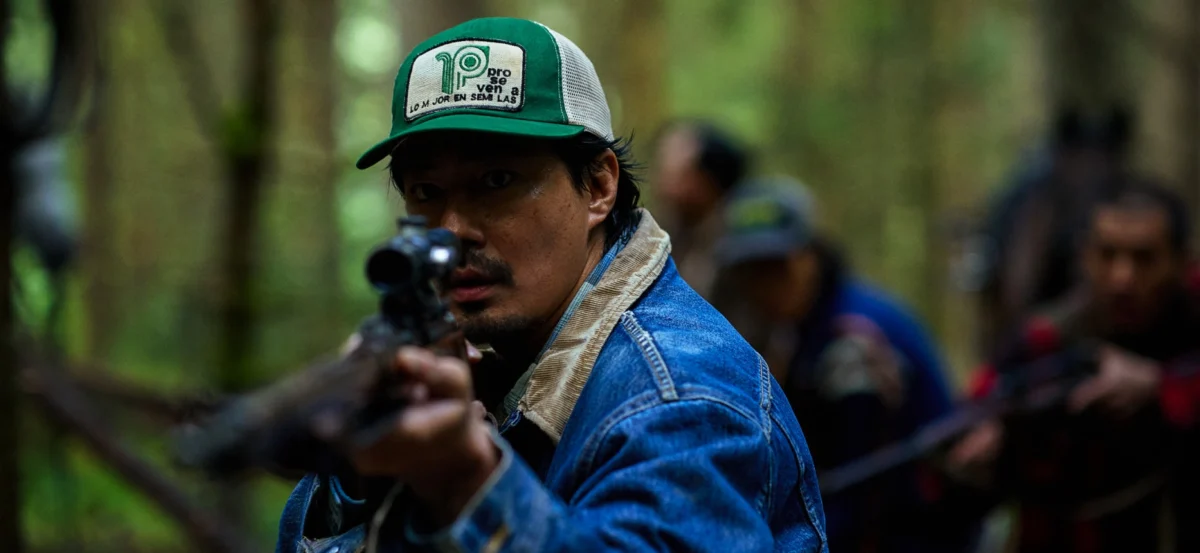
At its heart, Hope explores a compelling tension between the universal nature of an existential threat and the highly specific characteristics of a community facing it. Set in the remote coastal village of Hope Harbor, the narrative begins with police chief Beom-seok, portrayed by veteran actor Hwang Jung-min, investigating a disturbing incident: a mutilated animal found on a desolate rural road. What initially appears to be the work of a wild beast quickly escalates into something far more enigmatic and terrifying. This event propels Beom-seok, alongside rookie officer Sung-ae (Jung Ho-yeon in her much-anticipated big-screen debut), local tracker Sung-ki (Zo In-sung), and the entire populace of Hope Harbor, into a desperate struggle for survival against a mysterious extraterrestrial threat. As an uncontainable panic spreads throughout the community, the village’s intricate social bonds, long-standing family ties, deeply held fears, and primal instincts for self-preservation are severely tested by a violence that is both incomprehensible in its origin and seemingly unstoppable in its progression.
The destruction of communication lines, a critical plot point, elevates the absence of mobile phones from a mere period detail to a crucial narrative device, effectively isolating the community and amplifying their vulnerability. This isolation forces the villagers to rely entirely on their internal resources and existing social structures. Na Hong-jin’s most compelling world-building, however, does not stem primarily from the depiction of the extraterrestrial threat itself, but rather from his meticulous and dense evocation of rural Korea – a world defined by its complex kinship networks, established local hierarchies, and a distinct, often blunt, sense of humor. This emphasis on the local human element grounds the fantastic premise in a relatable reality.
Na Hong-jin’s Vision and the Vanishing Rural Sensibility
Na Hong-jin, a director celebrated for his distinctive cinematic voice and unflinching exploration of human darkness and resilience in films like The Chaser and The Wailing, brings his characteristic sharpness to capturing this vanishing rural sensibility. A poignant example is when a witness to the alien encounter asks Sung-ae about her parentage. This is not a casual background detail but a question that encapsulates an entire social structure where identity is fundamentally relational and communal. Similarly, Beom-seok’s insistence on saving Sung-ki because he is his second cousin, while perhaps sounding comically circular to an outsider, functions as a powerful plot engine within this community’s logic. Na masterfully understands how such deeply ingrained ties can simultaneously produce moments of absurdity and profound courage.
The casting of such prominent actors underscores the film’s ambitious scope. Hwang Jung-min, known for his powerful performances in films like Ode to My Father and Veteran, brings a gravitas to the role of the beleaguered police chief. Jung Ho-yeon, who rose to global fame with Squid Game, makes her cinematic debut, adding a fresh dynamic to the ensemble. Zo In-sung, a beloved star with a diverse filmography including The Great Battle and A Dirty Carnival, takes on a role that reportedly challenges his established screen image, further signaling Na’s intent to subvert expectations. The inclusion of international talents like Alicia Vikander, Michael Fassbender, and Cameron Britton, whose performances contribute to the nuanced portrayal of the alien language and emotional resonance, speaks to the film’s global aspirations and its significant production budget.
Technical Acumen and Early Narrative Strengths
The film’s initial 45 minutes have garnered particular acclaim, frequently cited as among the strongest passages Na Hong-jin has ever directed. Shot by the acclaimed cinematographer Hong Kyung-pyo, known for his work on Parasite and The Wailing, these early sequences exhibit a precision and atmospheric command that position them not only among the finest action sequences in recent Korean cinema but also as impressive examples of genre filmmaking globally. Hong Kyung-pyo’s signature visual style imbues the village, its winding roads, the intimate interiors, the human bodies, and the expansive surrounding landscape with a palpable, tactile intensity. Operating through an expertly crafted sense of dread and implication, this early section effectively demonstrates Na’s understanding that what is merely suggested often proves far more frightening and impactful than what is explicitly shown. This deliberate restraint in the initial horror amplifies the unsettling atmosphere, allowing the audience’s imagination to fill in the terrifying blanks.
Challenges: Digital Execution and Tonal Instability
Despite these early strengths, Hope encounters significant hurdles, particularly concerning its later creature work. Critics have noted that the aliens frequently move with an unintended stiffness, their digital surfaces often appearing detached from the physical world rather than seamlessly integrated within it. In a film so deeply invested in tactile visual textures and atmospheric realism, this separation is particularly damaging. While the creatures are conceptually designed to rupture reality, their less-than-convincing material believability inadvertently ruptures the film’s otherwise meticulously constructed world. This technical flaw poses a significant challenge for viewer immersion, potentially pulling audiences out of the narrative at crucial moments.
Further complicating the viewing experience is the film’s often unstable tonal register. Na Hong-jin has historically been drawn to grotesque humor and depictions of bodily degradation, elements that have been effectively utilized in his previous works. However, in Hope, the B-movie comedy often feels loose, predictable, and at times, overextended. Some jokes land with punchlines that are anticipated a beat too early, diminishing their impact. The toilet humor, in particular, is noted for its extended duration. While the intended mix of horror, shame, and absurdity is conceptually clear, the execution does not consistently achieve the desired sharpness, leading to moments where the humor detracts from the overall tension rather than complementing it.
Narrative and Emotional Complexity: Shifting Allegiances
Yet, beneath these surface-level criticisms, Na Hong-jin orchestrates something far more complicated and emotionally charged. The aliens are repeatedly shot, their bodies perforated, yet they persist with an obsessive, relentless force. Initially, this persistence reads as monstrous and terrifying. However, Na gradually reveals this tenacity as something deeply resonant, hinting at a hidden layer of motivation or identity that complicates the simplistic hero-versus-villain dynamic.
This subtle shift produces some of the film’s most resonant emotional turns. In the collision between monstrous otherness and ordinary emotional recognition, Na’s command of tone and characterization is robust enough to encourage viewers to look past the weaker CG and the aliens’ somewhat familiar design. The extent to which individual viewers are willing or able to make this imaginative leap, however, is likely to vary significantly.
The emotional shift sharpens considerably as the story progresses. In a bold directorial choice, Na begins to frame the attacking humans from the aliens’ point of view during action sequences. This effect is subtle but decisive, initiating a gradual tilt in moral and visual alignment. The question subtly posed to the audience is whether the villagers are truly the unequivocal victims they claim to be, particularly as they engage in violence with what can sometimes appear as the heedless excitement of sport.
This narrative reversal reaches its strongest force in the scenes involving Sung-ki, played by Zo In-sung. As Sung-ki attacks the aliens, the viewer becomes increasingly uncertain about where their allegiance should lie. That Na can so thoroughly unsettle the sympathies of an audience around a star persona as familiar and beloved as Zo In-sung speaks volumes, not only to the actor’s willingness to distort his own screen image but also to the director’s formidable skill in shifting audience emotional alignment. The alien language, developed with academic consultation, further sustains this dimension, possessing a persuasive internal credibility. Even when the digital bodies fall short, the performances by the international cast convey a compelling inner world for the extraterrestrial beings.
The Issue of Length and Animal Welfare Concerns
At an extensive 160 minutes, Hope is undeniably overlong. Its monumental scale – reportedly South Korea’s most expensive film to date, with an estimated budget exceeding KRW 20 billion (approximately USD 15 million) – and its grand ambitions might justify a certain expansiveness. However, its length becomes harder to defend when many of its weaker comic beats and predictable lines appear to have survived the final edit. The core issue is not merely duration but rhythm. While Hope contains passages of extraordinary control, particularly in its acclaimed first 45 minutes and several action set pieces, it also allows other scenes to sprawl beyond their dramatic usefulness, disrupting the narrative flow and pacing.
More troubling and ethically significant is the film’s reliance on animal suffering as an atmospheric device. Hope is replete with depictions of dead, distressed, or endangered animals – including carcasses, skinned remains, chickens scattering before speeding cars, fish struggling on the ground, and lengthy horseback sequences. The casual explanation of a stray cat for an accident further suggests that this disregard for animal vulnerability is interwoven into the very fabric of the plotting. While this might be intended to deepen the film’s vision of rural brutality and ecological disorder, the effect is not merely symbolic. At a time when much of the global film industry has become far more attentive to animal welfare, Hope feels unsettlingly out of step with contemporary ethical standards. Given past criticisms of animal treatment on Korean sets, the standard end-credit assurance that "no animals were harmed" does little to neutralize the discomfort for many viewers. The repeated and graphic suffering of animals in the film is so pervasive that viewers may find themselves worrying less about the horror of the story than about the ethical implications of its production.
Broader Implications for Korean Cinema
The production of Hope as one of South Korea’s most expensive films to date carries significant implications for the country’s film industry. It represents a bold investment in a high-concept genre film, pushing the boundaries of domestic production scale and ambition. The involvement of an internationally recognized director like Na Hong-jin, coupled with a star-studded cast including global names, signals a clear intent to appeal to both domestic and international audiences. The film’s reception will undoubtedly be closely watched by industry analysts, potentially influencing future investment in large-scale, genre-bending projects. The mixed critical response, particularly regarding the CGI and pacing, alongside the ethical concerns, highlights the inherent risks and challenges associated with such ambitious undertakings.
For Na Hong-jin himself, Hope represents a crucial juncture in his celebrated career. Known for his meticulous craftsmanship and uncompromising vision, this film attempts to expand his thematic and stylistic repertoire. The critical commentary on the film’s technical shortcomings in certain areas, contrasted with the praise for his directorial prowess in others, will shape the narrative around his artistic trajectory. His willingness to provoke and challenge audience sympathies, even at the cost of commercial appeal or universal critical acclaim, remains a defining characteristic.
Conclusion: A Formidable, Imperfect Vision
For all its acknowledged flaws, Hope ultimately remains a work of formidable imagination. Its weaknesses stand out more sharply precisely because it comes from Na Hong-jin, widely regarded as one of Korean cinema’s modern masters, and because the film so frequently reaches for greatness. Even when its digital execution falters, its storytelling produces one of the most unusual and emotionally complex experiences in recent alien-invasion cinema. This profound effect owes much to Na’s distinctive direction, but also significantly to the dedicated performances of its ensemble cast, who imbue even the subpar material with genuine emotional weight. In the end, Hope is most affecting not just when it showcases Na’s instinct for fear, pity, and grotesque tenderness, but when it dares to subvert expectations and question human morality in the face of the unknown. Its imagination proves stronger than its superficial imperfections, making Hope an impossible film to dismiss, cementing its place as a significant, albeit divisive, entry in contemporary Korean cinema.