Production Background and Festival Context
The selection of The Birthday Party as the closing film of the 79th Cannes Film Festival underscores the festival’s ongoing commitment to elevating French voices that have successfully transitioned from sidebars like Directors’ Fortnight to the prestigious In-Competition strand. Léa Mysius, who previously garnered attention for her debut Ava and her sophomore effort The Five Devils, returns to the Croisette with a project that is arguably her most grounded to date.
The 2026 edition of Cannes has been characterized by a distinct shift in French cinema. While the 2022 and 2023 seasons were dominated by "emotional capriccios"—films like Petite Maman and The Beast that used time-twisting mechanics to explore trauma—the current landscape has seen a return to political and social realism. The Birthday Party sits at a crossroads between these trends, utilizing the claustrophobic tension of a thriller to examine the "sins-of-the-mother" trope and generational unrest. The production involved high-profile collaborations, including an Oscar-nominated contribution from Mysius for her screenplay work on Emilia Pérez, signaling her rising status within the international film community.
Narrative Overview and Character Dynamics
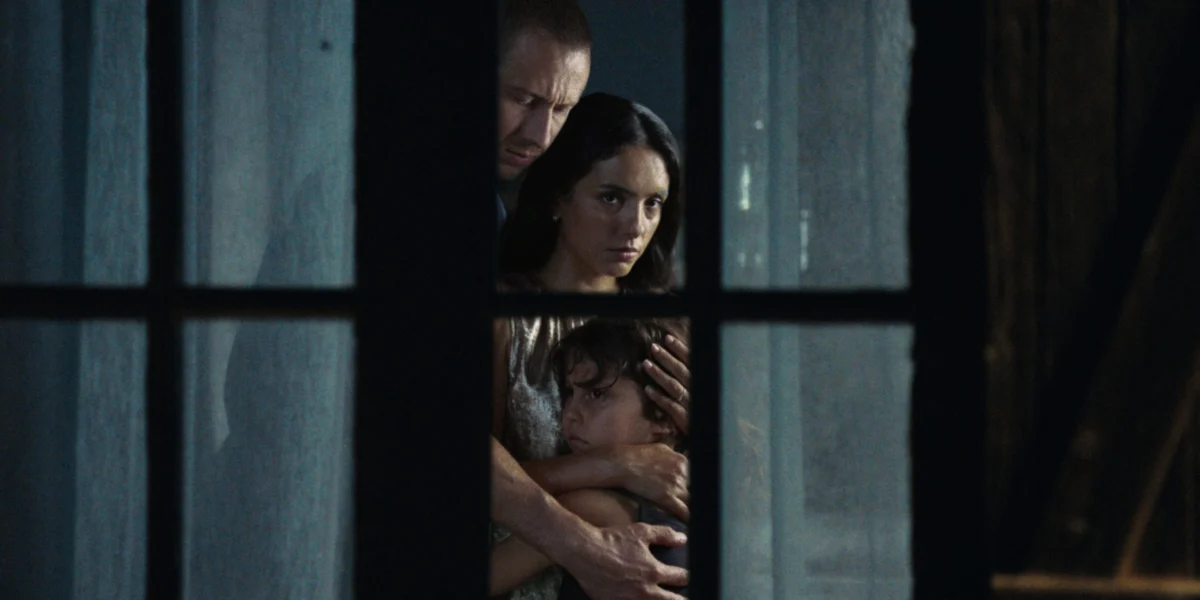
The story centers on Thomas (Bastien Bouillon), Nora (Hafsia Herzi), and their young daughter Ida (Tawba El Gharchi). The trio resides in a state of self-imposed seclusion on a remote marshland, a setting that serves as both a sanctuary and a prison. Their social circle is limited almost exclusively to their neighbor, Cristina (Monica Bellucci), a struggling artist whose presence adds a layer of sophisticated fragility to the rugged environment.
The plot is set in motion during the preparations for Nora’s surprise birthday party. The equilibrium of the household is disrupted when a video of Nora, filmed by Ida, is uploaded to TikTok. The video’s rapid viral success—surpassing 60,000 views—triggers a visceral reaction from Nora, who expresses a desperate need to remain absent from social media. This modern anxiety serves as a precursor to a more physical threat: the arrival of Franck (Benoît Magimel).
Franck, an ex-convict who has been released from prison for exactly one year, arrives at the property accompanied by two henchmen, the brothers Paul Hamy and Alane Delhaye. His arrival is marked by an immediate act of violence—the killing of the family’s dog—which establishes the high stakes of the encounter. As the birthday party begins and more guests arrive, Franck’s presence creates an atmosphere of "quiet menace." The narrative tension is derived not from immediate explosions of violence, but from the slow erosion of the family’s sense of security as Franck demands restitution for a past that Nora has fought to keep hidden.
Adaptation and Stylistic Execution
The transition from Laurent Mauvignier’s prose to the screen presented unique challenges for Mysius and her co-writer. The original novel is noted for its "snaking paragraphs" and a stream-of-consciousness style that frequently shifts perspectives between characters. This literary fluidity creates a sense of breathless urgency that is difficult to replicate in a visual medium.
Mysius opts for a more structured approach, filtering the majority of the story through the eyes of Nora and Ida. This choice allows the film to focus on the psychological impact of the home invasion on the female protagonists. However, critics have noted that this shift results in the loss of some of the novel’s "bouncy, intentional prose," sometimes leaving the film’s pacing feeling sluggish.
Visually, the film benefits from the work of cinematographer Paul Guilhaume. Utilizing shadow-heavy lighting, Guilhaume captures the oppressive nature of the marshland. The aesthetic reaches its peak during the final confrontation in an open field, where the only source of illumination is the moonlight. This chiaroscuro effect emphasizes the isolation of the characters and the primal nature of their conflict. Additionally, Mysius uses "implicit religious apparel" and specific room-based moods to add layers of meaning to the reveals, though some observers suggest these aesthetic choices occasionally feel detached from the core screenplay.
The Role of Technology and the AI Controversy
One of the most discussed aspects of The Birthday Party at the 2026 Cannes Film Festival is its use of generative artificial intelligence. During a scene where Nora attempts to distract Ida with a television show, the screen displays a "machine-manufactured anime." This sequence has been described as reminiscent of the post-Ghibli aesthetic trends that dominated social media in late 2025.
The inclusion of AI-generated content in a major competition film sparked significant debate among festival attendees and industry professionals. This year’s festival featured several high-profile discussions on the topic, including:
- A short film program led by Thierry Frémaux dedicated to AI experimentation.
- Steven Soderbergh’s documentary John Lennon: The Last Interview, which utilized AI for archival restoration.
- A surprise AI-generated commercial by Nicolas Winding Refn.
While figures like Peter Jackson and Hideo Kojima have defended AI as "just another special effect," the use of it in The Birthday Party has been met with skepticism. Critics have questioned the creative necessity of the machine-manufactured sequence, suggesting that the licensing of existing animation would have been a more "artistically solvent" choice. This controversy highlights the growing tension between technological efficiency and traditional creative labor in the film industry.
Cast Performances and Character Analysis
The ensemble cast is led by Benoît Magimel, whose performance as Franck provides the film’s necessary adrenaline. Magimel avoids the tropes of a "generic thriller goon," instead imbuing the character with a muted, calculating intensity that aligns with the film’s slow-burn pacing. Hafsia Herzi provides a grounded counterpoint as Nora, portraying a woman whose "everywoman" persona is a carefully constructed mask designed to protect her family from her history.
Bastien Bouillon’s portrayal of Thomas explores the vulnerabilities of a man caught in financial and emotional debt, while Monica Bellucci’s Cristina adds a touch of melancholic glamour. The youngest member of the cast, Tawba El Gharchi, is central to the film’s exploration of generational trauma. Her character, Ida, acts as the unwitting catalyst for the film’s events, bridging the gap between the digital world and the physical reality of her parents’ secrets.
Broader Impact and Industry Implications
As the closing film of Cannes 2026, The Birthday Party serves as a barometer for the current state of French cinema. It reflects a transition away from the "eccentric and darkly humorous" style of home-invasion classics like Michael Haneke’s Funny Games, leaning instead toward a somber, atmospheric exploration of domestic fragility.
The film’s reception suggests that while Léa Mysius remains an "assured and commanding" directorial voice, the challenges of adapting complex literary structures persist. The Birthday Party demonstrates the risks of "sunk cost" in filmmaking—where the pressure to adapt a popular license may lead to a script that feels like a "first draft" despite its high production values.
Furthermore, the film’s engagement with AI and social media themes indicates a growing preoccupation within the industry regarding the loss of privacy and the automation of art. The "60,000 views" on TikTok and the "machine-manufactured anime" are not merely plot points but reflections of a society struggling to maintain boundaries between the personal and the public.
Conclusion
The Birthday Party is a 103-minute exercise in sustained tension and atmospheric world-building. While it may not reach the heights of Mysius’s more experimental previous works, it reinforces her ability to manage high-stakes narratives and elite ensembles. The film’s legacy will likely be defined by its place in the 2026 Cannes lineup—a year where the industry began to seriously reckon with the implications of artificial intelligence and the enduring power of traditional genre storytelling. As the festival concludes, The Birthday Party stands as a reminder that even in the most remote locations, the past—and the digital future—is never truly far behind.