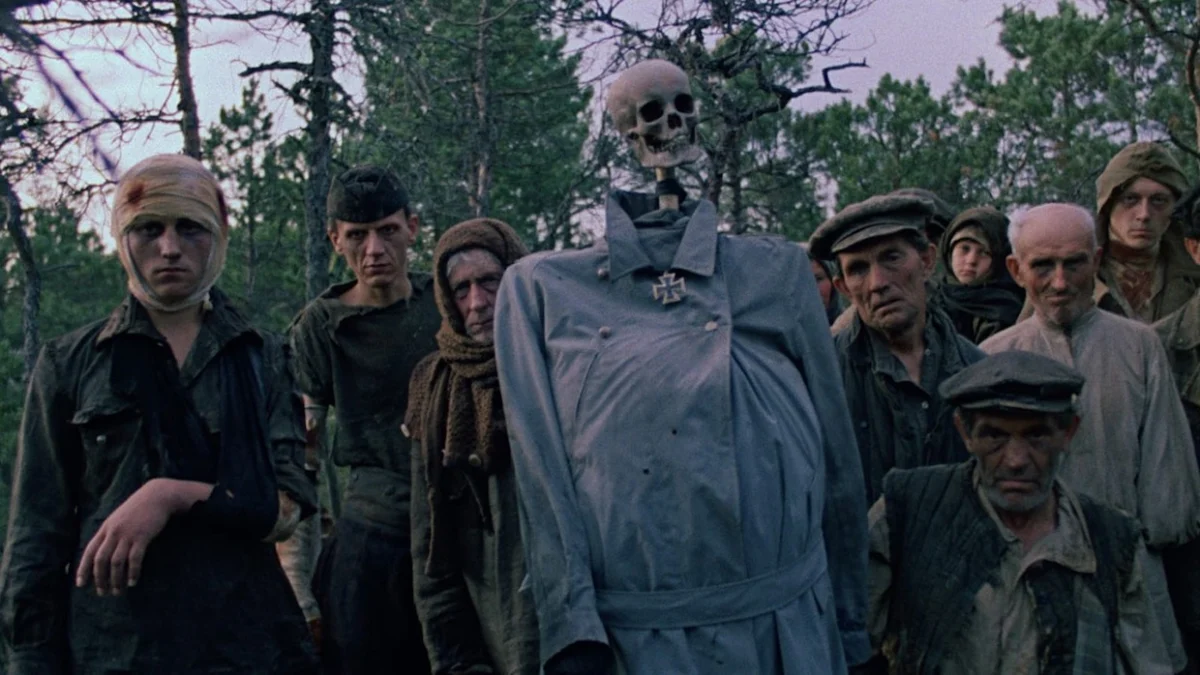
The American Cinematheque’s "Bleak Week: Cinema of Despair," a once-local cinematic experiment designed as a counter-programming antidote to summer blockbusters, has dramatically evolved into a global phenomenon, now expanding its reach to 73 cities and nearly 100 theaters worldwide for its fifth and most curatorially focused iteration. What began in 2022 as a "cheeky stab at summertime counter-programming" in Los Angeles has quickly cemented its place as a significant cultural event, challenging audiences to confront "unpleasant truths and raw empathy" through a meticulously curated selection of films that unflinchingly explore the darker facets of the human condition. This widespread embrace of challenging cinema stands in stark contrast to recent industry discussions around trends like "Hopecore," suggesting a profound and growing desire among global audiences for artistic reflections of reality, "warts and all."
The Genesis of a Movement: From Local Counter-Programming to Curatorial Vision
The American Cinematheque, a revered institution with a storied history of over three decades dedicated to the public presentation of the moving image in all its forms, has long been a bastion for serious film programming. Its mission to preserve, exhibit, and celebrate significant films from around the world provides a fertile ground for ambitious initiatives like Bleak Week. The festival’s inception can be directly attributed to the visionary efforts of Chris LeMaire, the American Cinematheque’s Director of Programming. LeMaire has a distinguished track record of championing challenging and often austere cinema, notably having led programming efforts to spotlight rare Andrei Tarkovsky prints and orchestrate the first-ever U.S. visit for the acclaimed Filipino auteur Lav Diaz. His programming philosophy consistently leans into films often labeled as "heavy" or "depressing," driven by a profound belief that such works serve a vital purpose in engaging with existential concerns and exploring foundational human qualities.
Artistic Director Grant Moninger revealed that the initial inspiration for Bleak Week stemmed from a desire to amplify LeMaire’s "brilliant programming and present it in a way to really bring some recognition to art house films and great auteurs throughout the history of cinema." This ambition led to a pivotal and unconventional decision: to deviate from the American Cinematheque’s customary practice of offering diverse thematic programs across its venues. For the inaugural Bleak Week in 2022, all three of their Los Angeles venues—the Egyptian Theatre, the Aero Theatre, and the Los Feliz 3—were dedicated exclusively to "wall-to-wall despair." This bold, singular focus created a unique immersion for audiences, compelling them to engage with the series’ specific tone without the option of alternative programming. It was a deliberate move to challenge audience comfort zones and foster a deeper engagement with the curated content.
The initial 33-film slate for Bleak Week’s debut was a formidable collection of repertory classics, united less by conventional genre classifications and more by their sheer visceral quality and uncompromising commitment to exploring profound human suffering and societal malaise. The lineup included cinematic touchstones such as Pier Paolo Pasolini’s controversial Salò, or the 120 Days of Sodom (1975), Elem Klimov’s harrowing World War II epic Come and See (1985), Ingmar Bergman’s stark spiritual drama Winter Light (1963), Michael Haneke’s unsettling meta-thriller Funny Games (1997), Lars von Trier’s emotionally brutal Breaking the Waves (1996), and Béla Tarr’s acclaimed, durational masterpiece Sátántangó (1994). These films, while diverse in their aesthetic modes and narrative approaches, collectively embodied the festival’s core tenets: a dedication to patience, humanism, and the unflinching exploration of difficult truths, often presented with an arthouse sensibility.
An Expanding Definition of "Bleakness": Evolution of Programming
As Bleak Week matured beyond its inaugural season, so too did its curatorial approach. Chris LeMaire’s initial, introspective inquiry, "What if there are different types of bleaks?", became a guiding principle that fostered a more diverse and expansive interpretation of the festival’s namesake. While the first edition, by design, offered few "left-field" choices beyond Arthur Penn’s darkly comedic Penn & Teller Get Killed (1989), subsequent iterations have embraced a broader spectrum of cinematic expressions of despair and existential angst.
The current fifth season exemplifies this remarkable evolution, seamlessly integrating canonical arthouse and repertory mainstays with genre films not typically seen programmed alongside them. Audiences can now find the works of Hungarian master Béla Tarr, a recurring "hero" of Bleak Week, presented alongside Jane Campion’s haunting and critically acclaimed period drama The Piano (1993) and Ingmar Bergman’s powerful and resonant war apologia Shame (1968). Crucially, the festival also makes room for more unconventional or genre-specific cinema, exemplified by Richard Kelly’s surreal and often polarizing sci-fi satire Southland Tales (2006) and Mick Jackson’s chilling post-apocalyptic docudrama Threads (1984). This expansive curatorial vision aims to cater to a wider audience, proving that "bleakness" can manifest in myriad cinematic forms, from introspective existential dramas to dystopian thrillers, all while maintaining the festival’s core thematic integrity.
The festival’s growing prestige is further evidenced by its increasing ability to attract high-profile filmmakers and actors for retrospectives and Q&A sessions. These include luminaries such as the legendary French actress Isabelle Huppert, acclaimed Indigenous Australian filmmaker Warwick Thornton, and the visionary American director Ari Aster, whose appearances have become central to the lineup, drawing significant attention and bolstering the festival’s standing in the global cinematic landscape. LeMaire noted that securing a renowned artist like Béla Tarr, who had previously stated he would never return to the United States, was a watershed moment that "suddenly changed the stature of the festival." His presence, along with tributes in previous years to independent maverick Jon Jost (in 2025) and acclaimed directors Kenneth Lonergan, Lynne Ramsay, and Charlie Kaufman (in 2024), underscores the festival’s reputation as a vital platform for serious cinematic discourse and a destination for esteemed artists.

A Global Collaborative Endeavor: Beyond Los Angeles
The most significant and ambitious development for Bleak Week has been its rapid and impressive global expansion. What began as a local Los Angeles event gradually spread to other major U.S. cinematic hubs like New York City, Chicago, and Dallas, and internationally to London, before blossoming into its current 73-city, nearly 100-theater worldwide footprint. This growth is not merely a logistical feat but a testament to a unique, collaborative programming model that decentralizes curatorial control while maintaining a unified thematic identity.
LeMaire emphasizes that the American Cinematheque does not impose a rigid, prescriptive lineup on participating venues. Instead, they operate as a central resource hub, offering invaluable assets such as "a giant spreadsheet" detailing past programs, film availability, and distributors’ upcoming restorations. Crucially, they actively encourage local programmers to interpret the series’ broad definition of "bleakness" and the concept of a "week" for their own audiences. "What is a ‘week’ to you? What would that look like in your programming?" LeMaire asks, fostering a spirit of creative autonomy and local relevance, which stands in contrast to many centrally organized film festivals.
This ethos of localized interpretation is clearly demonstrated by the diverse programming seen across different participating venues. Kerstin Larson, programming director at Milwaukee’s Oriental Theater, an early participant in the expansion, highlighted this flexibility. While her theater’s focused seven-film lineup shared only one film, William Friedkin’s intense 1977 heist thriller Sorcerer, with the American Cinematheque’s main program, she was able to craft a distinct thematic strand. Larson chose to home in on the theme of "how work and labor continues to be bleak," notably featuring a restoration of Chris Smith’s independent film American Job (1996), a selection with local resonance due to the enduring popularity of Smith’s documentary American Movie (1999) in Milwaukee. Her decision to screen Béla Tarr’s The Turin Horse (2011), a stark portrayal of rural destitution, on Father’s Day in bright, sunny June, encapsulates the festival’s playful yet profound counter-seasonal programming. This collaborative, localized approach ensures that Bleak Week remains fresh, relevant, and deeply connected to the unique cinematic tastes and cultural contexts of each participating city, fostering a sense of shared purpose within a global framework.
Countering "Hopecore": Audience Appetite for Reality
The remarkable and rapid global expansion of Bleak Week directly challenges recent industry narratives and media trends, most notably the concept of "Hopecore." The Hollywood Reporter recently explored this trend in an article by Carly Thomas, describing it as an embrace of "uncynical storytelling that celebrates collaboration and the indomitable human spirit," with films like the upcoming sci-fi blockbuster Project Hail Mary positioned "at the vanguard." This trend suggests a perceived shift away from Hollywood’s previous penchant for "downbeat, grayscale filmmaking," a style often epitomized by Christopher Nolan’s Batman films.
However, the overwhelming global appetite for Bleak Week suggests that while "Hopecore" might capture a segment of the audience, there remains a powerful, perhaps even growing, desire for films that grapple with life’s complexities without offering facile optimism or simplistic resolutions. Grant Moninger posits that "the greater hope is that places are uniting. These are films made by humans, programmed by humans, for humans, about the human condition. There’s nothing more hopeful than that." This perspective reframes the festival’s inherent "bleakness" not as an exercise in nihilism, but as a collective act of acknowledging shared human experience, fostering profound empathy through the cinematic exploration of suffering, resilience, and the unvarnished truth of existence.
The festival’s burgeoning popularity, with sold-out screenings for retrospectives like Ari Aster’s that vanish "in just a few minutes," attests to this deep audience engagement and a robust demand for challenging cinematic experiences. Chris LeMaire further credits the crucial role of major distributors like Janus Films and American Genre Film Archive, who are willing to "hold some restorations they have for the year for Bleak Week," indicating significant industry buy-in and recognition of the festival’s growing importance. This year’s edition notably features world premieres of restorations for the Coen Brothers’ neo-noir The Man Who Wasn’t There (2001) and Daniel Petrie’s difficult-to-see drama Buster and Billie (1974), further elevating the festival’s profile and offering unique cinematic treasures to its expanding global audience. The presence of major stars like Isabelle Huppert also creates a strategic "trickle-down" effect, as LeMaire explains: "If we can have someone that big, then we can ask audiences to take a chance on some of the rarer things in the lineup. If it’s in a festival with Isabelle Huppert and Ari Aster, it must be interesting." This strategic blend of acclaimed figures and challenging, lesser-known works creates a vibrant and accessible platform for diverse audiences, drawing them into a deeper engagement with the curated themes.
The Philosophical Underpinnings: Art, Suffering, and Community
A notable and intentional aspect of Bleak Week’s programming is its deliberate omission of nonfiction filmmaking. Moninger articulated the rationale behind this decision, stating, "We don’t actually want to show the suffering. Bleak Week is really triumphant. It’s saying that no matter what people have been through, what they’re going through now, or who they are, you can make art about it." This perspective highlights a nuanced understanding of cinematic "bleakness" within the festival’s specific context: