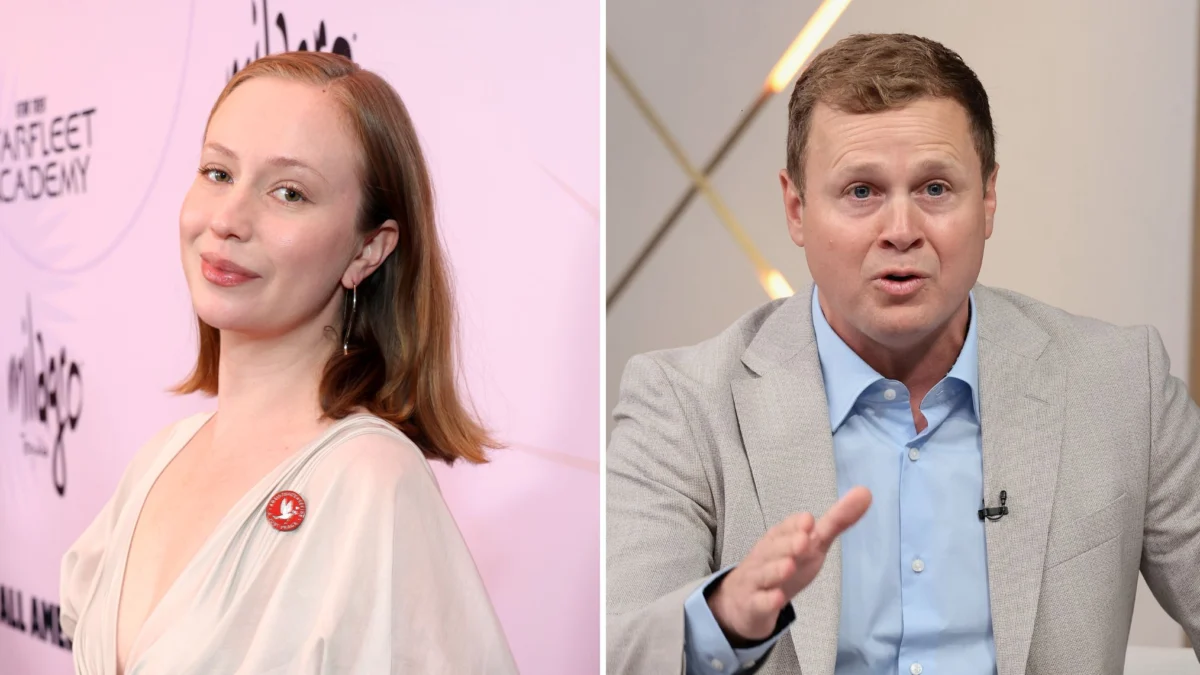
Hannah Einbinder, the Emmy-nominated star of the Max series Hacks, has issued a sharp rebuke of reality television personality Spencer Pratt’s bid for the Los Angeles mayoralty, framing the election as a critical junction between celebrity-driven populism and professional governance. Speaking at the Critics Choice Association’s 3rd Annual Celebration of LGBTQ+ Cinema & Television on Friday, May 29, 2026, Einbinder utilized the high-profile platform to urge voters to resist the "character" of Pratt’s campaign and instead prioritize candidates with established backgrounds in law and civic administration.
The actress’s comments come at a time of heightened political volatility in Los Angeles, just days before the June 2 nonpartisan primary. The race, which has become a three-way statistical dead heat between incumbent Mayor Karen Bass, City Councilmember Nithya Raman, and Pratt, has drawn national attention due to its unusual mix of seasoned politicians and a polarizing figure from the "golden era" of reality television.
The Intersection of Celebrity and Civic Responsibility
During an interview with Variety’s Marc Malkin on the red carpet at the Four Seasons Hotel Los Angeles at Beverly Hills, Einbinder expressed concern over what she characterized as a deceptive political landscape within the city. She argued that the immense wealth concentrated in Los Angeles often masks conservative economic interests behind a facade of liberal social values.
"There’s a lot of wealth in this city, and I think that there are a lot of people who masquerade as Democrats or people on the left, but really, money is their key issue," Einbinder stated. She suggested that this economic priority leads certain demographics to support candidates like Pratt, whom she linked directly to the political ideology of Donald Trump. "That’s what leads them to vote for people like Spencer Pratt, who is endorsed by Donald Trump, and I will remind everybody of that. So yeah, it’s important to resist that."
Einbinder’s critique mirrors a growing sentiment among a segment of the Los Angeles electorate that views the entry of media personalities into high-stakes governance with skepticism. This sentiment was echoed earlier in the week by Lisa Rinna, the former Real Housewives of Beverly Hills star, who also voiced her opposition to Pratt’s candidacy. Rinna told reporters that she did not believe the mayor’s office should be occupied by an "unqualified celebrity," a stance Einbinder explicitly endorsed.
"I’m with Lisa Rinna! I stand with Lisa Rinna," Einbinder told Malkin. "That’s not what we want, okay? We need to have people who work in housing and tenant’s rights lawyers and people with actual expertise in these positions, please."
The Rise of Spencer Pratt’s Political Ambitions
Spencer Pratt, who rose to international notoriety on MTV’s The Hills in the mid-2000s, announced his candidacy for mayor in January 2025. His entry into the race was initially viewed by political analysts as a publicity stunt, but his campaign gained unexpected traction through a combination of social media savvy and a focused critique of the city’s handling of recent crises.
Pratt’s platform has centered largely on the perceived failures of Mayor Karen Bass’s administration, specifically regarding the Palisades fire of early 2025. Pratt has frequently criticized the city’s emergency response times and its long-term recovery plans, positioning himself as an outsider capable of disrupting the "bureaucratic paralysis" of City Hall.
His campaign took a significant turn in May 2026 when former President Donald Trump voiced his support for Pratt’s bid. During a press appearance, Trump described Pratt as a "character" and a "big MAGA person," noting that he would like to see the reality star "do well" in the election. This endorsement has solidified Pratt’s base among the city’s more conservative voters while simultaneously galvanizing progressive opposition. Pratt’s recent appearance on Fox & Friends on May 28 further signaled his alignment with national Republican rhetoric, even as he runs in a nonpartisan municipal race.
The Progressive Alternative: Nithya Raman’s Ascendance
While Einbinder’s remarks were primarily focused on opposing Pratt, she also used the opportunity to endorse Nithya Raman, the current Los Angeles City Councilmember for District 4. Raman, a progressive urban planner who has long advocated for tenant protections and homeless services reform, has emerged as the primary challenger to Mayor Bass from the left.
Einbinder admitted that the choice was not without nuance, reflecting a broader sense of voter fatigue within the city. "It’s very complicated," the comedian noted. "No one is perfect, there are no perfect candidates. I’m underwhelmed in a lot of ways, but I have made the choice to put Nithya down, and that’s what we’re doing, girls!"
Raman’s campaign has focused on legislative results and systemic reform, a stark contrast to Pratt’s personality-driven approach. By backing Raman, Einbinder aligned herself with a faction of the city that prioritizes technical expertise in urban planning and social services over the visibility of a celebrity figurehead.
Polling Data and the Road to the Primary
The timing of Einbinder’s public statement is significant, following the release of a UC Berkeley Institute of Governmental Studies (IGS) poll on Thursday, May 28. The poll results indicate a remarkably tight race that could lead to a protracted runoff election in November.
According to the data:
- Mayor Karen Bass: 26 percent of likely voters.
- Nithya Raman: 25 percent of likely voters.
- Spencer Pratt: 22 percent of likely voters.
With only a four-point spread between the three leading candidates, the final days of the campaign have become a scramble for the significant portion of undecided voters. Under Los Angeles election rules, if no candidate receives more than 50 percent of the vote in the June 2 primary, the top two finishers will advance to a general election on November 3.
The poll suggests that Pratt’s message is resonating with nearly a quarter of the electorate, a development that has alarmed established political circles. Analysts suggest that Pratt’s support is concentrated among voters frustrated with the city’s chronic issues of homelessness, crime, and the rising cost of living—voters who may feel that traditional political figures like Bass and Raman have failed to deliver tangible improvements.
Implications for the Future of Los Angeles Governance
The debate sparked by Einbinder and Rinna highlights a recurring theme in California politics: the tension between the state’s entertainment industry and its governmental institutions. California has a long history of electing entertainers to high office, from Ronald Reagan to Arnold Schwarzenegger. However, the current climate in Los Angeles suggests a shift in how the public perceives these transitions.
The "unqualified celebrity" label used by Rinna and Einbinder points to a demand for professional credentials in an era of increasingly complex urban challenges. As the city prepares to host major international events, including the 2026 FIFA World Cup and the 2028 Summer Olympics, the stakes for administrative competence are perceived as higher than ever.
Critics of Pratt argue that his campaign lacks detailed policy proposals, relying instead on grievances and name recognition. Conversely, his supporters argue that his outsider status is precisely what is needed to break the status quo in a city they believe is in decline.
Conclusion and Looking Ahead
As Los Angeles residents prepare to head to the polls on Tuesday, June 2, the rhetoric from cultural influencers like Hannah Einbinder underscores the deep ideological divisions within the city. The primary will serve as a referendum not only on Mayor Karen Bass’s first term but also on the viability of celebrity-led populism in the nation’s second-largest city.
Whether Pratt’s "MAGA-aligned" campaign can overcome the resistance from the city’s progressive and institutional forces remains to be seen. However, the high visibility of the race and the involvement of prominent figures from the entertainment industry ensure that the results will have implications far beyond the borders of Los Angeles, potentially setting the tone for the 2026 midterm elections and the future of urban governance in America.