Upon his return from Cannes on May 24, 2026, Jean-Marc Thérouanne provided a comprehensive account of the Vesoul International Film Festival of Asian Cinemas (FICAV) delegation’s pivotal activities at the 79th Cannes Film Festival. The report details an intensive schedule encompassing the vast expanse of the Marché du Film, strategic networking, crucial working sessions, and an exhaustive film scouting mission, all aimed at bolstering FICAV’s international standing and enriching its future programming.
Navigating the Global Hub: The Marché du Film
The Cannes Film Festival, renowned globally for its cinematic prestige, concurrently hosts the world’s largest film market, the Marché du Film. This colossal event serves as an indispensable platform for industry professionals, distributors, producers, and festival organizers to converge, negotiate, and foster collaborations. For representatives of the Vesoul International Film Festival of Asian Cinemas (FICAV), the daily itinerary involved traversing an average of 12 kilometers across the market’s sprawling pavilions, a testament to the sheer scale of the operation.
The market is meticulously organized into distinct geographical and thematic zones. The Pantiero section housed national pavilions from diverse regions, including China, Egypt, Iraq, Palestine, and Uzbekistan, showcasing their respective cinematic outputs and cultural initiatives. Adjacent to this, the Riviera section featured a robust presence from entities like Film France/CNC, alongside pavilions representing Georgia, Hong Kong, India, Israel, Japan, the Philippines, Saudi Arabia, Singapore, South Korea, Thailand, and Turkey. These national and regional hubs are critical for cultural diplomacy and the promotion of local film industries on a global stage.
Beyond the International Village, the Marché du Film extends into the iconic Palais des Festivals, Riviera, and Lérins areas. These zones encompass the festival’s primary screening venues—the Grand Théâtre Lumière, Debussy, Buñuel, Bazin, and Agnès Varda theatres—along with numerous smaller screening rooms dedicated to market activities. This intricate setup facilitates a dynamic environment where films are bought, sold, and showcased around the clock.
Countless production companies, professional associations, and institutional bodies establish booths to champion world cinema. The FICAV delegation engaged with a broad spectrum of these organizations, including prominent entities such as 1001/Iraqi Cinema, Arab Cinema Center, China Film, Cinema Agency of the Republic of Azerbaijan, CJ ENM, Écran Total, Edko Films Ltd, the Federation of Indian Chambers of Commerce and Industry, Finecut, Gaga Corporation, Indonesia/Jakarta Pavilion, the Iranian Independent Filmmakers Association, the Japan External Trade Organization, Kazakfilm, Kurdistan Film Commission, Kyrgyzcinema, Le Pacte, Les Films du Losange, Mandarin Motion Pictures Limited, M-Line Distribution, the Mongolian National Film Council, Nikkatsu Corporation, Nippon TV, Parallax Films, Pyramide International, SACD, Shochiku Co. Ltd, Showbox, Taipei Film Commission, TOEI Company Ltd, Toho Global Inc, and Tokyo Film Commission. This extensive outreach underscores FICAV’s commitment to maintaining and expanding its international network.
The primary objectives for the FICAV representatives during these interactions were multifaceted: to collect documentation on emerging films and industry trends, to distribute catalogues from previous FICAV editions, and to disseminate promotional materials like postcards and bookmarks announcing the upcoming 33rd edition of the festival, scheduled for February 2–9, 2027. Effective communication remains the bedrock for sustaining and strengthening the vital ties between FICAV and the global film industry. The Marché du Film, with its estimated 12,500 accredited participants from over 120 countries and thousands of films presented annually, represents an unparalleled opportunity for a specialized festival like FICAV to secure its programming and elevate its profile.
Strategic Networking: Fostering Connections and Collaborations
Beyond the formal transactions of the market, the Cannes Film Festival provides an unparalleled landscape for informal yet highly strategic networking. These social gatherings are instrumental in building and reinforcing relationships, fostering cultural exchange, and facilitating future collaborations that are vital for film festivals like FICAV.
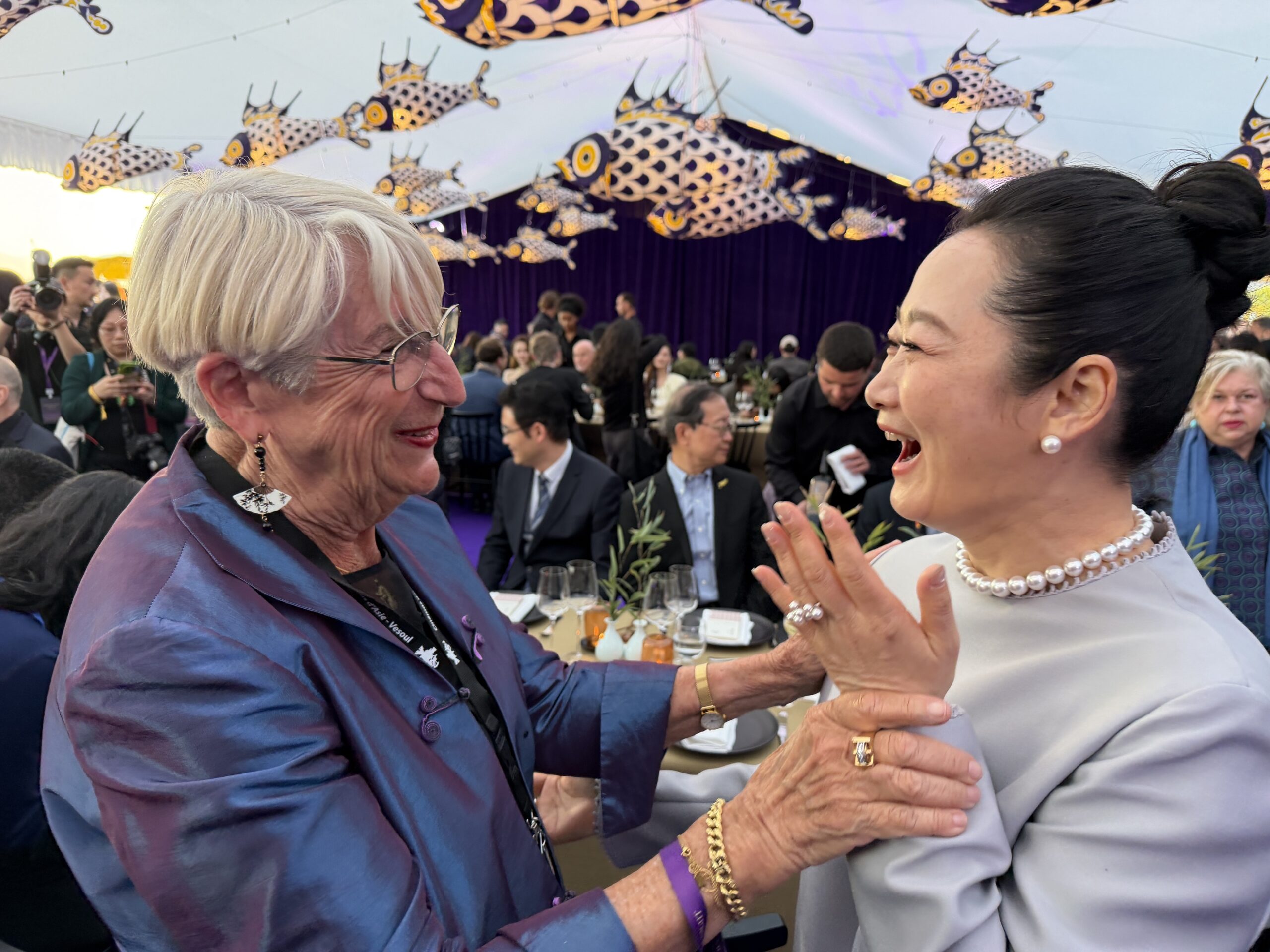
The 2026 edition saw Japan as the Guest of Honor at the Marché du Film’s opening-night events, setting a vibrant tone for international engagement. Throughout the festival, a series of national cinema nights served as key networking hubs: the Taiwan Film Night, Indonesian Cinema Night, Japan Night, K-Movie Korean Night, Hong Kong Cinema Night, and Beijing Film Festival Night. These events are not merely celebrations but crucial opportunities for filmmakers, producers, and festival directors to connect in a more relaxed setting. Complementing these were formal dinners and mixers, such as the China Film Night Gala organized by the Wu Tianming Foundation, the Festival Directors’ Dinner, the Screen International / Imagica Grove Film luncheon, the Condor Distribution Grill Party, the CNC Rendez-vous, the Festival Hub Mixer breakfasts, and the El Gouna Festival Happy Hours. Each event offered a unique environment for dialogue and partnership.
Among the prominent personalities encountered by FICAV representatives were acclaimed actress Isabelle Huppert, Jury President Park Chan-wook, Cannes Film Festival General Delegate Thierry Frémaux, and Minister of Culture Catherine Pégard. Such interactions provide invaluable insights into the broader cinematic landscape and potential avenues for institutional support.
Crucially, these events also facilitated reconnections with leading figures of Asian cinema who have previously graced FICAV in Vesoul. This included Chinese actress Zhao Tao and her husband, director Jia Zhang-ke; Japanese directors Kore-eda Hirokazu and Koji Fukada; and Japanese producer Tatsutaka Watanabe, known for his work on Akio Fujimoto’s films Along the Sea (Vesoul Jury Prize 2022) and Lost Land, a project initially conceived during his visit to Vesoul in 2022. These ongoing relationships underscore the long-term impact of FICAV’s engagement with international talents.
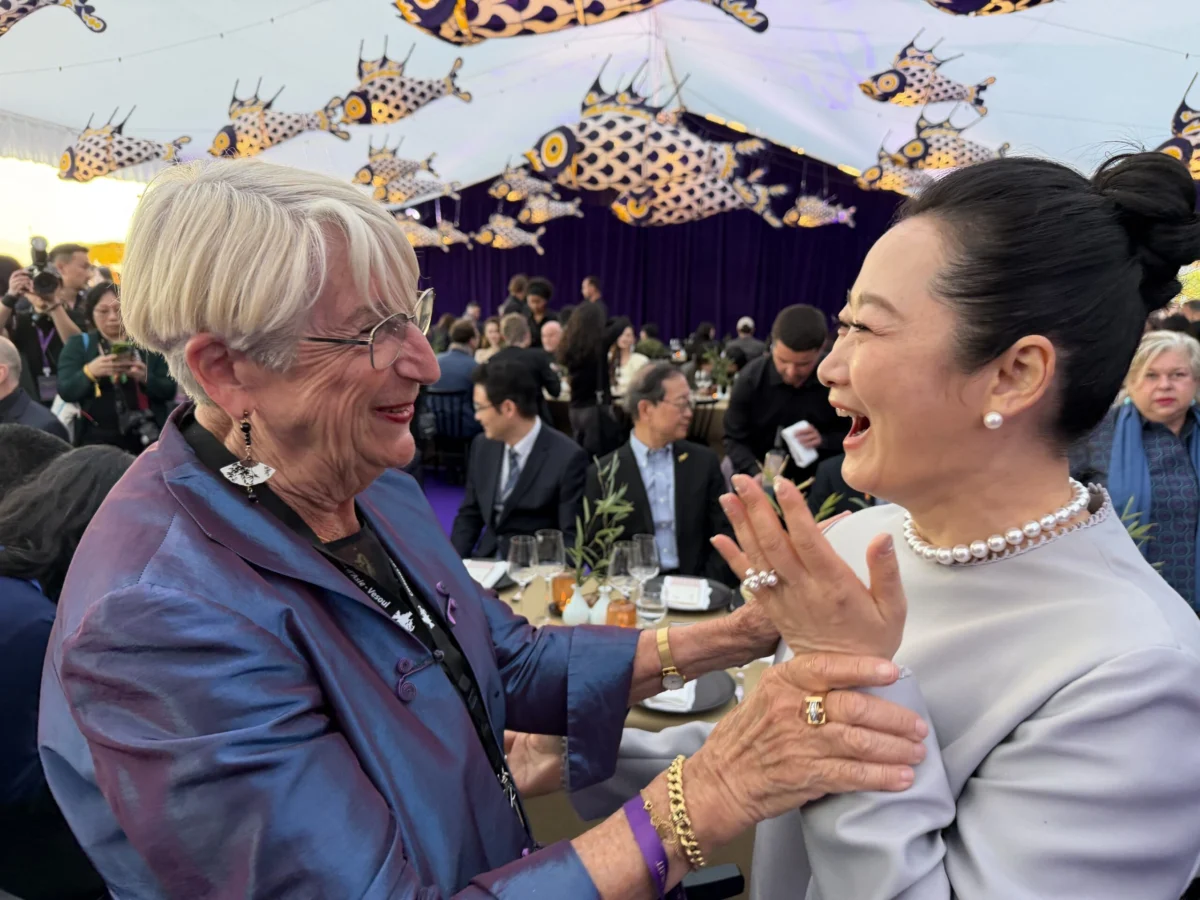
Networking is paramount for promoting and enhancing the recognition of FICAV, allowing it to maintain both professional and personal relationships that span decades. Over nearly 33 years of FICAV’s existence and 30 years of continuous attendance at the Cannes Film Festival, an extensive and robust network of connections has been meticulously built. This network is a living archive of cinematic relationships, enabling FICAV to attract top-tier Asian films and filmmakers to a regional festival in France, thus enriching the cultural tapestry for its audience.
Intensive Working Sessions: Shaping Future Festival Editions
Beyond the glitz and glamour, the Cannes Film Festival serves as an invaluable operational hub for festivals worldwide, offering dedicated spaces for focused working sessions. For FICAV representatives, these meetings are critical for strategic planning, program development, and solidifying international partnerships. Such sessions with producers, directors, festival directors, distributors, institutional representatives, and cultural advisers from French embassies across Asia are essential for curating the high-quality programming that defines FICAV.
One significant gathering involved approximately fifteen members of NETPAC (Network for the Promotion of Asia-Pacific Cinema) at the Egyptian Pavilion, which concurrently represented the Cairo International Film Festival and the El Gouna Film Festival. Under the leadership of NETPAC Vice-President Bina Paul and key Board members, including Martine Thérouanne (European Representative) and Ed Lejano (Executive Committee Member), participants engaged in crucial discussions regarding the organization’s future direction. These discussions are vital for shaping policies and initiatives that support Asia-Pacific cinema globally.
A particularly poignant moment occurred at the Palestine Pavilion, where Palestinian director Rashid Masharawi presented a new film school project in Gaza. Masharawi, who has a strong connection to FICAV, having attended both its 25th edition in 2019 and the 32nd edition in 2026, highlighted the transformative power of cinema in challenging environments. The initiative resonated deeply, serving as a powerful reminder of art’s resilience amidst adversity, and was described as one of the most moving moments of the 79th Cannes Film Festival.
Productive working meetings also laid the groundwork for future FICAV editions. A session with a team of Vietnamese filmmakers and their German producer sparked hope for establishing a dedicated retrospective of Vietnamese cinema at the 33rd edition of the festival. Similarly, discussions involving an Indian academic and a French producer concerning an Indian film project illuminated potential opportunities for FICAV to play a meaningful role in its development and presentation. These sessions are the lifeblood of festival programming, directly influencing the cinematic experiences offered to audiences in Vesoul. They underscore the proactive approach FICAV takes in sourcing and supporting diverse Asian cinematic voices.
The Marathon of Film Scouting: Curating the Next Edition
The Cannes Film Festival, with its dizzying array of screenings, is both a marathon and an obstacle course for festival programmers. FICAV representatives faced the formidable challenge of juggling numerous meetings, working sessions, and networking events with an ambitious film scouting schedule. Their priority was to identify potential films for upcoming FICAV editions, with a particular focus on Asian cinema presented across the festival’s various sections.
Over the course of the festival, FICAV representatives attended thirty-five screenings. This intensive viewing schedule covered the Official Selection, which includes the prestigious Competition, Out of Competition, Un Certain Regard, Cannes Première, Special Screenings, Midnight Screenings, Cannes Classics, Short Films, and La Cinef sections. Additionally, they delved into the parallel sections, such as Directors’ Fortnight, Critics’ Week, and ACID (Association for Independent Cinema and its Distribution), each offering a distinct curatorial lens.
Accessing these screenings is an exercise in perseverance. Each morning, participants must attempt to secure tickets precisely at 7:00 a.m. via the Cannes Film Festival ticketing website. Screening times span from an early 8:30 a.m. to a late 12:30 a.m., across a multitude of venues. These include the main Palais des Festivals, the modern Cineum multiplex near Mandelieu Airport, the historic Licorne, Studio 13, and Raimu cinemas in Cannes-la-Bocca, the downtown Olympia and Arcades cinemas, the Alexandre III theatre, the Théâtre Croisette at the JW Marriott Hotel, the Miramar venue, and the Carlton Hotel. The geographical spread of these venues adds another layer of logistical complexity.
With over 40,000 accredited professionals, in addition to local Cannes residents, vying for tickets, nothing is ever guaranteed. For instance, the Grand Théâtre Lumière, the largest auditorium, seats approximately 2,200 spectators, meaning the statistical chance of obtaining a ticket for a screening there is roughly 5%. Furthermore, access is stratified by professional category. Festival directors, classified under Cultural Institutions, receive a specific ticket allocation, as do producers, exhibitors, screenwriters, technicians, actors, makeup artists, editors, programmers, distributors, costume designers, projectionists, directors, sales agents, critics, and many others. This complex and often opaque allocation system makes securing tickets a constant challenge.
Should online attempts fail, attendees can resort to the Last Minute Ticket Office or join the "Last Minute" queue, often an hour or more before a screening, with no guarantee of admission. This reality underscores a fundamental truth about accessing culture at Cannes: it demands patience, perseverance, and unwavering determination.
The Opening Ceremony: A Glimpse into Cinematic Royalty
Securing a ticket to the Opening Ceremony is a coveted privilege, offering a direct encounter with the festival’s pageantry and its esteemed guests. The 79th edition’s ceremony was masterfully hosted by Eye Haïdara, the actress acclaimed for her role in Éric Toledano and Olivier Nakache’s C’est la vie! (The Party). Her elegant performance set the tone for the cinematic celebration to follow.
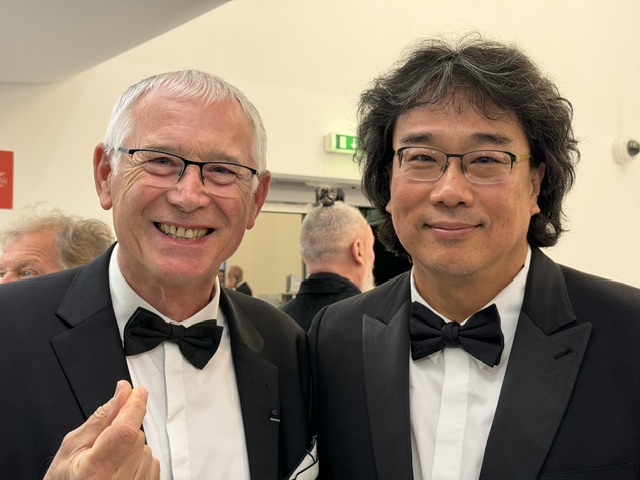
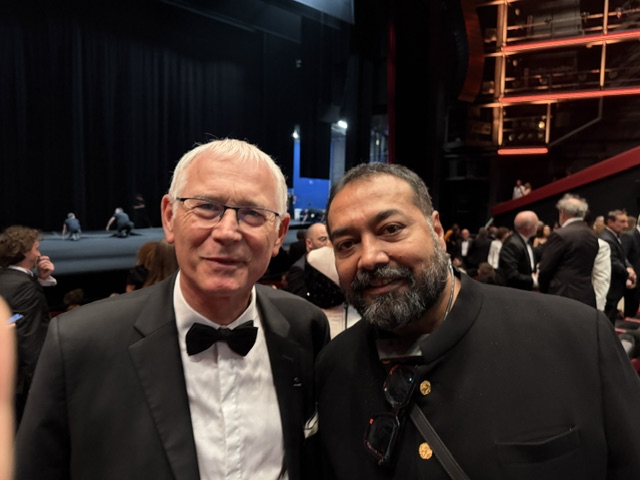
The intermission provided exceptional opportunities for notable encounters, including three Palme d’Or winners: Jacques Audiard (Dheepan, 2015), Kore-eda Hirokazu (Shoplifters, 2018), and Bong Joon-ho (Parasite, 2019). Their presence underscored the enduring legacy of Cannes. Also present was celebrated Indian director Anurag Kashyap (Gangs of Wasseypur), a significant figure in contemporary world cinema.
The evening culminated in the world premiere screening of Pierre Salvadori’s Electric Venus, starring Gilles Lellouche. The premiere was followed by an unexpected interview with a television crew, providing a spontaneous end to a grand ceremonial opening.
Highlights from the Competition Films: A Panorama of Contemporary Cinema
The official Competition section is the heart of Cannes, showcasing films vying for the prestigious Palme d’Or. The 79th edition featured a diverse selection of works that sparked critical debate and offered profound reflections on human experience.
Iranian director Asghar Farhadi’s Parallel Stories presented an impressive ensemble cast, including Isabelle Huppert, Virginie Efira, Vincent Cassel, Pierre Niney, Adam Bessa, and Catherine Deneuve. While lauded for its star power, critics noted that the abundance of renowned actors sometimes diffused audience attachment to individual characters. Charline Bourgeois-Tacquet’s A Woman’s Life, starring Léa Drucker, Mélanie Thierry, Charles Berling, and Marie-Christine Barrault, similarly benefited from its accomplished cast. Valeska Grisebach’s The Dreamed Adventure, a 2-hour-47-minute film largely shot in real-time, received the Jury Prize, recognized for its immersive narrative.
László Nemes’s Moulin featured Gilles Lellouche delivering a powerful performance as Jean Moulin, the unifier of the French Resistance. Lars Eidinger’s portrayal of Klaus Barbie was chillingly effective, depicting cruelty and moral depravity that left audiences stunned by the torturer’s brutality. Japanese director Koji Fukada, a familiar figure to Vesoul audiences who received a retrospective at the 28th FICAV in 2022, presented A Few Days in Nagi. This film offered a thoughtful exploration of artistic creation and the erotic fascination between artist and model, treating a sapphic relationship with tact and delicacy.
Paweł Pawlikowski’s Fatherland, starring the outstanding German actress Sandra Hüller as Thomas Mann’s daughter and Hanns Zischler as Thomas Mann, was praised as a masterfully concise cinematic achievement, earning the Best Director Award. Emmanuel Marre’s Our Salvation, subtitled A Man of His Time, was a remarkable historical reconstruction of an ordinary man’s gradual descent into collaboration with the Vichy regime during 1940–1944, winning the Best Screenplay Prize.
Javier Ambrossi and Javier Calvo’s La Bola Negra revisited the tragic destiny of Spanish writer Federico García Lorca, exploring his unfinished novel, concealed homosexuality, and assassination during the Spanish Civil War. Its intricate narrative spanning 1932, 1937, and 2017, combined with a magnificent Hispanic soundtrack, earned it a share of the Best Director Award.
The Palme d’Or was awarded to Fjord by Romanian director Cristian Mungiu, marking his second highest distinction at Cannes. The film’s subtle exploration of the tension between traditional Romanian family values and progressive Norwegian educational policies generated a profound sense of unease. Japanese director Kore-eda Hirokazu, whose work was celebrated at the 18th FICAV in 2012, returned with Sheep in the Box, questioning the ethical implications of offering humanoid robotic children to grieving parents. Lukas Dhont’s Coward told the story of a gay couple organizing drag cabaret performances during World War I, with Emmanuel Macchia and Valentin Campagne sharing the Best Actor Award.
Andrey Zvyagintsev’s Minotaur, loosely inspired by Claude Chabrol’s The Unfaithful Wife, was set against the backdrop of Russia’s "special military operation" in Ukraine. The film’s depiction of language distortion in describing aggression resonated with George Orwell’s Nineteen Eighty-Four, earning the Grand Prix. Ryûsuke Hamaguchi’s epic 3-hour-16-minute feature, Sudden, addressed the painful social issue of population aging. Virginie Efira and Tao Okamoto shared the Best Actress Award for their roles as a care facility director and a Japanese theatre director suffering from cancer, respectively. The screenplay, co-written by Léa Le Dimna and Hamaguchi, drew praise for its humanity and intelligence, inspired by anthropologist Maho Isono and philosopher Maoko Miyano.
Marie Kreutzer’s Gentle Monster portrayed the disintegration of a couple following revelations of the husband’s involvement in child sexual abuse material trafficking. Korean director Na Hong-jin, known for his thrillers (The Chaser, The Yellow Sea) and horror films (The Wailing), delivered Hope, an entertaining blend of monster movie, science fiction, action, and thriller genres, with clear nods to Godzilla, Avatar, and classic Hong Kong martial arts cinema. James Gray’s Paper Tiger was a crime drama starring Adam Driver as a former police officer turned real-estate agent who sacrifices himself to protect his family. Ira Sachs’s The Man I Love explored the anxieties of a gay cabaret performer in post-1968 America.
Un Certain Regard and Other Noteworthy Sections
The Un Certain Regard section, dedicated to films with unusual styles and non-traditional narratives, provided further scouting opportunities. Latvian director Viesturs Kairiša’s Ulya, in striking black-and-white, retraced the extraordinary career of basketball player Uļjana Semjonova, depicting life in Soviet Latvia and the regime’s exploitation of elite athletes. Palestinian director Rakan Mayasi’s Yesterday the Eye Didn’t Sleep examined Bedouin customs in the Bekaa Valley, highlighting how arranged marriages often disadvantage women in a patriarchal society.
Japanese director Toshikazu Nishigaya, internationally recognized for Aristocrats, presented All the Lovers in the Night, an adaptation of Mieko Kawakami’s novel. The film delicately explored loneliness, emotional vulnerability, and the search for intimacy in contemporary Japan. Abinash Bikram Shah’s Elephants in the Mist made history as the first Nepalese feature film selected for the Official Selection. Set within the matriarchal Kinnar community of transgender women living in harmony with wild elephants, this "cinematic UFO" received the Un Certain Regard Jury Prize. Konstantina Kotzamani’s debut feature, Titanic Ocean, offered a Western perspective on Japan, focusing on professional mermaid schools for Japanese teenage girls. Judith Godrèche’s A Girl’s Story, an adaptation of Annie Ernaux’s autobiographical novel about her 1958 rape, featured Tess Barthélémy and Maïwène Barthélémy, a rising star from Haute-Saône who had won the César Award for Most Promising Actress in 2025 for her role in Louise Courvoisier’s Holy Cow.
Special Screenings included Ukrainian director Rostislav Kyrpychenko’s Vesna, a harrowing portrayal of the inhumanity of Russian occupation forces in Ukraine, particularly their prohibition of burying executed civilians and the destruction of mass graves. Midnight Screenings featured South Korean director Yeon Sang-ho’s Colony – Gun-che, a horror film lauded for its suspense, social commentary, and supernatural terror.
Cannes Première showcased Volker Schlöndorff’s Heimsuchung – Klara’s Forest, adapted from Jenny Erpenbeck’s autobiographical novel. This historical fresco spanned a century of German history, mirroring political and social upheavals through the successive owners of a house near Berlin. Kiyoshi Kurosawa’s The Samurai and the Prisoner was a period drama (chambara) that paid tribute to Japanese historical cinema, combining spectacle with psychological depth.
Critics’ Week highlighted Yemeni director Sara Ishaq’s The Station, a powerful allegory of Yemen’s war through the sanctuary of a women-only gas station. Chinese director Zou Jing’s (Wu Ming Nü Hai / A Girl Unknown) addressed China’s former one-child policy and adoption, chronicling a young girl’s life through three adoptive families. This sensitive and moving film, exploring a distinctly Chinese yet universal subject, received the FIPRESCI Prize for the parallel sections.
Directors’ Fortnight presented South Korean director July Jung’s Dora, which, despite the filmmaker’s previous successes (A Girl at My Door, Next Sohee), was deemed disappointing due to its implausible narrative. Japanese director Kohei Kadowaki’s animated feature We Are Aliens stood out for its distinctive visual style and muted color palette, creating a hazy, misty world. Thai director Sompot Chidgasornpongse’s 9 Temples to Heaven was a road movie immersing viewers in Buddhist spirituality and reflections on life and mortality.
ACID (Association for Independent Cinema and its Distribution) featured Iranian director Karim Lakzadeh’s Living Twice, Dying Thrice, an offbeat dramatic comedy about three miners faking their deaths for compensation, leading to absurd clandestine existence and social criticism. Cannes Classics presented Jia Zhang-ke’s Torino Shadow (Du Ling Zhi Ying), a medium-length film starring Zhao Tao, praised for its analytical precision and subtle observation of contemporary Chinese society.
Pre-Closing Accolades and Broader Connections
On Saturday, May 23, 2026, the day before the Festival’s closing ceremony, FICAV representatives were invited to the Salon des Ambassadeurs for the presentation of the Ecumenical Jury Prize and the FIPRESCI Awards. This event provided another opportunity for significant encounters.
They met Romanian director Cristian Mungiu, who had just received two prestigious critics’ awards for Fjord, only hours before being crowned with the Palme d’Or. This pre-ceremony recognition underscored the critical acclaim for his work. They also connected with the wife of Chinese director Wang Bing, who served as President of the Jury at the 32nd FICAV. She is the producer of A Girl Unknown (Wu Ming Nü Hai) by Zou Jing, which was presented at Critics’ Week and received the FIPRESCI Prize.
Another delightful encounter was with actress Éloïse Valli, originally from Vesoul, highlighting the unexpected connections that bridge local origins with international platforms. These moments reinforced the notion that despite the global scale of Cannes, the film world remains remarkably interconnected, and for FICAV, "Vesoul appeared to be everywhere." This serendipitous observation speaks to the effectiveness of FICAV’s sustained engagement and the growing recognition of its mission to champion Asian cinema.
Conclusion: A Strategic Imperative for Global Cinema Engagement
The 79th Cannes Film Festival unequivocally reaffirmed its central and indispensable role in the international film industry. For the representatives of the Vesoul International Film Festival of Asian Cinemas, the intense period in Cannes was not merely an attendance but a strategic imperative. It served as an invaluable opportunity to strengthen existing relationships with key industry players, forge new partnerships that will broaden FICAV’s reach, discover future programming possibilities, and identify compelling films that promise to enrich upcoming editions of the festival.
Through the meticulous process of countless meetings, focused working sessions, strategic networking events, and dozens of film screenings across various competitive and parallel sections, Cannes continues to function as a unique crossroads. It is here that the future of world cinema is imagined, discussed, promoted, and celebrated, providing a vital ecosystem for festivals like FICAV to thrive and contribute to the global cinematic dialogue. The sustained presence and active participation of FICAV at Cannes underscore its commitment to bringing the best of Asian cinema to audiences in Vesoul, ensuring the festival remains a vibrant hub for cultural discovery and appreciation.